Find the Best Bed Bug Treatment Companies for Your Business
No obligation • Fast responses • Nationwide coverage

Why you can trust Pest Crews
Pest Crews is a leading U.S. resource for finding and evaluating residential and commercial pest control services. Our team researches providers, reviews treatment approaches, and organizes unbiased information to help you make informed decisions. Companies cannot pay to change our editorial content or influence how they appear.
Search providers near you
Best Bed Bug Treatment Companies in Oregon Ranked
Discovering bed bugs in your home can be a stressful and overwhelming experience. Effective bed bug control is essential for protecting your health, property, and peace of mind. This guide provides clear, actionable information on bed bug extermination in Oregon, covering your responsibilities, treatment options, and how to find qualified local professionals to resolve an infestation.

Insight Pest Control - Hillsboro
315 E Main St Suite 102, Hillsboro, OR 97123
Insight Pest Control - Hillsboro provides pest control services in Portland, OR, specializing in the removal and management of various pests including bed bugs, ants, rodents, wasps, and mosquitoes. Their services include comprehensive interior and exterior treatments, rodent baiting, and specialized mosquito and lawn pest control. The company offers thorough inspections to identify pest activity and tailor treatments accordingly. Insight Pest Control serves multiple locations in Oregon and Washington, ensuring pest management solutions for residential environments. Their approach includes eco-friendly methods and full-service pest management.

Good Earth Pest Company
2063 Roosevelt Blvd STE 1, Eugene, OR 97402
Good Earth Pest Company is a locally owned family business serving Eugene, OR, and surrounding communities. They provide environmentally responsible pest control services for ants, spiders, wasps, bed bugs, roaches, rodents, wildlife, and other pests. With over 30 years of experience since 1989, they focus on safe and effective treatments that protect both homes and the environment. Good Earth Pest Company serves multiple Oregon cities including Corvallis, Albany, Salem, and Springfield, offering pest control solutions without high-pressure sales tactics or locked-in contracts.
Morgan's Pest Management
Portland, OR
Morgan's Pest Management is a pest control company based in Portland, OR, serving Portland neighborhoods and surrounding cities including Sherwood, Tigard, Beaverton, and more. They provide services for bed bug treatment, ant control, rodent control, bee and wasp removal, wildlife removal, and general pest extermination. With over 10 years of experience, they handle a variety of pests such as ants, spiders, wasps, hornets, yellow jackets, mice, rats, squirrels, and fleas.
Sprague Pest Solutions
2285 Nugget Way, Eugene, OR 97403
Sprague Pest Solutions is a pest control company based in Eugene, OR, specializing in commercial pest management. They offer a range of services including rodent control, insect prevention, bed bug inspections and treatments, bird exclusion, mosquito abatement, and fumigation alternatives. The company uses advanced, science-based solutions and provides continuous pest management at all stages of pest life cycles. Sprague Pest Solutions is known for its LEED certified, green, and organic methods, and offers a 24/7 client web portal for communication and reporting. Their team is experienced in handling government compliance and third-party audits.

Pointe Pest Control - Eugene
474 Willamette St #310, Eugene, OR 97401
Pointe Pest Control - Eugene offers pest control services in Eugene, OR, specializing in bed bug treatment, ant control, rodent control, termite inspections, and general pest extermination. The company uses heat treatments for heavy bed bug infestations and applies scientific methods to ensure effective pest eradication while prioritizing safety for families and the environment. Technicians provide free inspections and tailor treatment plans to meet individual needs.
Understanding Bed Bug Infestations in Oregon
Bed bugs are small, parasitic insects that feed on human blood, often causing itchy welts and significant psychological distress. They are excellent hitchhikers, easily transported in luggage, furniture, and clothing, making any home susceptible. In Oregon, infestations can occur in single-family homes, apartments, and multi-unit buildings across both urban and rural areas. Early detection and professional intervention are critical, as these pests reproduce quickly and can be extremely difficult to eradicate with do-it-yourself methods alone.
Legal Responsibilities: Landlords vs. Tenants
Oregon law requires landlords to provide and maintain rental properties in a habitable condition. This generally includes addressing pest infestations that make a unit unfit for living. However, specific responsibilities for bed bug treatment can depend on the situation, local ordinances, and lease agreements.
Landlord Responsibilities
Under Oregon's implied warranty of habitability, landlords are typically responsible for bed bug extermination, especially in the following scenarios 1 2:
- Pre-existing Infestation: If bed bugs were present in the unit at the time the tenant moved in.
- Multi-Unit Buildings: When an infestation affects multiple units or common areas (like laundry rooms or hallways), the landlord is almost always responsible for coordinating and paying for building-wide treatment.
- Prompt Action: Once properly notified by a tenant, the landlord must arrange for inspection and treatment in a timely manner.
- Providing Information: Landlords should educate tenants on how to identify bed bugs and prevent their spread.
Tenant Responsibilities
Tenants also have crucial legal duties in the event of a bed bug discovery:
- Prompt Written Reporting: You must notify your landlord in writing (email or letter) as soon as you suspect bed bugs, ideally within 24 hours. This creates a legal record of notification.
- Full Cooperation: You are required to comply with all reasonable preparation instructions from the pest management professional. This is essential for treatment success.
- Preventative Measures: Tenants should take steps to avoid introducing bed bugs, such as inspecting second-hand furniture and luggage after travel.
Who Pays for Treatment?
While landlords are usually responsible, there are exceptions where a tenant may be held financially liable 3:
- If a tenant's specific actions (like bringing in infested furniture) clearly caused an isolated infestation in a single-family home or their sole unit.
- If the lease agreement includes specific, lawful clauses about pest control responsibilities.
- Local city codes can modify state rules. For example, Portland's housing code has specific provisions that can shift the cost of treatment to a tenant if their unit is the only one infested in a multi-unit building 4.
If you are a tenant facing an unresponsive landlord, you can contact the Community Alliance of Tenants (CAT) or seek legal advice for your specific situation 5.
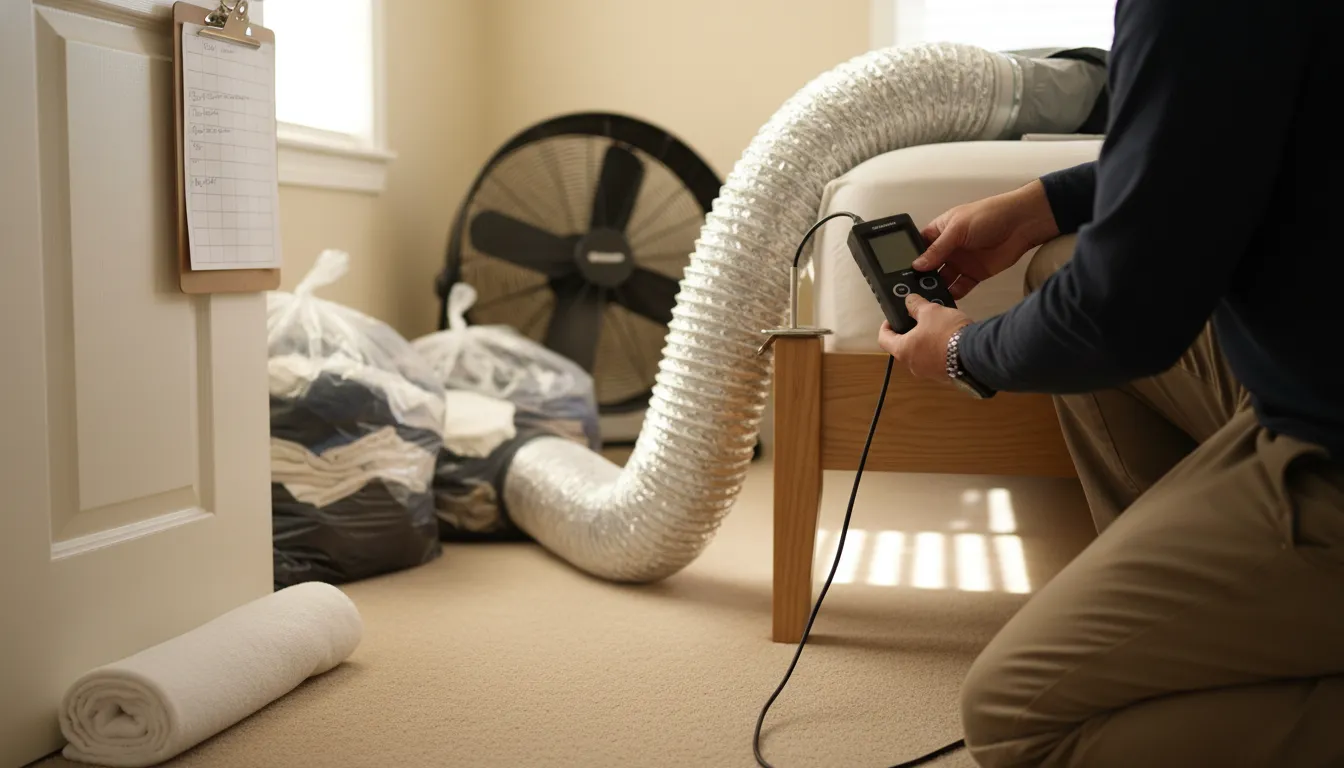
Professional Bed Bug Treatment Methods
Professional exterminators use a combination of strategies, often referred to as Integrated Pest Management (IPM), for the most effective and long-lasting results. IPM minimizes pesticide use by combining multiple tactics 6.
- Inspection & Monitoring: A thorough inspection confirms the infestation's extent. Professionals may use monitors and interceptors to detect bed bug activity.
- Chemical Treatments: Licensed applicators use EPA-registered insecticides in targeted cracks, crevices, and voids. Multiple treatments are almost always necessary to eliminate eggs and newly hatched nymphs.
- Heat Treatment (Thermal Remediation): This involves raising the temperature of an entire room or structure to levels lethal to all life stages of bed bugs (typically 120°F - 135°F). It is highly effective in a single day but requires specialized equipment.
- Steam Treatment: Targeted steam applications can kill bed bugs and eggs on contact on surfaces like mattresses, box springs, and furniture.
- Vacuuming: High-powered vacuums are used for physical removal of bed bugs from surfaces prior to other treatments.
Find the perfect bed bug treatment companies for your needs
Get personalized recommendations and expert advice
Preparing for a Professional Treatment
Your cooperation is the single most important factor for a successful treatment. Failure to prepare properly can lead to treatment failure and additional costs. Preparation is often the tenant's responsibility 7 8 9.
Typical preparation checklist includes:
- Extreme Decluttering: Remove unnecessary items from floors, under beds, and in closets. This gives technicians access to baseboards and potential hiding spots.
- Launder All Fabrics: Wash and dry all clothing, bedding, curtains, and stuffed animals on the highest heat settings possible. Place cleaned items in sealed plastic bags or bins.
- Disassemble Furniture: Move furniture away from walls. Dismantle bed frames and, if instructed, remove drawers from dressers and nightstands.
- Vacuum Thoroughly: Vacuum carpets, floors, and furniture, then immediately dispose of the vacuum bag or empty the canister into a sealed outdoor trash bag.
- Acquire Encasements: Purchase certified bed bug-proof encasements for all mattresses and box springs before the technician arrives.
Cost of Bed Bug Extermination in Oregon
The cost for professional bed bug control varies significantly based on the infestation's size, the treatment method, and your location in Oregon. You should obtain multiple estimates from licensed professionals.
- General Range: A full treatment for a single room or studio apartment can start around $300 to $500. Treating an entire multi-bedroom home can easily cost $1,000 to $2,500 or more 10 11.
- Cost Factors: Prices are influenced by the square footage, the need for heat treatment (which is more expensive), the number of follow-up visits required, and the extent of preparation needed.
- Additional Expenses: Remember to budget for preparation costs like mattress encasements, plastic storage bins, laundry, and potential replacement of heavily infested furniture.
Preventing Future Bed Bug Problems
After treatment, vigilance is key to preventing a recurrence.
- Use Protective Encasements: Keep mattresses and box springs sealed in bed bug-proof encasements for at least a full year.
- Be Cautious with Second-Hand Items: Carefully inspect any used furniture, mattresses, or clothing before bringing them inside.
- Inspect After Travel: When returning from trips, inspect your luggage and immediately wash all clothing on high heat.
- Reduce Clutter: A clutter-free home provides fewer hiding places for pests and makes future inspections easier.
Frequently asked questions
Sources
Footnotes
-
Who Is Responsible For Pest Control In A Rental Home - PestLock ↩
-
Are bed bugs a landlord's problem? - The Agent Blog - Goodlord ↩
-
Can You Get Rid of Bedbugs on Your Own? | Portland Monthly ↩
-
What's Working for Bed Bug Control in Multifamily Housing: - NM Health ↩
-
Bed Bug Battle Plan: Critical Tenant Reporting & Treatment ... - Ramos Law ↩
-
Multifamily Owner's and Manager's Guide Regarding Bed Bug Issues - NAHB ↩
-
Tackling Bed Bugs: A Starter Guide for Local Governments - NPIC ↩