Find the Best Bird & Pigeon Control Companies for Your Business
No obligation • Fast responses • Nationwide coverage

Why you can trust Pest Crews
Pest Crews is a leading U.S. resource for finding and evaluating residential and commercial pest control services. Our team researches providers, reviews treatment approaches, and organizes unbiased information to help you make informed decisions. Companies cannot pay to change our editorial content or influence how they appear.
Search providers near you
Best Bird & Pigeon Control Companies in Alaska Ranked
Bird and pigeon infestations can cause significant damage to property, create health hazards, and disrupt business operations. In Alaska, managing these issues requires a specialized approach that respects the state's unique environment and wildlife regulations. This guide provides a clear overview of humane bird control methods, relevant rules, and practical considerations for protecting your home or business. You can use this information to understand your options and connect with local professionals who can assess your specific situation and implement an effective, compliant solution.
Understanding Alaska's Bird Control Landscape
Alaska's vast wilderness and urban centers alike can attract nuisance birds, particularly pigeons, which thrive in human-altered environments. These birds are not just a nuisance; their droppings are acidic and can corrode building materials, metal, and vehicles. Accumulated droppings also pose slip-and-fall risks and can harbor fungi that cause respiratory illnesses in humans, such as histoplasmosis. Furthermore, birds nesting in vents, gutters, or on rooftops can block drainage systems and create fire hazards. Addressing these problems effectively means balancing robust building protection with a commitment to humane wildlife management, a principle deeply embedded in both professional practice and Alaskan regulation.
Legal and Humane Considerations for Bird Management
Before implementing any control measures, it's crucial to understand the legal framework. The focus in Alaska is squarely on humane deterrents-methods that discourage birds from landing, roosting, or nesting without causing them harm 1.
- Protected Species: While common pigeons (Columba livia) are not federally protected, many native bird species in Alaska are. It is illegal to harm, kill, or disturb protected birds, their eggs, or active nests. Professional assessments are vital to identify the species involved and ensure compliance.
- Regulatory Guidelines: Control activities often align with guidelines from the U.S. Department of Agriculture (USDA) and the Alaska Department of Fish and Game (ADFG). These agencies emphasize integrated pest management (IPM) strategies that prioritize exclusion and deterrents.
- Local Ordinances: Cities like Anchorage may have additional ordinances regarding sanitation, public health nuisances, and wildlife interactions. A reputable local provider will be familiar with these rules.
The overarching principle is that control should be proactive and preventative, creating an environment that is unattractive or inaccessible to birds, rather than a reactive removal of the animals themselves2.
Effective Bird Deterrents and Exclusion Methods
Professional bird control relies on a toolbox of physical and sensory deterrents. The most effective strategy often combines several methods tailored to the specific architecture and bird pressure of a property.
Physical Barriers (Exclusion)
These are the most permanent and effective solutions, designed to physically block birds from accessing preferred sites.
- Bird Spikes: Made from stainless steel or durable plastic, spikes are installed on ledges, signs, roof peaks, and beams. They prevent birds from landing by creating an uneven, uncomfortable surface. They are a cost-effective solution for linear foot problems 3.
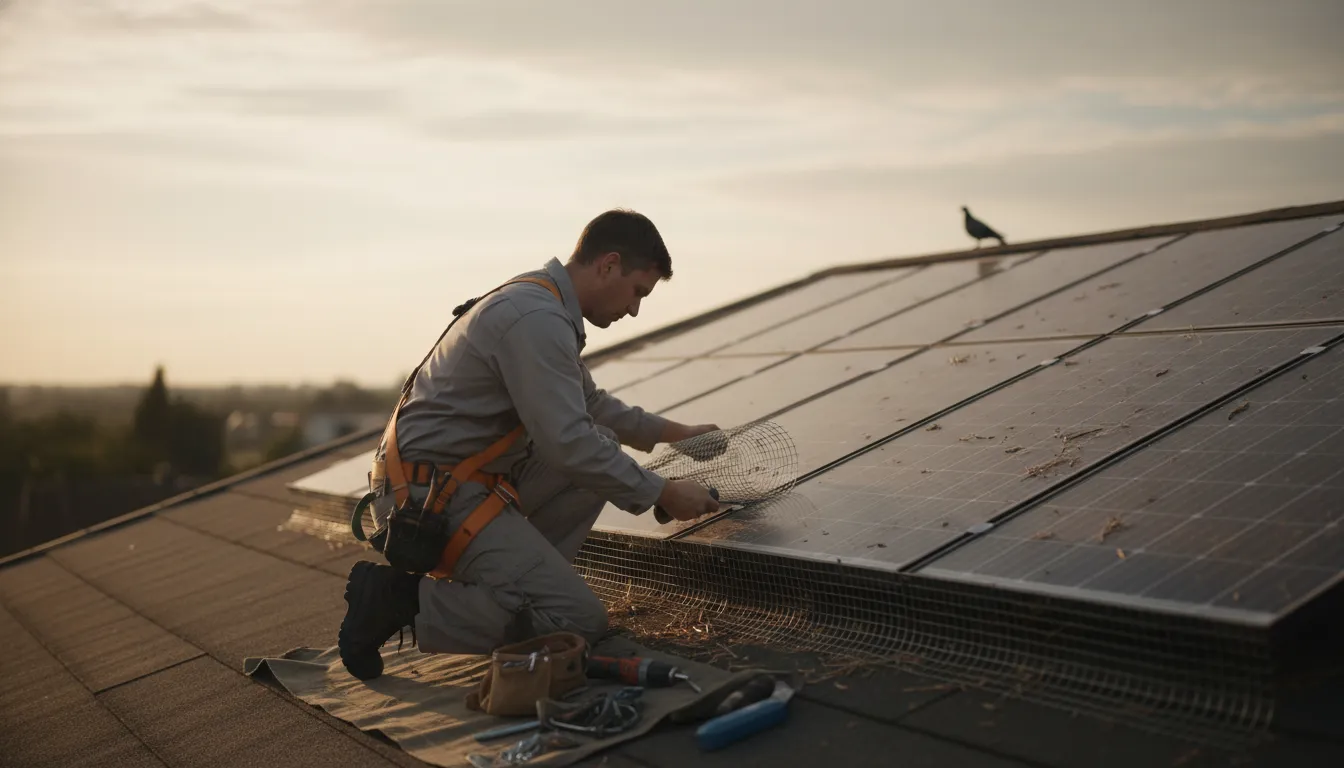
- Bird Netting: Heavy-duty polyethylene netting creates a physical barrier over large open areas. It is ideal for sealing off loading docks, warehouse eaves, balconies, and entire rooftops. Properly installed netting is nearly invisible and provides long-term protection.
- Bird Wire Systems: These systems use thin, spring-tensioned wires installed on ledges. The wires are unstable for birds to land on, effectively discouraging them without being visually obtrusive.
Sensory and Electrical Deterrents
These methods use birds' instincts against them by creating an unpleasant or confusing environment.
- Optical Deterrents: Reflective tape, holographic diverters, and predator decoys (like owls) use light and movement to scare birds. Bird repellent gels create a sticky, uncomfortable surface on ledges. These are often used as supplementary measures.
- Sonic and Ultrasonic Devices: These emit sounds that are irritating to birds or mimic predator calls. Some are motion-activated. Their effectiveness can vary, and birds may become habituated over time.
- Electric Track Systems: Products like Bird Jolt Flat Track deliver a mild, harmless electrical shock when a bird lands on a treated ledge. This conditions them to avoid the area. These systems are highly effective for ledges, parapet walls, and other specific roosting lines and are considered a humane aversive conditioning tool 4.
Find the perfect bird & pigeon control companies for your needs
Get personalized recommendations and expert advice
Professional Assessment and Installation
For anything beyond a minor, easily accessible DIY project, consulting a professional is highly recommended. An expert from a company like AviAway or an authorized Bird B Gone installer brings critical advantages to bird control in Alaska.
- Accurate Diagnosis: Professionals identify the species, locate all roosting and nesting sites, and understand the birds' behavior patterns. This ensures the correct solution is applied in the right places.
- Regulatory Knowledge: They navigate state and local wildlife regulations, ensuring your control plan is fully compliant and humane5 6.
- Proper Installation: Effectiveness hinges on correct installation. Netting must be taut and securely fastened; spikes must cover the entire landing zone; electric systems must be correctly powered. Poor installation leads to failure and wasted money.
- Safety: Bird control often involves working at heights on roofs and facades. Professionals have the safety equipment and training to perform the work safely.
- Long-Term Strategy: A pro can design a layered defense and recommend maintenance schedules, providing a lasting solution rather than a temporary fix.
Cost Considerations for Bird Control in Alaska
Pricing for bird control is highly variable and depends on several key factors. While specific quotes are essential, understanding the cost drivers can help in planning.
- Scope of the Problem: The size of the area to be protected is the primary cost factor. A few window ledges on a house are far less expensive than the entire roofline of a large warehouse.
- Inaccessibility: Alaska's architecture and weather can create challenges. Steep roofs, high elevations, and complex building designs increase labor time and safety requirements, affecting the price.
- Chosen Method: Different systems have different material and labor costs.
- Spikes and Wires: Generally the most affordable professional option for ledge protection, often starting in the hundreds of dollars for residential jobs and scaling up for large commercial properties.
- Bird Netting: Material and installation costs are higher due to the complexity of rigging and securing large spans. Commercial netting projects can range from a few thousand to tens of thousands of dollars7.
- Electric Track Systems: These involve both hardware and professional electrical installation, placing them at a higher price point, but they offer a highly effective solution for specific, persistent problems8.
- DIY vs. Professional: DIY kits for spikes or reflective tape are available at a lower upfront cost. However, for guaranteed, durable, and compliant results-especially for netting or electric systems-professional installation is strongly advised9 10.
The most reliable path is to obtain assessments and quotes from local Alaskan providers who can evaluate your property's unique needs and provide accurate pricing.
Maintenance and Long-Term Success
Bird control is not always a "set it and forget it" proposition. To ensure long-term effectiveness, a maintenance plan is important.
- Regular Inspections: Periodically check installed deterrents for damage from weather, UV degradation, or tampering. Ensure netting is still taut and spikes are secure.
- Cleanliness: An essential part of control is removing the attractants. Keep outdoor dining areas clean, secure trash bins, and eliminate standing water. Trim trees and branches away from buildings to remove perches and access points 11.
- Monitor for New Activity: Birds are adaptive. If they find a new, unprotected area, be prepared to extend your control measures. A professional maintenance contract can handle these inspections and adjustments.
By investing in a professionally designed and installed humane deterrent system and committing to simple preventative maintenance, you can protect your Alaska property from the costly and unhealthy problems caused by nuisance birds for years to come.
Frequently asked questions
Sources
Footnotes
-
5 Steps To Successfully Shield Your Home From Pigeon Intrusions ↩
-
What Are the Legal Considerations When Implementing Pigeon Control Measures? 6 Important Factors to Know ↩
-
Bird Deterrents for Roofs | Expert Bird Control Products - Bird B Gone ↩
-
Bird Deterrents For Businesses - RK Environmental Services ↩
-
How to Keep Pigeons Away from My House - Fantastic Pest Control ↩