
Find the Best Bird & Pigeon Control Companies for Your Business
No obligation • Fast responses • Nationwide coverage

Why you can trust Pest Crews
Pest Crews is a leading U.S. resource for finding and evaluating residential and commercial pest control services. Our team researches providers, reviews treatment approaches, and organizes unbiased information to help you make informed decisions. Companies cannot pay to change our editorial content or influence how they appear.
Search providers near you
Top Bird & Pigeon Control Companies in Hamilton, New Jersey Ranked
Pigeons, starlings, and other nuisance birds can quickly become a significant problem for properties in Hamilton. Their droppings are corrosive, can damage building materials and vehicles, and pose health risks. Nesting materials can clog gutters and create fire hazards near electrical equipment. Effective bird and pigeon control is about implementing humane, long-term deterrents to protect your property's value, appearance, and safety. This guide will help you understand the specific challenges birds present in our area and the range of professional solutions available to address them, from residential ledges to expansive commercial facilities.
ProTrappers LLC
18 Warren Way, Burlington, NJ 08016
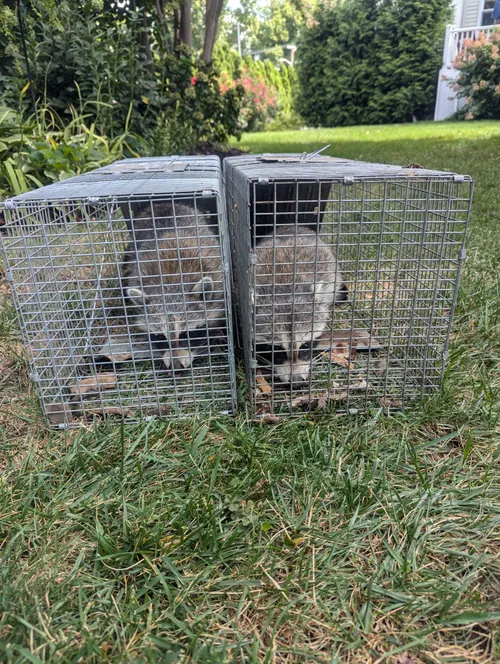
ProTrappers LLC is a wildlife removal and bird pigeon control company serving Philadelphia, PA. They specialize in removing nuisance animals from homes and businesses, including birds in vents and animals living under sheds or decks. Their process includes inspecting properties to identify problem animals and entry points, removing the animals, and sealing entry points to prevent future invasions. ProTrappers LLC focuses on making homes safe by addressing issues such as potential fire hazards from chewed wires and health risks from parasites. They have helped numerous families secure their homes from wildlife intrusions.

RK Environmental Services
Yonkers, NY
RK Environmental Services is a pest management and food safety consulting company based in Yonkers, NY. They specialize in integrated pest management (IPM) for the food, pharmaceutical, and related industries, serving regional and national accounts. Their services include commercial bird control, rodent and wildlife exclusion, expert fumigation, and remote pest monitoring. With 20 years of experience, RK Environmental is recognized for its expertise in regulatory compliance and food safety standards, offering customized and humane pest control solutions.
Critter Control
Philadelphia, PA
Critter Control provides wildlife and pest removal services in Philadelphia, PA. They handle nuisance animals such as raccoons, rodents, squirrels, bats, skunks, and pest birds using humane removal methods. Their process includes inspection, removal, exclusion, and repair to prevent future issues. Critter Control offers specialized capabilities like live trapping, one-way doors, and exclusion techniques to secure properties. They also provide sanitation and ectoparasite treatments to address health hazards caused by wildlife. The company serves both residential and commercial clients throughout the Greater Philadelphia area.
Why Bird Control is Critical in Hamilton
Hamilton's mix of residential neighborhoods, commercial strips, and industrial areas along the Delaware River provides ideal habitats for pest birds. Pigeons, in particular, thrive in urban environments where they find ample food sources and abundant nesting sites on building ledges, rooftops, and under bridges. The problems they cause are more than just a nuisance. Accumulated droppings are highly acidic and can accelerate the deterioration of roofing materials, paint, and masonry. Clogged gutters from nesting debris can lead to water damage, and nests in ventilation systems or near machinery create operational and safety hazards. For businesses, a bird infestation can negatively impact customer perception and even violate health code regulations.
Common Problem Areas on Hamilton Properties
Birds seek out sheltered, elevated spots to roost and nest. Identifying these areas is the first step toward an effective control strategy.
- Ledges & Window Sills: These are prime real estate for pigeons. Flat, sheltered ledges above doors, on facades, and along window sills mimic the cliff faces birds naturally prefer.
- Rooftops & Eaves: The peak of a roof, flat roof areas, and the sheltered space under eaves are favored for nesting and loafing. HVAC units on roofs provide warmth and shelter.
- Air Conditioning Units & Gutters: The platforms and cages around AC units offer protection. Gutters provide a source of nesting material and a concealed spot to build a nest, leading to drainage blockages 1.
- Loading Docks & Open Ceilings: For warehouses and industrial buildings in Hamilton's commercial districts, open loading dock areas and high, open ceilings with structural beams are irresistible to birds like sparrows and starlings, leading to constant droppings on inventory and equipment.
Professional Bird Deterrent Methods Used in Hamilton
Local pest management professionals employ a variety of humane and effective techniques, often combining them for a comprehensive solution tailored to your property's architecture and the specific bird species.
Physical Barriers (Exclusion)
This is the most permanent and effective form of bird control, physically preventing birds from landing or accessing an area.
- Bird Spikes: These are narrow, needle-like strips installed on ledges, signs, and beams. They are non-harmful but make landing uncomfortable and impossible. They are a common sight on commercial buildings in Hamilton.
- Bird Netting: Heavy-duty polyethylene nets create a physical barrier over large open areas like courtyards, loading docks, or beneath open ceilings. Properly installed netting is nearly invisible and provides complete exclusion.
- Shock Track Systems: These low-profile tracks deliver a mild, harmless electrical pulse that conditions birds to avoid the area. They are effective on parapet walls, roof peaks, and beams 2.
- Bird Wire (Post & Wire): Almost invisible tensioned wire systems prevent birds from getting a foothold on ledges. They are a discreet option for historical or aesthetic-sensitive buildings.
Visual & Sensory Deterrents
These methods work by scaring or disorienting birds.
- Visual Scares: This category includes predator decoys (like owls or hawks), reflective tape, and spinning devices. Their effectiveness can diminish over time as birds become habituated, so they are often used in rotation or with other methods.
- Sonic & Ultrasonic Devices: These emit sounds unpleasant to birds, such as predator calls or distress cries. Ultrasonic devices are inaudible to most humans. They are best for large, enclosed outdoor spaces like warehouses 3.
- Bird Gel & Optical Gel: These non-toxic, sticky substances create a surface birds dislike. Newer optical gels reflect ultraviolet light that birds see as a "fire" effect, deterring them without making a sticky mess.
Habitat Modification & Population Control
- Sanitation & Exclusion: The most fundamental step is eliminating food and water sources. Securing trash bins, cleaning up spilled grain, and advising against feeding birds are crucial. Sealing entry points into buildings prevents birds from nesting indoors 4.
- Bird Birth Control (OvoControl): This is an EPA-registered bait that limits egg hatchability in pigeons. It is used for managing large, persistent flocks in areas where other methods are impractical and requires a consistent feeding program 5.
Find the perfect bird & pigeon control companies for your needs
Get personalized recommendations and expert advice
Residential vs. Commercial Bird Control in Hamilton
The scale and approach to bird proofing differ significantly between a home and a business.
For Hamilton Homes: Solutions often focus on specific trouble spots. A homeowner might install bird spikes on chimney caps and front porch ledges, use netting to block birds from under a deck or patio, or employ visual deterrents on a balcony. DIY options like scent repellents (peppermint, garlic sprays) or simple spike installations are common for smaller problems, but professional installation ensures durability and completeness 6. Costs for residential work typically start in the hundreds of dollars and can range to a couple thousand for complex multi-faceted installations.
For Hamilton Businesses: Commercial bird control is more extensive. A warehouse may require thousands of square feet of netting installed at height, a strip mall might need shock tracks along all roof lines, and a restaurant with a dumpster area could benefit from a combination of spikes and sonic devices. Commercial providers have the equipment and expertise for large-scale, high-access jobs. Falconry (using birds of prey) and haze machines are specialized commercial-grade tactics sometimes used at airports or large facilities 7 8. Given the complexity, commercial projects are a larger investment, often ranging from several thousand to tens of thousands of dollars, but they protect critical assets and avoid costly clean-up and damage repairs 7 9.
Choosing a Bird Control Strategy
The right solution depends on several factors:
- Bird Species: Pigeons require sturdy spikes or netting, while smaller birds like sparrows may need finer mesh netting.
- Location & Architecture: The size, height, and materials of your building determine what installation is possible and most effective.
- Severity of Infestation: A small flock on one ledge needs a different response than a large, established colony.
- Aesthetic & Historical Concerns: For some properties, discreet solutions like wire or low-profile shock tracks are preferred.
- Budget & Long-Term Goals: While exclusion methods have a higher upfront cost, they provide a permanent solution, reducing long-term maintenance and damage expenses.
A professional assessment from a Hamilton-based specialist is invaluable. They can identify all active roosting sites, recommend a tailored combination of deterrents, and provide a clear estimate for implementing a lasting solution.
Frequently asked questions
Sources
Footnotes
-
How to keep birds away from your building or property - https://www.youtube.com/watch?v=5D2Hb9iQ7_E&t=40 ↩
-
Bird control - Wikipedia - https://en.wikipedia.org/wiki/Bird_control ↩
-
A Complete Guide on How To Get Rid of Pigeons - Avian Enterprises - https://aviancontrolinc.com/get-rid-of-pigeons/ ↩
-
How to Stop Birds from Building Nests on Your House - Chirp Nature Center - https://chirpforbirds.com/how-to/how-to-stop-birds-from-building-nests-on-your-house/ ↩
-
How to Get Rid of Pigeons: Overview of All Available Solutions - https://www.ovocontrol.com/how-to-get-rid-of-pigeons ↩
-
How To Keep Birds Away From Your House - State Farm® - https://www.statefarm.com/simple-insights/residence/how-to-keep-birds-out-of-my-yard ↩
-
Bird Deterrents For Businesses - RK Environmental Services - https://www.rkenvironmental.com/blog/pest-management/bird-deterrents-for-businesses ↩ ↩2
-
New Jersey Bird Control Solutions | Viking Pest Control - https://www.vikingpest.com/pest-control/bird-control/new-jersey-bird-control/ ↩
-
Expert Bird Proofing Services in Hamilton, NJ - https://thompsonexterior.com/bird-proofing-services-in-hamilton-nj ↩