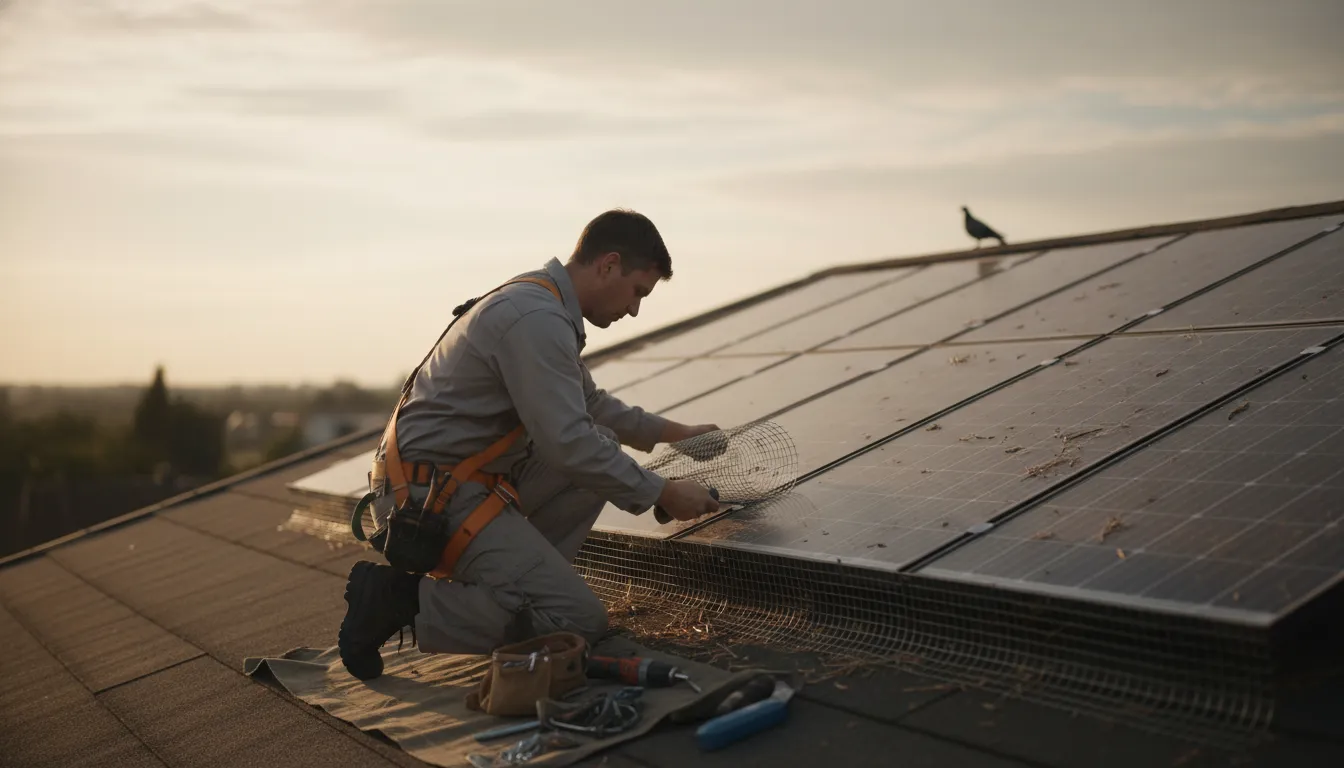
Find the Best Bird & Pigeon Control Companies for Your Business
No obligation • Fast responses • Nationwide coverage

Why you can trust Pest Crews
Pest Crews is a leading U.S. resource for finding and evaluating residential and commercial pest control services. Our team researches providers, reviews treatment approaches, and organizes unbiased information to help you make informed decisions. Companies cannot pay to change our editorial content or influence how they appear.
Search providers near you
Best Bird & Pigeon Control Companies in South Carolina Ranked
Bird and pigeon infestations can cause significant damage to property and pose health risks. In South Carolina, managing nuisance birds requires a specific approach due to strict federal wildlife laws. This guide explains the legal framework, effective control methods, and practical considerations for protecting your home or business from pest birds. You can use this information to understand your options and connect with local specialists who provide humane and compliant solutions.
Understanding South Carolina's Bird Control Laws
Effective bird management in South Carolina begins with compliance. The cornerstone of regulation is the federal Migratory Bird Treaty Act (MBTA). This law protects nearly all native bird species, making it illegal to harm, kill, possess, or disturb active nests containing eggs or chicks without a federal permit 1. This means traditional pest control methods are not applicable; the focus must be on humane exclusion and deterrents.
While South Carolina has its own wildlife codes, they generally reinforce federal protections, particularly prohibiting the baiting of birds for hunting 2. For property owners, this legal landscape mandates a non-lethal strategy. Any control plan must prioritize excluding birds from structures without causing them physical harm, especially during nesting seasons.
Common Pest Birds and Problems in South Carolina
Several bird species commonly become pests for South Carolina residents and businesses:
- Pigeons (Rock Doves): Often called "flying rats," pigeons are the most common nuisance bird. They roost in large numbers on building ledges, in attics, and under bridges, causing damage with their acidic droppings and creating slip hazards.
- Starlings & Sparrows: These cavity-nesting birds frequently enter buildings through vents, eaves, and other small openings. Their nests can block vents and create fire hazards, while their droppings accumulate quickly.
- Woodpeckers: Protected under the MBTA, woodpeckers can cause significant structural damage by drilling into siding, fascia, and eaves in search of insects or to create nesting cavities.
- Gulls & Waterfowl: Particularly problematic near coastal areas, lakes, and ponds, these birds can be aggressive, noisy, and create unsanitary conditions with their droppings.
The problems caused by these birds extend beyond noise. Their droppings are corrosive, damaging paint, metal, and stonework. Accumulated nesting materials can clog gutters and vents, leading to water damage and mold. Furthermore, bird droppings can harbor pathogens like histoplasmosis, posing a health risk.
Humane Bird Control and Exclusion Methods
The most effective and legal approach to bird control is integrated pest management (IPM), which combines multiple strategies for a long-term solution.
Physical Barriers and Exclusion
This is the most permanent solution, physically preventing birds from landing or nesting.
- Bird Spikes: Made from stainless steel or durable plastic, spikes are installed on ledges, signs, roof peaks, and other flat surfaces to prevent birds from landing. They are a highly effective and low-profile solution for ledges and beams 3.
- Bird Netting: Heavy-duty polyethylene netting creates a physical barrier over large open areas. It is ideal for protecting loading docks, warehouse ceilings, under-eave areas, and courtyards from all bird species.
- Bird Wire Systems: Nearly invisible tensioned wire systems create an unstable landing zone on ledges and beams. Birds cannot get a foothold and are encouraged to move elsewhere.
- Architectural Modification: Sealing entry points is critical. This includes installing vent covers, chimney caps, and sealing gaps in soffits and eaves with durable materials like hardware cloth or sealant.
Deterrents and Habitat Modification
Making an area less attractive to birds supports physical exclusion efforts.
- Visual & Sonic Deterrents: Reflective tape, holographic deterrent gels (like Bird-Out), and predator decoys can scare birds away from specific areas. Ultrasonic devices emit sounds unpleasant to birds but inaudible to most humans 4.
- Shock Track Systems (Bird Jolt Track): These low-profile, low-voltage tracks deliver a mild, harmless shock when a bird lands, training them to avoid the area. They are highly effective for ledges, parapet walls, and roof edges 5.
- Habitat Management: Reduce the food, water, and shelter that attract birds. Keep outdoor eating areas clean, use sealed trash containers, fix leaky faucets, and trim tree branches away from structures 6.
Find the perfect bird & pigeon control companies for your needs
Get personalized recommendations and expert advice
The Professional Bird Control Process
For a lasting solution, a professional assessment and installation are often necessary. A typical process involves:
- Inspection & Assessment: A specialist will identify the bird species, locate all roosting and nesting sites, assess the extent of the infestation, and evaluate the property's architecture.
- Recommendation & Plan: Based on the inspection, the professional will recommend a customized combination of exclusion and deterrent methods that comply with the MBTA. They will provide a clear scope of work and cost estimate.
- Safe Removal & Cleanup: If nests are present and inactive (no eggs or chicks), they will be safely removed. Professionals then perform a thorough cleanup and disinfection of the affected areas to remove droppings and debris, which is crucial for health and safety.
- Installation of Solutions: The chosen exclusion systems (netting, spikes, wire, etc.) are professionally installed to ensure they are secure, durable, and effective.
- Monitoring & Maintenance: Some companies offer follow-up services to ensure the systems are working and to make any necessary adjustments.
Cost Considerations for Bird Control in South Carolina
Costs vary widely based on the property size, bird pressure, species, and chosen methods. Here's a general overview:
- DIY Products: Homeowners can purchase deterrents like spike strips ($20-$40 per section), deterrent gel ($10-$20 per tube), or netting rolls ($180+). DIY is best for small, simple problems 7.
- Professional Installation: For guaranteed, code-compliant results, professional installation is recommended. Costs are project-dependent:
- Bird Netting: This is highly variable. A residential balcony may cost a few hundred dollars, while large-scale commercial netting for a warehouse or airport hangar represents a significant investment requiring a custom quote 10.
- Full-Service Removal & Exclusion: A complete service-including inspection, cleanup, disinfection, and installation of exclusion systems-will be quoted based on the specific project requirements. Always get a detailed, written estimate.
The most cost-effective strategy is often a one-time professional installation of a permanent exclusion system, which prevents recurring damage and cleanup costs.
Health and Safety Concerns
Addressing a bird infestation is not just about property protection; it's a health priority. Bird droppings can harbor fungi like Histoplasma capsulatum, which causes respiratory histoplasmosis when spores are inhaled during cleanup 11. Nests and droppings can also host mites, ticks, and other parasites. Professional cleaners use personal protective equipment (PPE), HEPA filtration vacuums, and hospital-grade disinfectants to safely remediate the area, a step that should not be skipped 12.
Frequently asked questions
Sources
Footnotes
-
Bird nests | U.S. Fish & Wildlife Service - https://www.fws.gov/story/bird-nests ↩
-
South Carolina Code of Laws Unannotated - https://www.scstatehouse.gov/code/t50c011.php ↩
-
Pigeon Control Products - Bird B Gone - https://www.birdbgone.com/bird/pigeon-control/ ↩
-
Bird Deterrents for Roofs | Expert Bird Control Products - Bird B Gone - https://www.birdbgone.com/bird-problem/keep-birds-off-roof/ ↩
-
Pigeon Deterrent Installation - Pigeonpros.com - https://pigeonpros.com/pigeon-deterrent-installation/ ↩
-
5 Steps To Successfully Shield Your Home From Pigeon Intrusions - https://www.greenmachinepest.com/bird-proofing-shield-home-pigeon-intrusions/ ↩
-
Nationwide Bird Control & Removal | Bird Netting Installers - https://animalprosonline.com/services/bird-removal/ ↩
-
South Carolina Bird Control | Bird B Gone - Authorized Installers - https://www.birdbgone.com/state/south-carolina-bird-control/ ↩
-
The Cost of Bird Control: What to Expect When Hiring a Pro - https://www.elitebirdmanagement.com/the-cost-of-bird-control-what-to-expect-when-hiring-a-pro/ ↩
-
Professional Bird Removal & Nest Prevention | SC & NC - https://palmettowildlifeextractors.com/wildlife-removal/birds/ ↩
-
Bird Removal & Prevention in SC | Gregory Pest Solutions - https://www.smarterpestcontrol.com/pest-id/wildlife/birds ↩
-
Verminator Wildlife Bird Control - https://verminatorsc.com/services/bird-removal-and-control/ ↩