
Choosing heat versus chemical bed bug removal
Heat vs chemical bed bug treatment at a glance
When you discover bed bugs, choosing between heat and chemical treatment changes how disruptive the process is, how quickly you get relief, and how likely the bugs are to come back. Many U.S. pest control companies now use both, but it still helps to understand the trade-offs so you can ask the right questions and pick a plan that fits your home, health needs, and budget.
Heat treatment (thermal remediation)
- Whole rooms or entire units are heated to lethal temperatures for bed bugs and their eggs, typically in one long visit.
- Kills bugs quickly, often in a single day, and penetrates into cracks and fabrics.
- Leaves no long-term chemical residue, which some people prefer, but also means no ongoing protection against re-introduction.
Chemical treatment (insecticides and dusts)
- Licensed pros apply a combination of liquid sprays, aerosols, and dusts to cracks, baseboards, furniture joints, and wall voids.
- Works more slowly and usually takes multiple visits, but the residual effect helps kill newly emerged bugs over time.1
- Requires careful label-directed use for safety and effectiveness; misuse of pesticides indoors can be hazardous.1
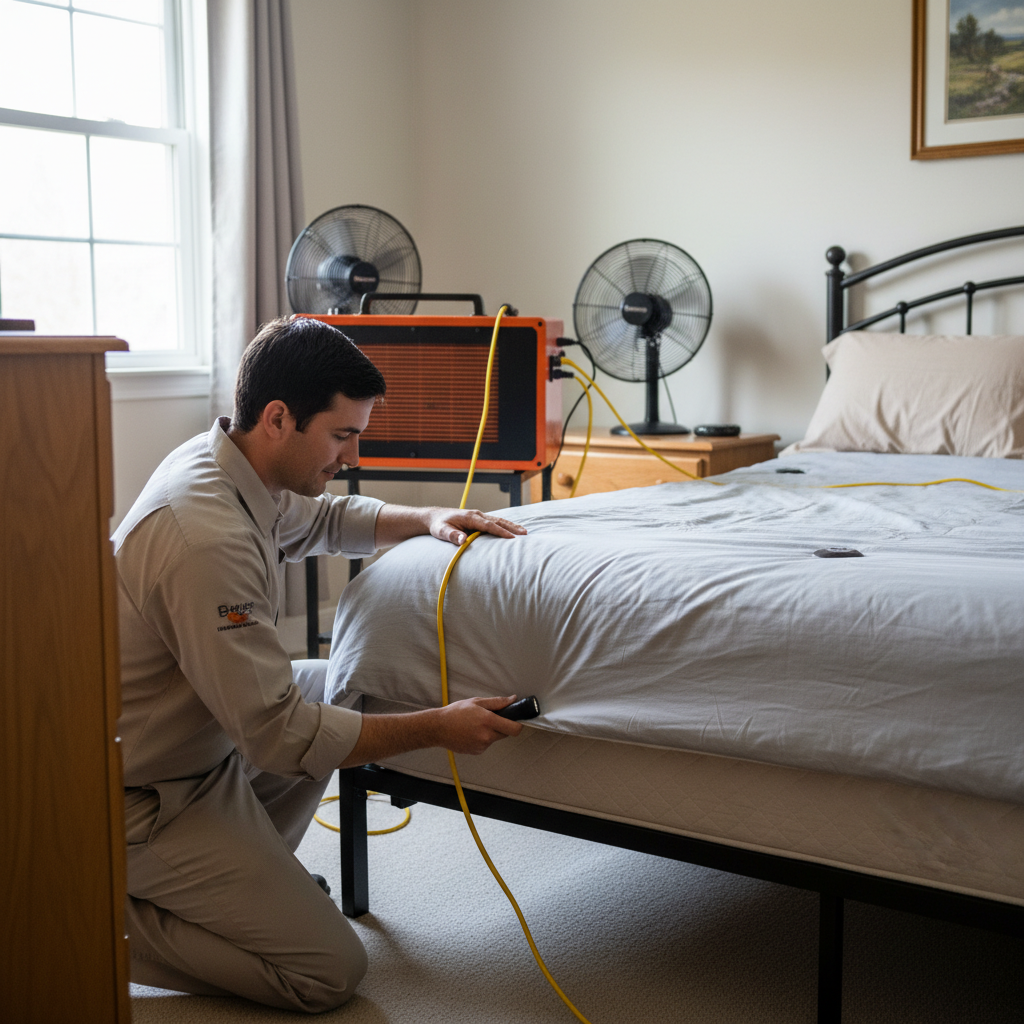
How professional heat treatment works
With professional heat treatment, the company brings in industrial heaters and high-temperature fans, then carefully raises the temperature of the treated area and its contents. Bed bugs and their eggs typically die when exposed to sustained temperatures of around 120-130°F (about 49-54°C) for a sufficient time period, so the goal is to get all the hard-to-reach hiding spots to that range and hold it there.2
Technicians will:
- Place heaters and fans to move hot air into cracks, behind baseboards, and into furniture.
- Use wireless temperature sensors in thick items (e.g., mattresses, couches) and remote corners.
- Slowly ramp up and then carefully cool down to protect building materials and reduce fire risk.
Pros of heat treatment
- Rapid: Most or all stages of bed bugs are killed in one long appointment.
- Deep penetration: Heat reaches inside furniture and wall voids better than sprays alone.
- Low chemical use: Useful for people concerned about pesticide exposure.
Limitations of heat treatment
- No residual: Once the temperature returns to normal, there's no ongoing protection. New bugs brought in later won't be affected.1
- Prep matters: Overstuffed closets or heavy clutter can create "cool pockets" where bugs survive.
- Sensitive items: Some plastics, electronics, candles, and certain finishes must be removed or protected.
Because high temperatures can create fire and burn risks if mishandled, whole-structure heat should always be done by trained professionals following recognized safety practices.1
How professional chemical treatment works
Chemical bed bug treatment relies on products that are registered for bed bug control and applied according to their labels. The U.S. Environmental Protection Agency (EPA) has registered hundreds of bed bug products in several chemical classes, including pyrethroids, desiccant dusts, neonicotinoids, and insect growth regulators.2
A typical professional chemical program includes:
- Detailed inspection to locate harborages in and around beds, sofas, baseboards, and outlets.
- Targeted applications of liquid, aerosol, and dust formulations into cracks, seams, wall voids, and under edges of carpet.
- Non-spray tools like mattress and box-spring encasements, interceptors under bed legs, and vacuuming.
Pros of chemical treatment
- Residual protection: Many products continue killing bed bugs that contact treated surfaces for weeks, helping catch late hatchers.2
- Flexible: Easier to use selectively in one unit or room when whole-structure heat isn't practical.
- Often combined with dusts in wall voids and outlets for long-term suppression.
Limitations and safety concerns
- Multiple visits: Because eggs can be more resistant and hidden, several follow-up treatments are usually needed.
- Resistance: Some bed bug populations are less sensitive to certain insecticide classes, so pros may rotate products or combine modes of action.2
- Safety: Using outdoor-only pesticides indoors, over-applying products, or spraying bedding, electronics, or upholstered furniture outside of label directions can be hazardous and ineffective.1 3
Any pesticide used against bed bugs in the U.S. should carry an EPA registration number and specifically list bed bugs on the label. That label is a legal document and includes where it can be used (e.g., cracks and crevices, mattress seams) and what protective steps are required.1
Safety and preparation for both methods
Whether you choose heat, chemicals, or both, preparation and safety steps are very similar:
- Follow your company's written prep checklist. This usually includes reducing clutter, moving furniture slightly off walls, and bagging items.
- Launder textiles on high heat. Wash and then dry bedding and clothing on the hottest dryer cycle that fabrics can safely handle; dryer heat is key to killing bugs and eggs.2
- Use mattress and box-spring encasements. These trap any surviving bugs inside and make future inspections easier.
- Stay out during treatment and re-entry periods. Your pro will give specific times when it's safe to go back in, based on product labels or maximum heat levels.1
- Protect vulnerable people and pets. Infants, pregnant people, those with respiratory or chemical sensitivities, and all pets should be out of the treated area until your provider says it's safe.
DIY whole-home heat with space heaters, ovens, or turning up the thermostat is both ineffective and dangerous; professional equipment and monitoring are needed to heat a structure safely and evenly.2
It's also worth remembering that while bed bugs are very disruptive, they are not known to spread disease to people, according to the U.S. Centers for Disease Control and Prevention (CDC).4
Follow-up visits and monitoring
Bed bug control is rarely a "one and done," even when heat is involved. Expect some form of follow-up in almost every professional program.
After heat treatment
- Many companies schedule at least one follow-up inspection to catch any survivors or newly introduced bugs.
- Interceptor traps under bed and sofa legs, plus periodic visual inspections, help confirm success.
- In multi-unit housing, neighboring units may need inspection to prevent re-introduction.
After chemical treatment
- Most plans involve multiple services spaced roughly with the bed bug life cycle, to hit eggs as they hatch.
- Technicians may adjust products or application sites based on what they find on each visit (live bugs, cast skins, or fresh fecal spots).
Between visits, you'll usually be asked to keep sleeping in the same rooms; leaving can cause bugs to spread to new areas instead of contacting treated surfaces.
Which option is better for your situation?
There's no one "best" method for every U.S. home or business. The right choice depends on how severe and widespread your infestation is, your building type, and your tolerance for chemicals, cost, and disruption.
Heat is often a strong choice when:
- You need rapid relief (e.g., hotels, rentals between tenants, or heavy infestations in a single unit).
- You prefer minimal pesticide use due to health conditions or personal preference.
- The space can be prepared thoroughly, with clutter reduced and heat-sensitive items managed separately.
Chemical-focused treatment can be a better fit when:
- Whole-structure heat is impractical (older wiring, complex multi-unit buildings, or partial access).
- There's ongoing risk of re-introduction (e.g., adjacent infested units, frequent shared-housing turnover), and residual protection is valuable.2
- You're comfortable with carefully managed pesticide use and can accommodate several service visits.
Why combination treatments are increasingly common
Many professionals now use heat and chemicals together as part of integrated pest management (IPM)-a strategy that combines multiple tools for better long-term control.2 3 A common approach is:
- Use heat (or intensive non-chemical methods) for fast knockdown.
- Follow with targeted residual dusts and sprays in key harborages.
- Add encasements, interceptors, and education to prevent re-infestation.
If you're unsure, ask each company you interview to explain exactly what methods they use, how many visits they expect, what you'll need to do, and what their warranty covers.
Conclusion
For most infestations, heat offers fast, low-chemical knockdown, chemicals offer slower but longer-lasting protection, and the most reliable bed bug removal in the U.S. often comes from a thoughtful combination of both.