
What to expect from a bed bug inspection
Bed bugs are small, hard to spot, and easy to spread, which is why many people bring in a licensed pest management professional (PMP) rather than trying to handle inspections alone. In the U.S., professional bed bug inspections follow a fairly standard pattern: an interview, a hands-on search of key areas, possible use of monitoring devices or canine teams, and a written report that can be shared with landlords or housing programs. Understanding that process ahead of time makes it easier to prepare, ask good questions, and make sure the findings are properly documented and acted on.
How a professional bed bug inspection typically works
Step-by-step walkthrough
While every company has its own style, a thorough bed bug inspection in a home or apartment usually includes:
-
Initial conversation and paperwork
The technician will ask about what you've seen (bugs, spots on sheets, bites), when problems started, travel history, and whether neighboring units have issues. You'll usually sign a service agreement and may be given a prep checklist for treatment if bed bugs are confirmed. -
Focused inspection of sleeping areas
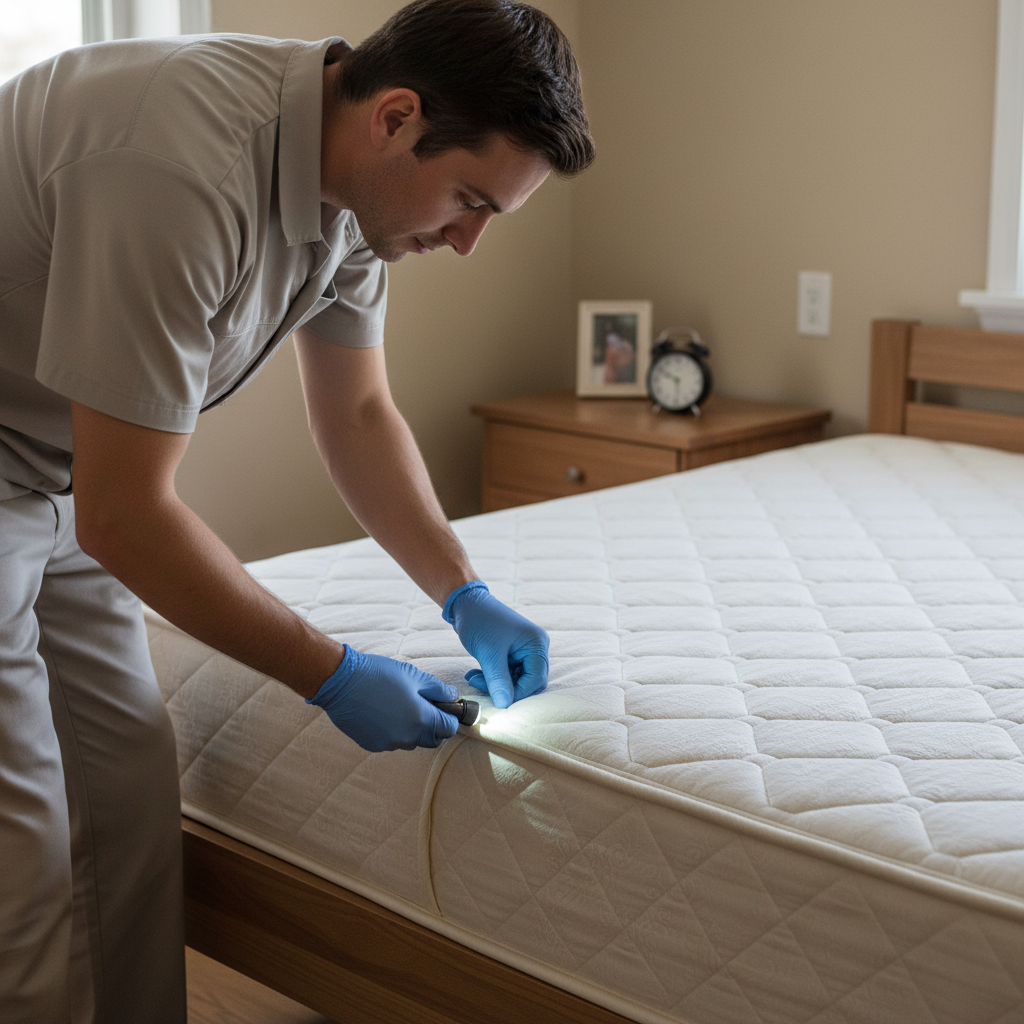
Professionals almost always start where people sleep or sit for long periods. They remove bedding, check mattress seams and labels, box spring interiors, bed frames, headboards, nearby nightstands, and behind wall hangings. The goal is to find live bugs, shed skins, fecal spotting, and eggs. -
Expanding to nearby rooms and furniture
If activity is found-or strongly suspected-the inspection expands to sofas, recliners, baseboards, electrical outlets, carpet edges, closets, and stored items. In apartments, inspectors may also suggest checking units next door, above, and below, especially when infestations are heavier. -
Discussion of findings in plain language
Before leaving, the inspector should explain what they did and what they did or didn't find: confirmed bed bugs, evidence that's "strongly suspicious," or no evidence at this time. They may also outline next steps for treatment, monitoring, or follow-up visits.1
Tools and techniques pros use
Most licensed inspectors rely on a mix of simple tools and, sometimes, specialized technology:
- Bright flashlight and inspection mirror to see into seams, joints, and cracks.
- Hand tools like screwdrivers or Allen keys to partially disassemble bed frames or remove headboards from walls when needed.1
- Crevice tools and vacuums to collect specimens or reduce visible bugs during the visit.
- Collection vials or evidence bags to save insects or debris so a supervisor or lab can confirm identification.
- Monitoring devices such as bed leg "interceptor" cups or sticky traps, often left in place when inspections are inconclusive.
- Encasements and covers may be recommended (or occasionally installed) around mattresses and box springs as part of the broader treatment plan.
- Canine (K-9) bed bug teams, in some markets, for large buildings or hard-to-inspect spaces; a handler will usually confirm alerts with a visual check.
Throughout the visit, many companies now use tablets or phones to take geo-tagged photos, mark unit layouts, and build a digital report you and your landlord can access later.
Special considerations in apartments and housing programs
Bed bugs spread easily through multi-unit buildings, so inspections in apartments, public housing, or voucher units usually look a bit different than in a single-family home.
Coordinating access and scope
- Entry and consent: In rentals, the landlord or property manager typically arranges access and may be present, especially for inspections of multiple units.
- Neighboring units: If bed bugs are confirmed or strongly suspected, inspectors often recommend expanding the search to units above, below, and next to the affected unit, plus key common areas (hallways, laundry rooms, lounges).
- Building-wide patterns: In larger properties, PMPs may review prior work orders and complaints to see if bed bugs are showing up in clusters (one floor, one wing, or one stack of apartments).
HUD-assisted and other housing programs
In federally assisted multifamily housing, the U.S. Department of Housing and Urban Development (HUD) has long encouraged owners to use an integrated pest management (IPM) plan, which includes prompt inspections, documentation, and follow-up rather than one-off treatments.2 In practice, that can mean:
- Faster scheduling when bed bugs are reported.
- Inspecting not just the complaining unit but also nearby units if the housing provider's IPM plan calls for it.
- Keeping written records of inspection dates, findings, and treatments for review by HUD or local housing authorities.
If your rent is paid through a voucher or other program, the inspection report may also be shared (with your consent and subject to program rules) to support inspections or requests for temporary relocation.
What goes in the inspection report
After the on-site visit, most reputable companies provide a written or digital report within a short time-sometimes the same day. It commonly includes:
- Property and unit identification: address, unit number, resident/landlord contact information.
- Inspection areas: rooms, furniture, and adjacent units that were inspected.
- Evidence found: whether bed bugs were confirmed, suspected, or not found at this time, plus notes on where evidence was located.
- Severity or level of activity: for example, light, moderate, or heavy; or counts of live bugs/eggs seen.
- Photos or diagrams: images of findings and simple floor plans showing "hot spots."
- Recommendations: suggested treatment methods (such as heat or chemical treatment), preparation instructions for residents, and whether follow-up inspections are needed.1
For landlords and property managers, these reports serve several purposes:
- Documenting that they responded to a complaint.
- Helping them decide whether to expand inspections to other units.
- Providing proof of professional involvement for housing authorities, insurers, or courts if disputes arise.
As a tenant, you can ask for a copy of the inspection report; how quickly and in what form it must be shared can depend on your local housing code or lease language.3
Permits and local rules
Do you need a permit for a bed bug inspection?
For typical U.S. homes and apartments, you do not pull a construction-style "permit" just to have a bed bug inspection. Instead, regulation mostly focuses on:
- Who can apply pesticides, and
- How pesticides are chosen and used.
The U.S. Environmental Protection Agency (EPA) requires bed bug pesticides to be registered and proven effective when used according to their labels.4 When treatment follows an inspection, the company must follow those label directions, and in most states, commercial pesticide applicators must be properly licensed.
Housing and disclosure rules
Where rules become more complex is in rental housing and big cities, where local codes can dictate how inspections and findings are handled. For example:
- Some cities require owners of multi-family buildings to report bed bug infestations annually and provide tenants with a record or posting of that report.3
- Local codes may require landlords to hire a licensed pest management professional when bed bugs are reported, ensure follow-up inspections, and keep written documentation of inspections and treatments.2 3
- In certain jurisdictions, owners must give tenants written information about the building's recent bed bug history and share pest control reports for inspected units.3
These requirements are very location-specific. Always check your city or county housing department or code enforcement office for the rules that apply where you live. Nothing here is legal advice-just a general overview of how inspections fit into U.S. housing and pest-control regulations.
Local factors across the U.S.
Because this guide focuses on the United States, it's worth noting a few local factors that can change how inspections play out:
- City vs. rural: Major metro areas with lots of multi-unit housing (New York, Chicago, Los Angeles, etc.) often have extra disclosure, documentation, or reporting rules for bed bugs. Smaller towns may lean more on general "habitable housing" standards instead of pest-specific ordinances.
- Building type and age: Older buildings with shared plumbing chases, steam risers, or worn baseboards often require broader inspections across multiple units. Newer, tightly built properties may allow more targeted inspections.
- Turnover and travel: College towns, tourist areas, and neighborhoods with frequent tenant turnover tend to see more bed bug issues. Inspectors in these markets may be quicker to recommend checking neighboring units or common areas.
When you schedule your inspection, ask the company directly: "Are there any local bed bug rules my landlord and I should know about?" Reputable professionals who work in your area every day can usually point you to the right local agency or resource.
Conclusion
A professional bed bug inspection is a structured, hands-on search using specialized tools and clear documentation, designed to confirm whether bed bugs are present and give you-and your housing provider-a concrete plan for what comes next.
Glossary
- Bed bug: A small, flat, blood-feeding insect (Cimex species) that hides in beds and furniture and bites people while they sleep.
- PMP (Pest Management Professional): A licensed pest control technician or company that inspects for and treats pests such as bed bugs.
- IPM (Integrated Pest Management): A strategy that combines inspection, monitoring, prevention, and targeted treatments (not just spraying) to manage pests effectively and safely.
- HUD: U.S. Department of Housing and Urban Development, which sets rules and guidance for many assisted rental housing programs.
- EPA: U.S. Environmental Protection Agency, which regulates pesticides used for bed bugs and other pests.
- Interceptor trap: A device placed under bed or furniture legs that captures bed bugs as they move, helping confirm their presence and monitor activity.