Find the Best Commercial Pest Control Companies for Your Business
No obligation • Fast responses • Nationwide coverage

Why you can trust Pest Crews
Pest Crews is a leading U.S. resource for finding and evaluating residential and commercial pest control services. Our team researches providers, reviews treatment approaches, and organizes unbiased information to help you make informed decisions. Companies cannot pay to change our editorial content or influence how they appear.
Search providers near you
Best Commercial Pest Control Companies in Massachusetts Ranked
For any business in Massachusetts, from a downtown Boston restaurant to a suburban warehouse, effective pest management is a non-negotiable component of operations. Commercial pest control is a specialized service designed to protect your property, inventory, reputation, and compliance with state health codes. It goes beyond simple spray treatments, focusing on a systematic approach to prevent and eliminate pests that threaten your business. This resource helps you understand the regulated landscape of pest management in Massachusetts, the common threats you face, and how to connect with licensed local professionals who can develop a customized protection plan for your unique needs.
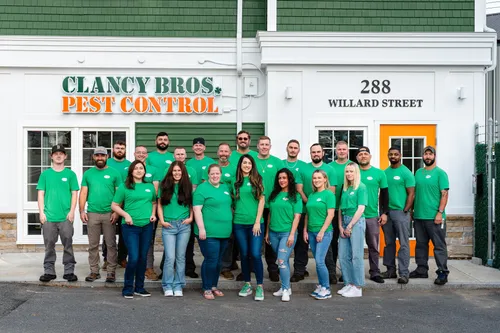
Clancy Brothers Pest Control
288 Willard St, Quincy, MA 02169
Clancy Brothers Pest Control is a family-owned pest control company serving Boston, MA. They specialize in residential and commercial pest control, including rodent control, termite inspections, wildlife removal, and bed bug treatment. With over 64 years of experience, they offer safe and effective pest elimination solutions.
Big Blue Bug Solutions
876 Boston Tpke, Shrewsbury, MA 01545
Big Blue Bug Solutions is a pest control company based in Worcester, MA, serving homes and businesses throughout New England including Rhode Island, Massachusetts, Connecticut, Vermont, Maine, and New Hampshire. They offer comprehensive pest control services for insects, rodents, termites, and wildlife, with expertise in commercial and residential settings. Established in 1935, the company has over 90 years of experience and provides year-round protection using advanced methods. Their technicians follow strict cleanliness protocols and the company offers live answering service 24/7, 365 days a year.

Mosquito Joe of Andover-Peabody
28 Teal Rd, Wakefield, MA 01880
Mosquito Joe of Andover-Peabody provides eco-friendly pest control services in Boston, MA, specializing in mosquito, tick, rodent, ant, cockroach, and commercial pest management. Their science-driven approach includes creating protective barriers and targeted treatments to prevent infestations and protect outdoor spaces. The company offers year-round pest control with flexible service plans tailored to seasonal pest activity. Mosquito Joe emphasizes environmentally responsible methods and supports both residential and commercial clients in maintaining pest-free environments.

Beantown Pest Control
Boston, MA
Beantown Pest Control provides residential and commercial pest control services in Boston, MA. They offer inspections, home protection plans, and treatments for a variety of pests including bed bugs, cockroaches, ants, rodents, termites, bees, and more. The company uses modern technology and environmentally friendly methods to manage pest problems safely and effectively. Their services include wood-destroying insect inspections and customized pest control plans designed to meet specific needs. Beantown Pest Control also offers warrantied service programs to address any pest sightings promptly.

Bug Bully Rodent & Pest Control
21 SW Cutoff, Northborough, MA 01532
Bug Bully Rodent & Pest Control is a family-owned pest control company based in Worcester, MA. Serving Worcester County and surrounding areas, they specialize in comprehensive pest management including rodent exclusion, general pest control, termite inspections, mosquito and tick treatments, and wildlife removal. Their BullGuard Rodent Exclusion System uses custom-fabricated barriers to permanently seal entry points and prevent rodent infestations without chemicals. Founded in 2013, Bug Bully has over 20 years of combined experience and offers fast service with protection plans that provide ongoing pest prevention.
Understanding Massachusetts Regulations for Commercial Pest Control
Operating a business in Massachusetts means adhering to specific state and local regulations governing pest management. The primary regulatory body is the Massachusetts Department of Agricultural Resources (MDAR), which enforces the Pesticide Control Act. This means any application of pesticides on your commercial property must be performed by a licensed pesticide applicator. Furthermore, local Boards of Health have the authority to issue abatement notices and fines for pest infestations that violate sanitary codes, particularly in high-risk industries like food service and healthcare.
The state strongly advocates for an Integrated Pest Management (IPM) approach. IPM is a science-based strategy that prioritizes long-term prevention through a combination of techniques such as inspection, monitoring, sanitation, and physical exclusion before considering chemical treatments. This systematic method is not only more effective and environmentally sound but is often a key component of compliance, especially for businesses that must meet stringent health and safety standards.
Common Commercial Pests in Massachusetts
Businesses in the Bay State face a variety of pest threats that can lead to product contamination, property damage, and health code violations. Understanding these common invaders is the first step in prevention.
- Rodents (Mice and Rats): These are among the most destructive and hazardous pests for businesses. They contaminate food and surfaces with droppings and urine, gnaw through wiring (creating fire hazards), and damage insulation and structural elements. Their presence is a critical red flag for health inspectors.
- Cockroaches: A major allergen and vector for pathogens, cockroaches thrive in warm, moist environments common in commercial kitchens, break rooms, and basements. Even a small infestation can quickly escalate and severely damage a business's reputation.
- Ants: From tiny sugar ants to larger carpenter ants, these insects can invade offices, retail spaces, and food preparation areas, contaminating products and becoming a nuisance to customers and employees.
- Flies: Fruit flies, drain flies, and house flies are not just a nuisance; they can spread bacteria from dumpsters and waste areas directly to food, preparation surfaces, and customer dining areas.
- Termites: These silent destroyers pose a significant threat to the structural integrity of any commercial building, particularly older structures in Massachusetts. Subterranean termites can cause extensive, costly damage before they are even detected.
- Bed Bugs: While often associated with residences, bed bugs are a growing concern for hotels, offices, theaters, and multi-use facilities. They can hitchhike on belongings, leading to costly treatments and potential liability issues 1.
The Professional Commercial Pest Control Process: An IPM Framework
A reputable commercial pest management provider follows a structured, IPM-based process tailored to your specific business. This is not a one-time service but an ongoing partnership.
- Inspection & Risk Assessment: A licensed professional will conduct a thorough inspection of your entire property, inside and out. This includes identifying potential pest entry points, conducive conditions like moisture or clutter, and signs of current activity. They will also assess your business type, traffic flow, and specific vulnerabilities.
- Custom Integrated Pest Management (IPM) Plan Development: Based on the inspection, the provider will create a detailed, written plan. This plan outlines the specific pests targeted, the monitoring and prevention strategies to be employed, and the precise treatment protocols, if and when necessary. The plan should align with Massachusetts's emphasis on IPM.
- Prevention & Exclusion: This is the cornerstone of IPM. The technician will recommend and often assist with physical modifications to your property to keep pests out. This includes sealing cracks and gaps around utility lines, installing door sweeps, repairing screens, and improving waste management practices. Sanitation recommendations are also a key part of this phase 2.
- Monitoring & Targeted Treatment: Instead of blanket pesticide applications, professionals use monitoring devices like traps and pheromone lures to track pest activity. Treatments are then applied in a targeted, judicious manner-only when and where needed, using the most effective and least-risk methods 3 4. This minimizes chemical use while maximizing effectiveness.
- Documentation & Communication: A critical component for business owners is detailed documentation. Your provider should supply regular service reports that document findings, actions taken, and recommendations. This paperwork is essential for demonstrating due diligence and compliance during health inspections or audits 5.
- Follow-up & Ongoing Service: Commercial pest control is proactive. Regular service visits (monthly, quarterly, etc.) allow for continuous monitoring, adjustment of the plan as needed, and rapid response to any new issues, ensuring your business remains protected year-round 6 7.
Find the perfect commercial pest control companies for your needs
Get personalized recommendations and expert advice
Understanding Costs for Commercial Pest Control Services
Investing in professional commercial pest management is essential, and costs can vary widely based on your specific situation. In Massachusetts, monthly service fees can range from approximately $35 to over $2,000 8 9. Several key factors influence this pricing:
- Property Size and Complexity: A small retail store will cost significantly less to service than a large multi-building manufacturing campus or a high-rise office building.
- Industry and Risk Level: Businesses that handle food (restaurants, grocery stores, processing plants) or serve vulnerable populations (hospitals, nursing homes) face higher stakes and stricter regulations, often requiring more frequent service and specialized plans, which increases cost 10.
- Level of Infestation: An account requiring remediation of an existing, severe infestation will involve more labor and materials (an initial "clean-out" fee) than a new account focused solely on prevention.
- Service Frequency: The contract terms-whether service is weekly, monthly, or quarterly-directly impact the price. Higher-risk businesses typically need more frequent visits.
- Location: Providers in metropolitan areas like Boston may have different operating costs than those in more rural parts of the state, which can be reflected in pricing.
It's crucial to view these costs as an investment in risk mitigation, protecting against far greater potential losses from fines, closures, reputational damage, or structural repairs.
Key Elements of a Commercial Service Contract
A formal contract protects both your business and the service provider. When reviewing a proposal, ensure it clearly outlines 11:
- Services Provided: A detailed description of the specific pests covered, the IPM strategies to be used (inspection, monitoring, exclusion, sanitation guidance), and the treatment methods.
- Service Frequency: Exactly how often the technician will visit (e.g., monthly interior and exterior service).
- Pricing Structure: A clear breakdown of all costs, including the regular service fee and any charges for extra services or emergency calls outside of scheduled visits.
- Guarantees or Warranties: Understand what is promised. Does the contract guarantee pest-free conditions, or does it specify that the provider will perform the services outlined in the plan? The wording matters.
- Communication Protocol: How and when you will receive service reports, and who your main point of contact is for questions or urgent issues.
- License and Insurance Verification: Always verify that the company and its technicians hold current Massachusetts pesticide applicator licenses and carry adequate liability insurance 12 13.