Find the Best Commercial Pest Control Companies for Your Business
No obligation • Fast responses • Nationwide coverage

Why you can trust Pest Crews
Pest Crews is a leading U.S. resource for finding and evaluating residential and commercial pest control services. Our team researches providers, reviews treatment approaches, and organizes unbiased information to help you make informed decisions. Companies cannot pay to change our editorial content or influence how they appear.
Search providers near you
Top Commercial Pest Control Companies in Hamilton, Ohio Ranked
For businesses in Ohio, effective pest management is a critical component of operational integrity, regulatory compliance, and brand protection. Commercial pest control services go beyond simple extermination, offering structured, ongoing programs designed to prevent infestations that can disrupt business, contaminate products, and damage property. This resource outlines the key aspects of professional pest management for Ohio businesses, from licensing requirements and common pests to service protocols and contract considerations, helping you understand how to secure and evaluate these essential services.
1 Stop Pest Control
8427 Harrison Ave, Cleves, OH 45002
1 Stop Pest Control is a full-service pest control company serving Cincinnati, OH, and the surrounding areas. Since 2012, they have provided residential, commercial, and industrial pest management with a team that has over 30 years of combined experience. Their services include rodent control and general pest extermination, and they also offer DIY pest control products for maintenance between professional treatments.

Scherzinger Pest Control
10557 Medallion Dr, Cincinnati, OH 45241
Scherzinger Pest Control has been serving Cincinnati, OH, and surrounding areas since 1934. They provide comprehensive pest control services for both residential and commercial properties, including bed bug treatment, termite inspection, rodent control, and mosquito management. Their Guardian programs offer proactive pest prevention with advanced detection and treatment methods. Scherzinger Pest Control operates with state-certified technicians and offers 24/7 service to address pest issues promptly.

Valley Termite & Pest Control
8504 Reading Rd, Cincinnati, OH 45215
Valley Termite & Pest Control is a locally owned and family-operated pest control company serving Cincinnati, OH. Established in 1960, they provide a range of pest management services including bed bug treatment, rodent control, termite inspections, and fumigation. Their licensed technicians use specialized products like Vikane™ for fumigation and Termidor® for termite treatments to protect homes and businesses. They offer customized treatment plans on a monthly, bimonthly, or quarterly basis to address various pest issues throughout the year.

Happy Hive Pest Management
4401 Mt Carmel Tobasco Rd Apt 2, Cincinnati, OH 45244
Happy Hive Pest Management provides pest control services in Cincinnati, OH, focusing on eco-friendly solutions for homes and businesses. They address common local pest issues such as ants, rodents, termites, and mosquitoes, offering thorough inspections and customized treatment plans. Their approach includes ongoing monitoring and prevention to maintain pest-free properties. The company serves both residential and commercial clients, adapting treatments to the unique challenges posed by Cincinnati's climate and older buildings.
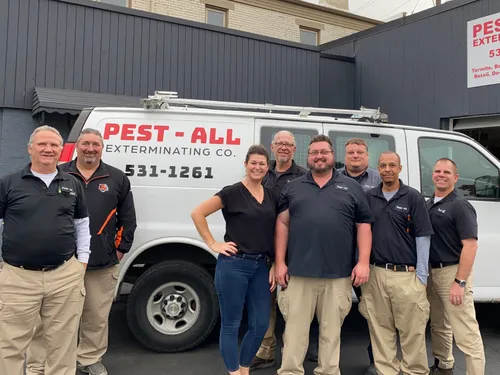
Pest All Exterminating
5005 Montgomery Rd, Cincinnati, OH 45212
Pest All Exterminating is a family-run pest control company serving Cincinnati, OH, and the surrounding Tri-State area including Norwood and Northern Kentucky. Established in 1968, they offer pest control services for homes and businesses without requiring long-term contracts. Their services cover a wide range of pests such as bed bugs, termites, ants, rodents, mosquitoes, and stinging insects. They use Integrated Pest Management techniques with EPA-registered products designed to be safe for families and pets. Pest All Exterminating also provides commercial pest control tailored to industry standards, including discreet after-hours service to minimize disruption.
Ohio Licensing and Regulatory Requirements
Any business providing commercial pest control services in Ohio must be properly licensed by the Ohio Department of Agriculture (ODA). This is not a suggestion but a legal requirement designed to ensure applicators are trained in the safe and effective use of pesticides. A company must hold a valid ODA Pesticide Business License, and each service location must operate under the supervision of a licensed commercial applicator1. Proof of liability insurance is also a mandatory condition for licensure.
Documentation is a cornerstone of compliance. Licensed professionals are required to maintain detailed records of all pesticide applications and inspections2. This paperwork is crucial for passing health department audits, fulfilling lease obligations, and demonstrating due diligence. For specific services like real estate transactions, a Commercial Applicator license in Category 12 is required to conduct official Wood Destroying Insect (WDI) inspections and complete the standardized NPMA-33 form 3.
Common Commercial Pests in Ohio
Ohio businesses face a wide array of pest threats that vary by industry and location. Understanding these common invaders is the first step in developing an effective defense.
- Insects: Cockroaches, ants, flies, and stored product pests are pervasive in facilities with food. Bed bugs are a critical concern for hospitality, healthcare, and multi-unit housing. Termites and other wood-destroying insects pose a silent but severe structural threat4.
- Rodents: Mice and rats seek shelter, food, and water in commercial settings, gnawing on wires, contaminating inventory, and spreading disease5.
- Birds and Wildlife: Pigeons, sparrows, and other birds can roost on structures, creating unsanitary conditions and clogging ventilation. Occasionally, wildlife like raccoons or squirrels may invade attics or dumpsters6.
The Integrated Pest Management (IPM) Process
Modern commercial pest control in Ohio is built on the Integrated Pest Management (IPM) framework. This proactive, multi-step process prioritizes prevention and uses chemical treatments as a last resort, aligning with best practices for safety and sustainability.
- Inspection: A licensed professional conducts a thorough survey of your facility, inside and out. They identify active pests, locate potential entry points, assess sanitation practices, and pinpoint structural vulnerabilities that could attract or harbor pests.
- Customized Plan Development: Based on the inspection findings, the provider develops a tailored IPM plan. This plan outlines a hierarchy of actions, starting with preventive measures like improving sanitation, sealing cracks and crevices, and installing door sweeps, before considering any pesticide use7.
- Targeted Treatment: When necessary, treatment involves the precise application of EPA-approved products. This is complemented by the strategic placement of monitoring devices like insect traps and rodent stations to gauge pest activity levels.
- Ongoing Monitoring & Maintenance: The cornerstone of a service contract is regular scheduled visits. During these visits, the technician inspects the property, checks monitoring devices, documents findings, and makes adjustments to the plan as needed.
- Emergency Response: A reliable service includes protocols for addressing urgent pest issues that arise between scheduled visits, ensuring rapid resolution to protect your business8.
Find the perfect commercial pest control companies for your needs
Get personalized recommendations and expert advice
Understanding Service Contracts and Pricing
Commercial pest control is typically governed by a formal service contract. This agreement details the scope of work, service frequency, documentation to be provided, and the associated costs 9.
Service frequency is not one-size-fits-all; it is determined by your business type and pest pressure. A restaurant or food processing plant may require weekly or monthly service due to high-risk conditions, while an office building or retail store might be adequately served with monthly or quarterly visits.
Cost factors are multifaceted. Providers consider the square footage and layout of your facility, the type and severity of pest pressure, the frequency of required service visits, and your geographic location within Ohio10 11. General pest control contracts for common insects and rodents can range significantly, often from $100 to $300+ per service visit on a monthly or quarterly schedule12 10. It is important to note that treatments for specific, complex pests like termites or full-scale bed bug elimination are specialized services that incur substantially higher costs11.
The value of a contract lies in its structure: it ensures ongoing protection, helps maintain compliance with health codes, and provides the detailed, consistent records necessary for audits or property transfers13. When evaluating proposals, look beyond the bottom line to the specifics of the IPM plan, the qualifications of the technicians, and the clarity of the reporting you will receive.
Selecting a Provider for Your Ohio Business
Choosing the right pest management partner is a strategic decision. Start by verifying the company's ODA Pesticide Business License and insurance certificates. Ask about the experience level of their technicians and their specific training in IPM principles. Request references from other businesses in your industry. A reputable provider will be transparent, willing to conduct a detailed initial inspection at no obligation, and able to explain their proposed plan in clear, non-technical language. Their goal should be to become a part of your operational team, safeguarding your assets and reputation through proactive, professional pest management.
Frequently asked questions
Sources
Footnotes
-
Pesticide Businesses - Ohio Department of Agriculture - https://agri.ohio.gov/divisions/plant-health/pesticides/business/pesticide-business ↩
-
Commercial Pest Control Services in Columbus, Ohio - https://www.1stresponse.biz/services/commercial-pest-management/ ↩
-
Ohio Pest Control License & Certification (Updated in 2025) - https://www.fieldroutes.com/blog/ohio-pest-control-license ↩
-
Commercial Applicator - Ohio Department of Agriculture - https://agri.ohio.gov/wps/portal/gov/oda/divisions/plant-health/pesticides/commercial ↩
-
TP19-001; Pest Control for TPS - https://cintimha.com/wp-content/uploads/2019/12/SOL-TP19-001-Attachment-A-Scope-of-Work.pdf ↩
-
Pest Control in Ohio - Market Research Report (2015-2030) - https://www.ibisworld.com/united-states/industry/ohio/pest-control/35316/ ↩
-
Columbus Commercial Pest Control | TORCO™ - https://www.torcotermite.com/commercial-pest-control/ ↩
-
Pest Control Services for Asset Management - CMHA - https://cintimha.com/wp-content/uploads/2020/02/SOL-2020-8018-Package.pdf ↩
-
Pest Control Contracts: How to Make and Win Service Agreements - https://www.getjobber.com/academy/pest-control/pest-control-contracts/ ↩
-
How To Establish Pest Control Prices: A Guide For Businesses - https://www.fieldroutes.com/blog/how-to-establish-pest-control-prices-a-guide-for-businesses ↩ ↩2
-
How To Price Commercial Pest Control - https://arizonapestsolutions.com/how-to-price-commercial-pest-control-arizona-pest-solutions/ ↩ ↩2
-
Cincinnati Facility Maintenance: Pest Control Contract ... - Shyft - https://www.myshyft.com/blog/commercial-pest-control-service-contracts-cincinnati-ohio/ ↩
-
The Commercial Property Manager's Guide to Pest Control ... - https://neusetermiteandpest.com/blog/the-commercial-property-managers-guide-to-pest-control-compliance ↩