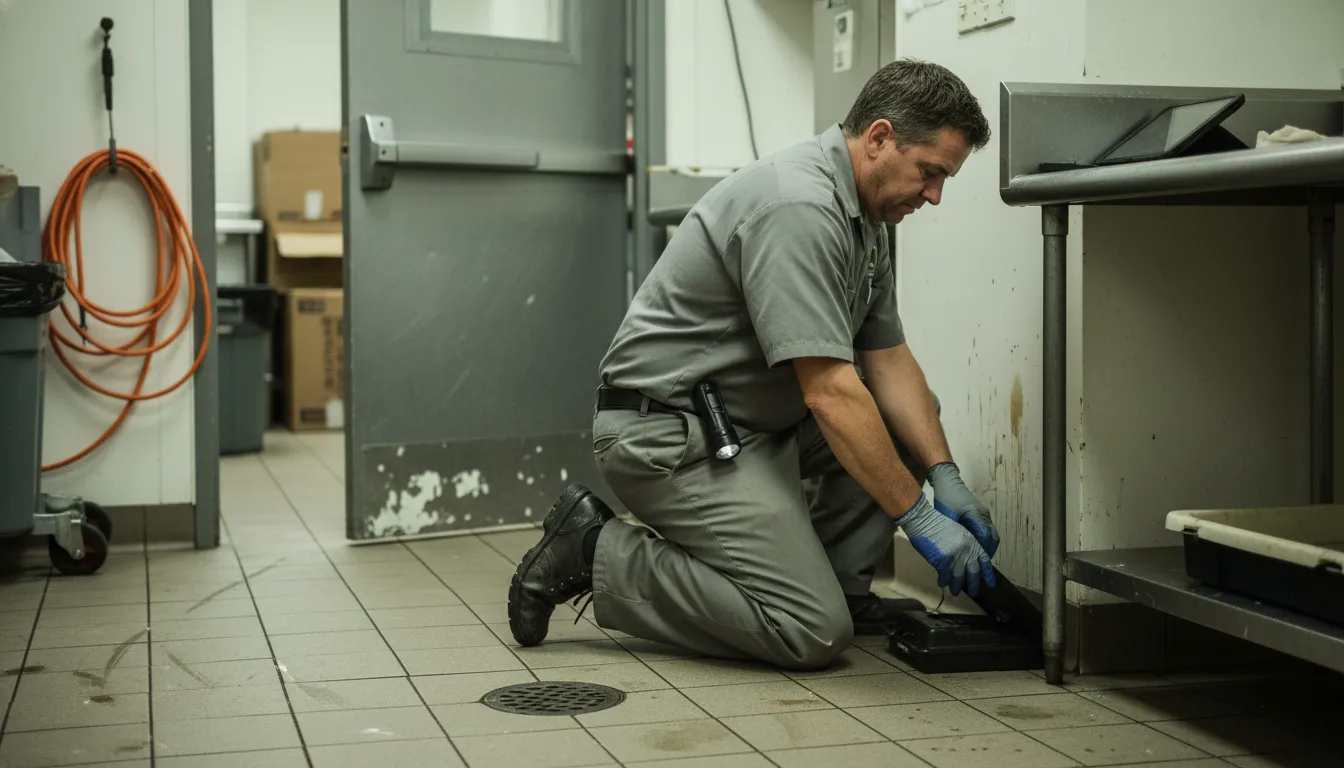
Find the Best Pest Control Companies for Your Business
No obligation • Fast responses • Nationwide coverage

Why you can trust Pest Crews
Pest Crews is a leading U.S. resource for finding and evaluating residential and commercial pest control services. Our team researches providers, reviews treatment approaches, and organizes unbiased information to help you make informed decisions. Companies cannot pay to change our editorial content or influence how they appear.
Search providers near you
Top Pest Control Companies in San Marcos, Texas Ranked
Managing pests is a year-round necessity for Texas homeowners and businesses due to the state's warm climate. Professional pest control services are essential for protecting property, health, and peace of mind from a wide array of common invaders. This guide explains the common pests in Texas, the methods professionals use, typical costs, and how to find a qualified local provider to address your specific pest problem.
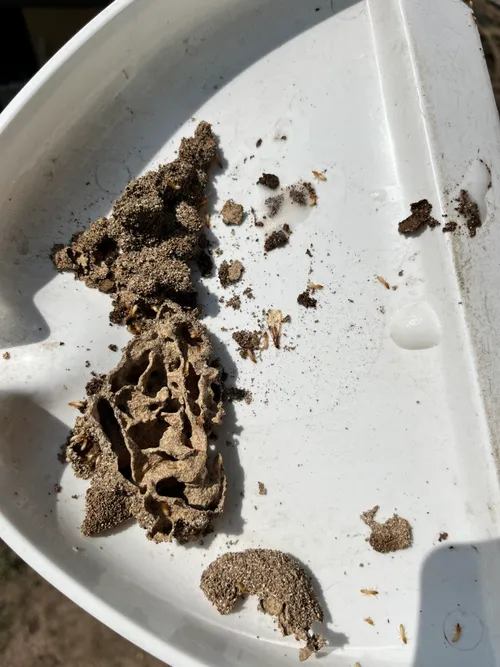
Deep Six Pest Control
1247 Watson Ln E, New Braunfels, TX 78130
Deep Six Pest Control is a family-owned pest control company serving San Antonio, TX, and surrounding areas including New Braunfels, San Marcos, and Austin. With over 20 years of experience, they offer a wide range of pest management services such as termite inspections, mosquito treatments, rodent and wildlife removal, and control of ants, bed bugs, roaches, spiders, bees, and more. They provide commercial and residential pest control solutions and specialize in termite prevention and wood-destroying insect (WDI) reports. Deep Six Pest Control often offers same-day service to address urgent pest issues promptly.
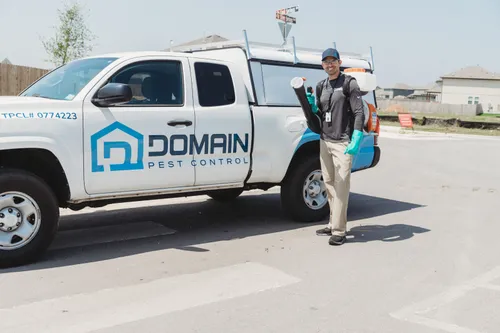
Domain Pest Control
245 Silver Springs Bend, Kyle, TX 78640
Domain Pest Control is a locally owned pest control company serving Austin, TX, specializing in eco-friendly pest management for homes and businesses. They focus on safe, family- and pet-friendly treatments that effectively prevent and eliminate infestations while keeping customers informed about the products used. Domain Pest Control offers proactive pest control services with a commitment to re-evaluating progress and applying advanced techniques to protect residential and commercial properties.
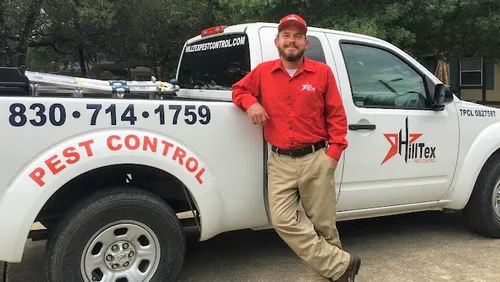
HillTex Pest Control
San Antonio, TX
HillTex Pest Control is a pest control company based in San Antonio, TX. They provide pest extermination services using high-grade products to ensure effective coverage. The company focuses on improving both their customers' lives and the local community through their service approach.
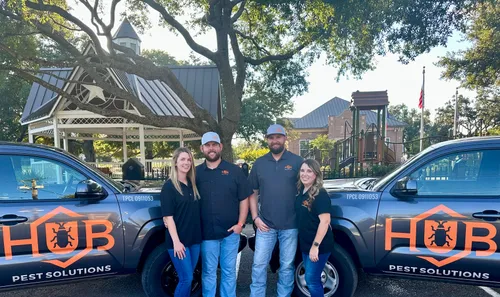
HUB Pest Solutions
2090 I 35 N Frontage Rd #5116, New Braunfels, TX 78130
HUB Pest Solutions is a family-owned pest control company serving San Antonio, TX, with over 31 years of combined experience. They provide pest management services for residential and commercial properties, addressing a wide range of pests including ants, cockroaches, rodents, termites, mosquitoes, and wildlife. The company emphasizes thorough inspections and customized treatment plans to eliminate pests effectively and prevent their return. Their licensed and insured technicians use environmentally responsible methods and follow state guidelines to ensure safety for families and pets.
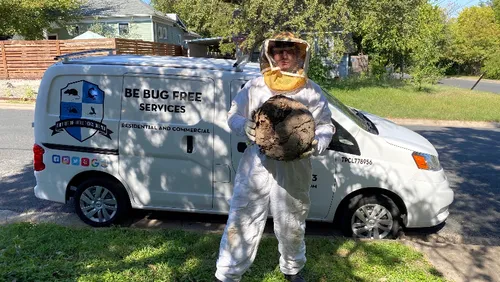
Be Bug Free Services- South Austin
4515 Menchaca Rd #105, Austin, TX 78745
Be Bug Free Services- South Austin offers pest control solutions in Austin, TX, and surrounding areas. They handle a variety of pests including bed bugs, cockroaches, ants, rodents, termites, and unwanted wildlife for both residential and commercial properties. Their certified technicians use advanced, safe methods suitable for homes and businesses. The company provides termite inspections and pest management services with written guarantees and green pest control options. Emergency on-call services are also available.
Common Pests in Texas
Texas is home to a diverse and persistent lineup of pests that can invade homes and businesses. Understanding what you're up against is the first step toward effective control.
Insects:
- Ants: Fire ants and carpenter ants are particularly problematic, with fire ants posing a stinging threat and carpenter ants causing structural damage.
- Cockroaches: American and German cockroaches thrive in warm, humid environments, spreading bacteria and triggering allergies 1.
- Spiders: Venomous species like black widows and brown recluses require careful professional handling.
- Mosquitoes: More than a nuisance, mosquitoes can transmit diseases and are prevalent, especially after rains 2.
- Fleas & Ticks: These parasites affect both pets and humans, with ticks posing serious health risks like Lyme disease.
- Stinging Insects: Wasps, bees, and yellow jackets can build nests in eaves, attics, and the ground, creating hazardous situations.
- Termites: Eastern subterranean and Formosan termites cause billions in property damage annually, often hidden from view until it's severe.
Rodents & Wildlife:
- Rats and Mice: Norway and roof rats, along with house mice, seek shelter indoors, contaminating food and gnawing on wires 3.
- Raccoons & Squirrels: These wildlife pests can invade attics, damage insulation, and create entry points for other animals.
- Armadillos: Known for their destructive digging in lawns and gardens while searching for insects 4.
Professional Pest Control Methods
Licensed Texas pest control companies employ an Integrated Pest Management (IPM) approach. This strategy prioritizes long-term prevention and uses a combination of techniques to manage pests effectively with minimal risk to people and the environment.
- Inspection and Monitoring: A thorough inspection is the cornerstone of any effective plan. Professionals identify the pest type, locate nesting areas, assess the infestation level, and find entry points 5.
- Exclusion: This involves sealing the cracks, crevices, and gaps in your home's exterior-around pipes, windows, doors, and foundations-with materials like caulk, steel wool, or mesh screening to prevent pests from entering in the first place 6.
- Sanitation Recommendations: Professionals advise on eliminating attractants, such as proper food storage, regular garbage removal, clearing yard debris, and eliminating standing water that breeds mosquitoes 7.
- Physical and Mechanical Control: This includes the use of traps for rodents, bait stations for insects, and the physical removal of nests (e.g., wasp or hornet nests).
- Targeted Chemical Treatments: When necessary, professionals apply EPA-registered pesticides in a targeted manner. This may include liquid barrier sprays, insecticidal baits and gels, or granular treatments in specific areas 8.
- Specialized Treatments: For severe infestations of resilient pests like bed bugs or drywood termites, companies may use whole-structure fumigation (tenting) or specialized heat treatments that penetrate walls and furniture 9.
Find the perfect pest control companies for your needs
Get personalized recommendations and expert advice
Understanding Seasonal Pest Patterns
Pest activity in Texas shifts with the seasons, making a proactive, seasonal approach to pest management crucial 10.
- Spring: Warming temperatures and spring rains trigger increased activity. Ants become more visible, termites begin their swarming flights (a key sign of nearby colonies), and mosquito populations start to rise 11 12.
- Summer: This is peak season for many pests. Cockroaches, flies, and mosquitoes thrive in the heat. Stinging insects like wasps and yellow jackets are highly active, and fire ant mounds proliferate.
- Fall: As outdoor temperatures begin to drop, rodents like mice and rats start seeking warm shelter indoors. You may also see occasional invaders like stink bugs looking for overwintering sites 13.
- Winter: While some pests become less active, many remain a problem indoors. Cockroaches, spiders, and rodents that have already entered a structure remain active in attics, basements, and wall voids, seeking food and warmth 14 15.
Pest Control Costs in Texas
The cost of pest management services in Texas varies significantly based on the type of pest, the size and severity of the infestation, the size of your property, and the frequency of service 16. Ongoing maintenance plans are generally the most cost-effective solution for long-term prevention 17.
Here is a general overview of typical cost ranges:
| Service Type | Typical Cost Range | Notes |
|---|---|---|
| One-time Treatment | $99 - $550+ | For a single, specific pest problem. Price depends on pest type and infestation severity. |
| Monthly Service | $40 - $75 per visit | Common for ongoing general pest maintenance. |
| Quarterly Service | $100 - $300 per visit | A popular option for preventative care, with visits every 3 months. |
| Annual Plan | $300 - $900 per year | Often includes multiple scheduled visits and coverage for common pests. |
| Specialty Pests | Varies Widely | Termite treatment: $800 - $8,000+ 18. Bed bug treatment: $1,000 - $4,000+ 18. |
For commercial properties, pricing structures differ. Many businesses opt for monthly maintenance plans, with costs typically ranging from $50 to $200 per month, depending on the size and type of facility 19.
Choosing a Service Provider
When looking for a pest control company in Texas, consider the following:
- Licensing & Insurance: Ensure the company is licensed by the Texas Department of Agriculture and carries proper liability insurance.
- Experience & Reputation: Look for established companies with positive reviews and experience dealing with your specific pest issue.
- Inspection & Plan: A reputable provider will always conduct a thorough inspection before recommending a treatment plan and providing a detailed quote.
- IPM Approach: Choose a company that emphasizes Integrated Pest Management strategies, focusing on prevention and targeted solutions.
- Guarantees: Ask about service guarantees and what they cover if pests return between treatments.
Frequently asked questions
Sources
Footnotes
-
Common Pest Identification Dallas, TX | Green Forest Services - https://www.greenforestservices.com/pest-library/ ↩
-
Common Bugs in Texas - BRD Pest Solutions - https://brdpestsolutions.com/bugs-in-texas-what-you-need-to-know-about-the-states-most-common-pests/ ↩
-
How Much Does Pest Control Cost in Dallas, TX? | Angi - https://www.angi.com/articles/how-much-does-pest-control-service-cost/tx/dallas ↩
-
Top 10 Common Pests in Texas & Preventative Measures - https://killum.com/top-10-common-pests-in-texas-preventative-measures/ ↩
-
Texas Pest Control Guide: Identifying & Eliminating Infestations - https://killum.com/texas-pest-control-guide-identifying-eliminating-infestations/ ↩
-
Effortless Pest Control: Top Tips for Fort Worth, TX! - Rodent Retreat - https://www.rodentretreattexas.com/blog/easy-pest-control-fort-worth-tx-tips-for-success ↩
-
Texas Pest Prevention Guide: A Complete Approach - https://www.rodentretreattexas.com/blog/a-comprehensive-approach-to-pest-prevention-in-texas ↩
-
Top 5 Methods of Pest Control | Fieldwork - https://fieldworkhq.com/2025/11/18/5-methods-of-pest-control/ ↩
-
Top pest control strategies to protect your Texas home - https://cdapress.com/news/2025/sep/20/top-pest-control-strategies-to-protect-your-texas-home/ ↩
-
Understanding Seasonal Pest Patterns in Texas - https://killum.com/understanding-seasonal-pest-patterns-in-texas/ ↩
-
Texas Weather's Effect on Pests: What to Do - https://killum.com/texas-weathers-effect-on-pests-what-to-do/ ↩
-
Termite Season in Texas: Protecting Your Home's Foundation - https://www.bugworksrgv.com/blog/2024/may/termite-season-in-texas-protecting-your-homes-fo/ ↩
-
Seasonal Pest Control in Texas: Stay Prepared & Pest-Free Year- ... - https://killum.com/seasonal-pest-control-in-texas-stay-prepared-pest-free-year-round/ ↩
-
Seasonal Pest Prevention in Texas Homes - https://killum.com/seasonal-pest-prevention-in-texas-homes/ ↩
-
Winter Pest Problems in Texas: All You Need to Know - 855Bugs - https://855bugs.com/winter-pest-problems-in-texas-all-you-need-to-know/ ↩
-
Pest Control Cost | Angi - https://www.angi.com/articles/how-much-does-pest-control-service-cost.htm ↩
-
What is the Average Cost of Pest Control in Texas 2025? - https://claritypest.com/what-is-the-average-cost-of-pest-control-in-texas-2025/ ↩
-
What is the Average Cost of Pest Control in Texas 2025? - https://claritypest.com/what-is-the-average-cost-of-pest-control-in-texas-2025/ ↩ ↩2
-
Commercial Pest Control Cost in Plano, TX - https://preferredpestmanagement.org/pest-control-plano-tx/how-much-does-commercial-pest-control-cost-in-plano-tx/ ↩