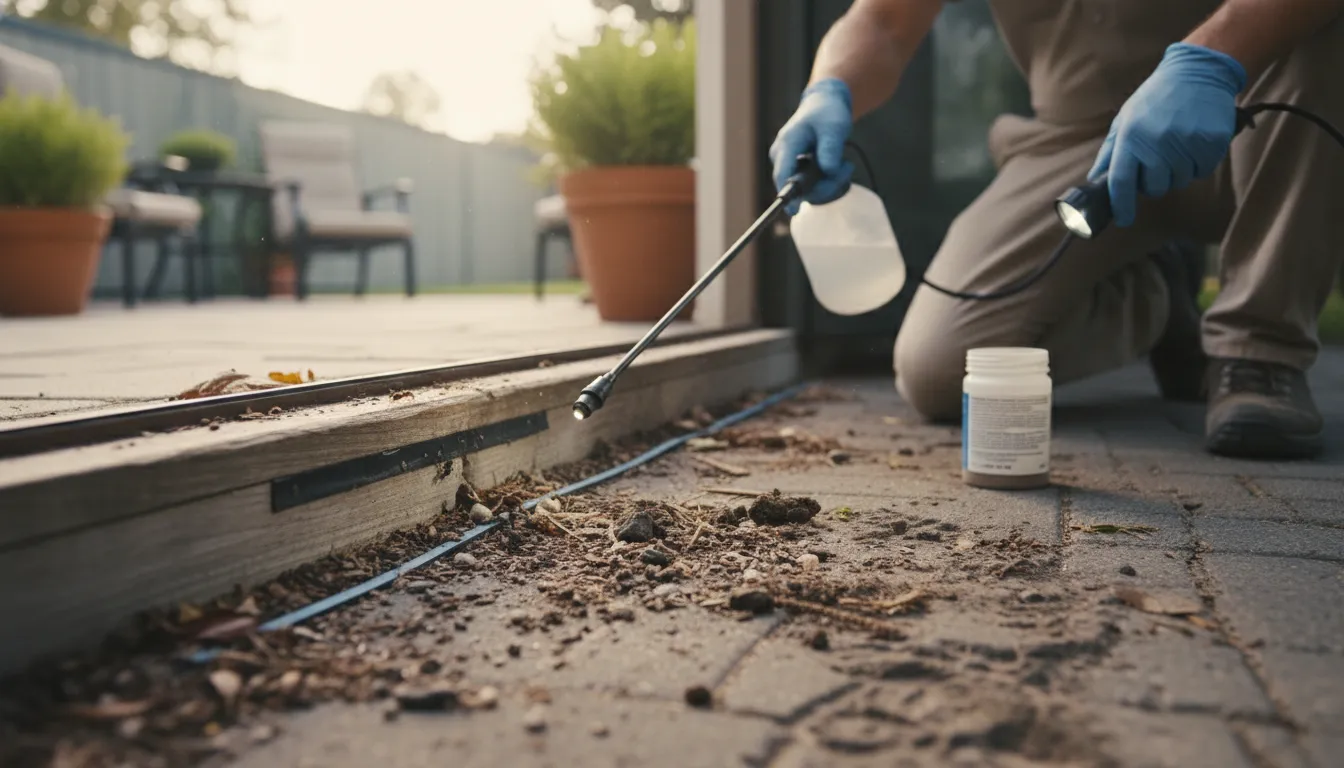
Find the Best Ant Control Companies for Your Business
No obligation • Fast responses • Nationwide coverage

Why you can trust Pest Crews
Pest Crews is a leading U.S. resource for finding and evaluating residential and commercial pest control services. Our team researches providers, reviews treatment approaches, and organizes unbiased information to help you make informed decisions. Companies cannot pay to change our editorial content or influence how they appear.
Search providers near you
Best Ant Control Companies in Arkansas Ranked
Managing ant invasions is a common challenge for Arkansas homeowners. These persistent pests can contaminate food, damage property, and become a significant nuisance. Effective ant management requires understanding the specific species in your home, their behavior, and the most reliable methods for elimination and prevention. This guide provides practical information to help you identify common Arkansas ants, implement control strategies, and know when to seek professional assistance for a lasting solution.

ClearDefense Pest Control
1015 W 2nd St Suite 105 Suite 105, Little Rock, AR 72201
ClearDefense Pest Control provides environmentally responsible pest control services in Little Rock, AR, and surrounding cities. They specialize in controlling cockroaches, ants, rodents, bees, wasps, and other pests using a micro-crystallized formula that releases treatment slowly for ongoing effectiveness. Their approach includes targeted applications based on pest behavior and lifecycle, creating barriers around homes to prevent pest entry. ClearDefense offers seasonal treatments to address pest activity year-round and removes webs and nests as part of their service. They serve multiple nearby communities including Alexander, Benton, and North Little Rock.

Curry's Termite, Pest & Animal Control
202 Bishop St, Little Rock, AR 72201
Curry's Termite, Pest & Animal Control is a family-owned exterminating company based in Little Rock, AR. Serving Arkansas since 1926, it is the state's oldest exterminating company, specializing in termite control, pest management, and wildlife removal. The company uses the latest termite control techniques and offers services for common household pests including ants, roaches, spiders, scorpions, and bed bugs. Curry's serves the Central Arkansas area, including Benton and Conway, with a focus on protecting homes from pests and wildlife.

Terminix
1320 Brookwood Dr Suite H & I, Little Rock, AR 72202
Terminix provides pest control services in Little Rock, AR, addressing common local pests such as ants, cockroaches, rodents, termites, and bed bugs. Their team offers interior and exterior inspections, regular treatments, and termite protection systems to help prevent and manage infestations. Terminix is known for its termite control capability, including a termite protection system and a guarantee covering termite damage repairs. The company serves a wide area around Little Rock and is supported by a nationwide network of pest control expertise.
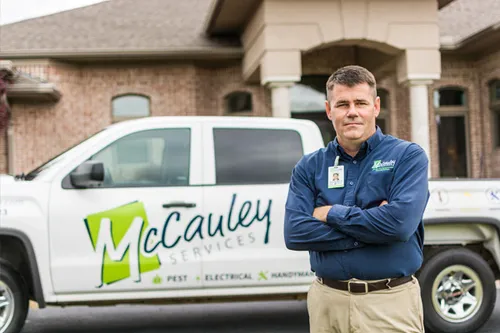
McCauley Services
23650 I-30 Frontage Rd, Bryant, AR 72022
McCauley Services is a family-owned pest control company serving Little Rock, AR, and surrounding areas. Since 1983, they have provided residential and commercial pest management solutions, addressing a wide range of pests including termites, ants, bed bugs, rodents, mosquitoes, and wildlife. Their QualityPro-certified team offers year-round protection with specialized treatments such as termite perimeter defense and mosquito control. McCauley Services emphasizes extensive training and community involvement to ensure careful and effective pest management.

Terminix
7016 Alcoa Rd, Benton, AR 72015
Terminix provides comprehensive pest control services in Little Rock, AR, and the surrounding areas. Their offerings include treatment and prevention for bed bugs, cockroaches, ants, rodents, termites, mosquitoes, and wildlife removal. The company emphasizes both interior and exterior inspections and treatments to address pest problems at all entry points and hiding spots. Terminix also offers specialized termite control with annual inspections and a termite protection system designed to prevent costly damage. With over 30 years of service in the Benton area, Terminix combines local knowledge with a nationwide network of expertise to manage seasonal pest challenges effectively.
Common Ant Species in Arkansas
Different ant species require different control approaches. Correct identification is the first step toward effective management. The most frequent invaders in Arkansas homes include:
- Odorous House Ants: Named for the rotten coconut smell they emit when crushed, these small, dark brown to black ants are a major indoor nuisance. They are strongly attracted to sweets and will form long, trailing lines to food sources in kitchens and pantries. They often nest in wall voids, under floors, or near moisture sources.
- Pharaoh Ants: These tiny, light yellow to red ants are a particular concern because they can spread bacteria and are notoriously difficult to eradicate. They prefer warm, humid areas and often nest in hard-to-reach places like wall voids, behind baseboards, and under appliances. Do-it-yourself sprays can cause colonies to "bud" or split, making the infestation worse.
- Carpenter Ants: Larger than most household ants, carpenter ants are black or dark brown and can cause structural damage. Unlike termites, they do not eat wood but excavate it to create smooth tunnels and nests. Signs of an infestation include piles of coarse sawdust-like material (frass) near wood, rustling sounds inside walls, and sightings of large, winged "swarmer" ants indoors.
- Fire Ants: Primarily an outdoor pest, imported red fire ants build large, visible mounds in lawns, gardens, and fields. Their aggressive sting, which results in a painful, pus-filled welt, is a significant health concern for people and pets. They can also damage electrical equipment and agricultural seedlings.
Signs of an Ant Infestation
Knowing what to look for can help you catch an ant problem early. Key indicators include:
- Visible Trails: The most obvious sign is a steady line of ants traveling to and from a food source, often along baseboards, counter edges, or windowsills.
- Live Ants: Seeing ants, especially in areas like kitchens, bathrooms, pantries, or near pet food bowls.
- Nesting Evidence: For carpenter ants, look for frass (a fine wood dust) near wooden beams, window sills, or door frames. For other species, nests may be found in soil, under pavement, or in wall cavities.
- Hollow-Sounding Wood: Tapping on wood that sounds hollow can indicate carpenter ant galleries inside.
- Rustling Noises: In quiet settings, you may hear a faint rustling sound from within walls where carpenter ants are active.
Effective Ant Control Strategies: An Integrated Approach
The most successful and long-lasting ant control uses Integrated Pest Management (IPM). This method combines prevention, monitoring, and targeted treatments to solve the root of the problem, not just the visible symptoms. 1
1. Prevention: The First Line of Defense
Preventing ants from entering and thriving in your home is more effective than trying to eliminate an established colony.
- Eliminate Food Sources: Store food in airtight containers, clean up spills and crumbs immediately, and keep kitchen surfaces clean. Regularly take out the trash and use trash cans with tight-fitting lids.
- Seal Entry Points: Carefully inspect and seal cracks and gaps in your home's exterior, especially around windows, doors, utility lines, and foundation vents using caulk or other appropriate sealants.
- Manage Moisture: Fix leaky pipes, faucets, and appliances. Ensure downspouts direct water away from your foundation. Use dehumidifiers in damp basements or crawl spaces, as many ants are attracted to moisture.
- Landscape Maintenance: Trim tree branches and shrubs so they do not touch your house. Keep mulch, leaf litter, and firewood piles several feet away from the foundation. 2
2. Targeted Treatment Methods
When prevention isn't enough, targeted treatments are necessary. The choice of treatment depends heavily on the ant species.
- Baiting (For Odorous, Pharaoh, and Other Common Ants): This is often the most effective method for many household ants. Worker ants are attracted to sweet or protein-based bait gels or stations, which they carry back to the nest and share, eventually eliminating the entire colony, including the queen. Patience is key, as it can take several days to see results. Avoid using repellent sprays near baits, as this will disrupt the trail. 3
- Perimeter and Barrier Treatments: Applying granular or liquid insecticide treatments around the exterior foundation of your home creates a protective barrier that deters ants from crossing. This is a common component of professional service plans. 4
- Direct Nest Treatment (For Carpenter and Fire Ants): Carpenter ant control often requires locating and treating the parent nest, which may be in a moist, decaying wood source outdoors or within the structure. Fire ant mounds in yards can be treated with specific granular baits or insecticidal drenches. The "Two-Step Method"-broadcast bait followed by individual mound treatment-is a recommended approach for fire ants. 5
Find the perfect ant control companies for your needs
Get personalized recommendations and expert advice
When Are Ants Most Active in Arkansas?
Ant activity follows seasonal patterns, which can influence when you're most likely to see them and when control efforts are most critical.
- Spring: This is the peak season for ant activity. As temperatures warm, overwintering colonies become active, expand their nests, and send out scouts and swarmers (reproductive ants) to establish new colonies. Increased rainfall can also drive ants indoors seeking drier ground.
- Summer: Activity remains high. Ants continue foraging for food and water. Hot, dry periods can force them indoors in search of moisture. 6
- Fall & Winter: Outdoor ant activity slows significantly as temperatures drop. However, species like Pharaoh ants and Odorous house ants, which often nest indoors, can remain active year-round in the climate-controlled environment of a home. 7
Understanding Professional Ant Control Services
For persistent, large-scale, or difficult-to-identify infestations (like carpenter ants or Pharaoh ants), hiring a professional is often the wisest course of action. Professionals have the training, experience, and tools to correctly identify the species, locate nests, and apply the most effective treatments safely.
- What to Expect: A thorough inspection of your property, inside and out, to identify the ant species, locate trails and nests, and find conducive conditions. The professional will then recommend a customized treatment plan based on IPM principles.
- Service Options: Many companies offer one-time treatments for active infestations as well as ongoing maintenance plans. These plans typically include periodic inspections and preventative treatments to keep ants and other pests from returning.
- Cost Considerations: Pricing can vary based on the severity of the infestation, the square footage of your home, the ant species involved, and the type of service plan. In Arkansas, an initial inspection and treatment for a standard infestation may range from $150 to $300 or more. Treatments for carpenter ants, due to the potential for structural damage and the difficulty of locating nests, are often higher. Ongoing quarterly or monthly maintenance visits may range from $40 to $80+ per visit. 8 9 10
Frequently asked questions
Sources
Footnotes
-
Ant Infestation: How to Detect and What to Do? - https://www.onemanandaladybug.ca/ant-infestation/ ↩
-
Understanding the Different Types of Ants in Arkansas Homes - https://hopperenvironmentalservices.com/different-types-of-ants-in-arkansas/ ↩
-
How to Get Rid of Pharaoh Ants | Ant Control - Orkin - https://www.orkin.com/pests/ants/pharaoh-ants/pharaoh-ant-infestation ↩
-
Ants | Central Termite and Pest in Arkansas - https://centraltermite.net/services/ants-2/ ↩
-
Long-Lasting Fire Ant Control with the Two-Step Method - GardenTech - https://www.gardentech.com/blog/pest-id-and-prevention/fight-off-invading-fire-ants-in-two-simple-steps ↩
-
Why Are There So Many Ants in 2025? - Merlin Environmental - https://merlinenvironmental.co.uk/blog/pests/ants/why-are-there-so-many-ants-in-2024/ ↩
-
What Month Are Ants the Worst in Knoxville? - Critter Wranglers - https://critterwranglerstn.com/ants/what-month-are-ants-the-worst-in-knoxville/ ↩
-
Ant Season in Arkansas: Identifying and Eliminating Common ... - https://westtermite.com/ant-season-in-arkansas/ ↩
-
Carpenter Ants - Arkansas Cooperative Extension Service - https://www.uaex.uada.edu/publications/pdf/FSA-7013.pdf ↩
-
How to Get Rid of Ants in Your House: Quickly & Permanently - Terminix - https://www.terminix.com/ant-control/how-to-get-rid-of-ants-in-the-house/ ↩