Find the Best Ant Control Companies for Your Business
No obligation • Fast responses • Nationwide coverage

Why you can trust Pest Crews
Pest Crews is a leading U.S. resource for finding and evaluating residential and commercial pest control services. Our team researches providers, reviews treatment approaches, and organizes unbiased information to help you make informed decisions. Companies cannot pay to change our editorial content or influence how they appear.
Search providers near you
Best Ant Control Companies in Delaware Ranked
Ants are a common nuisance for Delaware homeowners, but they can also pose serious risks, from contaminating food to causing structural damage. Effective ant management is about more than just killing the ants you see; it involves identifying the species, understanding their behavior, and implementing targeted, long-term solutions. This guide provides practical information on Delaware's common ant species, signs of infestation, and proven treatment strategies to help you protect your home.
Common Ant Species in Delaware
Knowing which type of ant you're dealing with is the first step toward effective control. Different species have unique nesting habits, food preferences, and behaviors that dictate the best approach for elimination.
- Odorous House Ants: These small, black ants are among the most common indoor pests in Delaware. When crushed, they emit a distinct odor reminiscent of rotten coconut. They nest both indoors in wall voids and outdoors under mulch or debris, making them particularly difficult to eradicate without professional intervention.
- Carpenter Ants: Larger than most household ants, carpenter ants are a significant concern because they excavate wood to create nesting galleries. They don't eat wood but can cause considerable structural damage over time. In Delaware, they are often found near sources of moisture, such as leaky windows, roofs, or pipes.
- Pavement Ants: As their name suggests, these small ants typically nest in cracks in pavement, sidewalks, and foundations. They enter homes in search of food, particularly sweets and proteins, and are often seen trailing along baseboards 1.
- Pharaoh Ants: These tiny, yellow-to-light-brown ants are a major problem in multi-unit buildings and hospitals. They prefer warm, humid areas and have multiple queens within a single colony, which allows infestations to rebound quickly if not treated correctly with specific baits 2.
Signs of an Ant Infestation
Catching an ant problem early can prevent a small issue from becoming a full-blown infestation. Look for these telltale signs:
- Live Ants: The most obvious sign, especially if you see them in areas where food is stored or prepared. Seeing large ants with wings indoors in spring can indicate a carpenter ant swarm.
- Scout Ants and Trails: A single "scout" ant is often the precursor to an invasion. Once it finds a food source, it leaves a pheromone trail for other workers to follow, leading to the visible lines of ants you commonly see.
- Frass: Carpenter ants push out sawdust-like material (called frass) from their nesting sites. Finding small piles of this material near baseboards, window sills, or in crawl spaces is a key indicator of their activity 3.
- Nesting Sites: Outdoors, look for small piles of soil or sand (pavement ant mounds), or areas of disturbed soil. Indoors, listen for faint rustling sounds inside walls where carpenter ants may be nesting.
Effective Treatment and Prevention Strategies
A successful ant control plan uses a combination of exclusion, sanitation, and targeted treatment. The goal is not just to eliminate the current ants but to prevent future colonies from taking hold.
Do-It-Yourself Prevention Tips
- Sanitation is Key: Wipe up spills immediately, store food in airtight containers, and manage garbage regularly. Don't leave pet food out overnight.
- Eliminate Moisture: Fix leaky faucets, ensure downspouts direct water away from your foundation, and use dehumidifiers in damp basements or crawl spaces. Many ants, including carpenter ants, are attracted to moisture.
- Seal Entry Points: Carefully inspect the exterior of your home. Use caulk to seal cracks in the foundation, around windows, and where utility pipes enter. Repair damaged door sweeps and window screens.
Treatment Methods
- Ant Baits: For many common species like odorous house ants, baits can be highly effective. Worker ants carry the bait (which contains a slow-acting insecticide) back to the colony, eventually eliminating the queen and the nest. It's crucial to use the correct bait formulation (sugar-based vs. protein/grease-based) for the target species.
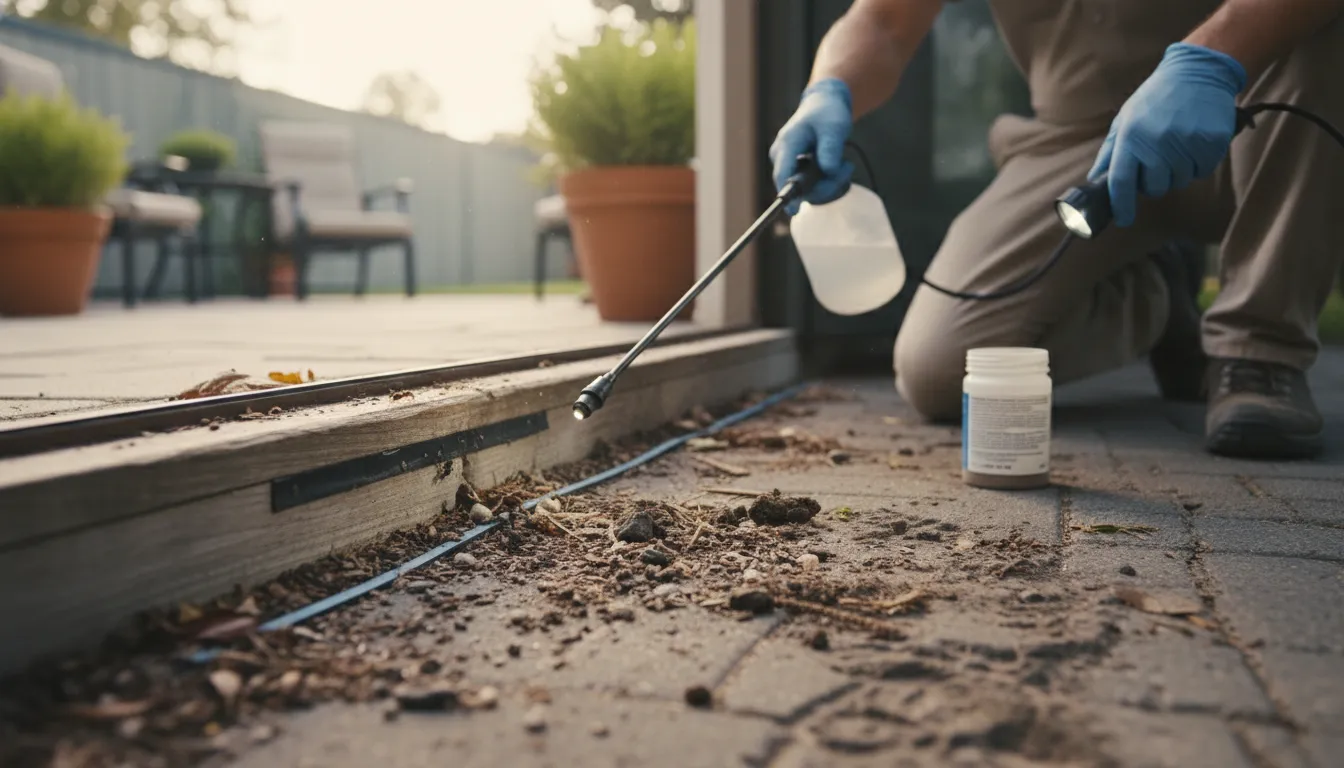
- Barrier Treatments: Applying a residual insecticide around the perimeter of your home can create a protective barrier that kills ants as they try to enter. This is often part of a professional service plan 4.
- Direct Nest Treatment: For outdoor nests like those of pavement ants, targeted treatments can be applied directly to the mound. However, this is less effective for species with multiple or hidden nesting sites 5.
Find the perfect ant control companies for your needs
Get personalized recommendations and expert advice
When to Call a Professional
While DIY methods can work for minor, isolated problems, professional help is often necessary for persistent or large-scale infestations. This is especially true for:
- Carpenter Ants: Due to their potential for structural damage, accurate identification and treatment are critical.
- Odorous House Ants and Pharaoh Ants: These species have multiple nesting sites and satellites, making complete eradication with store-bought products very challenging 6 7.
- Recurring Infestations: If ants keep coming back despite your best efforts, a professional can diagnose the root cause.
Professionals utilize Integrated Pest Management (IPM), a comprehensive approach that focuses on inspection, identification, and a combination of methods for long-term prevention rather than just reactive spraying 8. They have access to commercial-grade baits and insecticides not available to the public and can locate and treat hidden nests.
Seasonal Ant Activity in Delaware
Ant activity in Delaware follows a seasonal pattern, which can inform your prevention schedule.
- Spring: This is peak activity season. As temperatures warm, overwintering ants become active and emerge to forage for food and water. Swarms of reproductive carpenter ants may also be seen during this time 9.
- Summer: Foraging continues actively. Moisture from summer storms can also drive ants indoors seeking drier conditions.
- Fall: Ants intensify their foraging to build up resources for the winter. You may notice increased indoor activity as they seek shelter from cooler temperatures.
- Winter: Most ant activity slows down or goes dormant outdoors. However, if ants have already established a nest inside a heated structure, they can remain active year-round.
Understanding Ant Control Pricing
The cost for ant control in Delaware varies based on the severity of the infestation, the size of your property, and the species involved. General estimates include:
- An initial service visit for a standard infestation typically ranges from $150 to $300+ 10 11.
- Ongoing preventive services (monthly or quarterly) can range from $50 to $100+ per visit.
- Treatments for carpenter ants or widespread infestations involving multiple species often cost more due to the increased inspection time and materials required.
Most reputable providers will offer a free inspection and quote. Be wary of companies that quote a price over the phone without seeing the property.
Pro Tips for Delaware Homeowners
- Don't Squish Scout Ants: While tempting, crushing ants-especially scout ants-can release alarm pheromones that may prompt the colony to scatter and create multiple new nesting sites, worsening the problem 12.
- Follow the Trail: If you see a line of ants, don't just wipe them away. Observe where they are coming from and going to. This can help identify entry points and potential nesting areas.
- Be Patient with Baits: When using bait stations, you may initially see more ants. This is a sign it's working, as they are recruiting others to the food source. Avoid spraying ants near the bait, as this will break the trail and prevent the bait from reaching the colony.
Frequently asked questions
Sources
Footnotes
-
How To Manage the Three Most Common Ant Species - https://www.controlsolutionsinc.com/csi-pest/blog/how-to-manage-the-three-most-common-ant-species ↩
-
Most Common Ant Species Town & Country Pest Solutions | Pest ... - https://townandcountrysolutions.com/most-common-ant-species/ ↩
-
Signs of an Ant Infestation & Control Methods | Ehrlich Pest Control - https://www.jcehrlich.com/pest-insights/ants/infestation ↩
-
The Best Way To Get Rid Of Ants In Delaware County - https://www.madexterminators.com/blog/2021/may/the-best-way-to-get-rid-of-ants-in-delaware-county/ ↩
-
Best Ways to Destroy Ant Hills: Expert Guide - Solutions Pest & Lawn - https://www.solutionsstores.com/top-8-best-ways-to-destroy-an-ant-hill ↩
-
Ant Types In And Around Delaware - Integrity Pest Solutions - https://www.integrity-pestsolutions.com/ants-located-in-delaware ↩
-
Guide to Common Ant Species - On The Fly Pest Solutions - https://ontheflypestsolutions.com/a-guide-to-common-ant-species/ ↩
-
Your Guide to Common Ant Species - Town & Country Pest Solutions - https://townandcountrysolutions.com/your-guide-to-common-ant-species/ ↩
-
What Month Are Ants the Worst in Knoxville? - Critter Wranglers - https://critterwranglerstn.com/ants/what-month-are-ants-the-worst-in-knoxville/ ↩
-
Delaware Ant Control Solutions - https://www.vikingpest.com/pest-control/ants/delaware-ant-control/ ↩
-
How to Get Rid of Ants in Your House: Quickly & Permanently - Terminix - https://www.terminix.com/ant-control/how-to-get-rid-of-ants-in-the-house/ ↩
-
Why Squishing Ants Can Make Your Infestation Worse - https://dustinpestcontrol.com/why-squishing-ants-can-make-your-infestation-worse/ ↩