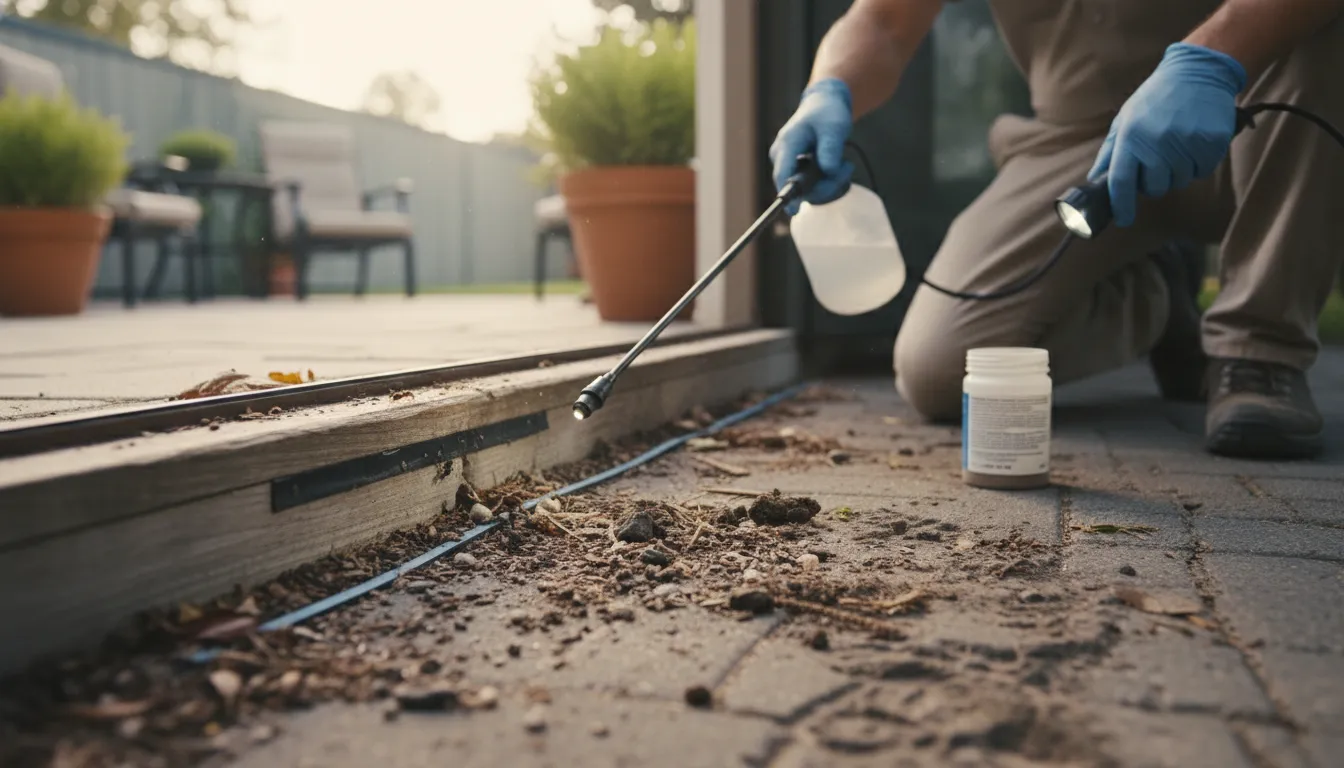
Find the Best Ant Control Companies for Your Business
No obligation • Fast responses • Nationwide coverage
Why you can trust Pest Crews
Pest Crews is a leading U.S. resource for finding and evaluating residential and commercial pest control services. Our team researches providers, reviews treatment approaches, and organizes unbiased information to help you make informed decisions. Companies cannot pay to change our editorial content or influence how they appear.
Search providers near you
Best Ant Control Companies in Illinois Ranked
Ant invasions are a common and persistent challenge for Illinois homeowners and businesses. These tiny pests can contaminate food, damage property, and become a significant nuisance. Effective ant management requires understanding the specific species involved, their seasonal patterns, and implementing a strategic combination of prevention and targeted treatment. This guide provides a detailed overview of identifying, preventing, and controlling ant infestations in Illinois, helping you find the right local expertise for your situation.

Eco Tech Pest Control
6271 W Howard St, Niles, IL 60714
Eco Tech Pest Control is a locally-owned, family-operated pest control company serving Chicago, IL, and the surrounding Chicagoland area. They specialize in controlling common household pests such as bed bugs, cockroaches, ants, and rodents, using environmentally responsible methods. Their approach includes Integrated Pest Management (IPM), which emphasizes prevention through exclusion and monitoring to reduce pest recurrence. Eco Tech focuses on eco-friendly pest control solutions that minimize harm to beneficial insects, wildlife, and the home environment while maintaining effective pest elimination.
Landmark Pest Management
Chicago, IL
Landmark Pest Management provides science-based, environmentally-friendly pest control services in Chicago, IL, and surrounding counties. They handle a wide range of pests including ants, wasps, mice, mosquitoes, bed bugs, and wildlife, using humane and green methods. Founded in 1976 by a wildlife biologist, the company combines expertise from biologists and epidemiologists to deliver effective pest exclusion and control. Landmark offers a Complete Home Care program with year-round protection and 24/7 monitoring to maintain pest-free homes.
Pest Arrest Pest Control
1901 S Cumberland Ave, Park Ridge, IL 60068
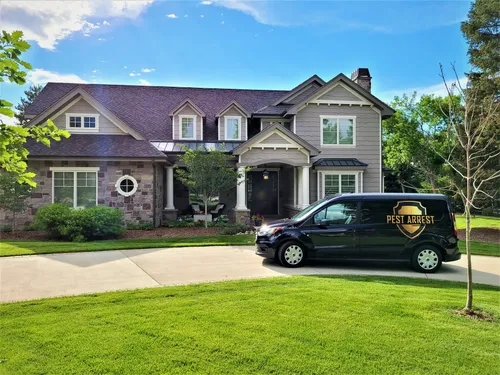
Pest Arrest Pest Control is a pest control company serving Chicago, IL, specializing in eco-friendly pest management for residential and commercial properties. They use the ARREST™ System, which applies Integrated Pest Management (IPM) practices to address and prevent a wide range of pests including ants, rodents, bees, wasps, and more. Their service includes thorough interior and exterior inspections to identify pest issues and potential entry points. Pest Arrest provides ongoing protection with follow-up visits as part of their system and offers a pest-free guarantee for added assurance.

Pest Arrest Pest Control
617 E Prairie Ave, Lombard, IL 60148
Pest Arrest Pest Control offers pest management services in Chicago, IL, specializing in eco-friendly solutions for both residential and commercial properties. Their ARREST™ System uses Integrated Pest Management practices to address a wide range of pests including rodents, ants, bees, wasps, and more. The service includes thorough interior and exterior inspections to identify pest issues and potential entry points, followed by a targeted treatment plan. Pest Arrest provides ongoing protection with follow-up visits as part of their system. Their approach emphasizes safety for families and pets while maintaining environmental responsibility.
Mom & Pop Pest Control Services, LLC
Chicago, IL
Mom & Pop Pest Control Services, LLC is a pest control company based in Chicago, IL, offering services for a wide range of pests including ants, roaches, bedbugs, rodents, wasps, and more. They provide both residential and commercial pest control solutions, serving restaurants, factories, offices, and apartment buildings with flexible service schedules. A notable capability is their rodent exclusion service, which includes sealing entry points and placing barriers to prevent rodents from entering homes. The company emphasizes a family-oriented approach and values customer care, distinguishing itself from larger corporate pest control providers.
Common Ant Species in Illinois
Knowing which ant you're dealing with is the first step toward effective control. Different species have unique behaviors and nesting preferences that dictate the best approach for elimination.
- Odorous House Ants: Often called "sugar ants" or "stink ants," these are the most common indoor invaders in Illinois. They form distinct trails along baseboards and countertops, seeking sweets and moisture. When crushed, they emit a distinct rotten coconut smell. Their colonies can contain multiple queens and tens of thousands of workers, making them challenging to eradicate with DIY methods.
- Pavement Ants: As their name suggests, these ants typically nest under sidewalks, driveways, and foundation slabs. They enter structures through cracks in the foundation or gaps around utility lines. They are attracted to a wide variety of foods, including grease, meats, nuts, and sweets.
- Carpenter Ants: These are among the largest ants found in Illinois and are a significant concern due to their potential for property damage. Unlike termites, they do not eat wood but excavate it to create smooth galleries for nesting. They prefer moist, decaying, or hollow wood. Signs of an infestation include piles of coarse sawdust-like material (frass), rustling sounds inside walls, and sightings of large, black or red-and-black ants, especially at night.
- Pharaoh Ants: These tiny, light yellow to red ants are a major problem in multi-unit buildings like apartments and hospitals. They are notoriously difficult to control because they readily split their colonies (bud) when threatened, spreading the infestation. They prefer warm, humid areas and are attracted to both proteins and sugars.
Seasonal Patterns of Ant Activity
Ant behavior in Illinois follows a predictable seasonal cycle, which influences when you're most likely to see them and the best time for certain control measures.
- Spring (March-May): This is peak activity season. As temperatures warm, overwintering colonies become active. Worker ants forage aggressively for food to support the growing colony, and winged reproductive ants (swarmers) may emerge to establish new nests. Spring is a critical time for implementing preventive barrier treatments.
- Summer (June-August): Foraging continues, though extreme heat and dry conditions may drive ants indoors in search of water. Carpenter ant activity is often highest on warm, humid summer nights.
- Fall (September-November): A second peak of activity occurs as ants seek food sources to store for winter and begin looking for sheltered places to overwinter 1. This often leads to a noticeable increase in ants moving indoors.
- Winter (December-February): Outdoor ant activity ceases as colonies become dormant below ground. However, if a nest is located within the heated structure of a home (e.g., in a wall void or under insulation), indoor activity can continue year-round.
Prevention: The First Line of Defense
The most effective and long-lasting ant control starts with making your property less attractive to them. An integrated pest management (IPM) approach prioritizes prevention.
- Sanitation: Eliminate food and water sources. Wipe down counters and sweep floors daily. Store food-including pet food-in airtight containers. Promptly clean up spills and fix leaky faucets or pipes.
- Exclusion (Sealing Entry Points): Conduct a thorough inspection of your home's exterior. Seal cracks in the foundation, gaps around windows and doors, and openings where utility pipes and wires enter the house using a quality silicone or silicone-latex caulk 2.
- Moisture Control: Reduce excess moisture that attracts many ant species. Ensure downspouts direct water away from the foundation, repair leaking roofs, and improve ventilation in crawl spaces and attics.
- Landscape Management: Keep tree branches and shrubs trimmed back so they do not touch the house. Store firewood, lumber, and debris away from the foundation. Replace mulch near the foundation with gravel or another non-organic material.
Treatment Strategies for Ant Infestations
When prevention isn't enough, targeted treatment is necessary. The strategy depends heavily on the ant species and the location of the nest.
- Ant Baits: For many common species like Odorous House and Pharaoh ants, baits are often the most effective DIY solution. Worker ants are attracted to the bait (which contains a slow-acting insecticide like boric acid, fipronil, or hydramethylnon) and carry it back to the colony, eventually eliminating the queen and other members. It's crucial not to spray other insecticides near bait stations, as this can disrupt the foraging trails.
- Insecticide Barriers: Perimeter treatments create a protective zone around the foundation of a home. Professionals often use non-repellent insecticides (like fipronil) for this purpose 3. Ants cannot detect these products, so they walk through the treated zone, pick up the insecticide, and carry it back to the nest, providing colony-wide control.
- Direct Nest Treatment: For Carpenter Ants or other species where the nest can be located, direct application of insecticidal dust or foam into the nest cavity is the most reliable method. This often requires professional skill to locate hidden nests inside walls or structural wood.
Find the perfect ant control companies for your needs
Get personalized recommendations and expert advice
When to Seek Professional Ant Control Services
While DIY methods can solve minor, isolated problems, professional intervention is recommended in several scenarios:
- The infestation is large or widespread.
- You have identified Carpenter Ants, due to their potential for structural damage and the difficulty in locating nests.
- You are dealing with Pharaoh Ants, as improper treatment can cause the colony to bud and worsen the problem 4.
- DIY methods have failed after several weeks of consistent effort.
- Ants are recurring seasonally, indicating an established outdoor colony that keeps re-invading.
A professional will conduct a thorough inspection to identify the species, locate nests and foraging trails, and implement a customized treatment plan. This may include a combination of baiting programs, perimeter barriers, and direct nest treatments. Follow-up visits are often part of a successful plan to ensure the colony is completely eliminated and to monitor for new activity.
Understanding Ant Control Service Options and Pricing
Professional ant control services in Illinois are typically priced based on the severity of the infestation, the property size, the ant species, and the treatment method required.
- Initial Inspection and Consultation: Many companies offer this for a fee, typically ranging from $100 to $200+, which is often credited toward treatment if you proceed with their services.
- Standard Perimeter Treatment: A one-time exterior barrier application for a typical home can range from $150 to $300+.
- Baiting Programs: For persistent indoor infestations, a baiting program may be implemented, often as part of a seasonal service plan. Individual visits for bait monitoring and replenishment can cost $75 to $150+ per visit.
- Carpenter Ant Treatment: Due to the complexity of locating and treating nests, services for Carpenter Ants are more involved, with costs commonly ranging from $300 to $800+ for initial treatment 5 6.
- Ongoing Maintenance Plans: Many homeowners opt for quarterly or seasonal service plans that include preventative treatments for ants and other common pests. These provide ongoing protection and can be cost-effective for preventing recurrent infestations.
Frequently asked questions
Sources
Footnotes
-
What Month Are Ants the Worst in Knoxville? - Critter Wranglers - https://critterwranglerstn.com/ants/what-month-are-ants-the-worst-in-knoxville/ ↩
-
Ants in the Kitchen | Flowers, Fruits, and Frass | Illinois Extension - https://extension.illinois.edu/blogs/flowers-fruits-and-frass/2019-05-02-ants-kitchen ↩
-
Most Common Ants in Illinois | American Pest Control - https://callamericanpest.com/blog/most-common-ants-in-illinois-and-how-to-get-rid-of-them/ ↩
-
How to Get Rid of Pharaoh Ants | Ant Control - Orkin - https://www.orkin.com/pests/ants/pharaoh-ants/pharaoh-ant-infestation ↩
-
Ants - Illinois Department of Public Health - https://dph.illinois.gov/topics-services/environmental-health-protection/structural-pest-control/ants.html ↩
-
How to Get Rid of Ants in Your House: Quickly & Permanently - Terminix - https://www.terminix.com/ant-control/how-to-get-rid-of-ants-in-the-house/ ↩