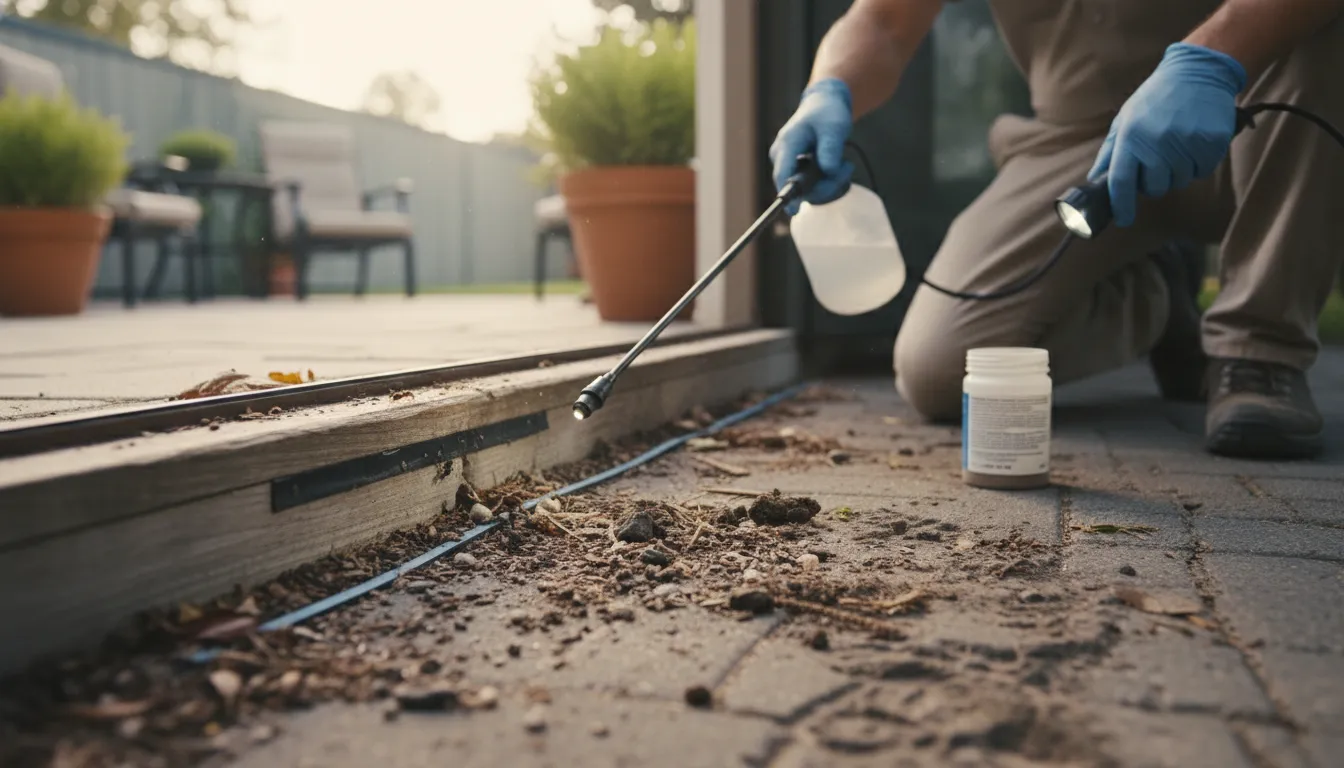
Find the Best Ant Control Companies for Your Business
No obligation • Fast responses • Nationwide coverage

Why you can trust Pest Crews
Pest Crews is a leading U.S. resource for finding and evaluating residential and commercial pest control services. Our team researches providers, reviews treatment approaches, and organizes unbiased information to help you make informed decisions. Companies cannot pay to change our editorial content or influence how they appear.
Search providers near you
Best Ant Control Companies in Kansas Ranked
Ants are one of the most common household pests in Kansas, and a persistent trail of tiny invaders in your kitchen or bathroom is more than just a nuisance. Different species, from destructive Carpenter Ants to odorous nuisance ants, require specific identification and treatment strategies for effective elimination. This guide provides clear, practical information on identifying common Kansas ant species, understanding their behavior, and implementing effective control measures, whether through do-it-yourself methods or by knowing when to call in a professional.
Maximum Pest Management
621 N Kessler St Suite C, Wichita, KS 67203
Maximum Pest Management is a pest control company based in Wichita, KS, offering residential and commercial extermination services. They handle a variety of pests including ants, cockroaches, fleas, spiders, and mosquitoes without requiring contracts. Their services include pest inspections, treatments, and prevention tailored for homes and businesses. The company emphasizes direct communication and knowledgeable technicians to provide effective pest control solutions.
Bug Shockers
8420 S 143rd St E, Derby, KS 67037
Bug Shockers is a family-owned pest control company serving Wichita, KS, and the surrounding areas since 2011. They offer residential and commercial pest control services, including treatments for bed bugs, cockroaches, ants, rodents, termites, and mosquitoes. Their approach focuses on customized pest control plans that eliminate infestations at the source and provide long-lasting protection. Bug Shockers is known for delivering thorough inspections and follow-up treatments to maintain pest-free environments for homes and businesses.
All Star Pest Control
14578 SW 210th St, Rose Hill, KS 67133
All Star Pest Control is a pest control company based in Wichita, KS, offering services for homes and businesses. They handle common pests such as ants, spiders, and cockroaches, and provide ongoing maintenance plans to help keep properties pest-free. The company serves a wide area across Kansas, including many surrounding communities. Their approach includes personalized pest control plans tailored to each customer's needs.
Aptive Pest Control
Overland Park, KS
Aptive Pest Control provides pest management services in Overland Park, KS, and surrounding areas including Raymore, MO. The company handles common pests such as ants, cockroaches, spiders, rodents, bees, and wasps. Aptive offers seasonal treatments and specializes in both indoor and outdoor pest control. Their technicians are experienced in locating and addressing pest issues like wasp nests and rodent infestations. Serving a broad region around Overland Park, Aptive Pest Control supports customers with clear communication and tailored pest plans.
Aptive Pest Control
Overland Park, KS
Aptive Pest Control provides pest management services in Overland Park, KS, and surrounding communities. They address common pests such as ants, spiders, rodents, bees, and wasps with year-round treatments tailored to local seasonal conditions. The company operates out of Lenexa, KS, and serves a wide area including Gardner, Basehor, Kansas City, and more. Aptive Pest Control is known for identifying and managing wasp nests and rodent issues effectively. Their team emphasizes clear communication and reliable service to meet the needs of homeowners in the region.
Common Ant Species in Kansas
Effective ant management starts with knowing your adversary. The treatment for a colony of sugar-loving Odorous House Ants differs significantly from that for wood-excavating Carpenter Ants. Here are the most prevalent species you're likely to encounter in and around Kansas homes.
Carpenter Ants
Carpenter Ants are among the largest ants found in the state and are a significant concern due to their potential for structural damage1. Unlike termites, they do not eat wood; instead, they excavate smooth galleries inside it to create nests, preferring moist or decaying wood. Common nesting sites include window sills, roof eaves, porch columns, and hollow doors. You may see large, black or reddish-black ants (workers can be up to ½ inch long) foraging for food-they are attracted to both sweet substances and proteins. Signs of an infestation include seeing the ants themselves, finding piles of coarse sawdust-like material (frass) near wood, or hearing faint rustling sounds inside walls.
Odorous House Ants
These small, dark brown to black ants are named for the distinct rotten coconut-like odor they release when crushed. They form very large colonies with multiple queens, making them challenging to eradicate with simple sprays. Outdoors, they typically nest in soil under objects like stones, mulch, or logs. They enter homes in search of food, particularly sweets, and moisture, often trailing along baseboards into kitchens and bathrooms. Their ability to quickly relocate their nest when threatened contributes to their persistence.
Pharaoh Ants
Pharaoh Ants are a major pest in multi-unit buildings like apartments, hospitals, and restaurants, but they can infest any Kansas home. They are tiny (about 1/16 inch), light yellow to reddish in color, and have a complex social structure with colonies containing millions of workers and thousands of queens. A unique and problematic behavior is "budding," where a portion of the colony, including queens and workers, breaks off to form a new nest if the main colony is disturbed by non-targeted insecticides. This allows them to spread rapidly throughout a structure via plumbing and electrical conduits.
Pavement Ants
As the name suggests, these ants commonly nest under sidewalks, driveways, and building foundations. They are small, dark brown to blackish, and often identified by the small mounds of soil they push up between pavement cracks. They enter homes through cracks in the foundation and slab, foraging for greasy or sweet foods. While they are primarily a nuisance, large colonies can become a persistent problem.
Understanding Ant Behavior and Seasonal Activity
Ants are driven by the basic needs of the colony: food, water, and shelter. Worker ants leave the nest to forage, leaving a pheromone trail for others to follow once a resource is found-this is why you see those characteristic trails. In Kansas, ant activity follows a seasonal pattern, though indoor infestations can occur year-round.
- Spring to Fall (Peak Activity): Ants are most active from early spring through late fall2. Warmer temperatures trigger colonies to expand and forage aggressively. This is when you are most likely to see ants marching into your home. Their food preferences can shift; they may seek proteins in the spring to feed developing larvae and switch to carbohydrates in the summer.
- Winter (Reduced Activity): Outdoor ant activity slows dramatically or goes dormant in winter. However, ants that have already established a nest within a heated structure remain active3. They will continue to seek food and moisture from your kitchen, pantry, and bathrooms, making winter ant sightings a sign of an indoor nest.
A Step-by-Step Guide to Ant Control
A successful ant management plan is multi-faceted, combining prevention, targeted treatment, and monitoring.
Step 1: Inspection and Identification
Before taking any action, try to identify the ant species. Observe their size, color, and where you see them. Follow their trail if possible to try to locate their entry point. Knowing whether you're dealing with Carpenter Ants (which may indicate a moisture problem) versus Pharaoh Ants (which require a specific baiting strategy) will dictate your next steps.
Step 2: Sanitation and Exclusion (Prevention)
This is the most critical long-term step. Make your home less attractive to ants by removing their incentives to enter.
- Eliminate Food Sources: Store all food, including pet food, in airtight containers. Wipe down counters, tables, and stovetops daily. Clean up spills and crumbs immediately. Regularly take out the trash and use cans with tight-fitting lids.
- Remove Water Sources: Fix leaky pipes, faucets, and irrigation systems. Use dehumidifiers in damp basements or crawl spaces. Ensure gutters and downspouts direct water away from your home's foundation.
- Seal Entry Points: Conduct a thorough exterior inspection. Seal cracks and gaps in the foundation, around window and door frames, and where utility lines (pipes, cables, wires) enter the house using a quality silicone or silicone-latex caulk. Install door sweeps on exterior doors.
- Modify the Landscape: Trim tree branches and shrubs so they do not touch your house, as these act as bridges for ants. Keep mulch, leaf litter, and firewood piles several feet away from the foundation.
Step 3: Targeted Treatments
Once prevention measures are in place, direct control methods can address existing colonies.
- Baits: Ant baits are often the most effective DIY solution for many common species4 5. Worker ants are attracted to the bait (which can be sugar-based, protein-based, or a combination), carry it back to the nest, and share it, eventually poisoning the queen and the entire colony. Patience is key; it can take several days to two weeks to see colony collapse. Do not spray insecticides near bait stations, as this will disrupt the foraging trail.
- Insecticide Sprays: Perimeter sprays can create a protective chemical barrier around the outside foundation of your home. For outdoor nests, direct application of an approved insecticide dust or liquid into the nest entrance can be effective. However, sprays alone often only kill visible foragers and may not reach the heart of the colony, especially if it is hidden inside a wall void.
Find the perfect ant control companies for your needs
Get personalized recommendations and expert advice
Step 4: Professional Intervention
There are times when professional expertise is the most efficient and effective choice.
- The Infestation is Large or Persistent: If DIY methods have failed after several weeks, professionals have access to more potent, commercial-grade products and application equipment.
- You Suspect Carpenter Ants: Since these ants can cause structural damage and their nests are often hidden inside wood, a professional can accurately locate the colony(s) and apply targeted treatments6 7.
- You Have Pharaoh Ants: Due to their budding behavior, improper treatment can make the infestation worse. Pest management professionals are trained in specific protocols to eliminate Pharaoh Ant colonies8.
- You Want Ongoing Prevention: Many homeowners opt for quarterly or annual service plans that provide regular inspections and treatments to prevent ants and other pests from becoming a problem.
Cost Considerations for Ant Control in Kansas
The cost to manage an ant problem varies based on the scale of the infestation, the species involved, and the treatment method chosen 9 10.
- DIY Approach: Initial costs are low. Over-the-counter bait stations, gels, or sprays typically range from $10 to $30. The investment is primarily your time and effort in implementing sanitation and exclusion measures.
- Professional One-Time Treatment: For a single, targeted service to eliminate an active infestation, homeowners can expect costs to generally range from $150 to $400 or more, depending on the size of the home and the severity of the problem11 12.
- Professional Ongoing Service: Many companies offer recurring pest control plans. These often include an initial "clean-out" visit followed by quarterly or bi-monthly maintenance treatments. Recurring service visits typically range from $75 to $150 per scheduled treatment13 14 15.
Local Resources for Kansas Homeowners
Kansas residents have excellent local resources for pest management information.
- Kansas State University Research and Extension (KSRE): The KSRE Bookstore offers several free or low-cost publications, such as "Household Pests of Kansas" (MF3291) and "Ants: Structural Pests" (MF2887), which provide detailed, science-based information16 17.
- Local Extension Offices: If you need help identifying an insect, your local county extension office can be a valuable resource. They can provide guidance or direct you to appropriate identification services18.
Frequently asked questions
Sources
Footnotes
-
Kansas City Homeowner's Guide To Ants - https://www.gunterpest.com/news/a-kansas-city-homeowners-guide-to-ants/ ↩
-
Ant Issues and Control in Kansas City - https://zipzappestcontrol.com/2020/06/ant/ ↩
-
Can Ants Survive Kansas Winters? Understanding Indoor Ant ... - https://www.augustineexterminators.com/blog/2025/december/can-ants-survive-kansas-winters-understanding-in/ ↩
-
How do I get rid of ants inside my Kansas home? Expert tips - https://www.kansas.com/news/state/article275189806.html ↩
-
Managing Household Ant Pests - Texas A&M University - https://www-aes.tamu.edu/files/2014/06/Managing-Household-Ant-Pests.pdf ↩
-
Kansas City Homeowner's Guide To Ants - https://www.gunterpest.com/news/a-kansas-city-homeowners-guide-to-ants/ ↩
-
Getting Kansas City Ant Control Services That Work - https://advantagetpc.com/getting-kansas-city-ant-control-services-that-work/ ↩
-
Pharaoh Ant Habitats & Behaviors in Kansas - World Pest Control - https://www.worldpestonline.com/pest-info/ants/pharaoh-ant/ ↩
-
Ant control cost calculator: Apartments, condos, HOAs | Parker Eco ... - https://www.parkerecopestcontrol.com/2019/03/22/ant-control-cost-calculator-apartments-condos-hoas/ ↩
-
Ant Control FAQs For Homeowners - https://www.cooperpest.com/blog/ant-control-near-me ↩
-
The best ways to get rid of ants in the house - Wichita Eagle - https://www.kansas.com/news/local/article152253487.html ↩
-
How Much Does an Ant Exterminator Cost? (2025) - https://www.thisoldhouse.com/pest-control/ant-exterminator-cost ↩
-
Recommendations for pest control for ant problem? - Reddit - https://www.reddit.com/r/kansascity/comments/t4jz10/recommendations_for_pest_control_for_ant_problem/ ↩
-
We have ants. Who is the best Pest Control in KCMO? : r/kansascity - https://www.reddit.com/r/kansascity/comments/1k0x29y/we_have_ants_who_is_the_best_pest_control_in_kcmo/ ↩
-
Ant Control - Pro Turf and Pro Pest Solutions - https://proturfpropest.com/antcontrol ↩
-
MF3291 Household Pests of Kansas - KSRE Bookstore - https://bookstore.ksre.ksu.edu/pubs/household-pests-of-kansas_MF3291.pdf ↩
-
MF2887 Ants: Structural Pests - KSRE Bookstore - https://bookstore.ksre.ksu.edu/pubs/ants-structural-pests_MF2887.pdf ↩
-
Bed Bugs-Salina's Hot Potato - https://www.ksal.com/bed-bugs-salinas-hot-potato/ ↩