Find the Best Ant Control Companies for Your Business
No obligation • Fast responses • Nationwide coverage

Why you can trust Pest Crews
Pest Crews is a leading U.S. resource for finding and evaluating residential and commercial pest control services. Our team researches providers, reviews treatment approaches, and organizes unbiased information to help you make informed decisions. Companies cannot pay to change our editorial content or influence how they appear.
Search providers near you
Best Ant Control Companies in Maine Ranked
Ants are a common and persistent nuisance for Maine homeowners, with several species posing threats ranging from food contamination to structural damage. Effective ant management is crucial for protecting your home and ensuring a pest-free environment. This guide provides a comprehensive overview of the ant species in Maine, their behaviors, and practical strategies for prevention and control. You can use this information to understand your ant problem and find qualified local professionals who can provide targeted, effective solutions.
Common Ant Species in Maine
Identifying the specific ant species invading your home is the first step toward effective control. Maine is home to several common ants, each with distinct characteristics and behaviors.
Carpenter Ants
Carpenter ants are among the most concerning pests for Maine homeowners due to their potential for structural damage. These are large ants, often up to 1/2 inch long, and are typically black or a combination of red and black. Unlike termites, they do not eat wood. Instead, they excavate smooth, clean galleries inside damp or decaying wood to create nests. Over time, this activity can compromise the integrity of wooden beams, window frames, and other structural elements. They are strongly attracted to moisture, so infestations often start in areas with water damage, leaky roofs, or poor ventilation.
Pavement Ants
Pavement ants are small, measuring about 1/8 inch, and are brown to black in color. True to their name, they typically nest in the soil underneath pavement slabs, driveways, sidewalks, and building foundations 1. They enter homes through cracks in the foundation and masonry, foraging for food along baseboards and kitchen floors. Their diet includes sweets, greases, and proteins, making kitchens a prime target 2.
Odorous House Ants
These small, dark brown or black ants get their name from the distinct rotten coconut odor they emit when crushed 3 4. Odorous house ants are attracted to sweet foods and moisture. They often establish nests in wall voids, under floors, or near leaky pipes and other sources of water 5 6. While they do not cause structural damage, they can form large colonies and become a significant indoor nuisance.
European Fire Ants
An invasive species of particular concern in coastal Maine, European fire ants are known for their painful stings, which can cause a burning sensation and raised welts 7 8. They build nests in soil and grassy areas and can become aggressive when disturbed. Managing their outdoor colonies is important for maintaining safe use of yards and gardens.
Why Ants Invade Maine Homes
Understanding what attracts ants is key to preventing them. Infestations typically follow predictable patterns related to environmental factors and human activity.
- Moisture Attraction: Many ant species, especially carpenter ants and odorous house ants, are drawn to moisture. Leaky pipes, clogged gutters, poor ventilation in crawl spaces, and water-damaged wood provide ideal conditions for nesting and survival 9 10 11.
- Food Sources: Ants are opportunistic foragers. Uncovered food, sticky spills on counters, unrinsed recycling, and pet food left out overnight are powerful attractants. Even small crumbs can sustain a scout ant and lead to a full-blown trail 12.
- Shelter and Entry Points: As seasons change, ants seek shelter from extreme temperatures. In fall, they may move indoors to overwinter. Cracks in the foundation, gaps around windows and doors, and openings where utility lines enter the home provide easy access 13.
- Nesting Sites: Certain ants seek specific nesting materials. Carpenter ants look for soft, damp wood. Pavement ants seek the compacted soil under man-made structures. The presence of these materials near your home can increase the likelihood of an infestation 14.
The Integrated Pest Management (IPM) Approach for Ant Control
The most effective and sustainable strategy for ant control is Integrated Pest Management. IPM focuses on long-term prevention and uses a combination of common-sense practices.
1. Sanitation and Exclusion
The foundation of any ant control plan is making your home less attractive and accessible to them.
- Sanitation: Wipe down counters and tables daily. Store all food, including pet food, in airtight containers. Take out the trash regularly and use bins with tight-fitting lids. Clean up spills immediately 15.
- Exclusion: Seal potential entry points. Use caulk to fill cracks and gaps around windows, doors, and the foundation. Install door sweeps and repair damaged window screens. Seal openings where pipes and wires enter the home 16.
2. Moisture Control
Eliminating moisture problems is critical, particularly for deterring carpenter ants.
- Fix leaky faucets, pipes, and appliances.
- Ensure downspouts direct water away from your home's foundation.
- Improve ventilation in attics, basements, and crawl spaces.
- Replace water-damaged or rotting wood promptly.
3. Targeted Chemical Treatments
When non-chemical methods are insufficient, targeted treatments can be effective.
- Baits: Ant baits are often the most effective chemical control for many species. Foraging worker ants carry the bait back to the nest, where it is shared, eventually eliminating the entire colony, including the queen 17. It's crucial to use baits appropriate for the ant species (sugar-based for sweet-loving ants, protein/grease-based for others) and to avoid spraying near bait stations, which can disrupt the foraging trails.
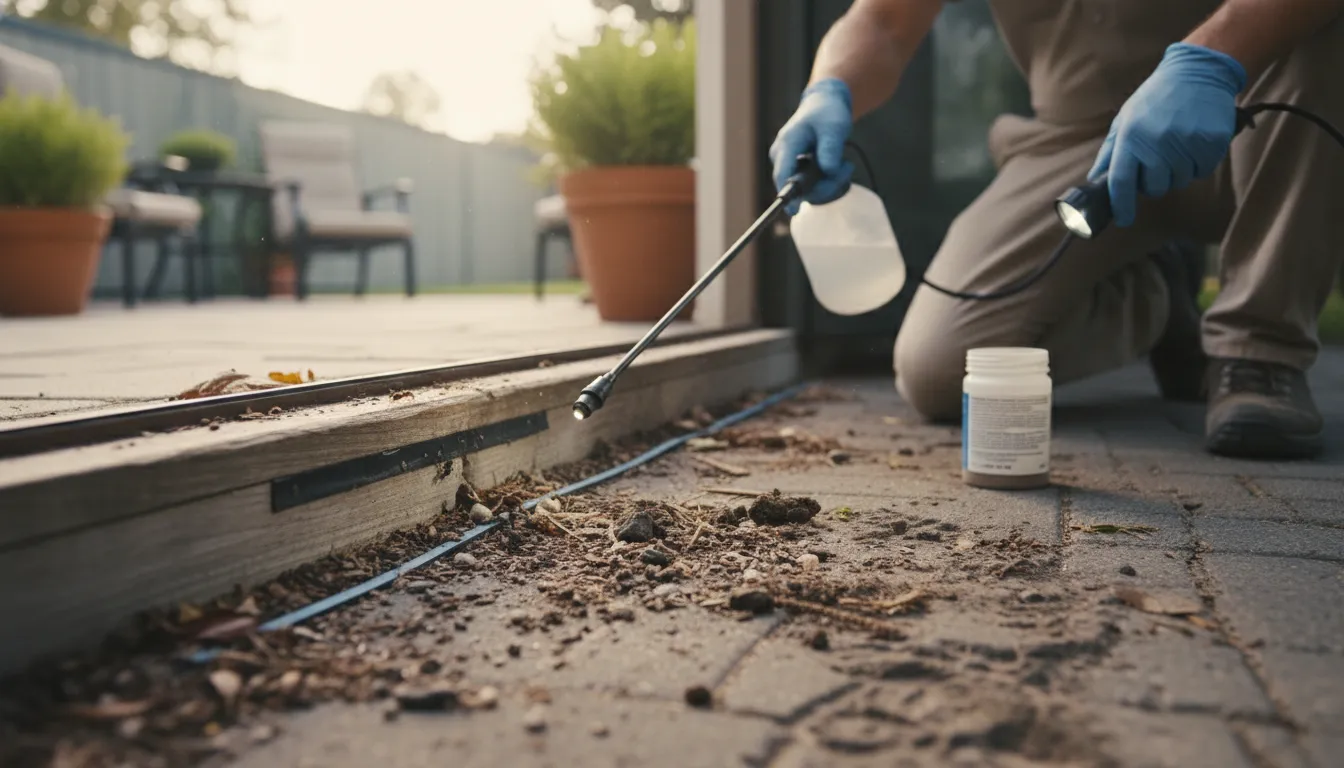
- Barrier Treatments: Pest control professionals may apply residual insecticides around the perimeter of a home to create a barrier that kills or repels ants attempting to enter 18.
Find the perfect ant control companies for your needs
Get personalized recommendations and expert advice
Seasonal Ant Activity in Maine
Ant behavior and pressure change with the seasons, requiring different strategies throughout the year.
- Spring (March-May): Ants become active as temperatures rise. This is a key time for preventative measures-sealing entry points, cleaning up yard debris, and addressing moisture issues. It's also an ideal time for early intervention if you spot scouts, as it can prevent a summer population boom 19.
- Summer (June-August): This is peak ant activity season. Colonies are large and foraging intensely for food and water. Indoor invasions are common. Baits are highly effective during this period due to robust foraging activity. Focus on sanitation and consider professional treatments for persistent problems 20.
- Fall (September-November): Ants forage aggressively to build up resources for winter. Many species, particularly pavement ants and odorous house ants, may move indoors seeking warmth. Sealing the home is critical in early fall. Late-season perimeter treatments can help prevent overwintering ants from establishing themselves inside 21.
- Winter (December-February): Most outdoor ant activity ceases as colonies become dormant. If you see ants inside your home during winter, it is a strong indicator that a nest is already established within the heated structure, such as in a wall void or under a floor. This requires targeted interior investigation and treatment 22 23.
When to Call a Professional
While DIY methods can solve minor problems, there are clear situations where professional expertise is warranted:
- Suspected Carpenter Ants: Given their potential for structural damage, a professional should confirm the identification and locate the main nest, which is often hidden 24.
- Large or Persistent Infestations: If ants return repeatedly after your own control efforts, a professional can assess the situation and implement a more comprehensive strategy.
- Difficulty Finding the Nest: The key to long-term control is eliminating the colony. Professionals have the experience and tools to track ants back to their nest source.
- Concern about Pesticide Use: Professionals can select and apply products in a targeted, effective, and safe manner, minimizing risk to people, pets, and the environment 25 26.
Understanding Ant Control Service Costs in Maine
Pricing for ant management services varies based on the species, the severity and extent of the infestation, the size of your property, and the treatment plan required 27 28.
- General Ant Control: For nuisance ants like pavement or odorous house ants, an initial service visit may range from $150 to $300. Many companies offer ongoing maintenance plans (e.g., quarterly treatments) to prevent recurrence, which can average $50 to $75 per month 29 30.
- Carpenter Ant Control: Treatments for carpenter ants are typically more involved and therefore more costly. A comprehensive plan to locate and eliminate the colony, along with preventative measures, may range from $500 to over $1,000, depending on the accessibility of the nest and any structural damage present 31 32.
For accurate pricing, homeowners should obtain a customized assessment and quote from a local Maine pest control provider.
Frequently asked questions
Sources
Footnotes
-
The Different Types Of Ants In Maine - Pine State Pest Solutions - https://www.pinestatepest.com/types-of-ants-in-maine ↩
-
Pavement Ants - Aptive Pest Control - https://aptivepestcontrol.com/pests/ants/pavement-ants/ ↩
-
A Guide to Identifying Maine Ant Species - Green Pest Defense - https://greenpestdefense.com/2025/02/09/a-guide-to-identifying-maine-ant-species/ ↩
-
Ants in Maine: Pest Identification Guide - A1 Exterminators - https://www.a1exterminators.com/ants-in-maine-pest-identification-guide/ ↩
-
Common Types of Ants in Southern Maine - https://gshieldpest.com/common-types-of-ants-in-southern-maine/ ↩
-
Common Ant Species in Maine: How to Identify and Manage ... - https://greenpestdefense.com/2024/03/31/ant-species-in-maine/ ↩
-
The Most Common Ants in Coastal Maine and How to Get Rid ... - https://atlanticpestcontrol.com/the-most-common-ants-in-coastal-maine-and-how-to-get-rid-of-them/ ↩
-
Bulletin #2551, European Fire Ant: Management for Homeowners - https://extension.umaine.edu/publications/2551e/ ↩
-
The Different Types Of Ants In Maine - Pine State Pest Solutions - https://www.pinestatepest.com/types-of-ants-in-maine ↩
-
Ants : Got Pests? : Board of Pesticides Control - Maine.gov - https://www.maine.gov/dacf/php/gotpests/bugs/all-ants.htm ↩
-
Ant Pest Control Services - https://www.rentokil.com/ca/help-and-advice/pest-insights/ants ↩
-
Summer Ant Invasion: Foods & Spills Attracting Midwest Ants - https://pccil.com/summer-ants-food-spills/ ↩
-
Prevent Ants from Entering Your Home - Ensure Group Of Companies - https://ensureuae.com/blog/prevention-from-ants.php ↩
-
Common Ants Found in Maine - Green Pest Defense - https://greenpestdefense.com/2024/11/03/common-ants-found-in-maine/ ↩
-
Ants - Maine.gov - https://www1.maine.gov/dacf/php/integrated_pest_management/school/pest-solutions/documents/me-school-ipm-factsheet_ants_8-15.pdf ↩
-
Carpenter Ants: Insect & Disease Fact Sheets - Maine.gov - https://www.maine.gov/dacf/mfs/forest_health/insects/carpenter_ants.htm ↩
-
Bulletin #2551, European Fire Ant - https://extension.umaine.edu/publications/2551e/ ↩
-
Ant Control in Sacramento - https://www.ecotech-pest.com/ant-control/ ↩
-
Why Ants Return Every Spring & How To Deal With Them - https://www.pinestatepest.com/blog/post/how-to-deal-with-ants-in-the-spring-in-maine ↩
-
What To Do When You Have Summer Ant Problems | Ants In Maine - https://www.pinestatepest.com/blog/post/what-to-do-when-you-have-summer-ant-problems ↩
-
Common Ant Species Found in Maine: A Complete Guide - https://greenpestdefense.com/2025/07/13/common-ant-species-found-in-maine-a-complete-guide/ ↩
-
Ant Infestations by Season | What to Expect and How to Prepare - https://www.westernpest.com/blog/ant-infestations-by-season/ ↩
-
Do Ants Hibernate? Discover Where Ants Go During Winter - Better Termite - https://bettertermite.com/do-ants-hibernate/ ↩
-
Maine Carpenter Ant Control | Local Carpenter Ant Exterminator - https://atlanticpestcontrol.com/carpenter-ant-control/ ↩
-
The Most Common Ants in Coastal Maine and How to Get Rid ... - https://atlanticpestcontrol.com/the-most-common-ants-in-coastal-maine-and-how-to-get-rid-of-them/ ↩
-
Common Types of Ants in Southern Maine - https://gshieldpest.com/common-types-of-ants-in-southern-maine/ ↩
-
How Much Does an Ant Exterminator Cost? (2025) - https://www.thisoldhouse.com/pest-control/ant-exterminator-cost ↩
-
Ant Extermination in MD: Ultimate Guide to Get Rid of Ants - https://www.brodybrotherspestcontrol.com/pest-identifier/ants/ ↩
-
Ant Pest Control Cost Guide: What to Expect and How to Save In 2025 - https://greenpestmanagementct.com/ant-pest-control-cost/ ↩
-
Dealing with Carpenter Ants in Maine: Prevention and Treatment ... - https://greenpestdefense.com/2023/08/05/dealing-with-carpenter-ants-in-maine-prevention-and-treatment-options/ ↩
-
How Much Does an Ant Exterminator Cost? (2025) - https://www.thisoldhouse.com/pest-control/ant-exterminator-cost ↩