Find the Best Ant Control Companies for Your Business
No obligation • Fast responses • Nationwide coverage

Why you can trust Pest Crews
Pest Crews is a leading U.S. resource for finding and evaluating residential and commercial pest control services. Our team researches providers, reviews treatment approaches, and organizes unbiased information to help you make informed decisions. Companies cannot pay to change our editorial content or influence how they appear.
Search providers near you
Best Ant Control Companies in Missouri Ranked
Ants are a persistent and common household pest across Missouri, capable of contaminating food, damaging property, and creating a general nuisance. Effective ant management requires understanding the specific species, their behavior, and the most appropriate control strategies. This guide provides clear, practical information to help you identify an ant problem, understand your options for DIY and professional intervention, and find qualified local specialists to address your specific situation.
Augustine Exterminators, Inc.
9280 Flint St, Overland Park, KS 66214
Augustine Exterminators, Inc. is a family-owned pest control company serving Kansas City, MO, and the surrounding Greater Kansas City area. Established in 1966, they provide pest management solutions for homes and businesses, addressing issues such as termites, bed bugs, ants, rodents, mosquitoes, and spiders. Their team is trained and certified in both Kansas and Missouri, and they use Integrated Pest Management (IPM) strategies to control and prevent infestations while minimizing environmental impact. Augustine Exterminators is also QualityPro and GreenPro Certified, reflecting their commitment to sustainable pest control practices.

Teacher's Spraying Service
4649 Idecker Dr, St. Louis, MO 63129
Teacher's Spraying Service is a family-owned pest control company serving St Louis, MO. They offer pest management for both residential and commercial properties, including bed bug treatment, ant control, termite inspections, and general pest control. Their services include a thorough inspection and a tailored Integrated Pest Management (IPM) program to address specific pest issues and infestation levels. The company has been operating for many years and focuses on educating clients about pest prevention and treatment options.

Newt’s Pest Control
St Louis, MO
Newt's Pest Control is a pest control company serving St Louis, MO, and surrounding counties including St. Charles. They offer residential and commercial pest extermination services, including cockroach, ant, rodent, mosquito, bee, wasp, spider, and flying insect control. Their services include one-time treatments, monthly plans, and pest inspections. Newt's Pest Control emphasizes eco-friendly and safe pest management solutions, combining pest and mosquito control under one agreement backed by a full satisfaction guarantee.

Blue Beetle Pest Control
2540 W Pennway St Floor 2, Kansas City, MO 64108
Blue Beetle Pest Control is a pest management company based in Kansas City, MO, offering services for residential and commercial properties. They specialize in ant, rodent, termite, and general pest control, including thorough inspections and treatments to address infestations effectively. The team is experienced in handling various pest issues such as fleas, rats, spiders, and carpenter ants. Blue Beetle Pest Control is known for detailed property inspections and tailored treatment plans to meet client needs.
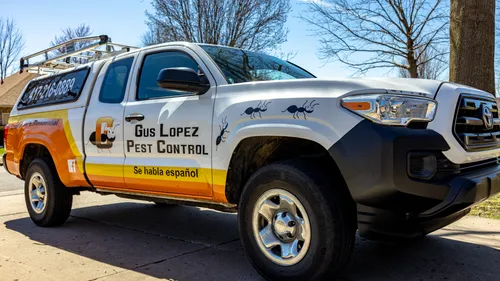
Gus Lopez Pest Control
Springfield, MO
Gus Lopez Pest Control is a family-owned pest control company serving Springfield, MO, and surrounding areas including Nixa, Ozark, Republic, and Willard. They offer a range of pest management services such as ant, bed bug, German cockroach, wasp, rodent, spider, termite, mole, flea, tick, and mosquito control. The company provides ongoing pest management plans tailored to each customer's needs, with targeted treatments and regular inspections to maintain pest-free environments. Founded in 2005, the business continues under the leadership of Gus Lopez, who maintains the commitment to thorough pest elimination and prevention. Their services include specialized capabilities like termite elimination and prevention, as well as mosquito and flea suppression.
Common Ant Species in Missouri
Missouri is home to dozens of ant species, but a few are particularly notorious for invading homes and businesses. Correct identification is the first step toward effective control, as different ants require different treatment approaches.
- Odorous House Ants: This is the most common indoor ant invader in the state. They are small, dark brown to black, and get their name from the rotten coconut-like odor they release when crushed. They typically nest outdoors under stones, mulch, patios, or debris but will forage indoors for sweets and proteins, often forming long, distinct trails 1.
- Carpenter Ants: These are large, black or red-and-black ants that pose a structural threat. Unlike termites, they do not eat wood but excavate it to create smooth-walled galleries for nesting. This activity can weaken structural timbers over time. They are often a sign of a moisture problem, as they are attracted to damp, decaying wood 2.
- Acrobat Ants: Named for their habit of raising their heart-shaped abdomen over their head when disturbed. They are opportunistic, feeding on aphids, dead insects, and sugary substances. They often nest in moist wood, including areas previously damaged by other insects, and can move into wall voids 3.
- Pharaoh Ants: These tiny, light yellow to red ants are a major concern, especially in multi-unit buildings like apartments and hospitals. They are notoriously difficult to control with typical DIY sprays, which can cause the colony to fragment and spread (a process called "budding"). Professional intervention with specific baits is almost always required 4.
Signs of an Ant Infestation
Recognizing the early signs of an ant problem can help you act before a small issue becomes a major infestation.
- Scouting Ants: Seeing a few ants wandering seemingly at random, especially in kitchens, pantries, or bathrooms, is often the first sign. These are scout ants searching for food and water sources.
- Consistent Trails: The most definitive sign is a steady, organized line of ants traveling to and from a food source. This indicates a nearby nest and a well-established foraging route 5.
- Nesting Evidence: Outdoors, look for small piles of excavated soil or sand (ant hills), particularly along sidewalks, foundations, or in mulch beds. For carpenter ants, you may find piles of fine sawdust (frass) near baseboards, window sills, or in crawl spaces, which is debris kicked out of their nesting galleries.
- Swarmers: The appearance of winged reproductive ants (swarmers) inside your home, often in spring, is a strong indicator of an established colony nesting within the structure itself.
Why Ants Invade Missouri Homes
Ants enter homes for the same basic reasons we live in them: shelter, food, and water. Missouri's climate, with its hot, humid summers, drives ants indoors in search of moisture. Common attractants include 6:
- Food Sources: Crumbs, spills, unsealed pantry items (especially sugar, syrup, honey, and pet food).
- Water Sources: Leaky pipes, dripping faucets, condensation around windows, and pet water bowls.
- Shelter: Cracks in foundations, gaps around doors and windows, utility penetrations, and cluttered landscaping that provides ideal outdoor nesting sites close to the structure.
DIY Ant Prevention and Control Strategies
For minor ant problems, a diligent, multi-pronged DIY approach can be effective. The goal is to make your home less attractive and accessible.
- Sanitation is Critical: Eliminate food sources. Wipe down counters, sweep floors, store food in airtight containers, and manage trash regularly. Don't forget pet food-pick up bowls after feeding or use a moat-style bowl.
- Exclusion (Sealing Entry Points): Conduct a thorough inspection of your home's exterior. Seal cracks in the foundation, gaps around doors and windows, and holes where utility lines enter with caulk or weatherstripping.
- Moisture Control: Repair leaky pipes, ensure downspouts direct water away from the foundation, and use dehumidifiers in damp basements or crawl spaces. Reducing moisture removes a key attractant, especially for carpenter ants.
- Judicious Use of Baits: For trailing ants, insecticidal baits can be a useful DIY tool. Worker ants carry the bait back to the colony, potentially eliminating the queen. Place baits near trails but away from areas where you spray cleaners or insecticides, which can repel the ants. Important Note: Avoid using spray insecticides on visible trails. This kills the worker ants but not the colony, often causing it to splinter and create multiple new nesting sites, making the problem much worse 7 8.
Find the perfect ant control companies for your needs
Get personalized recommendations and expert advice
When to Call a Professional Ant Control Specialist
While DIY methods can manage small, isolated issues, professional help is often necessary for complete, long-term control. Consider calling a specialist if:
- You see persistent trails or ants daily despite your cleaning efforts.
- You suspect a carpenter ant infestation (sawdust piles, large black ants inside).
- You have identified or suspect Pharaoh ants.
- The ants are nesting inside your walls or other inaccessible areas.
- DIY baiting efforts have failed after several weeks.
- You are dealing with a large property or a recurring annual problem.
Professional pest management technicians bring expertise in identification, knowledge of ant biology, and access to more effective, targeted products. A comprehensive professional service typically includes:
- Detailed Inspection: Identifying the ant species, locating nests, and finding entry points.
- Targeted Treatment: Using professional-grade baits, non-repellent insecticides, and dusts placed in wall voids and other critical areas.
- Exclusion Recommendations: Advising on structural repairs to prevent re-entry.
- Follow-up Plans: For persistent problems, scheduled return visits may be part of a management plan.
Understanding Ant Control Costs in Missouri
The cost for professional ant control in Missouri varies based on the severity of the infestation, the species involved, the size of your home, and the service provider. Most companies offer free inspections and quotes.
- Initial One-Time Service: For a standard infestation (e.g., Odorous House Ants), an initial treatment often ranges from $100 to $200+. This usually includes inspection, interior and exterior treatment, and sealing of major entry points 9.
- Ongoing Preventive Services: Many homeowners opt for quarterly or monthly plans for ongoing protection against ants and other pests. These visits typically cost between $50 and $100+ per service 10.
- Carpenter Ant or Major Infestations: Treatment for wood-destroying carpenter ants or widespread infestations can be more complex and costly, often starting at $300 or more due to the need for more extensive inspection and treatment methods 11.
Seasonal Ant Activity in Missouri
Ant activity peaks during the warmer months. In spring (often April-May), ants become highly active as they emerge from overwintering sites in search of food and moisture, making this a prime time for invasions 12. Activity remains high throughout the summer and into early fall. Proactive prevention in early spring-sealing entries, cleaning, and perhaps scheduling a professional preventative treatment-can help avoid problems later in the year.
Frequently asked questions
Sources
Footnotes
-
Ants | Missouri Department of Conservation - https://mdc.mo.gov/discover-nature/field-guide/ants ↩
-
Ant Pest Control & Extermination Services on Cape Cod - https://www.capecodpestpros.com/pests/ants/ ↩
-
Most Common Ant Species Town & Country Pest Solutions | Pest Control Rochester - https://townandcountrysolutions.com/most-common-ant-species/ ↩
-
How to Get Rid of Pharaoh Ants | Ant Control - Orkin - https://www.orkin.com/pests/ants/pharaoh-ants/pharaoh-ant-infestation ↩
-
Signs of an Ant Infestation & Control Methods | Ehrlich Pest Control - https://www.jcehrlich.com/pest-insights/ants/infestation ↩
-
Identify an Ant | Steve's Pest Control - https://stevespestcontrol.com/pest-id/ants/ ↩
-
How to Get Rid of Ants in Your House: Quickly & Permanently - Terminix - https://www.terminix.com/ant-control/how-to-get-rid-of-ants-in-the-house/ ↩
-
Ant Infestation: How to Detect and What to Do? - https://www.onemanandaladybug.ca/ant-infestation/ ↩
-
Ants | MU Extension - https://extension.missouri.edu/publications/g7392 ↩
-
Everything You Need to Know About Ants In Missouri - https://www.rottler.com/everything-about-ants/ ↩
-
How To Get Rid of Carpenter Ants - Frontline Pest Control - https://www.frontlinepestcontrol.com/blog/how-to-get-rid-of-carpenter-ants ↩
-
What Month Are Ants the Worst in Knoxville? - Critter Wranglers - https://critterwranglerstn.com/ants/what-month-are-ants-the-worst-in-knoxville/ ↩