Find the Best Ant Control Companies for Your Business
No obligation • Fast responses • Nationwide coverage

Why you can trust Pest Crews
Pest Crews is a leading U.S. resource for finding and evaluating residential and commercial pest control services. Our team researches providers, reviews treatment approaches, and organizes unbiased information to help you make informed decisions. Companies cannot pay to change our editorial content or influence how they appear.
Search providers near you
Best Ant Control Companies in New Hampshire Ranked
Ant invasions are a common and frustrating reality for New Hampshire homeowners. From tiny pharaoh ants in the kitchen to destructive carpenter ants in the walls, these persistent pests seek food, water, and shelter, often establishing colonies that are difficult to eradicate with do-it-yourself methods. Effective ant management requires a strategic approach tailored to New Hampshire's specific species and seasonal patterns. This guide provides clear, practical information to help you understand local ant problems, recognize when professional help is needed, and connect with qualified specialists who can implement lasting solutions.
Common Ant Species in New Hampshire
Identifying the type of ant invading your home is the critical first step toward effective control. Different species have unique nesting habits, food preferences, and behaviors that dictate the treatment strategy.
Carpenter Ants: These are the most structurally damaging ants in the state. Unlike termites, they do not eat wood but excavate it to create smooth-walled galleries for nesting, primarily in moist, damaged, or decaying wood. Workers are large, typically 1/4 to 1/2 inch long, and seeing them indoors, especially at night, is a strong sign of an infestation. They often establish parent colonies in stumps or trees outdoors and satellite colonies inside wall voids, making professional identification and location essential.
Pharaoh Ants: These tiny, yellowish ants are a significant nuisance, particularly in multi-unit buildings. They are notoriously difficult to control because they can "bud," meaning a colony can split into multiple new colonies if threatened by improper treatment like typical DIY sprays. Their small size allows them to exploit the tiniest cracks, and they are attracted to a wide variety of foods, including greases and proteins.
Odorous House Ants & Pavement Ants: These common nuisance ants typically nest in soil-under slabs, sidewalks, or along foundations-and enter homes in search of sweets and other foods. While they don't cause structural damage, their large colonies and persistent foraging trails can make them a major household annoyance.
Why Ants Invade New Hampshire Homes
Ants are driven indoors by basic survival needs. Understanding these attractants is key to both solving an active problem and preventing future ones.
- Food Sources: Crumbs, unsealed pantry items, pet food bowls, and even residue on recycling bins can draw foraging scouts inside. Once a scout finds food, it leaves a pheromone trail for hundreds of other workers to follow 1.
- Water & Moisture: Leaky pipes, clogged gutters, poor drainage, and areas of condensation provide the moisture ants need to thrive. Carpenter ants, in particular, are drawn to wood softened by water damage.
- Shelter: As temperatures drop in the fall, ants seek the consistent warmth of your home. They also enter to escape saturated ground after heavy rains. Cracks in the foundation, gaps around utility lines, and poorly sealed windows and doors are common entry points.
- Harborage Sites: Landscaping materials like mulch, leaf litter, and firewood stored directly against the house provide ideal nesting sites and bridges for ants to access your home's exterior.
The Risks of a Do-It-Yourself Approach
While store-bought sprays and powders can kill visible ants, they often worsen the problem or provide only temporary relief.
- Colony Scattering (Budding): Spraying a trail of ants, especially with repellent insecticides, can cause the colony to fragment and relocate deeper into your walls or establish multiple new colonies, spreading the infestation 2.
- Ineffective Targeting: DIY methods typically only kill worker ants you see. They fail to reach the queen and the heart of the colony, which continues to produce more ants.
- Misidentification: Using the wrong product for the species is ineffective. For example, typical sprays will cause pharaoh ants to bud, while carpenter ant control requires locating and treating the nest directly 3.
- Safety Concerns: Improper application of pesticides can pose risks to family members, pets, and the environment.
Professional Ant Control Methods
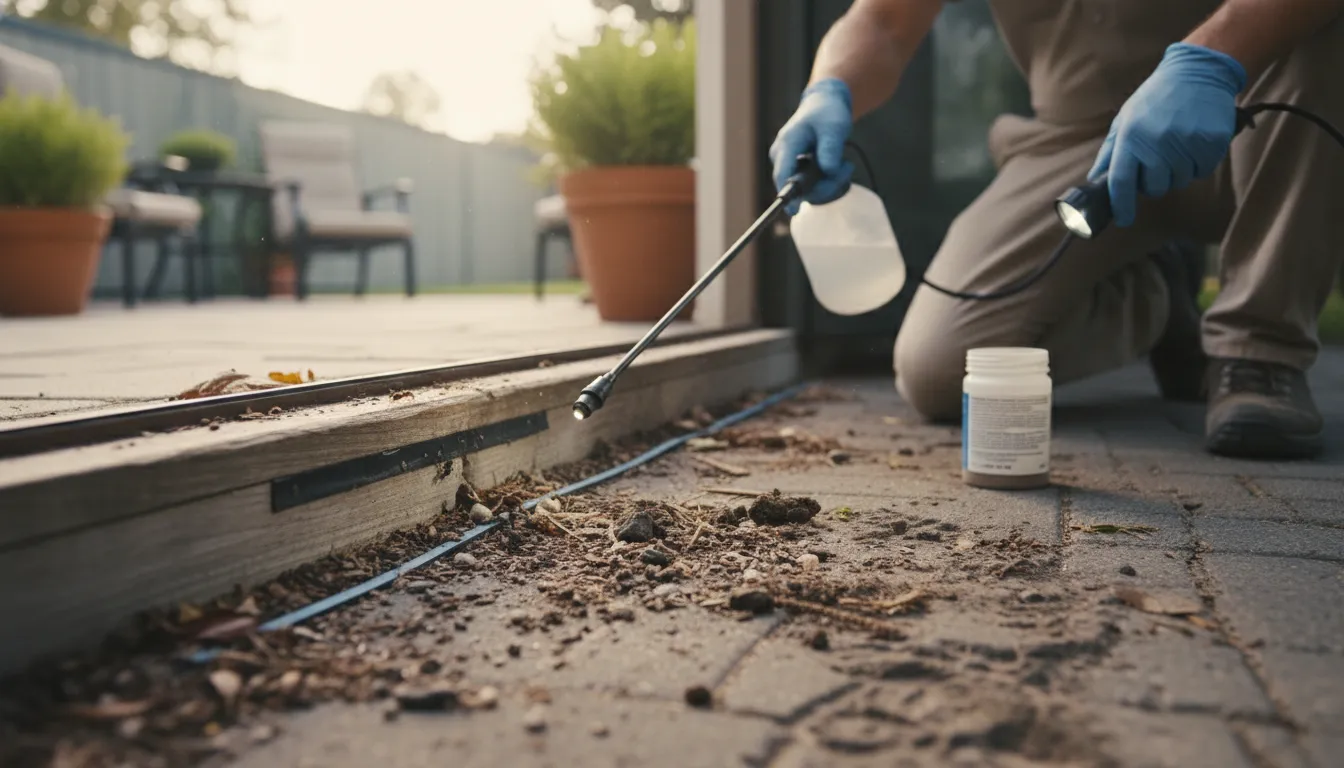
Licensed professionals use integrated strategies that are safe, targeted, and designed for long-term colony elimination.
- Inspection & Identification: A thorough inspection identifies the ant species, locates nesting sites (both indoors and out), and finds trails and entry points. This step is crucial for determining the correct treatment plan 4.
- Baiting Systems: This is often the core of professional ant control. Foragers are attracted to specially formulated bait (a combination of food and insect growth regulator or slow-acting poison). They carry it back to the nest, where it is shared with the queen and larvae, ultimately eliminating the entire colony.
- Targeted Perimeter Treatments: Professionals may apply non-repellent, residual insecticides around the home's foundation, creating a protective barrier. These products are designed to be transferred by ants back to the nest without triggering alarm or budding 5.
- Direct Nest Treatment: For species like carpenter ants, locating and treating the nest directly-often within wall voids or structural wood-is necessary for complete control.
- Exclusion & Prevention Advice: A key part of professional service is recommending and sometimes performing exclusion work, such as sealing cracks and gaps, and advising on moisture reduction and sanitation to make your home less attractive to ants.
Find the perfect ant control companies for your needs
Get personalized recommendations and expert advice
Seasonal Ant Activity in New Hampshire
Ant activity in New England follows a predictable seasonal cycle, which informs the timing and type of control measures.
- Spring & Summer (Peak Activity): As temperatures warm, overwintering colonies become active and expand rapidly. Ants forage aggressively for food and water to support growing larvae. This is the most common time for homeowners to notice outdoor trails and initial indoor invasions. Preventive treatments in late spring are highly effective.
- Fall (Indoor Migration): As outdoor temperatures drop, ants-particularly nuisance species like odorous house ants-begin seeking warm, sheltered places to overwinter, leading to a spike in indoor infestations 6. This is a critical time for perimeter barriers and interior baiting.
- Winter (Dormant but Present): While activity slows, ants nesting within heated wall voids can remain active all winter. Carpenter ant sightings indoors during winter almost always indicate an interior nest that requires attention.
Understanding Ant Control Costs in New Hampshire
Pricing for professional ant control varies based on the severity of the infestation, the species involved, the size of your home, and the treatment plan required.
- Initial Treatment Service: For a standard infestation, an initial service that includes inspection, interior and exterior treatment, and baiting typically ranges from $150 to $300 or more 7. Complex cases, like extensive carpenter ant damage, will be higher.
- Seasonal or Annual Maintenance Plans: For ongoing prevention and protection against seasonal invasions, many homeowners opt for a maintenance plan. These often include quarterly or bi-annual visits and can range from $300 to $600+ annually 8. These plans are proactive and can prevent costly infestations from taking hold.
Proactive Prevention Tips
Working in tandem with professional treatments, these steps can significantly reduce your home's appeal to ants.
- Eliminate Moisture: Repair leaky faucets and pipes, ensure downspouts direct water away from the foundation, improve ventilation in crawl spaces, and clean clogged gutters.
- Remove Food Attractants: Store pantry foods in sealed containers, clean up spills and crumbs immediately, keep pet food dishes clean and don't leave them out overnight, and manage trash/recycling bins.
- Seal Entry Points: Use caulk or sealant to close cracks in the foundation, gaps around windows/doors, and openings where utility pipes and wires enter the home 9 10.
- Modify Landscaping: Keep mulch, soil, and vegetation at least 6-12 inches away from the foundation. Trim tree branches and shrubs so they do not touch the house, as these can serve as ant highways 11 12.
- Store Firewood Properly: Keep firewood piles elevated and stored as far from the house as practical, as they are prime nesting sites for carpenter ants 13.
Frequently asked questions
Sources
Footnotes
-
Signs of an Ant Infestation & Control Methods | Ehrlich Pest Control - https://www.jcehrlich.com/pest-insights/ants/infestation ↩
-
Why Squishing Ants Can Make Your Infestation Worse - https://dustinpestcontrol.com/why-squishing-ants-can-make-your-infestation-worse/ ↩
-
How to Get Rid of Pharaoh Ants | Ant Control - Orkin - https://www.orkin.com/pests/ants/pharaoh-ants/pharaoh-ant-infestation ↩
-
Ant Infestation: How to Detect and What to Do? - https://www.onemanandaladybug.ca/ant-infestation/ ↩
-
Your Guide To Ant Season in New England - Pest-End - https://www.pestendinc.com/blog/your-guide-to-ant-season-in-new-england ↩
-
What Month Are Ants the Worst in Knoxville? - Critter Wranglers - https://critterwranglerstn.com/ants/what-month-are-ants-the-worst-in-knoxville/ ↩
-
NH Ant Control - Monadnock Pest & Wildlife Services - https://monadnockpest.com/nh-ant-control ↩
-
Seasonal Ant Control: How Pest Patrol Adapts Treatments for Portland's Changing Weather & Pest Needs - https://www.pestpatrolpdx.com/blog/seasonal-ant-control-how-pest-patrol-adapts-treatments-for-portlands-changing-weather-pest-needs/ ↩
-
How to Get Rid of Ants in Your House: Quickly & Permanently - Terminix - https://www.terminix.com/ant-control/how-to-get-rid-of-ants-in-the-house/ ↩
-
Why Are There So Many Ants in 2025? - Merlin Environmental - https://merlinenvironmental.co.uk/blog/pests/ants/why-are-there-so-many-ants-in-2024/ ↩
-
Protecting Your New England Home From Ants This Summer - https://www.bigbluebug.com/blog/2018/july/protecting-your-new-england-home-from-ants-this-/ ↩
-
20 Safe Ways to Kill Ants in Your Home and When to Hire a Pro - https://www.healthline.com/health/how-to-kill-ants ↩
-
Carpenter Ants - UNH Extension - https://extension.unh.edu/sites/default/files/migrated_unmanaged_files/Resource000530_Rep552.pdf ↩