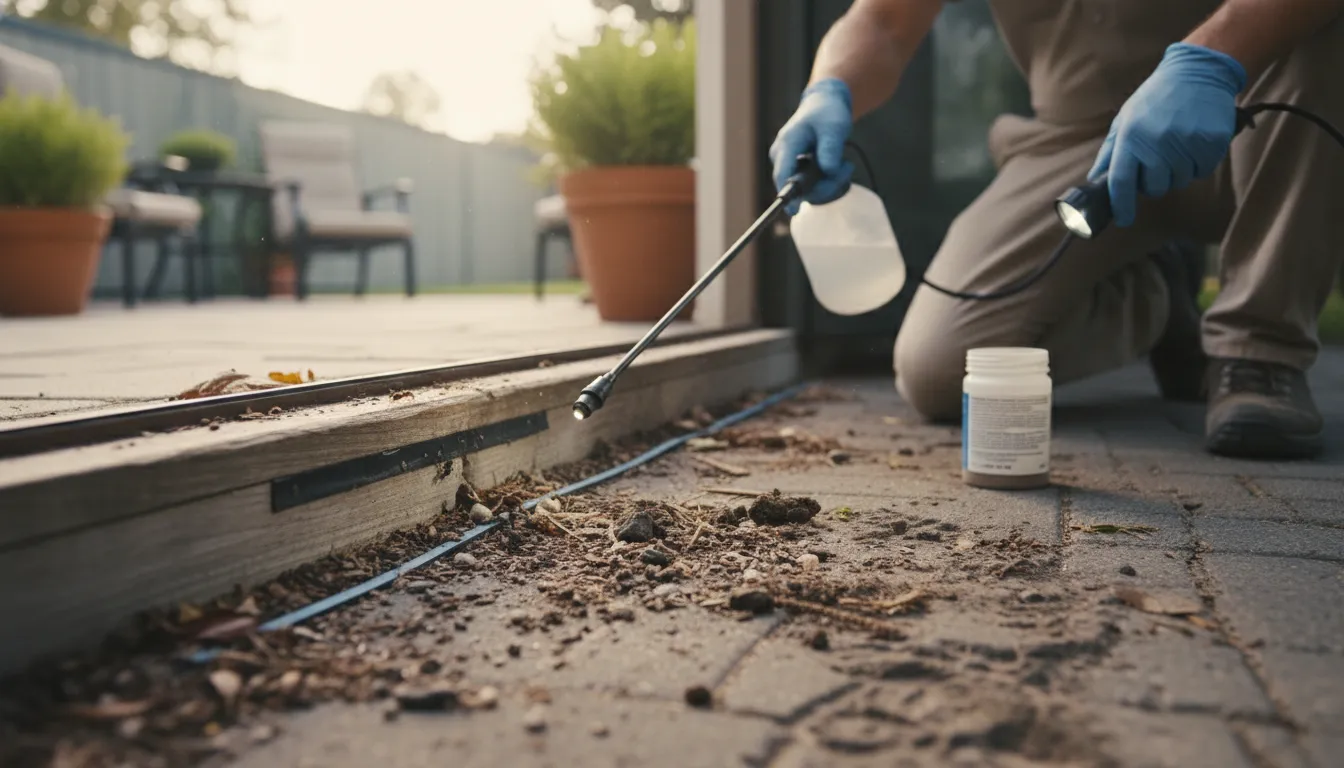
Find the Best Ant Control Companies for Your Business
No obligation • Fast responses • Nationwide coverage

Why you can trust Pest Crews
Pest Crews is a leading U.S. resource for finding and evaluating residential and commercial pest control services. Our team researches providers, reviews treatment approaches, and organizes unbiased information to help you make informed decisions. Companies cannot pay to change our editorial content or influence how they appear.
Search providers near you
Best Ant Control Companies in New Jersey Ranked
Ant invasions are a common and persistent nuisance for New Jersey homeowners and businesses. From tiny pavement ants marching across your kitchen to wood-destroying carpenter ants silently damaging structural beams, these pests are more than just a minor annoyance-they can pose health risks and cause significant property damage. Effective ant management requires understanding the specific species, their behavior, and the most reliable treatment strategies. This guide provides clear, practical information to help you identify, prevent, and address ant problems, and connects you with local expertise for professional solutions.
Universal Pest Control
118 Locust St, Roselle, NJ 07203
Universal Pest Control is a family owned and operated pest control company serving Newark, NJ, and the surrounding Union County area. They offer a wide range of pest management services including cockroach, ant, termite, bee and wasp removal, as well as wildlife control. Their licensed and trained technicians use up-to-date methods to address pest infestations safely and effectively. With years of experience, Universal Pest Control provides free consultations and estimates to help customers find tailored solutions for their pest issues.

Superb Pest Control
20 Commerce Dr, Cranford, NJ 07016
Superb Pest Control provides comprehensive pest control and extermination services in Newark, NJ, and surrounding areas including Woodbridge, Cranford, Clark, Westfield, Scotch Plains, and Springfield. They specialize in managing a wide range of pests such as bed bugs, rodents, cockroaches, ants, mosquitoes, bees, wasps, birds, and wildlife. Their approach includes Integrated Pest Management (IPM) to inspect, identify, and treat infestations in an environmentally responsible way. The company also offers a specialized six-month plan for controlling lanternfly infestations without harming vegetation or wildlife. Superb Pest Control serves both residential and commercial clients, including homes, restaurants, schools, hospitals, and manufacturing facilities.
Excel Pest Services
924 N Wood Ave 2nd Fl, Linden, NJ 07036
Excel Pest Services is a pest control company serving Newark, NJ, and the surrounding Essex County area. With over 30 years of experience, they specialize in managing common local pests such as bed bugs, cockroaches, ants, rodents, termites, and mosquitoes. Their licensed technicians use Integrated Pest Management (IPM) and eco-conscious treatments to address infestations and prevent future problems, tailoring solutions for both residential and commercial properties.
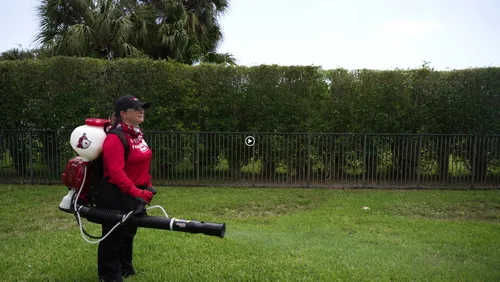
Mosquito Shield of North Central New Jersey
Newark, NJ
Mosquito Shield of North Central New Jersey provides mosquito, tick, and perimeter pest control services in Newark, NJ. They use a proprietary blend designed to kill and repel mosquitoes and ticks, creating a protective barrier around properties. The company serves a broad area including Essex, Morris, Bergen, Hudson, and Passaic Counties, offering tailored treatment plans that adapt to mosquito behavior. With over 20 years of experience, Mosquito Shield emphasizes environmentally conscious practices, including the use of battery-powered equipment in areas with gas-powered equipment restrictions.
Exto Pest Control LLC
212 Continental Pl, Staten Island, NY 10303
Exto Pest Control LLC offers comprehensive pest management services in Jersey City, NJ. They handle a wide range of pest issues including bed bugs, cockroaches, ants, rodents, termites, bees, wasps, birds, and wildlife. Their services cover both residential and commercial properties, providing customized solutions to meet specific needs. Exto Pest Control is known for advanced termite detection and treatment, as well as humane wildlife removal. The company emphasizes eco-friendly practices and personalized service, with a team of certified professionals dedicated to effective pest problem resolution. They provide prompt responses and have a reputation for thorough inspections and detailed treatment plans.
Common Ant Species in New Jersey
New Jersey is home to several ant species, each with unique behaviors and challenges. Proper identification is the first step toward effective control.
- Carpenter Ants: These are among the most concerning ants in the state. They are large, typically black or reddish-black, and excavate moist, decaying wood to create nesting galleries. Unlike termites, they do not eat wood but remove it to build their nests, which can compromise structural integrity over time. Spotting piles of fine sawdust-like material (frass) is a key sign of their activity.
- Pavement Ants: Small, dark brown to black ants commonly found nesting under sidewalks, driveways, and building foundations. They enter homes in search of food, particularly greasy or sweet substances, and are known for creating small mounds of displaced soil at their nest entrances.
- Odorous House Ants: Small, dark brown or black ants that earn their name by releasing a pungent, rotten coconut-like odor when crushed. They nest near moisture sources inside walls or under floors and are frequent invaders of kitchens.
- Pharaoh Ants: These are a major concern, especially in multi-unit dwellings like apartments and hospitals. They are tiny (about 1/16 inch), pale yellow to red, and are notoriously difficult to eradicate with typical DIY sprays, which can cause the colony to fragment and spread (a process called "budding") 1.
- Acrobat Ants: Identifiable by their heart-shaped abdomen that they raise over their thorax when disturbed. They are often yellow-brown to black and may nest in moist wood, sometimes taking over old carpenter ant or termite galleries 2.
Signs of an Ant Infestation
Recognizing the early warning signs can help you tackle a problem before it grows.
- Visible Trails: The most obvious sign is a line of worker ants traveling between a food source and their nest. These trails are created by pheromones, chemical signals that guide other ants.
- Live Ants: Seeing ants, especially inside your home during spring or summer, often indicates a nearby nest. Scout ants search for food; where there are a few, many more may follow.
- Frass: For carpenter ants, look for piles of coarse sawdust, wood fragments, and dead insect parts near baseboards, window sills, or in crawl spaces. This debris is pushed out of their nesting galleries.
- Swarmers: The appearance of winged reproductive ants (swarmers) inside your home is a strong indicator of an established, mature colony nesting within the structure.
- Rustling Noises: In quiet areas, you may hear a faint rustling sound coming from walls or woodwork where carpenter ants are actively excavating.
Why Ants Invade New Jersey Homes
Ants enter properties seeking the same basic necessities: food, water, and shelter. New Jersey's climate, with its humid summers, provides ideal conditions.
- Food Sources: Crumbs, unsealed pantry items, pet food, and sticky residues are powerful attractants. Ants are particularly drawn to proteins, fats, and sugars.
- Water and Moisture: Leaky pipes, poor drainage, clogged gutters, and condensation create the damp environments that many ant species, especially carpenter ants, need to thrive.
- Shelter and Entry Points: Cracks in foundations, gaps around utility lines, poorly sealed windows, and doors offer easy access. Overhanging tree branches and shrubs touching the house serve as bridges for ants.
- Seasonal Activity: Ant activity in New Jersey typically surges from March through October, peaking in the warm summer months. However, ants nesting inside heated structures can remain active year-round.
Professional Ant Extermination Methods
For persistent or large-scale infestations, especially involving carpenter or pharaoh ants, professional intervention is often the most effective and long-lasting solution. Local experts use integrated strategies.
- Inspection: A thorough inspection identifies the ant species, locates nests and foraging trails, and finds entry points and conducive conditions like moisture problems.
- Baiting Systems: This is a cornerstone of modern ant control, particularly for colony-eliminating species. Professionals use specially formulated gel or solid baits that worker ants carry back to the nest, poisoning the queen and the entire colony.
- Barrier and Targeted Treatments: Applying residual insecticides around the home's perimeter (barrier treatment) and directly into nests or wall voids creates a protective zone and eliminates colonies at the source 3.
- Moisture Correction: Since moisture attracts ants, professionals will often identify and recommend fixes for leaks, ventilation issues, and drainage problems as a critical part of the solution.
Find the perfect ant control companies for your needs
Get personalized recommendations and expert advice
DIY Ant Control Strategies
For minor, early-stage problems, several do-it-yourself approaches can be effective if applied correctly.
- Sanitation is Key: Eliminate food sources by wiping counters, storing food in airtight containers, taking out trash regularly, and keeping pet food dishes clean.
- Seal Entry Points: Use caulk to seal cracks in foundations, gaps around windows/doors, and holes where utility lines enter. This physically blocks ants from getting inside.
- Use Ant Baits Correctly: Place commercial bait stations near trails but do not spray insecticides near them. Killing the foraging workers prevents the bait from being taken back to the colony. Be patient, as baits can take several days to work.
- Disrupt Trails: Wiping ant trails with soapy water or a vinegar solution can disrupt pheromone signals and discourage follow-on traffic.
- Natural Deterrents: Substances like diatomaceous earth (a fine powder that damages ants' exoskeletons) can be applied in dry areas along baseboards or entry points. Note that these are often more effective as deterrents than complete eradication tools 4.
A Critical Warning: Avoid the instinct to spray visible ants with household insecticides. This often kills only the visible workers, leaving the hidden colony intact to send out more. For species like pharaoh ants, spraying can cause the colony to split and spread, making the infestation much worse 5 6.
Prevention: Keeping Ants Out for Good
Long-term prevention focuses on making your property less attractive and accessible to ants.
- Manage Moisture: Repair leaky faucets and pipes. Ensure downspouts direct water away from the foundation. Use dehumidifiers in damp basements or crawl spaces.
- Landscape Smartly: Keep tree branches and shrubs trimmed back from the house. Store firewood off the ground and away from the structure. Clear leaf litter and debris from around the foundation 7.
- Maintain a Clean Perimeter: Create a dry, clean zone around your home's foundation by removing mulch, pine straw, or other harborage materials from directly touching the siding 8.
- Regular Monitoring: Periodically check under sinks, around windows, and in basements for early signs of ant activity or moisture issues.
Understanding Ant Control Costs in New Jersey
The cost for professional ant management varies based on the infestation's severity, the property's size, and the ant species involved.
- Initial Treatment: For a standard infestation, an initial service typically ranges from $150 to $400 or more. Complex cases, like widespread carpenter ant damage or pharaoh ant infestations in large buildings, will be on the higher end.
- Ongoing Maintenance: Many homeowners opt for quarterly or monthly maintenance plans to prevent reinfestation. These ongoing services generally cost between $50 and $150 per visit 9.
Investing in professional service often provides more comprehensive and guaranteed results compared to repeated purchases of less-effective DIY products.
Frequently asked questions
Sources
Footnotes
-
Ant Identification Chart of Common Ants in Burlington, NJ - Ross Environmental Solutions ↩
-
Ant Control in New Jersey (Pest Guide) - Chemtec Pest Control ↩
-
Why Squishing Ants Can Make Your Infestation Worse - Dustin Pest Control ↩
-
7 Strategies: Preventing Ant Infestation In Spring | NJ Pest Control - 4NJ Pest ↩
-
Spotting and Eliminating Ant Invasions in Morris County Homes - Affordable Pest NJ ↩