Find the Best Ant Control Companies for Your Business
No obligation • Fast responses • Nationwide coverage

Why you can trust Pest Crews
Pest Crews is a leading U.S. resource for finding and evaluating residential and commercial pest control services. Our team researches providers, reviews treatment approaches, and organizes unbiased information to help you make informed decisions. Companies cannot pay to change our editorial content or influence how they appear.
Search providers near you
Top Ant Control Companies in Las Cruces, New Mexico Ranked
Dealing with an ant invasion in your Las Cruces home or business can be a persistent and frustrating problem. These tiny pests are more than just a nuisance; they can contaminate food, damage property, and, in the case of species like carpenter ants, compromise the structural integrity of wood. Effective ant management requires understanding the specific species, their behavior, and the most targeted treatment methods for our unique desert environment. This guide provides detailed information on professional ant extermination in Las Cruces, helping you understand the process, what to expect, and how to find the right local expertise to reclaim your space from these unwelcome invaders.
Common Ant Species in Las Cruces
The arid climate of Las Cruces is home to several ant species that commonly venture indoors in search of resources. Correct identification is the first critical step in any successful eradication plan, as treatment strategies differ significantly between species.
- Carpenter Ants: These are among the largest ants you'll encounter and are a significant concern for homeowners. Unlike termites, they do not eat wood but excavate it to create smooth-walled galleries for their nests. This activity can weaken structural timbers over time. They are often attracted to moisture-damaged wood around windows, door frames, and roofs 1.
- Fire Ants: Recognizable by their reddish-brown color and painful, stinging bite, fire ants typically build large, visible mounds in soil. They can become a serious problem in lawns, gardens, and around the exterior perimeter of buildings, posing a threat to people and pets.
- Pavement Ants: As their name suggests, these small, dark brown or black ants commonly nest under sidewalks, driveways, and foundation slabs. They enter homes through cracks in the foundation or gaps around utility lines, often forming visible trails along edges as they forage for food indoors 2.
- Odorous House Ants: When crushed, these small, dark brown ants emit a distinct rotten coconut-like smell. They are highly adaptable and will nest in a wide variety of locations, both inside wall voids and outdoors under mulch or debris.
Where to Look for Ants in Your Home or Business
Ants are expert foragers and nest builders, seeking out the essentials: food, water, and shelter. They can exploit the smallest openings to enter a structure 3 4. Knowing their favorite hideouts can help you identify an infestation early and guide a professional inspection.
- Kitchens and Pantries: This is the most common hotspot. Ants are drawn to crumbs, spills, pet food, unsealed pantry items, and even the residue in recycling bins and trash cans. Pay close attention to areas under and behind appliances like refrigerators and dishwashers, as well as inside cabinets.
- Bathrooms and Laundry Rooms: Leaky pipes, dripping faucets, and condensation provide the moisture ants need to survive. Check around sink bases, behind toilets, under washing machines, and in any areas with signs of water damage 5.
- Interior Walls and Voids: Many ant species prefer the safety of hidden spaces. They commonly establish nests inside wall voids, behind baseboards, around electrical outlets, and in insulation. You may see them emerging from tiny cracks in these areas.
- Exterior Perimeter and Foundation: The outside of your property is the first line of defense. Inspect along the foundation, in mulch beds, under patio stones, around air conditioning units, and near outbuildings for nests or foraging trails.
- Electrical Appliances and HVAC Units: The warmth generated by electronics, computers, and HVAC systems can be attractive to ants, especially during cooler months. Infestations inside these units can be particularly problematic and require careful treatment 6.
The Professional Ant Extermination Process
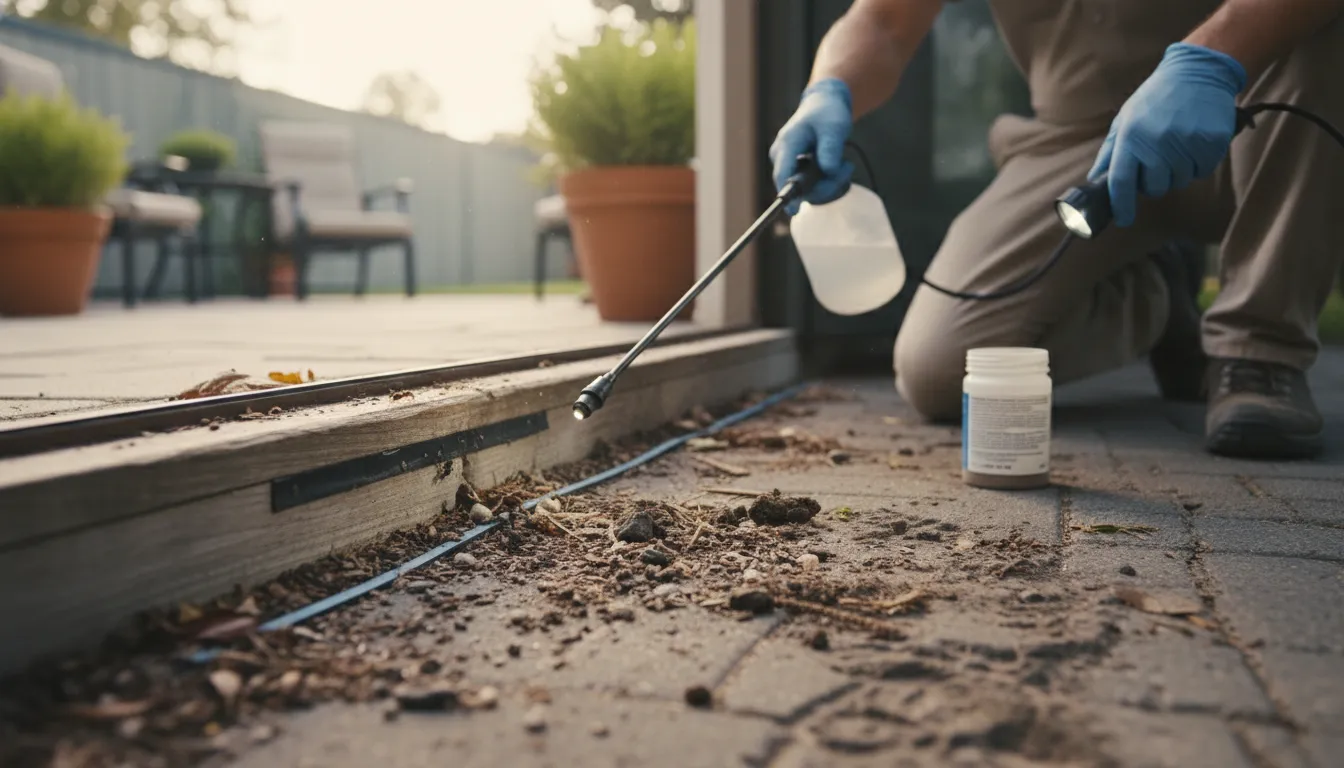
A professional pest management approach in Las Cruces is systematic and science-based, moving far beyond simple spray treatments to address the root of the problem-the entire colony, including the queen.
- Inspection and Identification: A thorough technician will examine your property inside and out to locate ant trails, entry points, and potential nesting sites. Correctly identifying the ant species is paramount, as it dictates the choice of bait, treatment zones, and methods.
- Targeted Treatment Application: Based on the inspection, the technician will employ a combination of strategies:
- Strategic Baiting: This is often the cornerstone of effective ant control. Specialized bait gels or granules are placed in strategic, accessible locations. Worker ants consume the bait and carry it back to the nest, where it is shared with the colony, including the queen, leading to its elimination from within.
- Residual Barrier Treatments: A protective, long-lasting insecticide barrier is applied around the exterior perimeter of the structure, key entry points, and along common ant trails. This creates a zone that repels or kills ants attempting to cross it, preventing new foragers from entering 7.
- Direct Nest Treatment: When nests are accessible, such as outdoor fire ant mounds or colonies in wall voids (accessed via small drilled holes), they may be treated directly with dust or aerosol formulations for a rapid population knockdown.
- Crack and Crevice Treatments: Precision applications of insecticidal dust or foam are made into tiny openings, voids, and spaces where ants travel and hide but are inaccessible to people and pets 8.
- Prevention and Follow-up Recommendations: A key part of the service is advising you on how to make your property less inviting. This includes sealing cracks and gaps with caulk, installing door sweeps, managing moisture issues, and storing food in sealed containers. For ongoing protection, many companies offer maintenance plans with scheduled follow-up visits to ensure the colony is gone and to guard against future invasions 9.
Find the perfect ant control companies for your needs
Get personalized recommendations and expert advice
What to Expect After Treatment
Understanding the timeline for ant control helps set realistic expectations. The speed of results depends heavily on the treatment method (especially baiting versus direct kill) and the size and location of the colony 10.
- Initial Reduction: You may notice a significant decrease in the number of visible, foraging ants within 24 to 48 hours of the initial service, particularly if a fast-acting barrier or contact treatment was used in combination with baits 11.
- Complete Elimination: For the baiting process to work fully, it takes time for the toxicant to circulate throughout the entire colony. Complete control and colony elimination typically takes one to two weeks. In cases of large or multiple colonies, particularly with carpenter ants, it may take several weeks to achieve total eradication 12 13 14.
- The "Patience is Key" Phase: It is crucial not to use store-bought ant sprays or cleaners in the treated areas during this period. Killing the foraging workers you see can actually disrupt the baiting cycle, preventing the bait from being taken back to the nest and slowing down the entire process 15. You might even see increased activity initially as the colony reacts to the treatment, which is often a normal part of the process.
Understanding Ant Control Pricing in Las Cruces
The cost for ant extermination in Las Cruces varies based on the size of your home or business, the severity and type of infestation, and the service model you choose. Most local professionals provide free inspections and detailed quotes 16.
- One-Time Service Visit: For a single, targeted treatment, homeowners can expect to pay between $80 and $500. The average cost for a standard-sized home with a moderate infestation typically falls in the $150 to $300 range 17.
- Ongoing Service Plans: These are popular for long-term prevention and often provide better value for recurring problems.
- Initial Plan Setup: The first visit to establish service usually costs between $80 and $200.
- Monthly Visits: Approximately $30 to $250 per subsequent visit.
- Severe or Complex Infestations: Situations involving widespread carpenter ant damage, multiple nests throughout a property, or very large homes can raise the cost significantly, ranging from $800 to over $1,500 for comprehensive treatment 20 21.
For a precise estimate tailored to your specific situation, contacting established Las Cruces pest control providers for an inspection is the best course of action 22 23 24.
Frequently asked questions
Sources
Footnotes
-
Ant Control in El Paso, TX & Alamogordo, NM - https://www.integritypestandtermite.com/ant-control ↩
-
The Problem With Pavement Ants On Your Reno Property - https://www.pestmaster.com/blog/the-problem-with-pavement-ants-on-your-reno-property/ ↩
-
Seeing Ants Suddenly? This Might Be Why - Kodiak Pest Control - https://www.kodiakpestcontrol.com/blog/seeing-ants-suddenly-this-might-be-why/ ↩
-
Ant Control in Denver, CO - https://www.apcpestcontrol.com/seasonal-service/ant-control/ ↩
-
What Are The Hotspots For Ant Infestations In The Home? - https://pointepest.com/what-are-the-hotspots-for-ant-infestations-in-the-home/ ↩
-
Ant Infestation: Where Do Ants Hide in the House? - PestWorld.org - https://www.pestworld.org/news-hub/pest-articles/where-do-ants-hide/ ↩
-
Ant Control in Las Cruces, NM - https://lascrucestermite.com/ant-control/ ↩
-
Ant Control in Las Cruces, NM - https://lascrucestermite.com/ant-control/ ↩
-
Pest Control for Ants in New Mexico - Insight Pest Solutions - https://insightpest.com/pest-control-for-ants-in-new-mexico/ ↩
-
How do professional exterminators get rid of ants? - https://www.westernexterminator.com/ants/how-to-get-rid-of-ants ↩
-
How Long Does It Take to Stop Seeing Ants After an ... - https://critterwranglerstn.com/ants/how-long-to-stop-seeing-ants-after-exterminator/ ↩
-
Professional Ant Extermination: What to Expect and How to Prepare - https://www.wakepest.com/professional-ant-extermination-what-to-expect-and-how-to-prepare/ ↩
-
How Long Does Pest Control Take? Treatment Timelines ... - https://portageturf.com/blog/how-long-does-it-take-for-pest-control-to-work-within-the-perimeter/ ↩
-
Frequently asked questions about ant control - https://prudentialpest.com/frequently-asked-questions-about-ant-control/ ↩
-
Preparation and Expectations for Ant Control - Amherst Exterminators - https://www.amherstexterminators.com/pest-preparation/preparation-and-expectations-for-ant-control/ ↩
-
Pest control estimates: How much do pest control services cost? - https://gorilladesk.com/learn/pest-control-estimates/ ↩
-
How much does Ant extermination cost? - Yelp - https://www.yelp.com/costs/ant_extermination ↩
-
The ultimate guide to pest control pricing - https://www.method.me/pricing-guides/pest-control-prices-list/ ↩
-
How Much Does an Ant Exterminator Cost? (2025) - This Old House - https://www.thisoldhouse.com/pest-control/ant-exterminator-cost ↩
-
How much does it cost to exterminate ants: 2025 Best Guide - https://bigginsexterminating.com/how-much-does-it-cost-to-exterminate-ants/ ↩
-
How Much Does an Ant Exterminator Cost? [2026 Data] | Angi - https://www.angi.com/articles/how-much-does-it-cost-get-rid-ants.htm ↩
-
Pest Control and Exterminator Services in Las Cruces NM - https://texas.bugoutservice.com/locations/las-cruces/ ↩
-
Prime Pest and Lawn - Las Cruces - https://www.google.com/viewer/place?mid=/g/11spwdzxv2 ↩
-
Desert Oasis Pest Control LLC - https://www.google.com/viewer/place?mid=/g/1thsgcb6 ↩