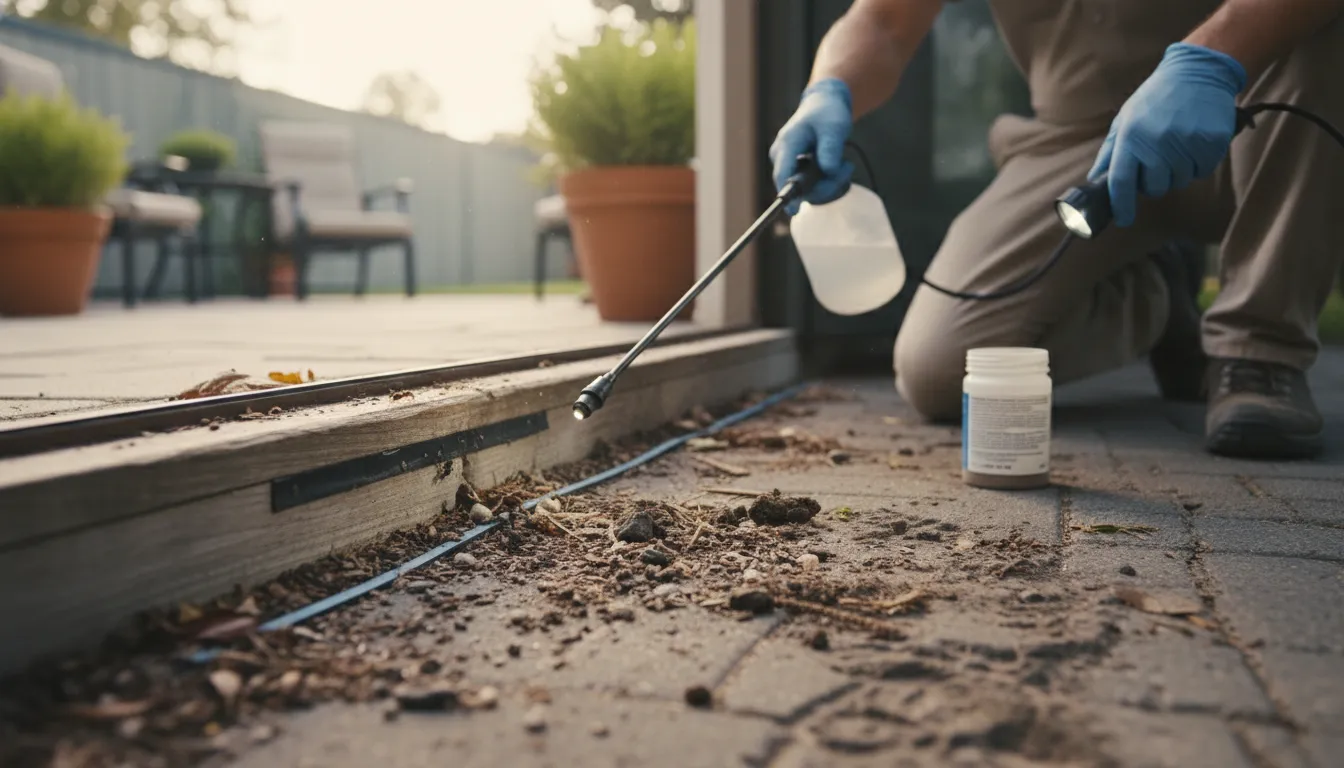
Find the Best Ant Control Companies for Your Business
No obligation • Fast responses • Nationwide coverage

Why you can trust Pest Crews
Pest Crews is a leading U.S. resource for finding and evaluating residential and commercial pest control services. Our team researches providers, reviews treatment approaches, and organizes unbiased information to help you make informed decisions. Companies cannot pay to change our editorial content or influence how they appear.
Search providers near you
Best Ant Control Companies in Vermont Ranked
Ants are a common household nuisance in Vermont, but they can also pose a threat to your property's structure. Effective ant management requires understanding the specific species, their seasonal behaviors, and the most appropriate control methods. This guide provides practical information to help you identify an ant problem, implement prevention strategies, and know when to seek professional ant control services in Vermont.
Common Ant Species in Vermont
Knowing which ant you're dealing with is the first step toward effective control. Vermont homes and businesses typically encounter a few key species, each with distinct characteristics and habits.
Carpenter Ants: These are large ants, typically black or reddish, and are a significant concern in Vermont. Unlike termites, they do not eat wood but excavate it to create smooth tunnels for nesting, which can compromise structural integrity over time. A key sign of their activity is the presence of coarse sawdust-like material (frass) near wooden structures 1.
Pavement Ants: Small and reddish-brown to black, pavement ants are named for their tendency to nest under sidewalks, driveways, and foundation slabs. They enter buildings in search of food, often forming visible trails along edges and cracks.
Odorous House Ants: When crushed, these small, dark brown to black ants emit a distinct odor reminiscent of rotten coconut 2. They nest in a wide variety of locations, both indoors and out, often near moisture sources and under objects like flooring or mulch.
Pharaoh Ants: These tiny, yellowish ants are a major challenge indoors, as they form massive colonies with multiple queens. They are notorious for nesting in wall voids, behind baseboards, and near warm, humid areas, making them difficult to eradicate without professional methods.
Field Ants: Primarily an outdoor species, field ants are larger and often bicolored (red and black). They build mounds in soil or nest in logs and are less likely to invade homes unless their outdoor food sources are scarce 3.
Seasonal Ant Behavior in Vermont
Ant activity in Vermont follows predictable seasonal patterns, which can inform your prevention and treatment timing.
Spring and Summer: This is peak activity season. As temperatures rise, ants forage heavily for food and water to support growing colonies. Carpenter ants become more visible as they establish new satellite colonies and swarmers (reproductive ants) may be seen. Spring rains and summer humidity also drive ants to seek moisture, making kitchens and bathrooms attractive targets.
Fall and Winter: As outdoor temperatures drop, ants seek warmth and shelter. They move indoors, often into wall voids, under insulation, near pipes, or behind appliances. You may see increased indoor activity on warmer winter days as ants venture out from their nesting sites in search of sustenance.
How to Identify an Ant Infestation
Early detection is crucial. Look for these common signs:
- Visible Trails: A line of ants traveling to and from a food source is a clear indicator. Follow the trail to help locate entry points.
- Entry Points: Inspect foundations, windows, doors, and utility line penetrations for cracks and gaps where ants may be entering.
- Frass: Piles of fine, sawdust-like material near wooden beams, window sills, or door frames signal carpenter ant activity.
- Nesting Sites: Outdoors, look for soil mounds (field ants), disturbed pavement, or nests in mulch, logs, or firewood stacked against the house.
- Swarmers: The presence of winged ants indoors, especially in spring, often indicates an established colony within the structure.
Effective Ant Prevention Strategies
An ounce of prevention is worth a pound of cure, especially with ants. Implementing these Integrated Pest Management (IPM) strategies can make your property less inviting.
Sanitation: Eliminate food and water sources that attract ants. Clean up spills immediately, store food in sealed containers, manage pet food, and take out trash regularly. Fix leaky faucets and pipes, as moisture is a powerful attractant 4.
Exclusion: Seal potential entry points. Use caulk to fill cracks in the foundation, around window and door frames, and where utility lines enter the home. Install door sweeps and repair damaged screens 5 6.
Landscape Management: Keep vegetation trimmed back from the structure. Store firewood, lumber, and debris away from the foundation. Ensure downspouts direct water away from the house to reduce moisture accumulation.
Find the perfect ant control companies for your needs
Get personalized recommendations and expert advice
Professional Ant Control Methods in Vermont
For persistent infestations, particularly with carpenter ants or pharaoh ants, professional intervention is often necessary. Vermont pest control experts use a combination of advanced techniques.
Inspection and Identification: A professional will conduct a thorough inspection to identify the ant species, locate nests (including main and satellite colonies), and assess the extent of the problem.
Baiting Programs: This is a highly effective strategy for many species. Professionals use specialized bait formulations (attractive to either protein- or sugar-seeking ants) that worker ants carry back to the colony, ultimately eliminating the queen and the nest.
Perimeter Treatments: Applying non-repellent insecticides around the foundation creates a protective barrier. Ants cross the treatment unknowingly and transfer the product to other colony members through contact, leading to colony collapse 7.
Direct Nest Treatment: For accessible nests, professionals may use targeted dusts or insect growth regulators (IGRs). For carpenter ants, this often involves locating and treating the moist, decaying wood that harbors the main colony 8.
Ongoing Monitoring and Maintenance: Many companies offer seasonal or annual plans that include regular inspections and preventative treatments to keep ants from returning, which can be a cost-effective solution for recurring issues 9.
When to Call a Professional
Consider contacting a Vermont ant control specialist if:
- You have identified or suspect carpenter ants, due to their potential for property damage.
- You are dealing with Pharaoh ants, as DIY efforts often cause the colony to fragment and spread.
- The infestation is widespread or the nest cannot be located.
- Over-the-counter products have failed to resolve the problem.
- You prefer a preventative, long-term solution to avoid future infestations.
Understanding Ant Control Service Costs in Vermont
Pricing for ant control services can vary based on the species, severity, size of the property, and treatment method required.
- General Ant Control (One-Time Service): For common species like odorous house or pavement ants, an initial treatment may range from $150 to $400 or more, depending on the infestation's scope 10 11.
- Carpenter Ant Treatment: Due to the need for thorough inspection and often multiple treatments to eliminate all nests, services for carpenter ants typically start higher, often in the range of $300 to $800+ 12 13.
- Annual or Seasonal Plans: Many providers offer maintenance plans that include scheduled inspections and treatments, which can provide peace of mind and may offer savings compared to one-time services.
Frequently asked questions
Sources
Footnotes
-
Carpenter Ants - Millers Pest Control - https://millerspestvt.com/pests/Carpenter-Ants ↩
-
Odorous House Ant Identification & Behavior | Vermont Pest ... - https://www.vtpestcontrol.com/pest-info/ants/odorous-house-ants/ ↩
-
Field Ant Identification, Habits & Behavior - Vermont Pest Control - https://www.vtpestcontrol.com/pest-info/ants/field-ants/ ↩
-
Managing Household Ant Pests - Texas A&M University - https://www-aes.tamu.edu/files/2014/06/Managing-Household-Ant-Pests.pdf ↩
-
DMV Ant Season: Patterns, Predictions and Prevention Tips - https://bettertermite.com/ant-season/ ↩
-
Ant Infestations by Season | What to Expect and How to Prepare - https://www.westernpest.com/blog/ant-infestations-by-season/ ↩
-
Your Guide to Common Ant Species | Pest Control Rochester - https://townandcountrysolutions.com/your-guide-to-common-ant-species/ ↩
-
How To Get Rid of Carpenter Ants - Frontline Pest Control - https://www.frontlinepestcontrol.com/blog/how-to-get-rid-of-carpenter-ants ↩
-
Apartment Pest Control | Keep Apartments Pest-Free in Vermont - https://www.vtpestcontrol.com/residential/apartments/ ↩
-
Ant Control in VT | Carpenter Ant Exterminator | PestPro - https://www.pestpro.net/ants ↩
-
Ant Exterminators | Ant Pest Control & Removal - Vermont Pest Control - https://www.vtpestcontrol.com/ant-exterminators/ ↩
-
Carpenter Ant Identification, Habits & Behavior - Vermont Pest Control - https://www.vtpestcontrol.com/pest-info/ants/carpenter-ants/ ↩
-
How To Manage the Three Most Common Ant Species - https://www.controlsolutionsinc.com/csi-pest/blog/how-to-manage-the-three-most-common-ant-species ↩