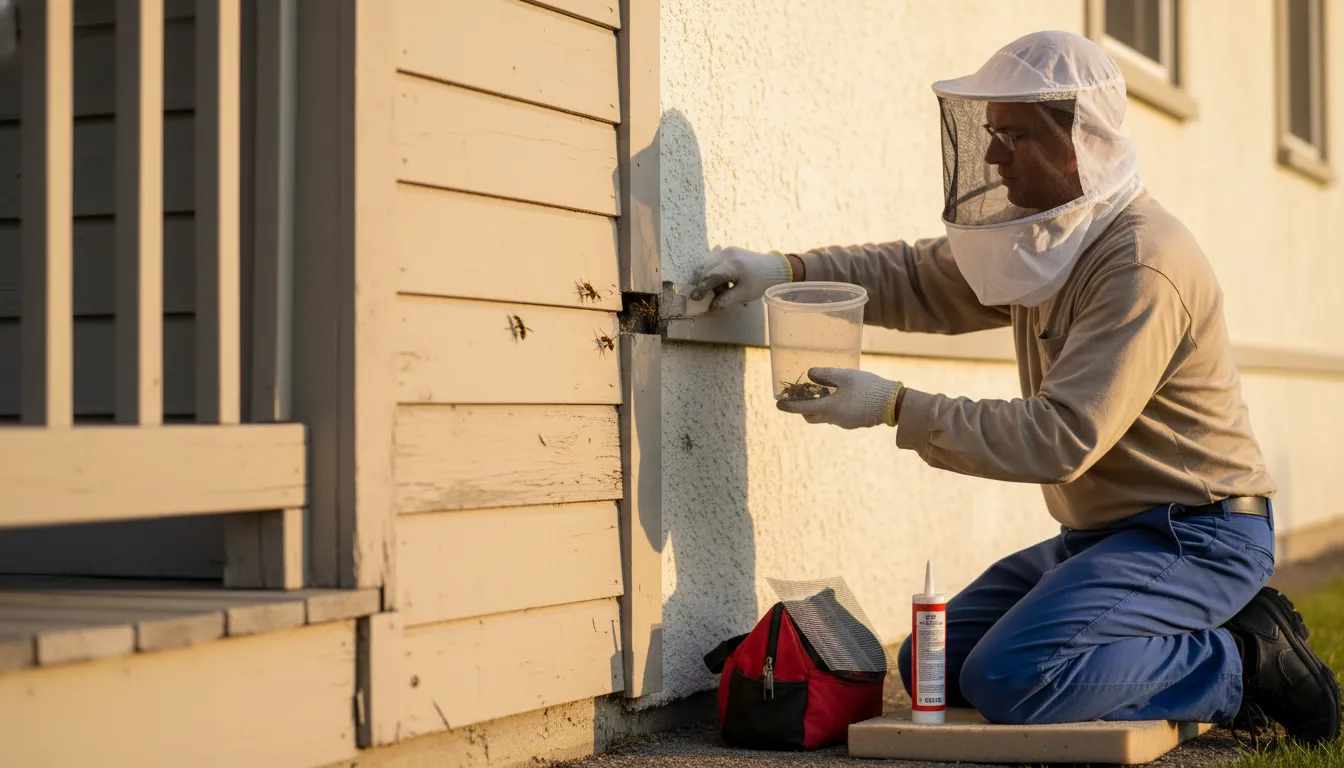
Find the Best Wasp & Hornet Removal Companies for Your Business
No obligation • Fast responses • Nationwide coverage
Why you can trust Pest Crews
Pest Crews is a leading U.S. resource for finding and evaluating residential and commercial pest control services. Our team researches providers, reviews treatment approaches, and organizes unbiased information to help you make informed decisions. Companies cannot pay to change our editorial content or influence how they appear.
Search providers near you
Top Wasp & Hornet Removal Companies in Conway, Arkansas Ranked
A bee or wasp nest on your property in Conway can quickly turn a peaceful backyard into a stressful zone. Professional bee and wasp removal services are essential for safely and effectively addressing these stinging insect problems, protecting your family, pets, and property. This guide will help you understand the local options for stinging insect control, from identifying nests to choosing the right service for humane relocation or extermination.

ClearDefense Pest Control
1015 W 2nd St Suite 105 Suite 105, Little Rock, AR 72201
ClearDefense Pest Control provides environmentally responsible pest control services in Little Rock, AR, and surrounding cities. They specialize in controlling cockroaches, ants, rodents, bees, wasps, and other pests using a micro-crystallized formula that releases treatment slowly for ongoing effectiveness. Their approach includes targeted applications based on pest behavior and lifecycle, creating barriers around homes to prevent pest entry. ClearDefense offers seasonal treatments to address pest activity year-round and removes webs and nests as part of their service. They serve multiple nearby communities including Alexander, Benton, and North Little Rock.
Bug Masters Exterminating Co.
1730 Eureka Garden Rd, North Little Rock, AR 72117
Bug Masters Exterminating Co. is a pest control company based in Little Rock, AR, serving both homes and businesses. They handle a wide range of pests including ants, bed bugs, cockroaches, rodents, fleas, spiders, wasps, yellow jackets, and migratory pests like crickets and beetles. The company specializes in heat remediation for bed bugs, a method considered effective and environmentally friendly, with most treatments successful on the first visit. Bug Masters is recognized locally as a leading provider for bed bug extermination, often receiving referrals from other pest control companies.

Terminix
4228 E 43rd St Suite A, North Little Rock, AR 72117
Terminix is a pest control company serving Little Rock, AR, specializing in managing a wide range of pests including ants, bed bugs, cockroaches, rodents, termites, bees, wasps, and wildlife. Their local technicians are familiar with the specific pest challenges in the area and provide customized plans to protect homes and properties. Terminix offers termite inspections and control, rodent prevention, and bed bug treatments among other services, supported by a nationwide network of expertise.
Central Termite and Pest Control
12620 Lawson Rd, Little Rock, AR 72210
Central Termite and Pest Control has been serving residents of Little Rock, AR since 1957, offering a wide range of pest management services. Their expertise includes termite control using the Termidor system, rodent control, mosquito treatments, bed bug extermination, bee and wasp removal, and wildlife removal. The company emphasizes safety for homes, children, and pets while providing effective pest solutions. Regular termite inspections and mosquito control treatments help protect homes and outdoor spaces throughout the area.
Orkin
8720 I-30, Little Rock, AR 72209
Orkin provides residential and commercial pest control services in Little Rock, Arkansas. They handle a wide range of pests including bed bugs, termites, rodents, mosquitoes, ants, cockroaches, and wildlife. Orkin offers specialized termite inspections and treatments using methods such as dry foam void filler, Sentricon® bait, and liquid barriers. With over 120 years in the pest management industry, Orkin combines experience with a thorough understanding of local pest behaviors across six distinct pest seasons. They also offer 24/7 availability for pest control emergencies.
Understanding Your Stinging Insect Problem
The first step in addressing an infestation is identifying the culprit. Different species require different approaches, especially when considering the ecological importance of pollinators like honeybees.
Common Species in Conway:
- Honeybees: Often seen in swarms in spring, these pollinators are crucial to the environment. They build wax combs inside cavities like wall voids, attics, or hollow trees. Professional removal often focuses on live relocation.
- Paper Wasps: Build distinctive, open-celled, umbrella-shaped nests, often under eaves, deck railings, or in door frames. They are less aggressive than some species but will defend their nest.
- Yellow Jackets: Highly aggressive, especially in late summer and fall. They commonly nest underground in old rodent burrows or within wall cavities, making them particularly dangerous and difficult to remove.
- Bald-Faced Hornets: Build large, gray, enclosed football-shaped nests in trees, shrubs, or on buildings. They are very protective of their nest.
- Carpenter Bees: Look similar to bumblebees but bore perfectly round holes into wooden structures like decks, siding, and rafters to lay eggs, causing potential structural damage over time 1.
Where to Look for Nests Around Your Home
Stinging insects are opportunistic nesters. Conducting periodic checks around your property, especially in early spring, can help you spot a new nest before it becomes a large colony. Common nesting sites in the Conway area include 2 3 4 5:
- Eaves, Soffits, and Roof Overhangs: A prime location for paper wasp nests.
- Wall Voids and Attics: Honeybees and yellow jackets can establish large, hidden colonies inside walls, often indicated by a steady stream of insects entering a small crack or hole.
- Underground and in Landscaping: Yellow jackets favor old rodent burrows, while bumblebees may nest in abandoned rodent nests, compost piles, or under dense shrubbery.
- Outbuildings and Decks: Sheds, garages, playground equipment, and the undersides of decks or porches provide sheltered spots.
- Trees and Shrubs: Bald-faced hornets build their aerial nests in tree branches or dense bushes.
- Structural Wood: Look for carpenter bee activity around untreated wood surfaces, evidenced by perfect half-inch holes and sawdust piles below.
The Seasonal Activity of Bees and Wasps
Insect activity in Arkansas is tightly linked to temperature, which dictates their life cycle and behavior throughout the year 6 7.
- Spring (March-May): As temperatures consistently reach 50-55°F, overwintering queens emerge to start new colonies. This is the most common time to see honeybee swarms-a natural process of colony reproduction. It's the ideal time for prevention, as nests are small and easier to manage 8.
- Summer (June-August): Colonies reach their peak population. Foraging activity is highest during the warmest parts of the day, typically between 10 a.m. and 3 p.m. Nests are fully established and highly defensive.
- Fall (September-November): This is when wasps and yellow jackets become most aggressive. As natural food sources dwindle, they are drawn to human foods, sugary drinks, and trash. Worker wasps begin to die off, and the new queens leave to find hibernation spots 9 10.
- Winter (December-February): Most colonies die off, with only fertilized queens surviving by hibernating in protected crevices. Visible activity is minimal, making it a good time to seal potential entry points in your home's exterior.
Professional Removal: Methods and Local Services
For the safety of everyone involved, DIY removal of an established nest is strongly discouraged 11. Professionals have the training, protective equipment, and correct insecticides to handle the job safely.
Local Conway Services: Companies like Diamond Pest Solutions, Empire Pest Solutions LLC, and McCauley Services offer comprehensive stinging insect control for residents 12 13. These professionals can accurately identify the species, locate the nest, and determine the safest and most effective treatment plan.
Humane Bee Relocation: Given the vital role honeybees play as pollinators, many homeowners and professionals prefer live removal when possible. Local beekeepers or pest control companies with specific expertise may be able to relocate an accessible swarm or colony to a managed apiary. The Arkansas State Plant Board can also provide guidance and may help connect you with an apiary inspector or beekeeper for swarm removal 14.
Find the perfect wasp & hornet removal companies for your needs
Get personalized recommendations and expert advice
What Determines the Cost of Removal?
The cost for professional bee and wasp removal in Conway generally aligns with national averages and depends on several key factors. For an accurate estimate, it's always best to contact local providers for a free inspection 15 16.
- Type of Insect: Removing a ground-nesting yellow jacket colony is typically more complex and costly than treating a small paper wasp nest under an eave.
- Nest Size and Location: A large, established hive inside a wall or attic requires more labor, specialized equipment, and possibly repair work afterward, significantly increasing the price.
- Accessibility: Nests high in a tree, deep within a wall, or under a concrete slab are more challenging and time-consuming to treat.
- Treatment Method: Simple extermination may have one cost, while a live bee relocation requires different skills and time, sometimes affecting the price.
General Cost Ranges:
- Small, Accessible Nests: For a single, visible wasp nest, costs can start around $100 to $200.
- Standard Removal: Most common jobs for wasp or hornet removal fall between $212 and $875, with an average around $385 17 18.
- Complex Infestations: For large yellow jacket nests, hornet nests, or beehives inside structures, prices can range from $500 to $1,200 or more, especially if structural repairs are needed 19.
- Bee Swarm Relocation: If the swarm is easily accessible, some local beekeepers may remove it for free or a nominal fee (averaging around $140) as they are acquiring new bees for their hives 20.
Preventing Future Infestations
After professional removal, take steps to make your property less attractive to stinging insects:
- Seal Entry Points: Carefully inspect and seal cracks, gaps, and holes in your home's siding, roof, and foundation, especially around utility lines and vents.
- Manage Food Sources: Keep trash cans tightly sealed, clean up fallen fruit, and avoid leaving pet food or sugary drinks outside.
- Reduce Nesting Sites: Fill in abandoned rodent burrows, remove old logs or piles of debris, and consider painting or staining untreated wood surfaces to deter carpenter bees.
- Perform Regular Inspections: Routinely check common nesting areas in early spring and summer to catch new nests when they are small.
Frequently asked questions
Sources
Footnotes
-
Wasps, Hornets, Yellowjackets and Bees - Curry's Pest Control - https://www.curryspestcontrol.com/critter-catalog/wasps-hornets-yellowjackets-and-bees/ ↩
-
What Hive Is It?: Identifying Bee and Wasp Nests - Groundworks - https://www.groundworks.com/resources/what-hive-is-it/ ↩
-
Common Areas for Wasp Nests - Summit Pest Management - https://www.summitpestmanagement.com/bees-wasps-exterminators/common-areas-for-wasp-nests/ ↩
-
How Much Does Beehive Removal Cost in 2026? - Lawn Love - https://lawnlove.com/blog/beehive-removal-cost/ ↩
-
Bees, Wasps, Hornets, Stinging Insects Service - https://www.crittercontrol.com/wildlife/stinging-insects/ ↩
-
When Are Bees Most Active? And Other FAQs - https://www.bizzybeeexterminators.com/blog/post/when-are-bees-most-active-and-other-faqs ↩
-
What Month Do Wasps Go Away? - Lookout Pest Control - https://www.lookoutpestcontrol.com/blog/what-seasons-are-wasps-most-active/ ↩
-
Beekeeping Calendar | Month by month to-do list for beekeepers - https://www.uaex.uada.edu/farm-ranch/special-programs/beekeeping/calendar.aspx ↩
-
Late Season Stingers: The "buzz" with Autumn yellow-jacket activity. - https://monadnockpest.com/blog/late-season-stingers-the-buzz-with-fall-season-yellow-jacket-activity ↩
-
Why Are Bees Suddenly So Aggressive? It's Angry Bee Season! - https://www.afcurgentcare.com/torrington/blog/why-are-bees-suddenly-so-aggressive-its-angry-bee-season/ ↩
-
Wasp Nest Removal Arkansas | Nature Guard Pest Control - https://arkansas.mynatureguard.com/blog/how-to-identify-and-remove-wasp-nests-safely-in-arkansas/ ↩
-
Arkansas Bee & Wasp Exterminators | Stinging Insect Removal - https://www.callmccauley.com/bee-wasp-control/ ↩
-
Empire Pest Solutions LLC - https://www.google.com/viewer/place?mid=/g/11bzx52yqn ↩
-
Honey Bee Swarms in Arkansas | Removal services for honey ... - https://www.uaex.uada.edu/farm-ranch/special-programs/beekeeping/swarms.aspx ↩
-
Diamond Pest Solutions - https://www.google.com/viewer/place?mid=/g/11vt066hgq ↩
-
Conway Pest Control - McCauley Services - https://www.callmccauley.com/conway-pest-control/ ↩
-
Yellow jacket exterminator cost 2025: Top 5 Proven Savings - https://bigginsexterminating.com/yellow-jacket-exterminator-cost/ ↩
-
Breaking Down the Bee Control Cost - https://proguardpest.com/breaking-down-the-bee-control-cost/ ↩
-
Bee and Wasp Removal: Top 2025 Effective Solutions - https://bigginsexterminating.com/bee-and-wasp-removal/ ↩
-
How Much Does Beehive Removal Cost in 2026? - Lawn Love - https://lawnlove.com/blog/beehive-removal-cost/ ↩