Find the Best Wasp & Hornet Removal Companies for Your Business
No obligation • Fast responses • Nationwide coverage

Why you can trust Pest Crews
Pest Crews is a leading U.S. resource for finding and evaluating residential and commercial pest control services. Our team researches providers, reviews treatment approaches, and organizes unbiased information to help you make informed decisions. Companies cannot pay to change our editorial content or influence how they appear.
Search providers near you
Find Wasp & Hornet Removal Companies near you
Discovering a buzzing nest of stinging insects on your property can be unsettling. Professional bee and wasp removal is a specialized service that addresses infestations of these insects safely and effectively, protecting your family, pets, and property from the risks associated with stings and potential structural damage. This guide explains the key methods, costs, and safety considerations for managing stinging insect problems, helping you understand your options for connecting with qualified local specialists who can assess your specific situation.
Search providers near you
Understanding the Need for Professional Stinging Insect Control
While a single bee or wasp may seem like a minor nuisance, an established nest represents a significant hazard. These insects are highly defensive of their colonies and can swarm and sting repeatedly if they feel threatened. For the estimated millions of Americans with insect sting allergies, a single sting can trigger a life-threatening reaction. Even for those without allergies, multiple stings are painful and can be dangerous. Furthermore, certain species, like carpenter bees, can damage wooden structures by boring into them to create nesting galleries. Professional intervention is crucial to mitigate these risks, as experts have the training, protective equipment, and targeted methods to resolve the issue without escalating the danger to household members.
Common Methods for Bee and Wasp Extermination and Removal
The approach a professional takes depends heavily on the type of insect, the nest location, and environmental considerations. The goal is always to eliminate the threat while minimizing harm to beneficial insects and the surrounding ecosystem.
Chemical Treatments: For aggressive wasp, hornet, or yellowjacket nests, pest control professionals often use targeted pesticides applied to nests. These are typically administered at night when the colony is less active and all insects are present. The application is precise to avoid unnecessary environmental impact and to ensure the entire colony is treated 1. This method is generally fast and effective for eliminating wasp populations.
Trapping: In some cases, particularly for controlling yellowjacket populations around outdoor living areas, professionals may deploy bait traps. These traps lure foraging wasps inside, where they are captured and cannot escape, helping to reduce the overall number of insects in the area over time. Trapping is often used as a supplementary control method or for ongoing management.
Humane Bee Relocation: Honey bees are vital pollinators, and their populations are under stress. Whenever possible, a live bee colony removal is the preferred method. Many professionals work with local beekeepers who can capture and move honey bee colonies to apiaries where they can thrive. This process involves carefully vacuuming the bees and removing the comb from within a wall, attic, or other structure. Beekeepers often provide this service for free or at a low cost for accessible swarms, as they value the bees 2.
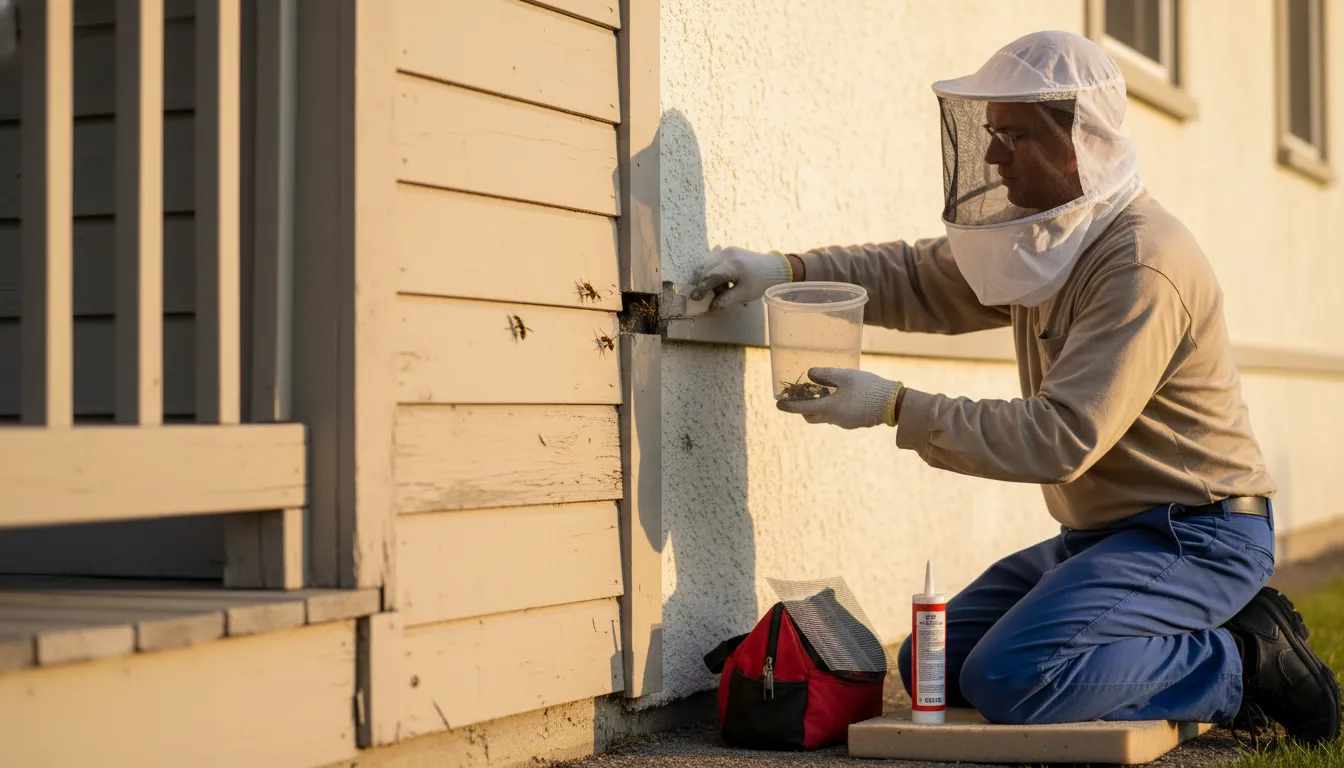
Physical Nest Removal: After a colony has been eliminated, the nest itself often needs to be removed. For wasps, this prevents pheromones from attracting new queens. For bees, leftover honey and wax in a wall can attract other pests or cause staining. Nest removal can be straightforward for an exposed eaves nest, but for nests inside walls or ceilings, it may require the careful cutting of an access panel, removal of comb and honey, and subsequent repair of the opening 3. This complete service ensures the problem is fully resolved.
Critical Safety Considerations in Stinging Insect Management
Attempting a DIY solution for a bee, wasp, or hornet nest is strongly discouraged due to the significant risks involved.
- Sting Risk and Allergies: The primary danger is provoking a mass-stinging event. Professionals are trained to approach and treat nests in a way that minimizes defensive behavior. They also carry protective gear and know how to work around known allergies 4.
- Expertise with Aggressive Species: Identifying the exact species is important, as some, like bald-faced hornets or certain yellowjackets, are exceptionally aggressive. Professionals know how to handle these different temperaments safely 5.
- Access and Equipment: Nests in high places, deep underground, or inside structural voids are extremely hazardous to access without proper ladders, scaffolding, and protective suits. Professionals have this specialized equipment and the experience to use it safely 6.
- Structural Knowledge: Removing a hive from inside a wall requires knowing where to cut without damaging electrical wiring, plumbing, or load-bearing structures. A professional brings this essential knowledge to the job.
Find the perfect wasp & hornet removal companies for your needs
Get personalized recommendations and expert advice
What Influences the Cost of Bee and Wasp Control?
The price for professional stinging insect removal varies widely based on several key factors. Understanding these can help you interpret estimates from service providers.
- Type of Insect and Service: A wasp nest removal for a small, exposed paper wasp nest is typically on the lower end of the scale. In contrast, a honey bee hive removal from inside a wall structure is a more labor-intensive, technical job and costs more. Many beekeepers remove accessible swarms (a cluster of bees not yet in a nest) for little to no charge 7.
- Nest Size and Location: This is the most significant cost driver. A small nest under a deck eave is straightforward. A large nest inside a wall void, attic, or HVAC duct requires time, specialized tools, and often drywall repair, increasing the price substantially. Nests high up on a second-story soffit or in a tree may also cost more due to access challenges.
- Emergency or After-Hours Service: Services requested on weekends, holidays, or outside standard business hours often incur an additional premium 8.
To provide a general range based on industry data: wasp or hornet nest removal typically costs between $100 and $400+, while a structured honey bee hive removal can range from $150 to $700 or more, with complex removals from walls or ceilings at the higher end 9 10 11 12. Always request a detailed, on-site inspection and written estimate before work begins.
Effective Prevention Strategies for Homeowners
After a nest has been removed, taking preventive steps can help avoid future infestations.
- Seal Entry Points: In early spring, inspect your home's exterior. Seal any cracks, gaps, and holes in siding, around roof eaves, vents, and utility lines with caulk or steel wool. Pay special attention to areas where different building materials meet.
- Manage Attractants: Keep trash cans tightly sealed and clean up food spills, especially sugary drinks and proteins, from outdoor eating areas promptly. Consider using lids on compost bins 13.
- Modify Landscaping: Keep shrubs and tree branches trimmed back from your house. Overgrown vegetation provides shelter and can guide insects to your structure. Fill in rodent burrows in the ground, as these can be adopted by yellowjackets 14.
- Regular Inspections: Periodically check common nesting sites like under decks, inside sheds, under eaves, and in attic vents, especially in late spring and early summer when colonies are just starting.
By combining professional removal with diligent prevention, you can protect your property and enjoy your outdoor spaces with greater peace of mind.
Frequently asked questions
Sources
Footnotes
-
Bee and Wasp Extermination Services | Scout Pest Control - https://www.scoutpestcontrol.com/understanding-bees-and-wasps-what-you-need-to-know-about-removal-and-extermination/ ↩
-
Bee and Wasp Extermination Near Me | Safe Insect Removal Services - https://www.scoutpestcontrol.com/effective-insect-removal-a-comprehensive-guide-to-bee-wasp-extermination-and-pest-management/ ↩
-
Bee and Wasp Exterminator Near Me: Top 5 Proven Tips - https://bigginsexterminating.com/bee-and-wasp-exterminator-near-me/ ↩
-
Bee and Wasp Removal: Top 2025 Effective Solutions - https://bigginsexterminating.com/bee-and-wasp-removal/ ↩
-
Bee, Wasp, & Hornet Control & Removal - ABC Humane Wildlife - https://abcwildlife.com/animals-insects/bee-wasp-hornet-control/ ↩
-
Bee, Wasp, and Hornet Nests: Issues and Professional Removal - https://www.cai-ohio.com/inspection-library/bee-wasp-and-hornet-nests-issues-and-professional-remova ↩
-
Safe & Effective Bee Removal for Homeowners and Beekeepers - https://responsiblepestcontrol.net/blog/bee-removal/ ↩
-
Honey Bee Removal Cost: What to Know for Your Budget - https://blythewoodbeecompany.com/blogs/news/honey-bee-removal-cost ↩
-
Bee or Wasp Removal Cost - https://usalivebeeremoval.com/bee-or-wasp-removal-cost/ ↩
-
What Do Bee Keepers Charge for Bee Removal in 2025? - Pest Extinct - https://pestextinct.com/what-do-bee-keepers-charge-for-bee-removal-in-2025/ ↩
-
How Much Does Wasp Nest Removal Cost in 2026? - Lawn Love - https://lawnlove.com/blog/wasp-nest-removal-cost/ ↩
-
Property Manager's Guide to Wasp Control - https://www.rpmdiversified.com/gainesville-property-manager-guide-wasps-661 ↩
-
Bee, Wasp, and Hornet Removal - Universal Pest Control - https://universalpest1.com/services/specialty-pest-control/bees-wasps-hornets/ ↩
-
Keeping Your Home Safe: Bee and Wasp Removal Services ... - https://crandellpest.com/keeping-your-home-safe-bee-and-wasp-removal-services-explained/ ↩