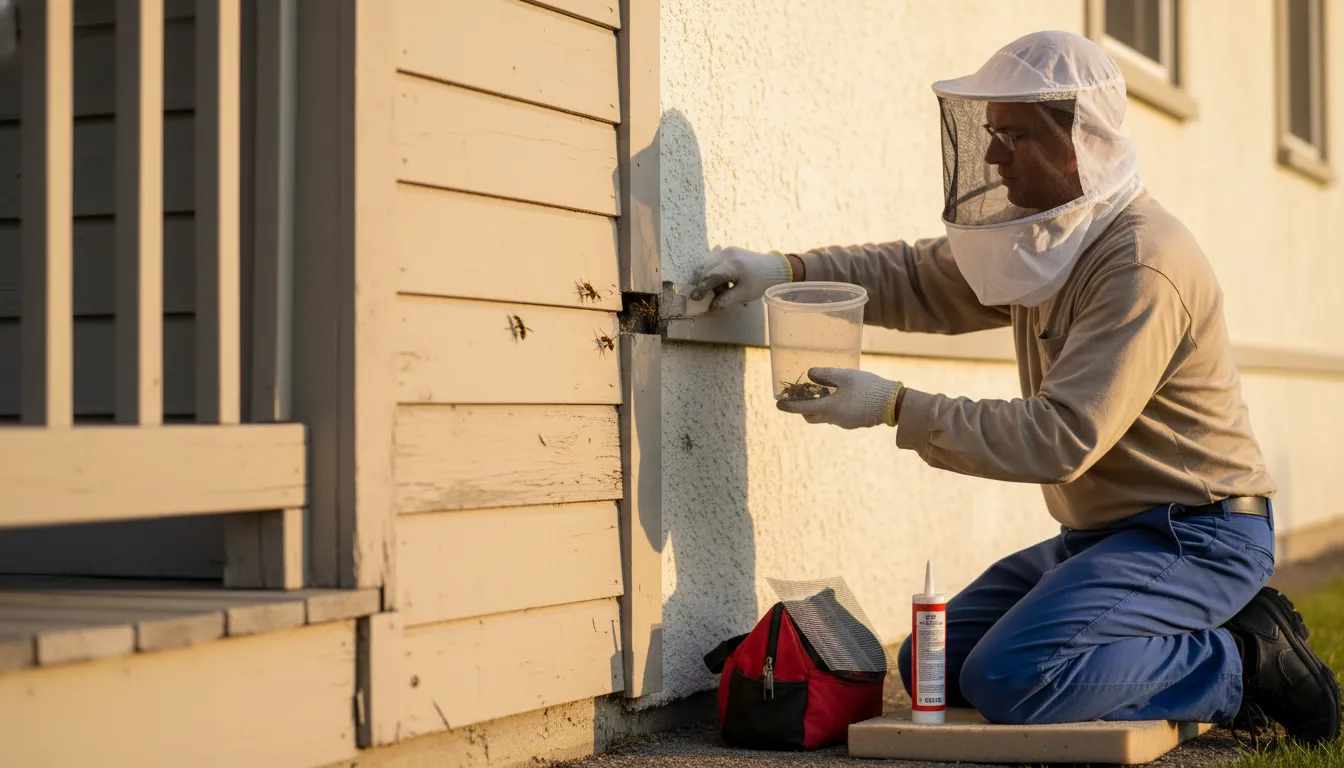
Find the Best Wasp & Hornet Removal Companies for Your Business
No obligation • Fast responses • Nationwide coverage

Why you can trust Pest Crews
Pest Crews is a leading U.S. resource for finding and evaluating residential and commercial pest control services. Our team researches providers, reviews treatment approaches, and organizes unbiased information to help you make informed decisions. Companies cannot pay to change our editorial content or influence how they appear.
Search providers near you
Best Wasp & Hornet Removal Companies in Minnesota Ranked
Discovering a buzzing nest on your property can be alarming. In Minnesota, managing stinging insects requires a nuanced approach that balances safety, environmental responsibility, and the specific biology of the pests involved. This guide provides clear, practical information on navigating bee and wasp issues, from identifying the problem to understanding your removal options and connecting with the right local experts. Whether you're dealing with beneficial honey bees or aggressive wasps, knowing the local protocols and seasonal considerations is key to a safe and effective resolution.
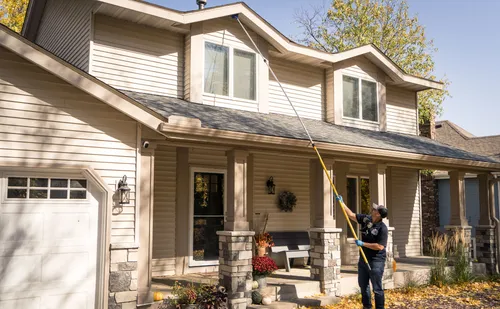
Rainbow Pest Experts
11571 K-Tel Dr, Minnetonka, MN 55343
Rainbow Pest Experts is a pest control company serving Minneapolis, MN, and the surrounding Twin Cities area. They offer a range of pest management services including mouse control, mosquito and tick treatments, ant control, and wasp removal. Their approach includes both elimination of current pests and prevention of future infestations. With over two decades of experience, Rainbow Pest Experts applies science-backed and environmentally responsible methods to protect homes and families. They also provide ongoing pest protection plans for year-round coverage.
Rove Pest Control
275 4th St E b260, St Paul, MN 55101
Rove Pest Control provides residential and commercial pest control services in Minneapolis, MN. They address a wide range of pests including ants, mice, rats, cockroaches, wasps, and bed bugs, using preventive treatments to help keep properties pest-free year-round. Rove offers specialized services such as bed bug heat treatments and mosquito control, and serves various neighborhoods and business types across the Minneapolis-St. Paul metro area. The company has partnered with Greenix Pest Control, which has over a decade of industry experience, enhancing their commitment to effective and sustainable pest management solutions.
Rove Pest Control
301 4th Ave S #272h, Minneapolis, MN 55415
Rove Pest Control provides residential and commercial pest control services in Minneapolis, MN. They handle a variety of pests including ants, rodents, cockroaches, wasps, bed bugs, and mosquitoes. Their services include preventive treatments designed to keep pests from returning. Rove Pest Control offers specialized treatments such as state-of-the-art heat treatment for bed bugs and injection treatments for trees and shrubs. The company has partnered with Greenix Pest Control, which has over a decade of experience, enhancing their expertise and service reach across the Midwest.

Valor Pest Solutions
1406 Thomas Ave W, St Paul, MN 55104
Valor Pest Solutions is a pest control company based in Minneapolis, MN, specializing in customized pest management tailored to the region's extreme seasonal changes. They offer services for a variety of pests including ants, mice, wasps, spiders, mosquitoes, bed bugs, and rodents. Their approach begins with a thorough inspection followed by a tailored treatment plan that considers local conditions and seasonal pest activity. One notable capability is their comprehensive pest control process, which includes interior and exterior treatments, lawn care, and prevention measures such as de-webbing and nesting area elimination. Valor Pest Solutions understands the unique pest challenges in Minnesota and adapts their services accordingly.

Valor Pest Solutions
530 N 3rd St Unit C, Minneapolis, MN 55401
Valor Pest Solutions is a pest control company serving Minneapolis, MN, with over 30 years of local experience. They provide customized pest control services tailored to seasonal pest challenges common in Minnesota homes. Their expertise covers a wide range of pests including ants, mice, wasps, mosquitoes, bed bugs, and rodents. Valor Pest Solutions offers thorough interior and exterior treatments, including home perimeter and full yard services, with a focus on eco-friendly and pet-safe products. They specialize in rodent control by identifying nests and eliminating infestations effectively. Their knowledge of local pests and seasonal patterns supports targeted pest management throughout the year.
Understanding Minnesota's Stinging Insects
Not all buzzing insects are created equal, and the approach in Minnesota differs significantly between species. Correct identification is the crucial first step.
Honey Bees are fuzzy, golden-brown insects that are vital pollinators. In Minnesota, there is a strong emphasis on preserving honey bee colonies whenever possible due to their ecological importance and declining populations. Extermination is generally discouraged.
Wasps, including yellow jackets, hornets, and paper wasps, have smoother, brighter yellow and black bodies and can be highly aggressive, especially in late summer when defending their nests. These are typically treated as pests requiring control or extermination.
Bumble Bees are large, robust, and very fuzzy. They are also excellent pollinators and usually nest in small colonies in the ground or in abandoned rodent burrows. They are rarely aggressive unless their nest is directly disturbed.
The Minnesota Approach: Relocation vs. Extermination
State guidelines and best practices clearly separate how to handle bees versus wasps.
For Honey Bees: Seek Relocation
The preferred and often mandated method for a honey bee swarm or established hive is live removal and relocation. This process involves:
- Contacting Local Beekeepers: Organizations like the Minnesota Hobby Beekeepers Association maintain networks of beekeepers who may volunteer or charge a fee to collect swarms and remove established hives.
- Professional Live Removal: Specialists use techniques like bee vacuums to safely collect the colony and physically remove the wax comb from structures like walls or attics.
- Complex Situations: If bees have established a hive deep within a wall void, removal becomes more invasive and costly, as it may require opening up the structure to extract all comb and honey to prevent future problems with decay or attracting other pests.
For Wasps and Hornets: Professional Control
Due to their aggressive nature and lack of the ecological benefit of honey bees, wasp and hornet management focuses on extermination and prevention.
- Targeted Elimination: Pest management professionals use specialized insecticides and techniques to eliminate active nests, often treating the nest directly for immediate results.
- Preventative Treatments: Many companies offer exterior barrier sprays applied in the spring and fall. These treatments target areas where queens may try to establish new nests and can significantly reduce seasonal problems.
- Nest Removal: After treatment, the nest is often removed to prevent secondary pest issues and to allow for any necessary repairs to the structure.
When and Why Stinging Insects Become a Problem
Activity is highly seasonal, which influences both the nature of the threat and the recommended response.
Spring (April - June): This is the critical window for prevention. Overwintered queen wasps emerge to seek sheltered spots to build new nests-often in soffits, attics, wall voids, or under decks. Proactive, preventative exterior sprays applied during this time can deter queens from settling on your property.
Summer to Fall (August - October): Colonies reach their peak size and aggression. Food sources become scarcer, making wasps more bothersome at outdoor gatherings. Nests are large, well-established, and defended fiercely. This period most commonly requires professional intervention for active nest elimination.
Find the perfect wasp & hornet removal companies for your needs
Get personalized recommendations and expert advice
Factors Influencing Removal Complexity and Cost
The price for bee or wasp services in Minnesota varies widely, primarily based on the location of the nest and the species involved.
- Basic Wasp Nest Removal: For an accessible, above-ground nest (e.g., under eaves, in a shrub), removal typically ranges from $100 to $300+ 1 2.
- Ground Nests: Yellow jackets often nest in the ground, which can be hazardous. Removal costs are similar to above-ground nests but require specific techniques.
- Complex Interior Removals: This is the most significant cost driver. If honey bees or wasps have colonized a wall void, attic space, or chimney, the job expands from simple pest control to a minor construction project. Professionals must safely eliminate the insects, remove all comb and honey (to prevent decay and attractants), and often coordinate with a contractor to open and repair the structure. These scenarios can cost $1,000 to $2,500 or more 3 4 5.
- Honey Bee Relocation: While sometimes offered at a lower cost by hobbyists for easy swarms, professional live removal from a structure carries a cost comparable to complex pest removal due to the labor and care required.
- Preventative Seasonal Contracts: Some homeowners opt for seasonal spray programs targeting wasps and other perimeter pests. These are typically priced per application or as an annual contract.
DIY Considerations: Proceed with Extreme Caution
Attempting to handle a nest yourself is risky and is only advisable under very specific conditions.
For Small, Accessible Wasp Nests: A small, recently started paper wasp nest (the size of a golf ball) on an easily reachable surface might be addressed by a diligent homeowner using a commercial aerosol spray designed for wasps, applied at night or on a cool day when insects are less active, while wearing full protective clothing 6. This is not recommended for ground nests, large nests, or if you have allergies.
For Honey Bees: DIY is not recommended. Disturbing a hive without proper technique can provoke a dangerous sting response and may violate local guidelines encouraging relocation. Always contact a beekeeper first.
When to Absolutely Call a Professional:
- The nest is large or has been active for weeks.
- It's located inside a wall, attic, or other structural void.
- You are allergic to stings.
- The nest is in a high-traffic area (near a doorway, playground, or patio).
- You are dealing with aggressive yellow jackets or hornets.
- You suspect the insects are honey bees.
Finding the Right Service Provider in Minnesota
Making the right call depends entirely on your situation.
- Identify the Insect: Take a photo from a safe distance. Is it fuzzy (likely bee) or smooth and brightly colored (likely wasp)?
- For Suspected Honey Bees: Search for local beekeeping associations or "bee rescue" services. The University of Minnesota Bee Lab website offers guidance and contacts 7.
- For Wasps, Hornets, or Complex Bee Infestations: Contact licensed pest management professionals. Look for companies that specify experience with stinging insects and offer clear explanations of their process for both extermination and preventative treatments 8 9 10.
- Get a Detailed Assessment: A reputable professional will inspect the property, identify the species and nest location, and provide a detailed quote that outlines the removal method, any necessary repairs, and follow-up recommendations.
Frequently asked questions
Sources
Footnotes
-
Wasp & Hornet Removal in Minneapolis - Rainbow Pest Experts - https://www.rainbowpestexperts.com/pest-services/wasp-hornet-control/ ↩
-
How Much Does Wasp Nest Removal Cost? [2026 Data] - Angie's List - https://www.angi.com/articles/how-much-does-wasp-removal-cost.htm ↩
-
How to Remove Minnesota Bees and Wasps Safely - https://pestandcrittercontrol.com/remove-minnesota-bees-wasps-safely-2018/ ↩
-
How Much Does Beehive Removal Cost in 2026? - Lawn Love - https://lawnlove.com/blog/beehive-removal-cost/ ↩
-
Wasp Nest Removal & Prevention in Minneapolis - https://bogopestcontrol.com/wasp-nest-removal-prevention-in-minneapolis/ ↩
-
Effective Mud Wasp Nest Removal Techniques for St Cloud ... - https://completegroundcontrol.com/blog/effective-mud-wasp-nest-removal-techniques-for-st-cloud-mn-homes/ ↩
-
Wasp and Bee Removal - Bee Lab - https://beelab.umn.edu/wasp-and-bee-removal ↩
-
Quick Treatment & Removal Of Hornets & Wasps - https://donerightpestsolutions.com/services/hornets-wasps ↩
-
Wasps Extermination and Nest Removal Minneapolis - https://www.greenmnpest.com/wasps-extermination-and-nest-removal-minneapolis/ ↩
-
Bee & Wasp Removal Service - Minneapolis Wasp Treatment - https://bugtech.com/bee-and-wasp-control/ ↩