Find the Best Wasp & Hornet Removal Companies for Your Business
No obligation • Fast responses • Nationwide coverage

Why you can trust Pest Crews
Pest Crews is a leading U.S. resource for finding and evaluating residential and commercial pest control services. Our team researches providers, reviews treatment approaches, and organizes unbiased information to help you make informed decisions. Companies cannot pay to change our editorial content or influence how they appear.
Search providers near you
Best Wasp & Hornet Removal Companies in Vermont Ranked
Discovering a buzzing nest on your property can be unsettling. In Vermont, managing stinging insects safely and effectively requires professional expertise. This guide provides essential information on identifying different species, understanding removal options, and navigating seasonal considerations to protect your home and family. You can use this resource to learn about local services and make informed decisions when you need assistance.
Understanding Vermont's Stinging Insects
Proper identification is the critical first step in any removal process. Vermont is home to various stinging insects, each with distinct behaviors and nesting habits. Knowing what you're dealing with determines the urgency, method, and cost of removal.
- Honey Bees: These are vital pollinators and are generally not aggressive unless their hive is threatened. They have fuzzy, golden-brown bodies and typically nest in hollow trees, wall cavities, or sometimes in open spaces like between rafters. Due to their ecological importance, honey bee colonies are often candidates for relocation rather than extermination.
- Bumble Bees: Larger and furrier than honey bees, bumble bees are also important pollinators. They often nest in the ground, in abandoned rodent burrows, or under piles of debris. They are typically docile but will defend their nest if disturbed.
- Paper Wasps: Recognizable by their long legs and narrow waists, paper wasps build open-comb, umbrella-shaped nests often found under eaves, deck railings, or in shrubs. They can be aggressive when their nest is approached.
- Yellowjackets: These wasps are highly aggressive, especially in late summer and fall. They have bright yellow and black markings and build paper nests that can be found in the ground, in wall voids, or in attics. Their tendency to scavenge makes them common pests at outdoor gatherings.
- Bald-Faced Hornets: Actually a type of yellowjacket, these insects are black with white or ivory markings. They build large, football-shaped paper nests, usually high in trees or on buildings. They are extremely protective of their nest and can sting repeatedly.
A licensed professional will always start with a positive identification to choose the safest and most appropriate course of action.
Why Professional Removal is Essential in Vermont
Attempting to remove a bee, wasp, or hornet nest yourself is strongly discouraged and can be dangerous. Vermont professionals are trained and equipped to handle these situations safely.
Safety First: Stinging insects can swarm and deliver multiple stings, which can trigger severe allergic reactions (anaphylaxis) in some individuals. Professionals have the protective gear and techniques to minimize this risk for themselves and your household.
Proper Identification and Treatment: As mentioned, the treatment differs vastly between a honey bee colony and a yellowjacket nest. Using the wrong method can be ineffective, worsen the problem, or harm beneficial pollinators. Experts know the biology and behavior of each species.
Nest Location Challenges: Nests inside walls, chimneys, or high in trees require specialized tools and knowledge for safe access and complete removal. Incomplete removal can lead to recurring infestations, as pheromones left behind can attract new colonies or surviving insects may rebuild 1.
Legal and Environmental Considerations: Some municipalities have regulations regarding pesticide application. Professionals understand these rules and employ integrated pest management (IPM) strategies, prioritizing targeted, environmentally responsible solutions whenever possible.
Find the perfect wasp & hornet removal companies for your needs
Get personalized recommendations and expert advice
Removal Methods: Extermination vs. Relocation
The approach to removing stinging insects depends primarily on the species. Vermont pest control companies typically offer two main services.
Extermination
This is the standard and often necessary method for dealing with aggressive species like yellowjackets, hornets, and most wasps. The goal is to eliminate the colony to protect people and property.
- Inspection: The technician locates the nest and identifies the insect.
- Treatment: A targeted insecticide is applied, usually in the evening or at night when the insects are less active and the entire colony is present. This ensures the queen is eliminated.
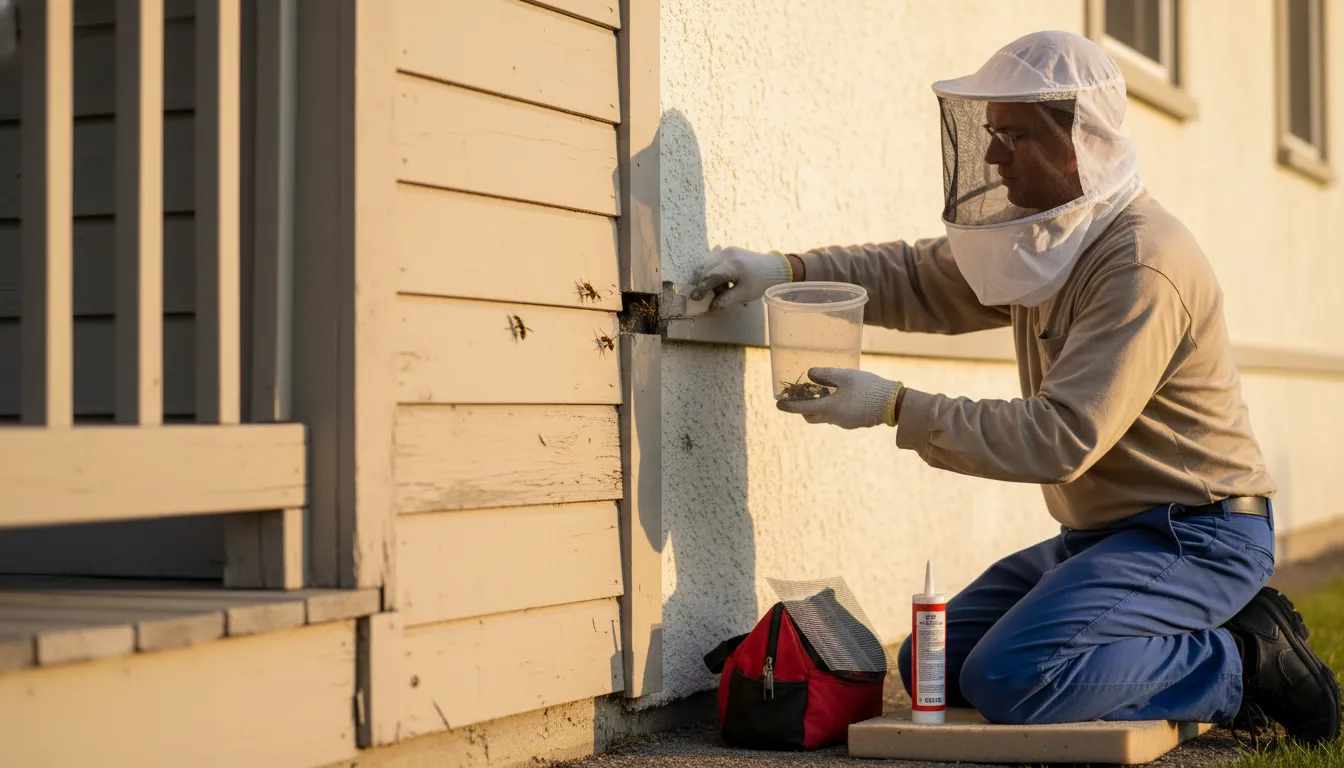
- Removal & Prevention: After the colony is neutralized, the nest is physically removed (if accessible) to prevent other pests from being attracted to it. The technician will also seal entry points and advise on measures to deter future nesting 2 3.
Relocation
This humane and eco-friendly option is primarily available for honey bees, which are struggling globally and are crucial for agriculture.
- Contacting a Beekeeper: Many local beekeepers and some pest control companies partner with apiarists to save viable honey bee colonies.
- The Process: Using specialized equipment like bee vacuums, the beekeeper carefully collects the swarm or removes the comb from a cavity. The bees and their queen are then transported to a managed apiary where they can thrive.
- Cost: Beekeepers often perform swarm captures (a cluster of bees without an established nest) for free or a small fee, as they are gaining a new colony. Removal of an established hive from a structure is more labor-intensive and may cost between $150 and $500, but this is often less than extermination and supports the environment 4.
Seasonal Guide for Nest Removal in Vermont
The time of year significantly impacts insect behavior, removal strategies, and safety.
- Spring (April-May): Queens emerge from hibernation and begin searching for nesting sites. This is an ideal time for prevention, such as sealing potential entry points in soffits, vents, and wall cracks. Spotting and addressing a very new, small nest is easiest now.
- Summer (June-August): Colonies grow rapidly. Wasps and hornets become more active and defensive as they work to feed the developing larvae. Professional removal services are in high demand during these months 5.
- Late Summer & Fall (September-October): This is when problems often become most apparent-and dangerous. As natural food sources dwindle, yellowjackets and hornets become highly aggressive in their search for sugars and proteins, frequently bothering outdoor activities. The colonies are at their peak size, making removal more complex 6.
- Winter (November-March): With the exception of the queen, most social wasps, hornets, and bees in exposed nests die off in the winter. This is the safest time to physically remove an inactive, empty nest from an eave or tree. It eliminates a potential site for a new queen in the spring. However, if insects are active inside a wall or attic, they may have found a warm space to survive, and professional help is still needed 7.
Understanding the Cost of Bee & Wasp Removal in Vermont
Prices for stinging insect removal vary widely based on several factors. The following estimates are based on 2026 industry data for Vermont and the Northeast 8.
Primary Cost Factors:
- Insect Type: Honey bee relocation may have different pricing (sometimes lower) than wasp extermination.
- Nest Size & Location: A small, easily accessible paper wasp nest under a deck will cost far less than a large yellowjacket colony inside a wall or chimney.
- Urgency & Accessibility: Emergency or after-hours service, or nests requiring ladders, scaffolding, or drywall repair, will increase the price.
General Price Ranges:
- Swarm Capture (Honey Bees): $0 - $150 (often free from beekeepers if easily accessible) 9.
- Standard Exterior Nest: $100 - $400 for removal of a visible nest in a tree, bush, or under an eave.
- Ground Nest: $150 - $500 for yellowjacket nests in the ground, which can be extensive.
- Structural Nest (Wall, Attic, Chimney): $300 - $1,300+. This higher range accounts for the need to locate the nest within the structure, possibly open a wall, remove comb, and perform repairs after treatment 10 11 12.
- Preventive Treatments: Some companies offer seasonal protection plans from spring through fall, which may provide periodic inspections and treatments for a set fee.
Always request a detailed, on-site inspection and a written quote from a licensed professional before work begins.
Choosing a Qualified Vermont Removal Service
Selecting the right provider ensures a safe, effective, and lasting solution.
- Verify Licensing & Insurance: Ensure the company is licensed by the Vermont Agency of Agriculture, Food & Markets for pesticide application and carries both liability and worker's compensation insurance.
- Ask About Experience & Methods: Inquire about their specific experience with the type of insect you have and their standard protocols. Do they work with beekeepers for honey bee relocation?
- Get a Detailed Inspection & Quote: A reputable company will inspect the property before providing a written estimate that outlines the problem, proposed solution, and total cost.
- Check for Guarantees: Ask if their service includes a guarantee or warranty period, and understand what it covers (e.g., retreatment if the problem recurs within a certain timeframe).
- Read Reviews & Ask for References: Look at online reviews and don't hesitate to ask the company for references from past customers with similar issues.
Frequently asked questions
Sources
Footnotes
-
Bee and Wasp Removal: Top 2025 Effective Solutions - https://bigginsexterminating.com/bee-and-wasp-removal/ ↩
-
Bee Wasp and Hornet Exterminators | Nest Removal - https://www.vtpestcontrol.com/bees-wasps-exterminators/ ↩
-
Bee, Wasp, & Hornet Nest Removal - Suburban Exterminating - https://www.suburbanexterminating.com/bees-wasps-exterminators/bee-wasp-hornet-nest-removal/ ↩
-
Honey Bee Nest Removal | Safe & Eco-Friendly Solutions - https://blythewoodbeecompany.com/blogs/news/honey-bee-nest-removal ↩
-
Wasp & Bee Control Vermont | Safe Nest Removal - Pestpro - https://www.pestpro.net/wasps-bees ↩
-
Bee, Wasp & Hornet Nest Removal - Vermont Pest Control - https://www.vtpestcontrol.com/bees-wasps-exterminators/nest-removal/ ↩
-
When Is It Safe To Remove a Wasp Nest? - Western Exterminator - https://www.westernexterminator.com/western-answers/when-is-it-safe-to-remove-a-wasp-nest ↩
-
How Much Does Wasp Nest Removal Cost in 2026? - Lawn Love - https://lawnlove.com/blog/wasp-nest-removal-cost/ ↩
-
How Much Does Bee Removal Cost? [2026 Data] | Angi - https://www.angi.com/articles/how-much-does-bee-removal-cost.htm ↩
-
How Much Does Beehive Removal Cost in 2026? - Lawn Love - https://lawnlove.com/blog/beehive-removal-cost/ ↩
-
How Much Does Wasp Nest Removal Cost? [2026 Data] - Angie's List - https://www.angi.com/articles/how-much-does-wasp-removal-cost.htm ↩
-
How Much Does Bee Removal Cost? | Compare Prices Now - https://pestextinct.com/bee-removal/ ↩