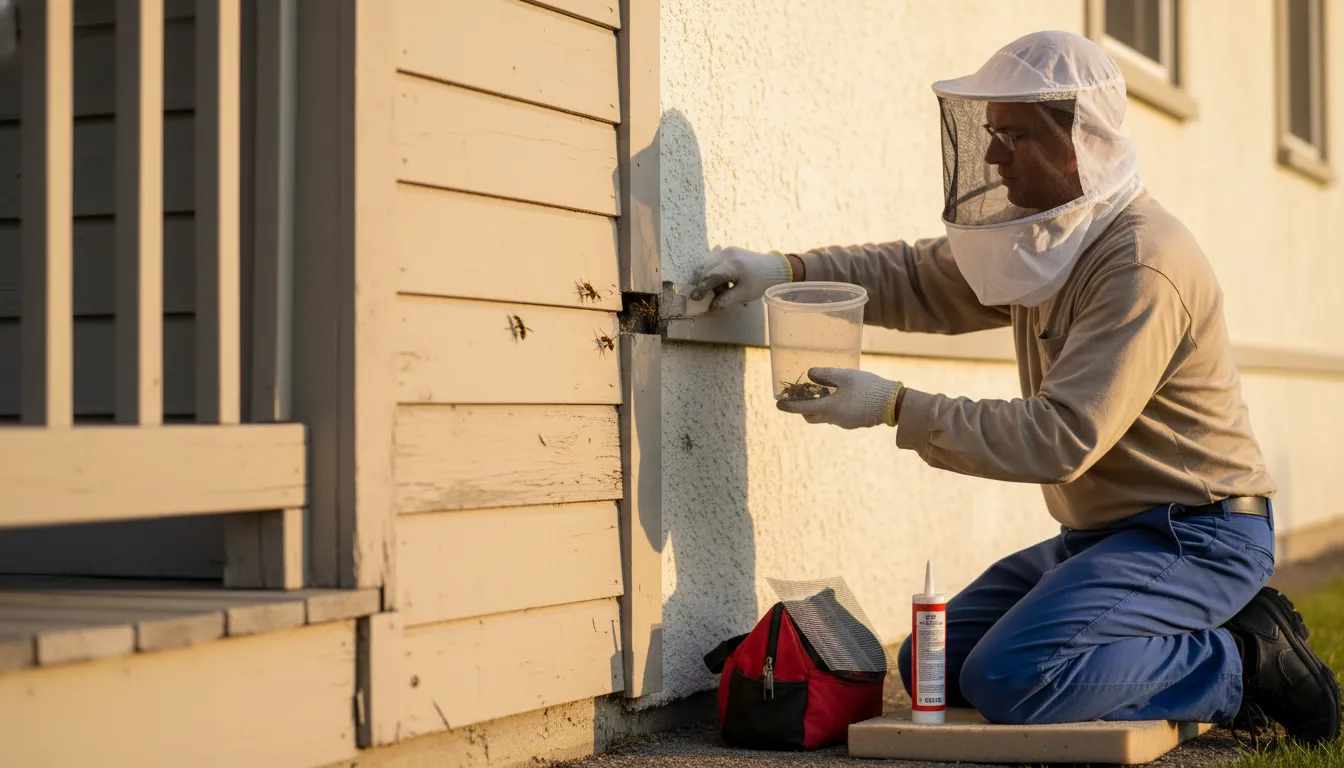
Find the Best Wasp & Hornet Removal Companies for Your Business
No obligation • Fast responses • Nationwide coverage

Why you can trust Pest Crews
Pest Crews is a leading U.S. resource for finding and evaluating residential and commercial pest control services. Our team researches providers, reviews treatment approaches, and organizes unbiased information to help you make informed decisions. Companies cannot pay to change our editorial content or influence how they appear.
Search providers near you
Best Wasp & Hornet Removal Companies in Iowa Ranked
Discovering a buzzing nest on your property can be unsettling. In Iowa, managing stinging insects like bees, wasps, and yellow jackets requires a careful approach that balances safety, environmental responsibility, and effectiveness. Professional bee and wasp removal is the recommended course of action to protect your family, pets, and property from painful stings and potential structural damage. This guide will help you understand the process, costs, and important local regulations, so you can make an informed decision when seeking expert help for safe removal or relocation.

Preferred Pest Control
3400 100th St, Urbandale, IA 50322
Preferred Pest Control is a family-owned pest control company serving Des Moines, IA, and the surrounding metro area. They provide pest management services for both residential and commercial properties, addressing common issues such as ants, bed bugs, rodents, termites, mosquitoes, bees, wasps, cockroaches, spiders, and ticks. Their team uses specialized techniques including bed bug detection dogs and Sentricon® termite control to effectively manage infestations. With over 40 years in the industry, Preferred Pest Control offers same-day emergency services and ongoing training to stay current with pest control methods.

Preferred Pest Control
1410 SE Cortina Dr Suite 102, Ankeny, IA 50021
Preferred Pest Control is a family-owned pest control company serving homes and businesses in Des Moines, IA. They offer a wide range of services including bed bug treatment, cockroach and ant control, rodent management, termite inspections, mosquito control, and bee and wasp removal. Their team uses advanced methods such as bed bug detection dogs and Sentricon® termite systems to address infestations effectively. With over 40 years in the pest control industry, Preferred Pest Control provides same-day emergency services and ongoing training to stay current with pest management techniques.
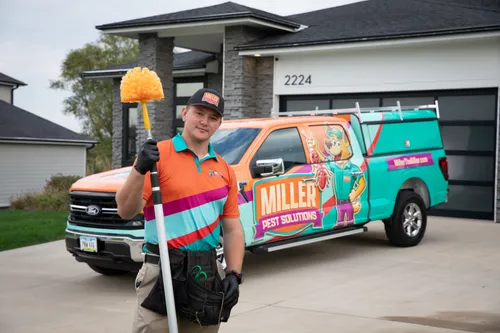
Miller Pest Solutions
1904 NW 92nd Ct, Clive, IA 50325
Miller Pest Solutions is a family-owned pest control company serving Des Moines, IA, and surrounding areas. They offer comprehensive pest management services for homes and businesses, including bed bug treatment, termite inspections, rodent control, mosquito control, and stinging insect removal. Their approach includes detailed inspections, customized treatment plans, and ongoing seasonal visits to maintain pest-free environments. Since 2001, Miller Pest Solutions has combined local expertise with guidance from an in-house entomologist to provide targeted and effective pest control solutions. They also provide specialized termite protection using Sentricon® bait stations and offer a retreatment warranty for termite services.
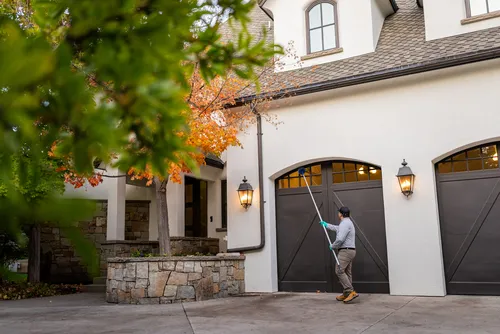
Greenix Pest Control
2501 Grand Ave Suite G, Des Moines, IA 50312
Greenix Pest Control offers comprehensive pest management services in Des Moines, IA, addressing a wide range of household pests including cockroaches, ants, rodents, termites, mosquitoes, bees, and wasps. Their service includes a science-based, custom pest control plan that covers over 50 common pests, with specialized treatments such as termite prevention and mosquito reduction. Greenix uses a detailed six-step process that includes inspection, perimeter spraying, and interior protection to create effective pest barriers around homes. The company serves all neighborhoods in Des Moines and emphasizes sustainable and eco-friendly pest control methods.
The Bug Man, Inc.
2333 McKinley Ave #2, Des Moines, IA 50321
The Bug Man, Inc. is a family-owned pest control company serving Des Moines, IA, and central Iowa since 2001. They offer a range of pest management services including bed bug treatment, ant and rodent control, termite inspections, mosquito control, and bee and wasp removal. The company installs advanced systems such as In2Care Mosquito Stations and BASF Annual Termite Bait Stations to provide targeted and eco-friendly pest solutions. Their experienced technicians develop customized treatment plans tailored to both residential and commercial properties, including offices, apartments, hotels, and assisted living facilities.
Understanding Iowa's Stinging Insects
Proper identification is the first step toward a safe and effective solution. The strategy for dealing with these insects varies significantly based on the species.
- Honeybees: These are crucial pollinators and are generally not aggressive unless their hive is threatened. In Iowa, relocation by a beekeeper is the preferred and often free method for dealing with a honeybee colony. Professionals use specialized equipment like bee vacuums to safely collect the colony and seal entry points to prevent a new swarm from moving in 1.
- Paper Wasps: Identified by their open, umbrella-shaped nests often found under eaves, these wasps can be defensive. Removal of a paper wasp nest is typically straightforward if the nest is exposed and accessible.
- Yellow Jackets & Hornets: These are the most aggressive stingers. They often build nests in wall voids, underground, or in attics, making them particularly dangerous and challenging to eradicate. Extermination is the standard approach for these pests, as they are not suitable for relocation.
Why Professional Removal is Essential in Iowa
Attempting a DIY removal can provoke a massive, dangerous sting attack. Professionals have the training, protective gear, and correct insecticides to handle the job safely. They also understand the specific behaviors of different species, ensuring the entire colony is addressed and the nest is properly removed to prevent other insects from reusing it. For honeybees, a professional beekeeper or pest control expert with relocation experience ensures these beneficial insects are preserved and moved to a safe apiary.
The Iowa Bee Rule: What Property Owners Need to Know
Iowa has a specific regulation known as the "Iowa Bee Rule" designed to protect managed honeybee colonies from pesticide drift. The rule restricts the application of certain pesticides on field crops during bee foraging hours (typically 8 a.m. to 6 p.m.) when crops are in bloom 2. It's important to understand that this rule does not make it illegal to destroy a nuisance honeybee colony on your own property. The law is aimed at protecting apiaries (managed bee yards) from agricultural chemical drift, not prohibiting the removal of a wild colony from a home's siding or chimney 3 2. However, given their ecological importance, contacting a local beekeeper for relocation is strongly encouraged.
Cost Factors for Bee and Wasp Removal in Iowa
The price for professional removal in Iowa varies widely, primarily based on three factors: the type of insect, the location of the nest, and its accessibility.
-
Insect Type:
- Paper Wasp Nest: Removal for a simple, exposed nest typically ranges from $100 to $200 4.
- Yellow Jackets & Hornets: Due to their aggression and complex nest structures, removal costs average around $385 but can range from $200 to $875 or more 5 6.
- Honeybees: Relocation by a beekeeper is often performed at no charge. However, if the colony is embedded within a wall or structure, the cost for the extraction and repair work can range from $500 to $1,200+ 7 8.
-
Nest Location & Accessibility: This is the most significant cost driver. A nest under an eave is far less expensive to treat than one inside a wall void, chimney, attic, or underground. These difficult locations require more time, specialized tools, and often repair work after the insects are removed.
-
Size of the Colony: Larger, more established colonies require more extensive treatment and cleanup, increasing the overall cost.
Find the perfect wasp & hornet removal companies for your needs
Get personalized recommendations and expert advice
Seasonal Considerations for Removal
Stinging insect activity in Iowa is highly seasonal, which influences both the urgency and the approach to removal.
- Spring & Summer: This is peak season. Queens emerge in spring to start new colonies. By mid-to-late summer, nests are at their largest population, making them more dangerous and harder to eliminate. Quick action is advised to prevent the colony from growing 9.
- Fall: Most wasp and hornet colonies die off with the first hard frost. However, fertilized queens may seek shelter inside structures to overwinter, potentially starting a new problem the following spring. Fall is a good time to seal potential entry points around your home 10.
The Professional Removal Process
When you contact a professional, they will generally follow a proven process:
- Inspection & Identification: The expert will identify the insect species and locate the nest.
- Treatment Plan: They will recommend a course of action-relocation for honeybees or extermination for wasps and yellow jackets.
- Treatment: Using appropriate, targeted methods, the professional will eliminate the threat. For wall infestations, this may involve drilling small access holes to inject insecticidal dust.
- Nest Removal: The nest is physically removed whenever possible to prevent pheromones from attracting new insects and to allow for sealing of the entry point.
- Exclusion & Repair: The final, critical step is to seal the entry hole(s) used by the insects to prevent future infestations. For honeybees removed from walls, this includes repairing the structure.
Health Risks and Allergies
For most people, stings are painful but not life-threatening. However, for individuals with an allergy, a single sting can trigger a severe, potentially fatal reaction called anaphylaxis 11. If you or anyone in your household is allergic to bee or wasp stings, it is imperative to address a nest immediately with professional help. Do not attempt to handle the situation yourself.
Frequently asked questions
Sources
Footnotes
-
Honey Bee Nest Removal | Safe & Eco-Friendly Solutions - https://blythewoodbeecompany.com/blogs/news/honey-bee-nest-removal ↩
-
fieldwatch & the iowa bee rule - frequently asked questions - https://iowaagriculture.gov/sites/default/files/ent/FieldWatch%20and%20Bee%20Rule%202-27-2023.pdf ↩ ↩2
-
Honey Bee, Nuisance: Nests and Swarms - Yard and Garden - https://yardandgarden.extension.iastate.edu/encyclopedia/honey-bee-nuisance-nests-and-swarms ↩
-
How Much Does Wasp Nest Removal Cost in 2026? - Lawn Love - https://lawnlove.com/blog/wasp-nest-removal-cost/ ↩
-
Yellow jacket exterminator cost 2025: Top 5 Proven Savings - https://bigginsexterminating.com/yellow-jacket-exterminator-cost/ ↩
-
Bee and Wasp Removal: Top 2025 Effective Solutions - https://bigginsexterminating.com/bee-and-wasp-removal/ ↩
-
How Much Does Beehive Removal Cost in 2026? - Lawn Love - https://lawnlove.com/blog/beehive-removal-cost/ ↩
-
How Much Bee Removal and Treatment Costs - Terminix - https://www.terminix.com/bee-control/cost/ ↩
-
Bee and Wasp Extermination Services - Scout Pest Control - https://www.scoutpestcontrol.com/understanding-bees-and-wasps-what-you-need-to-know-about-removal-and-extermination/ ↩
-
Bee & Wasp Control In Des Moines - https://www.preferredpest.com/residential/bees-wasps ↩
-
Wasp Nest & Bee Nest Removal in Des Moines, Iowa - https://www.preferredpest.com/education/blog/nest-removal-identification-guide-from-wasp-and-bee-exterminators ↩