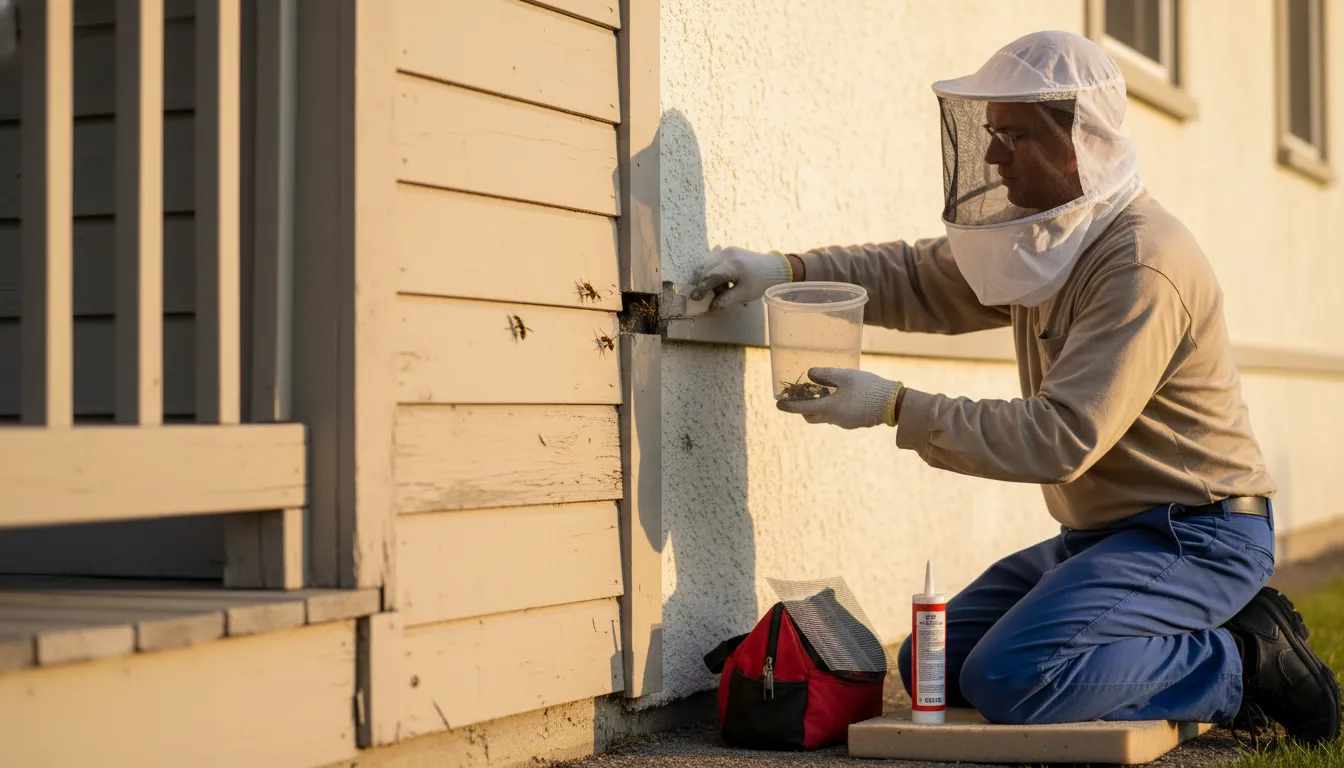
Find the Best Wasp & Hornet Removal Companies for Your Business
No obligation • Fast responses • Nationwide coverage
Why you can trust Pest Crews
Pest Crews is a leading U.S. resource for finding and evaluating residential and commercial pest control services. Our team researches providers, reviews treatment approaches, and organizes unbiased information to help you make informed decisions. Companies cannot pay to change our editorial content or influence how they appear.
Search providers near you
Best Wasp & Hornet Removal Companies in Washington Ranked
Dealing with stinging insects on your property requires a careful approach that balances safety, environmental responsibility, and local regulations. In Washington, the rules and best practices differ significantly between beneficial pollinators like honey bees and more aggressive pests like wasps and hornets. This guide provides clear, practical information to help you understand your options, from identifying the insects to choosing the right time and method for safe, effective removal. You can use this information to find and compare local professionals who specialize in handling these specific situations.
Cascade Pest Control
1420 5th Ave Suite 2260, Seattle, WA 98101
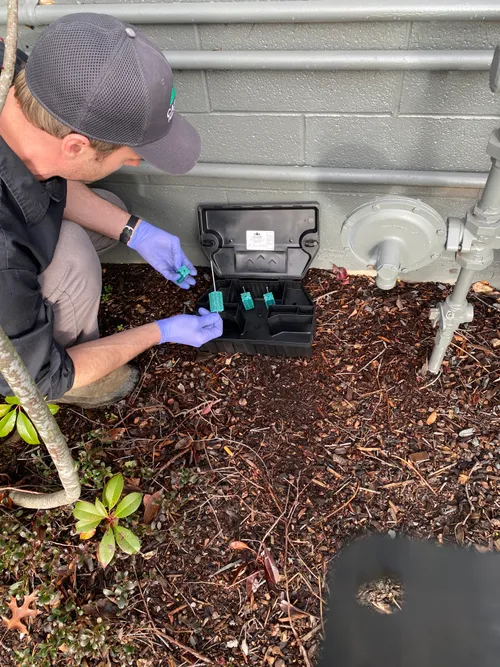
Cascade Pest Control is a family-owned pest control company serving Seattle, WA, and nearby areas. Established in 1979, they specialize in environmentally safe pest and rodent control services tailored to the unique needs of homes and businesses in the region. Their licensed technicians provide comprehensive inspections and treatments for common Seattle pests such as ants, spiders, rodents, termites, and wasps. Cascade Pest Control offers rodent removal and prevention, including damage remediation and exclusion services, along with ongoing pest prevention maintenance programs to protect properties year-round.

Rambo Total Pest Control
401 Olympia Ave NE UNIT 52, Renton, WA 98056
Rambo Total Pest Control is a pest control company serving Seattle, WA, with expertise in managing a wide range of pests including rodents, ants, spiders, stinging insects, and termites. They offer comprehensive pest control services tailored to both residential and commercial properties, focusing on effective inspection, treatment, and follow-up to ensure long-term pest management. Their skilled technicians are trained to handle challenging infestations and provide customized plans based on thorough property assessments. Rambo Total Pest Control emphasizes clear communication and expert service throughout the pest control process.

Spokane Pest Pro
Spokane, WA
Spokane Pest Pro is a locally owned and operated pest control company serving Spokane, WA. Founded in 2014 by Kevin and Karen Dawes, the company offers pest management services for homes and businesses, including ant, cockroach, rodent, spider, mosquito, boxelder bug, springtail, and stinging insect control. They use integrated pest management techniques to address infestations effectively while minimizing environmental impact. Spokane Pest Pro focuses on identifying entry points, treating infestations at the source, and implementing prevention strategies to protect properties from unwanted pests.

Organix Pest Control
1709 E 1st Ave, Post Falls, ID 83854
Organix Pest Control is a family-owned pest control company serving Spokane, WA, and the surrounding areas. They provide comprehensive pest management for homes and businesses, specializing in controlling ants, cockroaches, rodents, bees, wasps, and spiders. Their approach includes Integrated Pest Management (IPM), focusing on tailored treatments that often minimize chemical use. Organix Pest Control employs licensed technicians who undergo ongoing training to stay current with industry standards and safety practices. They emphasize eco-friendly methods with mostly low-risk EPA-certified products and maintain a low callback rate. The company is committed to serving the local community with effective pest control solutions.
Rambo Total Pest Control
Tacoma, WA
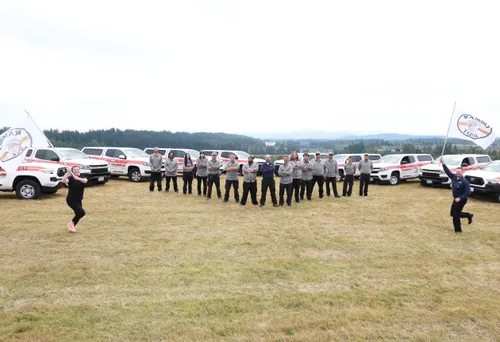
Rambo Total Pest Control is a pest control company serving Tacoma, WA, and the surrounding Pierce County area. Established in 2007, they offer comprehensive pest management services for both residential and commercial properties, including rodent control, ant control, termite inspections, stinging insect removal, and cockroach control. Their technicians provide thorough inspections and customized treatment plans, focusing on long-term pest prevention and clear communication throughout the process. Rambo Total Pest Control is equipped to handle a wide range of pests common to the Pacific Northwest, such as rodents, ants, spiders, and stinging insects.
Understanding Washington's Stinging Insects
Correctly identifying the insects on your property is the critical first step, as it dictates the legal and practical approach to removal. Washington is home to a variety of stinging insects, each with different behaviors and levels of protection.
Honey Bees are vital pollinators and are protected in Washington. Swarms-which are clusters of bees looking for a new home-are generally docile and should be saved whenever possible. Established colonies nesting inside wall voids or attics pose a more complex problem, as removal can be destructive, but extermination is considered a last resort. The state encourages contacting local beekeepers or the Washington State Beekeepers Association for swarm and colony removal to preserve these important insects 1.
Wasps and Hornets, including yellow jackets and bald-faced hornets, are typically treated as pests. They can be aggressive, especially when their nest is disturbed, and their stings pose a significant risk, particularly to those with allergies. Professional removal is strongly recommended for these species, especially when nests are large, in structures, or in high-traffic areas.
Bumblebees are also important native pollinators. While they can sting, they are not typically aggressive. In some cases, their ground nests can be relocated using specific techniques rather than destroyed.
Professional Removal Methods
Once you've identified the insect, understanding the removal methods used by professionals will help you know what to expect and discuss options with a service provider.
For Honey Bees:
- Swarm Capture: A beekeeper will gently collect the swarm cluster, often for free or a small fee, and relocate it to an apiary.
- Cut-Outs: For colonies inside structures, a beekeeper may perform a "cut-out," which involves carefully opening the wall, removing the comb and bees, and then sealing the entry point. This is labor-intensive and costly but saves the colony.
- Extermination: This is a last resort for honey bees, typically only considered when a cut-out is structurally impossible or poses an extreme hazard. Professionals will use targeted insecticides and then must remove all comb to prevent future problems 2.
For Wasps and Hornets:
- Extermination: The most common method for established nests. Professionals use targeted insecticidal dusts or sprays applied directly to the nest entrance, often at night when insects are less active. They then remove the physical nest to prevent future occupation.
- Non-Toxic Removal: Some companies offer methods like freezing nests with liquid nitrogen or using specialized vacuums. This is particularly useful for individuals who need the nest for allergy immunotherapy (allergy shots) or for those seeking a chemical-free solution.
- Preventive Treatments: Professionals can apply residual insecticides to eaves, soffits, and other common nesting sites in early spring to deter queens from building nests.
For Bumblebees:
- Relocation: A technique called "Gradual Nest Containment" (GNC) can be used. This involves placing a special containment box over the ground nest entrance in the early morning when most bees are inside, allowing them to be safely moved to a new location 3.
Find the perfect wasp & hornet removal companies for your needs
Get personalized recommendations and expert advice
When to Remove Stinging Insects
Timing is a major factor in the safety, difficulty, and cost of removal. Different seasons present different scenarios.
Winter (Late Fall to Early Spring): This is the optimal time for removing wasp and hornet nests. The colonies die off in the winter, leaving empty nests behind. A professional can safely remove these abandoned nests from eaves, attics, or shrubs without risk of stings, preventing queens from reusing them in the spring 4.
Spring and Early Summer: This is the best time for preventive action and addressing new problems. Queen wasps and hornets emerge to start new nests, which begin small (often golf-ball size). Spotting and removing a nest at this stage is far easier, safer, and less expensive than dealing with a large, mature colony later 5. For honey bees, swarm season peaks in spring, making it the prime time for swarm calls to beekeepers.
Summer and Early Fall: Nests reach their peak size and population, and insects are most aggressive as they work to sustain the colony. Removal during this period is the riskiest and most challenging, almost always requiring a professional. It is also the most expensive time for removal services 6.
Cost of Bee and Wasp Removal in Washington
The cost for professional service varies widely based on the insect type, nest location, size, and time of year. Honey bee swarm removal by a beekeeper is often free, though a fee may be charged for travel or if the swarm is difficult to access. For pest species like wasps and hornets, expect the following general price ranges:
- Small, Accessible Nests: A single, small nest in an easy-to-reach location like a shrub or under a deck typically costs between $100 and $300.
- Medium or Challenging Nests: Nests inside wall voids, soffits, or attics require more time and skill to address. Removal for these scenarios generally ranges from $300 to $700+ 7.
- Large or High-Risk Nests: Extensive nests in hard-to-reach areas (high peaks, deep in an attic, or in the ground), or those belonging to highly aggressive species, can cost $700 to $1,300 or more 8 9. Complex honey bee cut-outs from structures also fall into this higher price range.
When to Call a Professional
While a small, isolated paper wasp nest on a distant fence post might be a DIY candidate for some, there are clear situations where calling a licensed professional is the only safe and prudent choice.
- If anyone in your household has a known allergy to bee or wasp stings.
- If the nest is located inside a structure, such as a wall void, attic, soffit, or between floors.
- If the nest is large (larger than a softball) or you observe high insect traffic.
- If the nest is in a high-traffic area near doors, windows, decks, playgrounds, or mailboxes.
- If the insects are aggressive and have already stung people or pets.
- If you are unsure of the insect species and whether it is protected.
- If you prefer non-toxic removal methods or need the nest preserved for allergy treatment 10 11 12.
Professionals have the protective equipment, proper insecticides, and experience to handle the job safely and effectively, ensuring the nest is fully eliminated and entry points are sealed to prevent recurrence.
Frequently asked questions
Sources
Footnotes
-
Bees & Wasps in Your Community Association - PENCO Management - https://pencomanagement.com/community-association-bees/ ↩
-
Bees and Wasps | Washington State Department of Health - https://doh.wa.gov/community-and-environment/pests/bees-and-wasps ↩
-
Bumblebee Nest Relocation and Tagging Plan for Washington ... - https://yakimabees.org/wp-content/uploads/2024/06/Bumblebee-Nest-Relocation-and-Tagging-Plan.pdf ↩
-
Safely Removing a Wasp Nest in Winter - Mosquito Squad - https://www.mosquitosquad.com/blog/other-insects-pests/how-to-safely-remove-a-wasp-nest-in-winter/ ↩
-
Wasps & Hornets Control in Olympia - https://www.venablespestmanagement.com/pest-control/wasps-hornets/ ↩
-
How Much Wasp and Hornet Removal and Treatment Costs - Terminix - https://www.terminix.com/stinging-pest-control/cost/ ↩
-
Stinging Insect Control - Bees, Hornets, Wasps - https://www.environmentalpc.com/stinging-insect-control ↩
-
Bee and Wasp Removal: Top 2025 Effective Solutions - https://bigginsexterminating.com/bee-and-wasp-removal/ ↩
-
Cost for wasp and bee removal - Wild Bee Company - https://www.wildbeecompany.com/cost ↩
-
Bee and Wasp Extermination Services - Scout Pest Control - https://www.scoutpestcontrol.com/understanding-bees-and-wasps-what-you-need-to-know-about-removal-and-extermination/ ↩
-
Wasp removal in Seattle and surrounding area - Wild Bee Company - https://www.wildbeecompany.com/wasp-removal ↩
-
Wasp Exterminator in the PNW: 9 Essential Tips & When to Call - https://www.ecocarepestcontrol.com/blog-wasp-exterminator-pnw/ ↩