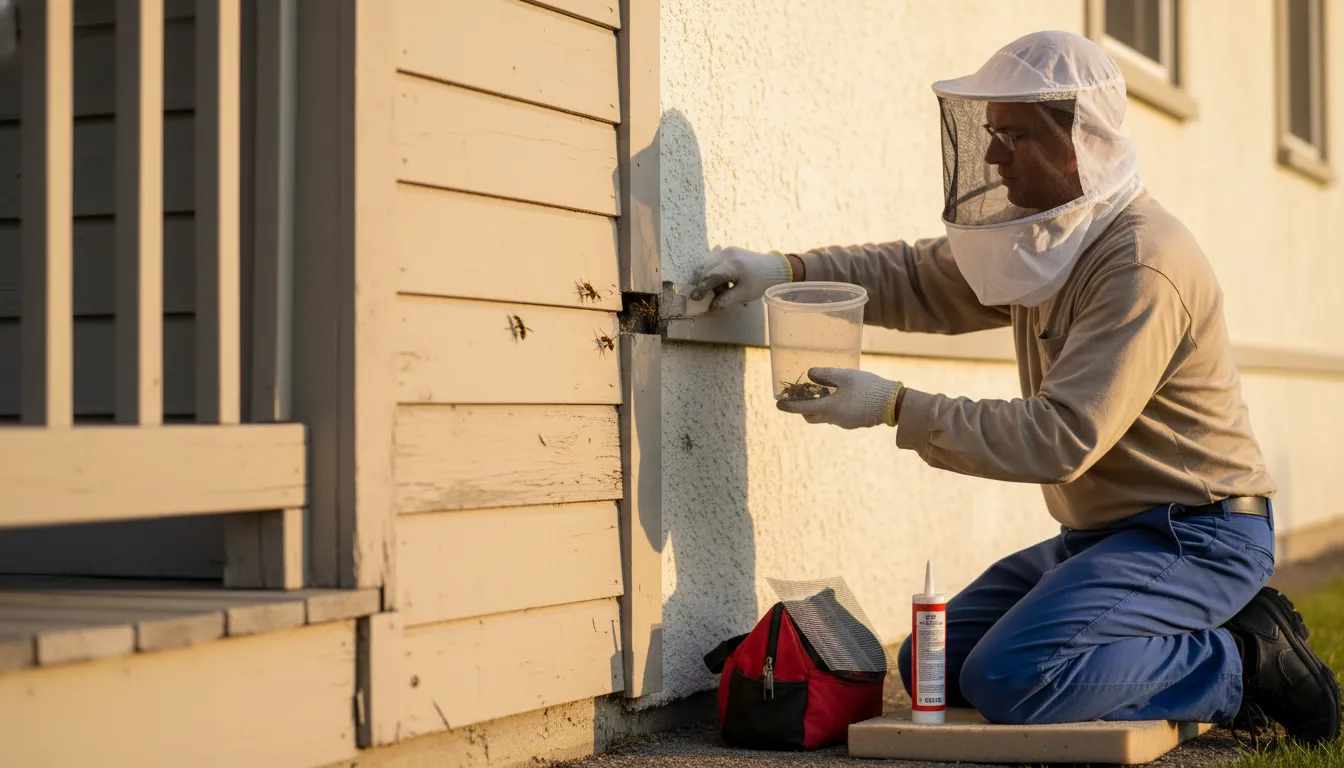
Find the Best Wasp & Hornet Removal Companies for Your Business
No obligation • Fast responses • Nationwide coverage

Why you can trust Pest Crews
Pest Crews is a leading U.S. resource for finding and evaluating residential and commercial pest control services. Our team researches providers, reviews treatment approaches, and organizes unbiased information to help you make informed decisions. Companies cannot pay to change our editorial content or influence how they appear.
Search providers near you
Best Wasp & Hornet Removal Companies in Kentucky Ranked
Discovering a buzzing nest on your property can be unsettling. In Kentucky, managing stinging insects requires a careful approach that balances safety, environmental responsibility, and practicality. The right solution depends entirely on correctly identifying the insect, as honey bees are vital pollinators often protected through relocation, while wasps and hornets are typically treated as pests requiring extermination. This guide provides clear, actionable information to help you understand your options, navigate local considerations, and connect with qualified professionals in the Bluegrass State for safe and effective resolution.
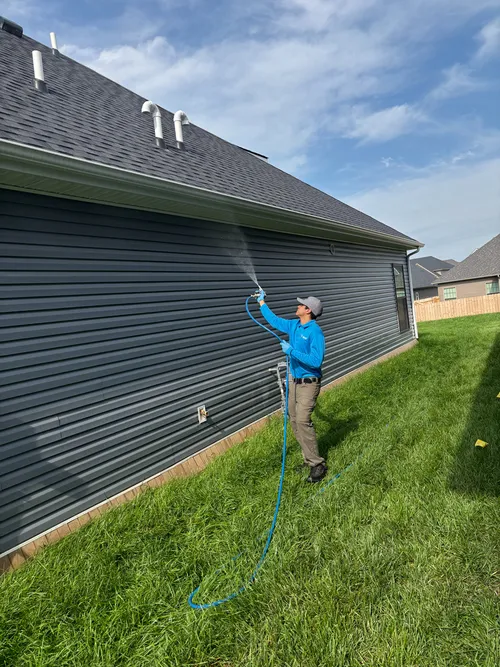
ClearDefense Pest Control
1585 Mercer Rd #130, Lexington, KY 40511
ClearDefense Pest Control offers comprehensive pest control services in Lexington, KY, targeting common household pests such as ants, roaches, spiders, rodents, mosquitoes, and wasps. Their approach includes both indoor and outdoor treatments, focusing on pest nesting sites, wall voids, and entry points. They use a micro-crystallized, slow-release formula that creates a long-lasting barrier around homes, refreshed seasonally to adapt to pest activity throughout the year. The treatments are certified safe for sensitive environments like hospitals and schools, ensuring safety for families and pets. The company provides a detailed initial inspection and treatment, including removal of insect webs and wasp nests, and offers free re-treatments if pests return between scheduled visits.

Black Diamond Pest Control
4911 Hamburg Pike, Jeffersonville, IN 47130
Black Diamond Pest Control is a full-service pest control company serving Louisville, KY, and the surrounding Kentuckiana region. They provide a wide range of pest management solutions including bed bug treatment, termite control, mosquito prevention, wildlife removal, and bee relocation. Their services include advanced bed bug detection using certified K9 units and termite treatments backed by industry-leading warranties. The company also offers 24/7 emergency wildlife removal to address urgent pest issues promptly. Black Diamond emphasizes eco-conscious practices, such as relocating honey bees to local sanctuaries rather than exterminating them, and provides comprehensive lawn care services to maintain healthy turf. With extensive experience in the region, Black Diamond Pest Control combines specialized pest control capabilities with environmentally responsible methods. Their integrated approach includes identifying pest entry points and securing properties to prevent future infestations, supporting long-term pest management solutions.
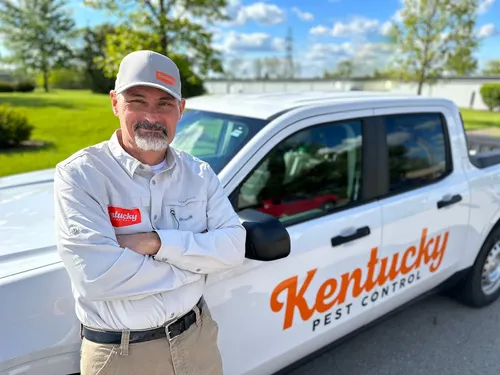
Kentucky Pest Control
470 Conway Ct B8, Lexington, KY 40511
Kentucky Pest Control is a family-owned pest control company based in Lexington, KY. They provide a wide range of pest management services including cockroach, ant, rodent, termite inspections, mosquito control, and bee and wasp removal. Serving Lexington and other areas across Kentucky, they use proven methods tailored to local pest issues to help keep homes pest-free. The company offers free retreatments if pests return, reflecting their commitment to customer satisfaction.
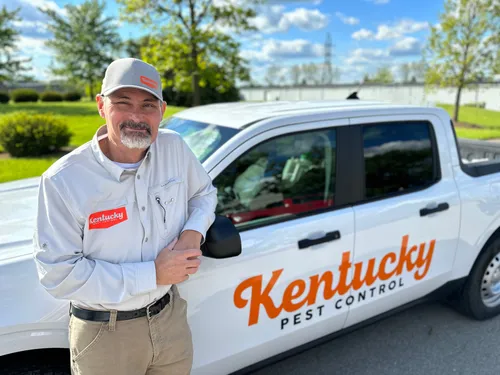
Kentucky Pest Control
8007 Vine Crest Ave #8, Lyndon, KY 40222
Kentucky Pest Control is a family-owned pest control company serving Louisville, KY, and other areas across Kentucky. They offer a wide range of pest management services including cockroach, ant, rodent, termite, mosquito, and bee/wasp control. Their team uses proven methods to provide effective treatments tailored to local pest issues. The company emphasizes customer satisfaction by offering free retreatments if pest problems persist and is committed to protecting homes and families with safe pest control solutions.

Greenix Pest Control
271 W Short St Suite 411, Lexington, KY 40507
Greenix Pest Control provides comprehensive pest management services in Lexington, KY. They offer tailored plans to address over 50 common household pests, including ants, bed bugs, rodents, termites, mosquitoes, and wasps. Their approach combines inspection, treatment, and prevention to protect homes from pest damage and health risks. Greenix uses eco-friendly, science-based methods and offers specialized services such as termite prevention and mosquito control. Their trained technicians focus on creating pest-resistant barriers and treating both interior and exterior problem areas. Greenix emphasizes safe treatments suitable for homes with children and pets and maintains ongoing seasonal service for lasting protection.
Understanding Kentucky's Stinging Insects
The first and most critical step is identification. Kentucky is home to a variety of stinging insects, and the recommended course of action differs significantly between them.
Honey Bees: These fuzzy, golden-brown insects are crucial for agriculture and ecosystems. In Kentucky, there is a strong cultural and regulatory encouragement to preserve honey bee colonies whenever possible. Swarms (a cluster of bees looking for a new home) are generally docile, while established hives in structures can cause damage over time.
Wasps & Hornets: This category includes paper wasps, yellow jackets, and bald-faced hornets. They have slender, smooth bodies and can be more aggressively defensive of their nests. Unlike honey bees, which maintain perennial colonies, most wasp and hornet nests die off in the winter, with new queens building fresh nests each spring. They are generally considered pests due to their stinging threat.
Rules and Best Practices in Kentucky
Kentucky has practical guidelines and community resources for handling stinging insect issues.
- Honey Bee Relocation is Encouraged: The Kentucky State Beekeepers Association (KSBA) actively promotes the preservation of honey bees. They maintain networks of local beekeepers who are often willing to safely remove and relocate swarms and accessible hives, sometimes for little to no cost 1. This is the preferred first step for a suspected honey bee colony.
- Wasps and Hornets are for Pest Control: For aggressive species like yellow jackets or hornets, professional extermination by a licensed pest control company is the standard and safest recommendation.
- Identification Dictates Method: Never attempt removal without knowing what you're dealing with. Mistaking a honey bee hive for a wasp nest could lead to the unnecessary destruction of a beneficial pollinator colony, while misidentifying an aggressive hornet's nest can lead to dangerous stings.
Your Removal Options Explained
Once you've identified the insect (or called a pro to do so), you have several paths forward.
Professional Honey Bee Relocation
This is a specialized service often performed by beekeepers, not necessarily traditional pest control companies. The beekeeper will safely collect the swarm or carefully extract the comb and colony from a structure like a wall or attic. The goal is to keep the colony alive and transfer it to a managed apiary. This service preserves biodiversity and supports local agriculture 2.
Professional Wasp & Hornet Extermination
Licensed pest management professionals handle these removals. The process typically involves applying specialized insecticidal dusts or sprays directly into the nest entrance during times of low activity (often at dusk or dawn). After the colony is eliminated, the nest may be removed to prevent secondary pest issues like carpet beetles, which are attracted to the leftover larvae 3.
DIY Approaches: Caution Advised
For small, easily accessible paper wasp nests, over-the-counter aerosol sprays can be effective if used with extreme caution. However, DIY is strongly discouraged for:
- Ground nests (often yellow jackets), as disturbing the entrance can provoke a massive, aggressive swarm.
- Nests inside walls, attics, or soffits, as improper treatment can drive insects deeper into the home.
- Large nests or nests at height.
- Anyone with known allergies to insect stings.
The risks of multiple stings and potential anaphylactic shock far outweigh the cost of a professional service.
Find the perfect wasp & hornet removal companies for your needs
Get personalized recommendations and expert advice
Seasonal Activity in Kentucky
When you discover a nest significantly impacts the urgency and strategy for removal.
- Spring (March-May): Queen wasps and hornets emerge to start new nests. Honey bee swarms are most common. Early intervention is easier and often less costly, as colonies are small 4.
- Summer (June-August): This is peak season. Colonies are at their largest and most defensive. Removal is most challenging and potentially most expensive. Activity is highest, making it the most common time for service calls.
- Fall (September-November): New queen wasps and hornets leave the nest to overwinter, and the worker population dies off. Existing nests are inactive but should be removed to prevent future queens from using them. Honey bee hives prepare for winter and are less likely to swarm.
- Winter (December-February): Most wasp and hornet nests are completely vacant and can be safely removed. Honey bee clusters are dormant inside structures; removal is complex but possible if they are causing damage.
Understanding Removal Costs in Kentucky
Prices for bee and wasp removal in Kentucky vary based on the insect, nest location, size, and required accessibility work. The following are general price ranges; always get a specific quote from your local provider.
Honey Bee Relocation Costs:
- Swarm Collection: Often free or a minimal fee ($50-$200) from a local beekeeper associated with the KSBA if easily accessible 5.
- Established Hive Removal: $200 to $600 for an exposed, accessible hive (e.g., in a tree branch or under an eave).
- Structural Extraction: $450 to $1,500 or more for hives inside walls, chimneys, or attics. This higher cost accounts for the labor of carefully opening the structure, removing comb and honey (which can attract other pests and cause damage if left behind), and performing necessary repairs like drywall 6 7 8.
Wasp & Hornet Extermination Costs:
- Single, Accessible Nest: $150 to $400 for a standard nest on a gutter, eave, or shrub.
- Ground Nest or Hard-to-Reach Nest: $300 to $600, especially for large yellow jacket nests in the ground or high in a tree.
- Multiple Nests or Interior Nests: Costs can exceed $600 for complex situations involving nests inside wall voids or multiple nests on a property 9 10.
Key Factors Influencing Price:
- Location: Nests high on a second-story peak or deep within a wall are more expensive to address.
- Insect Aggressiveness: More defensive species may require more elaborate safety protocols.
- Required Repairs: If the nest is within a structure, the cost to repair entry holes, remove honeycomb, and replace insulation or drywall adds to the total.
- Emergency/After-Hours Service: Often incurs a premium fee.
Choosing a Service Provider
Selecting the right professional is crucial. For suspected honey bees, your first call should be to a local beekeeper listed with the Kentucky State Beekeepers Association. They have the expertise to relocate the colony humanely. For wasps, hornets, or complex structural bee infestations, seek a licensed and insured pest control company with specific experience in stinging insect removal. Ask about their methods, guarantees, and whether the quoted price includes nest removal and any basic repairs. Always prioritize safety and expertise over the lowest price.
Frequently asked questions
Sources
Footnotes
-
Regulations - Kentucky State Beekeepers Association - https://kybees.org/Regulations ↩
-
Bee Control In Kentucky - Four Seasons Pest Solutions - https://www.myfsps.com/bee-control-in-kentucky/ ↩
-
How Much Bee Removal and Treatment Costs - Terminix - https://www.terminix.com/bee-control/cost/ ↩
-
Wasp Control In Kentucky - Four Seasons Pest Solutions - https://www.myfsps.com/wasp-control-in-kentucky/ ↩
-
Free Honey Bee Swarm Removal Louisville Kentucky - https://kyanabees.com/swarm-removal ↩
-
How Much Does Bee Removal Cost? (2026) - HomeGuide - https://homeguide.com/costs/bee-removal-cost ↩
-
How Much Does Beehive Removal Cost in 2026? - Lawn Love - https://lawnlove.com/blog/beehive-removal-cost/ ↩
-
How Much Does Bee Removal Cost? [2026 Data] | Angi - https://www.angi.com/articles/how-much-does-bee-removal-cost.htm ↩
-
How Much Does Wasp Nest Removal Cost? [2026 Data] - Angie's List - https://www.angi.com/articles/how-much-does-wasp-removal-cost.htm ↩
-
How Much Wasp and Hornet Removal and Treatment Costs - Terminix - https://www.terminix.com/stinging-pest-control/cost/ ↩