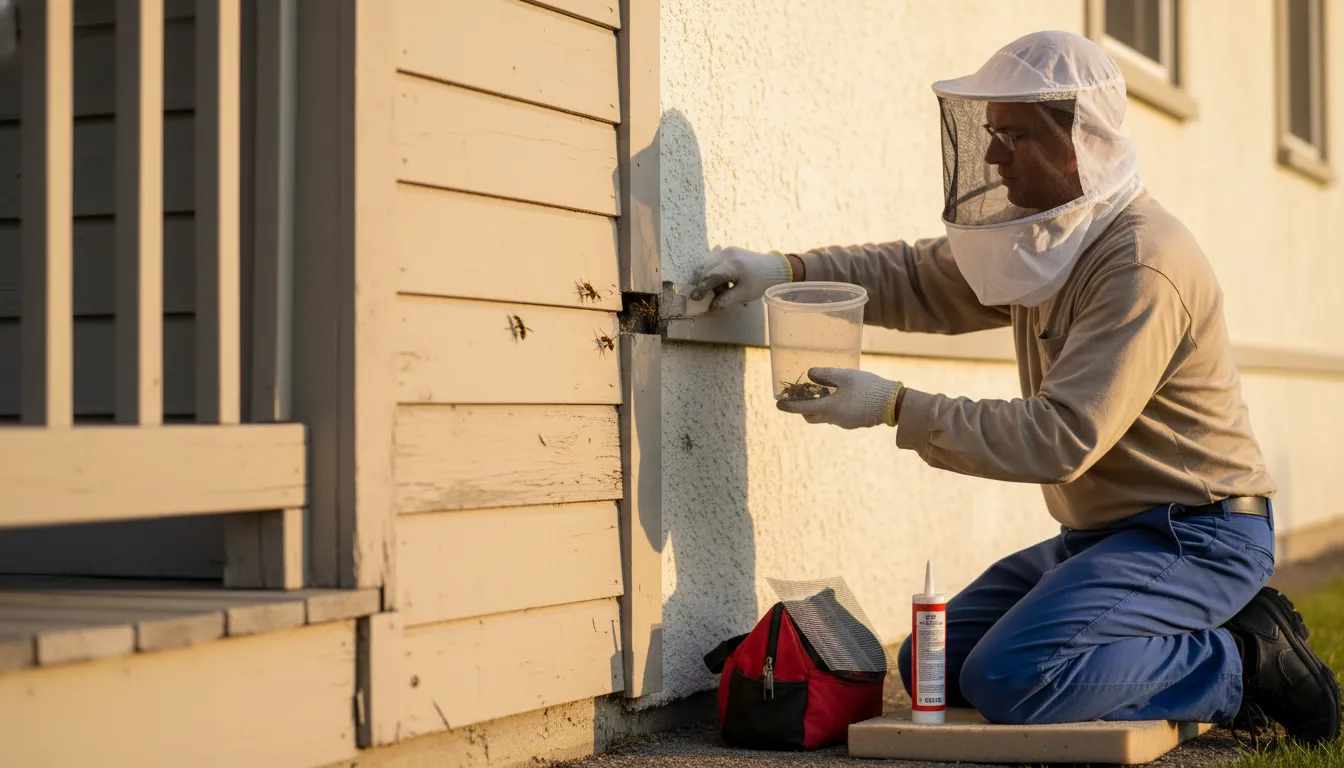
Find the Best Wasp & Hornet Removal Companies for Your Business
No obligation • Fast responses • Nationwide coverage

Why you can trust Pest Crews
Pest Crews is a leading U.S. resource for finding and evaluating residential and commercial pest control services. Our team researches providers, reviews treatment approaches, and organizes unbiased information to help you make informed decisions. Companies cannot pay to change our editorial content or influence how they appear.
Search providers near you
Top Wasp & Hornet Removal Companies in Louisville, Kentucky Ranked
Discovering a buzzing nest on your property can be unsettling. Professional bee and wasp removal services in Louisville provide safe, effective solutions to manage these stinging insects, protecting your family and home. Whether you're dealing with aggressive yellow jackets in a wall void or a beneficial honey bee swarm in a tree, understanding your local options is key. This guide will help you navigate the process, from identifying the problem to choosing the right specialist for humane extermination or live relocation.

Black Diamond Pest Control
4911 Hamburg Pike, Jeffersonville, IN 47130
Black Diamond Pest Control is a full-service pest control company serving Louisville, KY, and the surrounding Kentuckiana region. They provide a wide range of pest management solutions including bed bug treatment, termite control, mosquito prevention, wildlife removal, and bee relocation. Their services include advanced bed bug detection using certified K9 units and termite treatments backed by industry-leading warranties. The company also offers 24/7 emergency wildlife removal to address urgent pest issues promptly. Black Diamond emphasizes eco-conscious practices, such as relocating honey bees to local sanctuaries rather than exterminating them, and provides comprehensive lawn care services to maintain healthy turf. With extensive experience in the region, Black Diamond Pest Control combines specialized pest control capabilities with environmentally responsible methods. Their integrated approach includes identifying pest entry points and securing properties to prevent future infestations, supporting long-term pest management solutions.
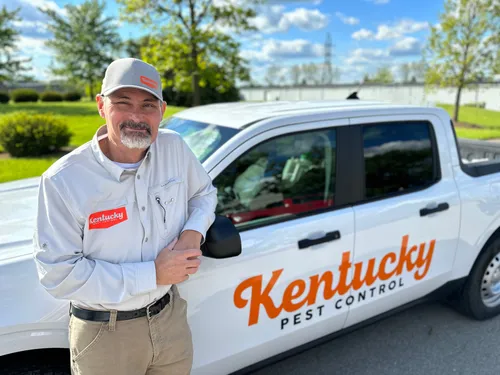
Kentucky Pest Control
8007 Vine Crest Ave #8, Lyndon, KY 40222
Kentucky Pest Control is a family-owned pest control company serving Louisville, KY, and other areas across Kentucky. They offer a wide range of pest management services including cockroach, ant, rodent, termite, mosquito, and bee/wasp control. Their team uses proven methods to provide effective treatments tailored to local pest issues. The company emphasizes customer satisfaction by offering free retreatments if pest problems persist and is committed to protecting homes and families with safe pest control solutions.
Defense Pest Solutions
1011 Goshen Rd, Lawrenceburg, KY 40342
Defense Pest Solutions is a pest control company based in Louisville, KY, offering services to manage ants, wasps, bees, spiders, ticks, fleas, and other common pests. With over 12 years of experience in the industry, the company provides thorough inspections and treatments tailored to residential properties. Their capabilities include effective removal and control of a variety of pests, ensuring homes remain pest-free. The business emphasizes working around customer schedules to deliver convenient service.
Franklin Pest Solutions
415 E Elm St, New Albany, IN 47150
Franklin Pest Solutions is a pest control company serving Louisville, KY, specializing in managing insects, rodents, termites, and wildlife for both residential and commercial clients. They offer year-round pest maintenance programs with multiple visits annually and focus on eco-friendly, sustainable pest management solutions. Established in 1929, Franklin Pest Solutions brings nearly a century of experience to the Midwest, using advanced technology and environmentally responsible methods to protect homes and businesses. The company is licensed and certified by health and agriculture departments, emphasizing thorough evaluation and prevention before treatment.
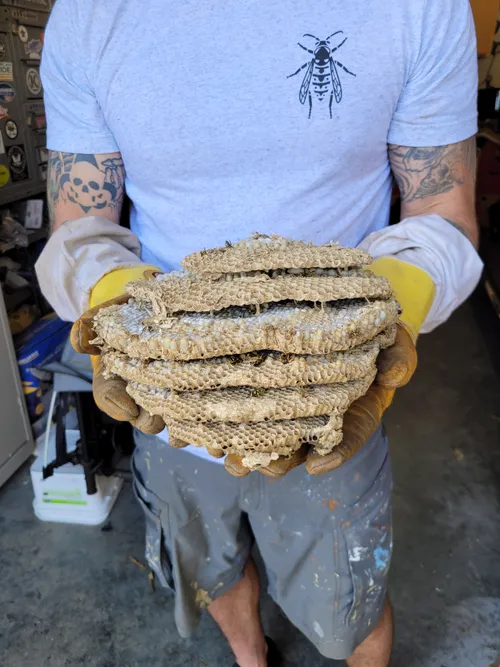
Vespro Wasp Removal
Louisville, KY
Vespro Wasp Removal specializes in the removal of large, dangerous wasp nests such as yellowjackets, bald-faced hornets, and European hornets in Louisville, KY. The service includes complete nest removal, treatment of affected areas, and refilling underground nest voids with new topsoil. Vespro offers chemical-free options and focuses on physical nest removal for faster and more complete results compared to typical pest control methods. The owner, Colin Hall, combines his experience as a carpenter with his knowledge of wasp behavior to provide effective and safe removal services. Vespro operates seven days a week to address urgent nest removal needs.
Understanding Your Stinging Insect Problem
The first step in addressing any pest issue is proper identification. In Louisville, you're likely to encounter several common species, each with distinct behaviors and nesting preferences. Knowing what you're dealing with informs the best course of action, whether it's urgent extermination or a call to a beekeeper.
Common Wasps in Louisville:
- Yellow Jackets: Often build large, papery nests underground or in wall cavities. They are highly aggressive, especially in late summer and fall when defending their nest or searching for food.
- Paper Wasps: Build the classic open-comb, umbrella-shaped nests under eaves, decks, and railings. They are less aggressive than yellow jackets but will sting if provoked.
- Bald-Faced Hornets: Construct large, gray, football-shaped nests high in trees or on structures. They are protective of their nest and can sting repeatedly.
Common Bees in Louisville:
- Honey Bees: Social, fuzzy insects that live in large colonies. They are crucial pollinators and typically only sting when threatened. Swarms-a cluster of bees looking for a new home-are generally docile but should be addressed by a professional.
- Bumble Bees: Larger, rounder, and furrier than honey bees. They nest in small colonies, often in abandoned rodent burrows or under piles of debris. They are generally non-aggressive.
Where to Look for Nests Around Your Home
Stinging insects seek sheltered, out-of-sight locations to build their homes. A thorough inspection of these common areas can help you locate a potential problem before it grows.
Above Ground and Structural Hideaways: Nests are frequently found in the sheltered architectural features of your home. Check under roof eaves, soffits, and ledges. Inspect attics, wall voids (often indicated by a buzzing sound or bees/wasp entering a crack), chimneys, and behind window shutters or siding 1. Don't forget to look in garages, sheds, and on the underside of decks.
At or Below Ground Level: Many species, particularly yellow jackets, prefer ground nesting. Examine areas near the foundation, in garden beds, under porches, or in abandoned rodent burrows 2 3. Also check within hollow trees, rock walls, and even inside unused outdoor furniture or utility boxes.
In Trees and Shrubs: Paper wasps and hornets often attach their nests to tree branches, within dense shrubs, or in the corners of building overhangs 4 5. Regular landscaping maintenance can sometimes disturb these nests, so it's wise to survey the area before starting yard work.
The Seasonal Cycle of Bees and Wasps
Activity levels and risks associated with stinging insects change dramatically with the seasons in Kentucky's climate.
- Spring: Surviving queens emerge from hibernation in sheltered spots like attics or logs to start new colonies 6. They begin building small nests and laying eggs. This is an ideal time for preventative measures, as nests are small and easier to manage.
- Summer: Worker populations explode, and activity peaks. Nests grow rapidly as insects constantly forage for food to support the expanding colony 7. This is when most removal calls occur.
- Late Summer & Fall: Colonies reach their maximum size. Wasps, in particular, become noticeably more aggressive as they scavenge for sweets and proteins to sustain the queen for winter 8 9. This is the season of highest risk for stings.
- Winter: Most worker wasps and male bees die off. Only the newly mated queens survive, finding protected places to hibernate until spring, completing the cycle 10.
Find the perfect wasp & hornet removal companies for your needs
Get personalized recommendations and expert advice
Professional Removal Options in Louisville
When a nest poses a threat, Louisville residents have several types of professionals to call upon. The right choice depends heavily on the insect species and your desired outcome.
Commercial Pest Control Companies: Firms like Mint Pest Control, Tailor Made Pest and Wildlife, and OPC Pest Services specialize in extermination for aggressive species like wasps and hornets 11 12. They typically use EPA-approved insecticidal sprays or dusts to eliminate colonies, especially in high-risk or difficult-to-access locations like inside walls or chimneys. Many of these services also handle nest clean-up and can provide recommendations for repairing any structural damage caused by the insects or the removal process.
Local Beekeepers and Associations: For honey bee swarms or established hives, contacting a local beekeeper is the preferred and most ecological solution. Organizations like Beeing2gether, LLC and the Kentuckiana Beekeepers Association prioritize safe, live relocation due to the bees' vital role as pollinators 13. Beekeepers may remove easily accessible swarms for little to no cost, while extraction from a structure (like a wall) is a more involved service with associated fees 14.
Specialized Wasp Removers: Some operators focus exclusively on aggressive stinging insects. Services like Vespro Wasp Removal target yellow jackets and hornets, often offering rapid response times and physical nest removal to prevent recurrence 15.
What Determines the Cost of Removal?
The cost for professional bee and wasp control in Louisville can vary widely, typically ranging from $100 to over $1,300 16 17. Several key factors influence the final price:
- Nest Location and Accessibility: A small, exposed nest under an eave is far less expensive to treat than a large colony deep inside a wall void or chimney flue. Difficult access often requires specialized equipment and more time.
- Insect Species: Aggressive wasps that require protective gear and careful application methods may cost more to treat than a docile honey bee swarm slated for relocation.
- Nest Size: The physical size of the nest and the estimated population of insects directly impact the amount of material and labor required.
- Need for Repairs: If bees have created honeycomb inside a wall, removal often necessitates opening the wall, which adds carpentry repair costs to the project.
- Service Urgency: Emergency or after-hours calls typically incur a premium fee for immediate response.
For the most accurate estimate, it is always recommended to contact a local Louisville-based professional for an on-site inspection.
Safety and Prevention Tips
While professionals handle the removal, homeowners can take steps to minimize risks and prevent future infestations.
- Never Disturb a Nest: Avoid poking, spraying, or throwing objects at a nest. This can provoke a mass attack.
- Seal Entry Points: In early spring, inspect and seal cracks in siding, around roof vents, and where utility lines enter the home to prevent queens from entering to nest.
- Manage Food Sources: Keep trash cans tightly sealed, clean up fallen fruit, and avoid leaving pet food or sugary drinks outside.
- Wear Protective Clothing: If you must be near a nest (e.g., while mowing), wear long sleeves, pants, closed-toe shoes, and gloves.
- Know Allergies: Ensure everyone in your household is aware of any bee or wasp sting allergies and has an action plan, including access to an epinephrine auto-injector if prescribed.
Frequently asked questions
Sources
Footnotes
-
A Guide To Wasps Across the Midwest and East Coast - https://www.urbanexpro.com/pest-library/wasps/ ↩
-
Common Places You Find Bee and Wasp Nests - https://abarbpest.com/common-places-you-find-bee-and-wasp-nests/ ↩
-
What Hive Is It?: Identifying Bee and Wasp Nests - Groundworks - https://www.groundworks.com/resources/what-hive-is-it/ ↩
-
Bee or Wasp Removal Cost - https://usalivebeeremoval.com/bee-or-wasp-removal-cost/ ↩
-
Bird Nest Removal Cost | Bird Removal from Attic Cost - https://www.fixr.com/costs/bird-removal ↩
-
Common Wasps of Kentucky - Four Seasons Pest Solutions - https://www.myfsps.com/bees-and-wasps/common-wasps-of-kentucky/ ↩
-
When Are Bees Most Active? And Other FAQs - https://www.bizzybeeexterminators.com/blog/post/when-are-bees-most-active-and-other-faqs ↩
-
Late Summer Wasp Control in Kentucky - Four Seasons Pest Solutions - https://www.myfsps.com/stinging-pests/late-summer-wasp-control-in-kentucky/ ↩
-
Wasps, Hornets, Yellowjackets, and Spidersl - Kentucky ... - https://www.uky.edu/Ag/Entomology/PSEP/cat8wasps.html ↩
-
What Homeowners Should Know About Wasp and Hornet Season - https://completegroundcontrol.com/blog/what-homeowners-should-know-about-wasp-and-hornet-season/ ↩
-
Wasp Control Louisville KY | Wasp Extermination Services - https://mintpest.com/wasp-control-louisville-ky/ ↩
-
Tailor Made Pest and Wildlife - https://www.google.com/viewer/place?mid=/g/11pcjk4zwy ↩
-
Free Honey Bee Swarm Removal Louisville Kentucky - https://kyanabees.com/swarm-removal ↩
-
How much does Bee removal cost? - Yelp - https://www.yelp.com/costs/bee_removal ↩
-
Vespro Wasp Removal - https://www.google.com/viewer/place?mid=/g/11v6wxpyv3 ↩
-
Wasp Nest Removal Cost [2026 Data] | Angi - https://www.angi.com/articles/how-much-does-wasp-removal-cost.htm ↩
-
How Much Does Bee Removal Cost? [2026 Data] | Angi - https://www.angi.com/articles/how-much-does-bee-removal-cost.htm ↩