Find the Best Wasp & Hornet Removal Companies for Your Business
No obligation • Fast responses • Nationwide coverage

Why you can trust Pest Crews
Pest Crews is a leading U.S. resource for finding and evaluating residential and commercial pest control services. Our team researches providers, reviews treatment approaches, and organizes unbiased information to help you make informed decisions. Companies cannot pay to change our editorial content or influence how they appear.
Search providers near you
Best Wasp & Hornet Removal Companies in Maine Ranked
Discovering a buzzing nest on your property can be alarming. In Maine, managing stinging insects requires a careful balance between protecting vital pollinators like honeybees and safely eliminating aggressive pests like wasps and hornets. This guide provides clear, practical information to help you understand your options, the importance of professional intervention, and how to find qualified local specialists for safe and effective removal.
Understanding Maine's Stinging Insects: Bees vs. Wasps
The first critical step is identifying your unwanted guests, as the approach to removal differs drastically. Maine is home to both beneficial bees and problematic wasps, each requiring a distinct strategy.
Honeybees are protected pollinators crucial to our ecosystem. They are generally less aggressive unless their hive is threatened. When a honeybee colony establishes itself in a structure like a wall or attic, the preferred method is live removal and relocation by a registered beekeeper. This process is more complex but preserves these important insects.
Wasps (including yellow jackets, paper wasps, and hornets) are typically considered pests due to their aggressive defensive behavior and ability to sting repeatedly. They do not produce honey and are not protected. For wasps and hornets, the standard procedure is extermination by a licensed pest control professional.
The Professional Removal Process: What to Expect
Attempting a DIY removal is dangerous, especially for those with allergies or when dealing with large, established nests. Professionals have the training, protective equipment, and correct insecticides to handle the job safely.
For Honeybee Colonies:
- Inspection: A beekeeper or specialist will assess the colony's size and location within the structure.
- Live Removal (Cut-out): This involves carefully opening the wall or cavity, removing the comb, brood, and the queen bee, and vacuuming the bees into a special box for transport.
- Relocation: The colony is moved to an apiary where it can continue to thrive and pollinate.
- Clean-up & Repair: Honey and comb must be completely removed to prevent attracting other pests and causing damage from melting wax and fermenting honey. Structural repairs are often needed afterward.
For Wasp and Hornet Nests:
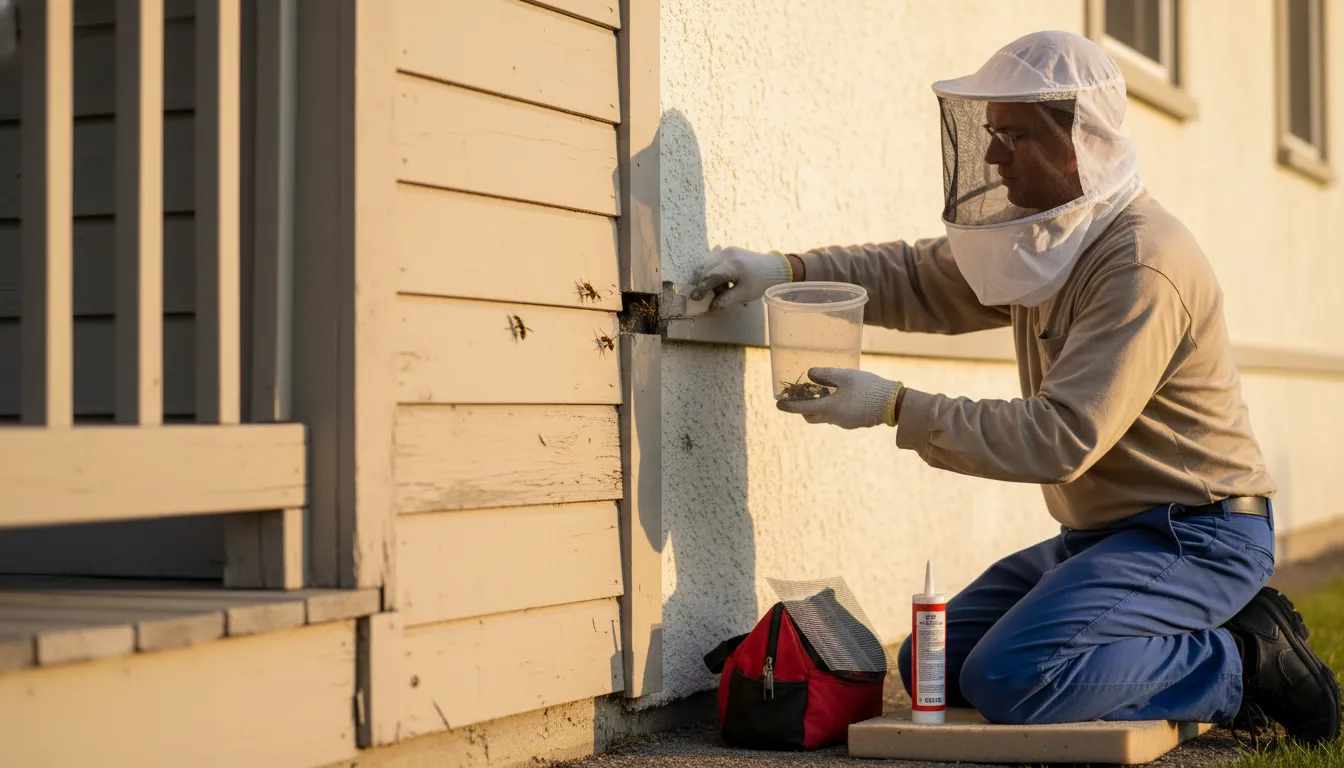
- Identification & Assessment: A pest control expert will identify the species and locate all entry points and nests, which can sometimes be underground or hidden in soffits.
- Treatment: Using specialized insecticides and application tools, the professional will treat the nest, often during cooler evening or early morning hours when the insects are less active and more likely to be inside the nest.
- Removal & Exclusion: Once the colony is eliminated, the nest is removed, and entry points are sealed to prevent re-infestation.
Cost Factors for Bee and Wasp Removal in Maine
The price for professional removal services in Maine varies widely based on several key factors. Understanding these can help you interpret estimates.
- Type of Insect: A simple wasp nest treatment is generally the most affordable option. Honeybee relocation is more labor-intensive and requires specialized skills, making it more costly.
- Nest Size and Location: A small, easily accessible paper wasp nest under a deck will cost far less than a large yellow jacket colony inside a wall void or attic. Interior removals are always more expensive due to the complexity.
- Height and Accessibility: Nests high up on a second-story eave or in a tall tree may require ladders or special equipment, adding to the cost.
- Need for Repairs: If honeycomb and residue need to be removed from within a wall, or if structural repairs are necessary after a cut-out, this will increase the total project price significantly.
Estimated Price Ranges
Based on industry data, here are general cost ranges you might encounter in Maine 1 2 3 4 5 6:
- Basic Wasp or Hornet Nest Removal: $100 - $875
- Honeybee Swarm Removal (temporary cluster): Often free or a minimal fee (e.g., for fuel) if handled by a local beekeeper.
- Established Honeybee Colony Removal (Cut-out): $200 - $1,300+, with the potential to be higher if extensive repairs are needed.
Find the perfect wasp & hornet removal companies for your needs
Get personalized recommendations and expert advice
Timing Your Removal: Seasonal Considerations in Maine
When you discover a nest can be as important as what you do about it. Maine's seasons dictate insect behavior.
- Spring to Early Summer: This is the optimal time for intervention. Queens are just starting new colonies, and nests are small. Removal is easier, safer, and often less expensive. It's also a good time to inspect your property for early signs of nesting activity.
- Late Spring Warm Spells: Sudden warm periods can activate overwintering wasp queens and bring hidden colonies to the surface, making them more noticeable 7.
- Late Summer to Fall: Wasp and hornet colonies reach their peak size, and the insects become more aggressive as their food sources dwindle and the colony begins to die off 8. While removal is still critical for safety, the nests are larger and more dangerous to address.
- Winter: Most wasp colonies die off, and the nests are abandoned. These empty nests can be safely removed to prevent queens from reusing them the following spring.
Why Professional Help is Non-Negotiable
Safety is the paramount reason to hire a professional for stinging insect problems.
- Risk of Allergic Reaction: Stings can cause severe, life-threatening anaphylaxis in allergic individuals. Professionals mitigate this risk.
- Aggressive Defense: Disturbing a nest, especially of yellow jackets or hornets, can trigger a massive, coordinated attack from hundreds of insects.
- Correct Identification & Treatment: Misidentifying a protected honeybee colony as wasps could lead to the unnecessary destruction of pollinators. Professionals know the difference and use the appropriate, legal methods for each 9 10.
- Preventing Property Damage: Improper removal of a honeybee colony can leave behind honey and wax, which will melt, seep through walls, attract rodents, and cause rot.
Finding the Right Service Provider in Maine
Given the different approaches needed, knowing whom to call is essential.
- For a swarm or nest of honeybees: Your first call should be to a local beekeeper or a pest control company that specializes in live bee relocation. The Maine State Beekeepers Association maintains a swarm removal list 11.
- For wasps, hornets, or yellow jackets: Contact a licensed pest control company with experience in stinging insect extermination.
- For unknown or hard-to-identify insects: A reputable pest control company can perform an inspection and provide a proper identification and treatment plan.
Always ask about their methods, especially regarding bees, to ensure they align with your preferences for protecting pollinators.
Preventing Future Infestations
After removal, take proactive steps to make your property less inviting.
- Seal Entry Points: In early spring, inspect and seal cracks in siding, gaps around utility lines, and openings in soffits, eaves, and roof vents.
- Manage Food Sources: Keep trash cans tightly sealed, clean up fallen fruit, and avoid leaving sugary drinks or food outdoors.
- Remove Attractants: Consider relocating hummingbird feeders, which can attract wasps.
- Regular Inspections: Periodically check under decks, porch ceilings, sheds, and play structures for early signs of nest building.
Frequently asked questions
Sources
Footnotes
-
How Much Does Beehive Removal Cost in 2026? - Lawn Love - https://lawnlove.com/blog/beehive-removal-cost/ ↩
-
How Much Bee Removal and Treatment Costs - Terminix - https://www.terminix.com/bee-control/cost/ ↩
-
Bee and Wasp Removal: Top 2025 Effective Solutions - https://bigginsexterminating.com/bee-and-wasp-removal/ ↩
-
FAQs - Southern Maine Bee Removal - https://southernmainebeeremoval.me/faqs ↩
-
Bee Rescuers - Pollinator.org - https://www.pollinator.org/learning-center/bee-rescuers ↩
-
What Do Bee Keepers Charge for Bee Removal in 2025? - Pest Extinct - https://pestextinct.com/what-do-bee-keepers-charge-for-bee-removal-in-2025/ ↩
-
Bee & Wasp Control in Bangor - Proactive Pest - https://www.proactivepestmngt.com/pest-control/bees-wasps/ ↩
-
How To Keep Wasps & Hornets Away In Maine - https://www.pinestatepest.com/how-to-keep-wasps-hornets-away ↩
-
Bee and Wasp Extermination Services - Scout Pest Control - https://www.scoutpestcontrol.com/understanding-bees-and-wasps-what-you-need-to-know-about-removal-and-extermination/ ↩
-
Safe & Effective Bee Removal for Homeowners and Beekeepers - https://responsiblepestcontrol.net/blog/bee-removal/ ↩
-
Honey Bee Swarm Removal Service - https://mainebeekeepers.org/beekeeping-resources/honey-bee-swarm-removal-service/ ↩