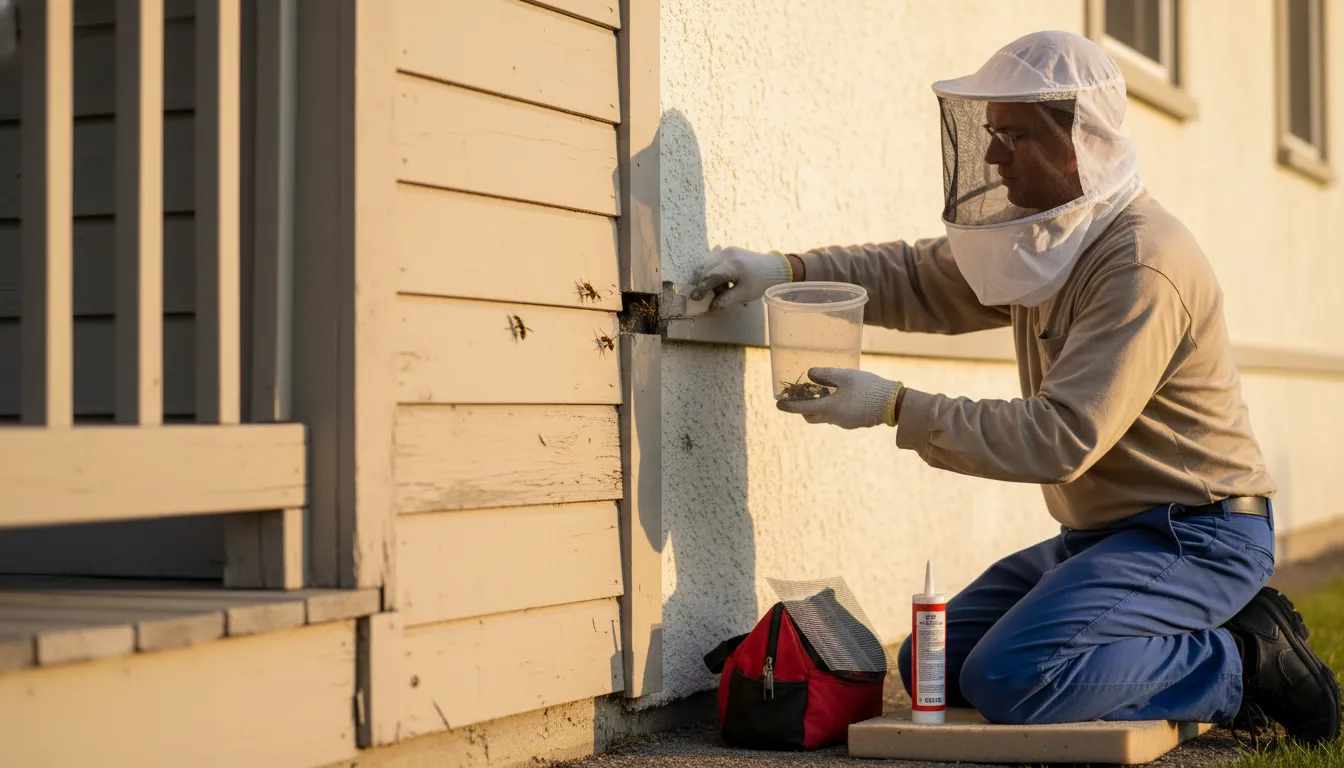
Find the Best Wasp & Hornet Removal Companies for Your Business
No obligation • Fast responses • Nationwide coverage

Why you can trust Pest Crews
Pest Crews is a leading U.S. resource for finding and evaluating residential and commercial pest control services. Our team researches providers, reviews treatment approaches, and organizes unbiased information to help you make informed decisions. Companies cannot pay to change our editorial content or influence how they appear.
Search providers near you
Best Wasp & Hornet Removal Companies in Arizona Ranked
Discovering a buzzing nest or swarm on your Arizona property can be alarming. Bee and wasp removal is a specialized service focused on safely and legally addressing stinging insect infestations, which is crucial for protecting your family, pets, and property. In Arizona, this work is particularly important due to the prevalence of aggressive Africanized honey bees and the need to protect vital pollinators. This guide will help you understand the process, local considerations, and how to find qualified professionals to handle your specific situation.

Busy Bee Pest Solutions
14819 N Cave Creek Rd Suite 2, Phoenix, AZ 85032
Busy Bee Pest Solutions is a pest control company based in Phoenix, AZ, specializing in humane bee and rodent removal. They provide services across the Phoenix metro area and Maricopa County, including live bee relocation, wasp and hornet nest removal, and rodent exclusion with sealing and sanitation. Their team uses advanced detection and exclusion technology such as thermal inspections and custom rodent-proofing to address infestations effectively. Busy Bee Pest Solutions has served over 5,000 homeowners with a focus on tailored solutions and same-day service when available.
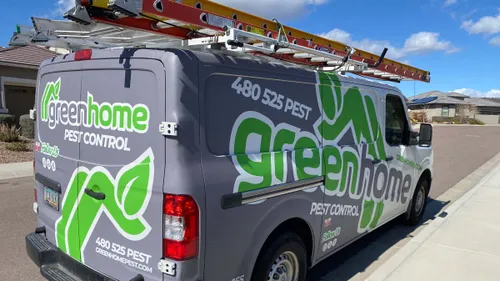
Green Home Pest Control
355 E Warner Rd #2, Chandler, AZ 85225
Green Home Pest Control is a family-owned pest control company serving Phoenix, AZ, and nearby areas. Since 2012, they have provided pest management for residential and commercial properties, addressing common pests such as scorpions, ants, roaches, termites, rodents, bees, and wasps. Their service includes thorough inspections, targeted treatments for exterior foundations and entry points, and interior service upon request. They offer a 35-point treatment plan and termite protection programs with annual inspections. The company uses kid- and pet-safe products and provides ongoing pest control with a pest-free guarantee.

Terminix
4246 E Wood St Suite 350, Phoenix, AZ 85040
Terminix provides pest control and termite inspection services in Phoenix, AZ. The company offers treatments for a variety of pests including bed bugs, ants, cockroaches, rodents, termites, mosquitoes, bees, wasps, and wildlife. Their services include comprehensive interior and exterior inspections, ongoing pest treatments, and termite protection systems. Terminix technicians are familiar with local pest issues and provide tailored plans to protect homes from seasonal and persistent pest problems. The company also offers a termite damage repair guarantee for qualifying homes.

Fromms Pest Control
4633 E Devonshire Ave, Phoenix, AZ 85018
Fromms Pest Control is a pest control company based in Phoenix, AZ, serving the city and surrounding areas including Gilbert and Scottsdale. They provide comprehensive pest management services for residential and commercial properties, addressing issues with ants, bed bugs, bees, rodents, termites, scorpions, and more. Their approach includes proactive inspections, targeted treatments, and ongoing maintenance to control and prevent infestations. Fromms Pest Control offers customized pest control plans without long-term contracts, focusing on safe and effective methods tailored to each client's needs.
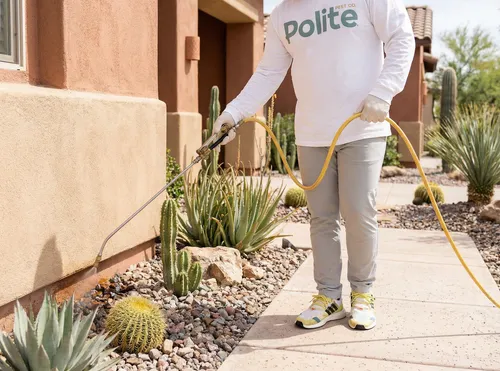
Polite Pest Control
6344 E Brown Rd #103, Mesa, AZ 85205
Polite Pest Control offers comprehensive pest management services in Chandler, AZ, and the surrounding Phoenix metropolitan area. They provide tailored solutions for residential and commercial properties, addressing a wide range of pests including bed bugs, ants, rodents, termites, mosquitoes, bees, and more. With over a decade of experience, Polite Pest Control combines proven methods and expertise to protect homes and businesses from pest damage. Their capabilities include termite control and ongoing pest management plans designed to maintain pest-free environments.
Understanding Arizona's Stinging Insect Challenges
Arizona's warm, mild climate allows stinging insects to be active year-round, making infestations a persistent concern for homeowners. The state is home to a diverse array of species, from relatively docile European honey bees to highly defensive Africanized honey bees and various types of wasps and hornets. Proper identification is the first critical step, as the approach for a transient honey bee swarm differs vastly from dealing with an established wasp nest or an Africanized colony.
Local authorities, including cities like Mesa and Chandler, emphasize public safety and often advise residents to contact licensed professionals rather than attempting DIY removal. This is especially true given the potential danger; Africanized bees can be provoked by vibrations from power tools, loud noises, or even strong scents, leading to aggressive behavior 1.
Types of Infestations and Recommended Responses
Not all buzzing insects require immediate extermination. Understanding the nature of the problem will determine the appropriate and often legally required response.
Swarms (Transient Clusters): A swarm is a large group of honey bees in transition, usually resting on a tree branch, fence post, or the side of a building while scout bees search for a permanent home. These clusters are typically docile as they are not defending a hive or food stores. In many cases, a swarm will move on within 24 to 72 hours. The best action is to keep a safe distance, ensure pets and children are away, and monitor the situation. If the swarm does not leave, a beekeeper can often perform a live removal and relocation.
Established Bee Hives: When a swarm finds a suitable cavity-such as inside a wall, attic, chimney, or water meter box-they build comb and establish a permanent colony. An established hive requires professional intervention. For European honey bees, live removal and relocation is the standard and preferred method. A trained beekeeper or removal specialist will extract the bees, the queen, and all honeycomb, then seal the entry point to prevent a new colony from moving in 2. For confirmed Africanized honey bee colonies, which pose a significant public safety risk, extermination is often the necessary course of action 3.
Wasp and Hornet Nests: Unlike honey bees, wasps (like paper wasps, yellowjackets, and hornets) are not protected pollinators and their nests are typically targeted for extermination. Their nests can be found under eaves, in shrubs, underground, or in attics. Wasps can be extremely defensive of their nests, especially in late summer when colonies are at their peak size 4. Professional extermination involves applying insecticides and physically removing the nest to prevent reinfestation.
Find the perfect wasp & hornet removal companies for your needs
Get personalized recommendations and expert advice
The Professional Removal Process: What to Expect
Hiring a licensed professional ensures the job is done safely, thoroughly, and in compliance with local guidelines. Here's a general overview of the process:
- Inspection and Assessment: A technician will identify the insect species, locate the nest or hive entrance, and assess the size and location of the colony. They will determine if it is a swarm, a hive inside a structure, or a wasp nest.
- Method Determination: Based on the assessment, the professional will recommend a course of action-live bee relocation, extermination, or nest removal. They should explain the reasons for their recommendation.
- The Removal Service: For live bee removal, specialists use specialized vacuums, tools, and techniques to safely collect the colony and the comb. For extermination, appropriate EPA-registered products are applied. A critical, often overlooked step is the complete removal of all honeycomb and nest material. Left behind, wax comb will melt in the heat, damage structures, and attract new swarms of bees or other pests 5.
- Exclusion and Repair: After removal, the entry point must be permanently sealed with appropriate materials (caulk, steel wool, mesh, etc.) to prevent future infestations. If the hive was inside a wall, this may involve minor repair work to open and close the cavity.
- Clean-up and Advice: The area should be cleaned, and you should receive guidance on signs to watch for that might indicate a new problem.
Cost Factors for Bee and Wasp Removal in Arizona
The cost of removal in Arizona varies significantly based on the job's complexity. Below are general price ranges, but always get a specific quote from your chosen provider 6 7.
- Transient Swarm Removal: $150 - $250. This is typically the simplest and least expensive service.
- Established Hive (Inside a Structure): $250 - $700 or more. The price increases if the hive is large, difficult to access, or requires cutting into drywall or siding to reach the comb.
- Africanized Bee Removal: Starting around $300+. The added risk and potential for more aggressive protective measures can increase the cost.
- Honeycomb Removal & Structural Repair: $150 - $500+. This is a separate but essential service if comb is left inside a structure. Repair costs depend on the extent of the damage and the materials needed for reconstruction.
- Wasp Nest Extermination: Generally less than bee removal, often ranging from $100 to $400, depending on the nest's size, height, and location (e.g., underground vs. third-story eave).
Seasonal Activity and Prevention
While stinging insects are present year-round in Arizona, their activity peaks during the warmer months 8.
- Peak Season (Late May - September): This is when wasp and bee colonies are at their largest population. Food is abundant, and workers are most active and defensive. Nests are most noticeable and pose the greatest risk.
- Winter Months: Most wasp workers die off with colder temperatures, leaving only new queens to find shelter. Honey bee colonies reduce activity but remain alive inside their hives. Winter is an excellent time for homeowners to perform inspections and seal potential entry points in eaves, rooflines, and siding before new queens start scouting in spring.
Prevention is key. Regularly inspect the exterior of your home for new nest-building activity, especially in early spring. Seal cracks and crevices, ensure soffit and roof vents are screened, and keep garbage cans tightly covered to avoid attracting yellowjackets.
Legal and Environmental Considerations
Arizona has a strong beekeeping community and recognizes the importance of honey bees for pollination. Many municipalities encourage the live relocation of docile honey bee colonies whenever possible 9 10 11. However, public safety is paramount. The presence of Africanized bees, which are widespread in the state, often justifies extermination. A reputable professional will understand these nuances and operate within both ethical and legal frameworks, ensuring that protected species are spared when feasible and that public threats are neutralized.
Frequently asked questions
Sources
Footnotes
-
Bee Removal in Phoenix: What You Need to Know - https://busybeepestsolutions.com/2025/09/safe-bee-removal-phoenix-2/ ↩
-
Bees in Arizona | Responsible Pest and Scorpion Control - https://responsiblepestcontrol.net/pest-library/bees/ ↩
-
The Essential Guide to Bees Pest Control in Arizona - https://www.greenmachinepest.com/the-essential-guide-to-bees-pest-control-in-arizona/ ↩
-
Is It Safe to Remove a Wasp Nest Yourself in Arizona? - https://busybeepestsolutions.com/2025/08/wasp-removal-phoenix/ ↩
-
Bee and Honeycomb Removal Service for the Phoenix Metro ... - https://www.phxbees.com/bee-removal/ ↩
-
Bee Removal & Pest Control FAQ - Phoenix - https://beeremovalnow.com/faq/ ↩
-
How Much Does Bee Removal Cost in Phoenix? [2025 Guide] - https://beeremovalnow.com/2025/05/19/bee-removal-cost-phoenix/ ↩
-
When Is Wasp Season in Arizona? A Complete Guide - https://busybeepestsolutions.com/2025/08/wasp-season-arizona/ ↩
-
Bee Safety | City of Chandler - https://www.chandleraz.gov/chandler-a-z/bee-safety ↩
-
Bees - City of Mesa - https://www.mesaaz.gov/Resident-Resources/Pests/Bees ↩
-
Bee Removal - Arizona Apicultural Society - https://azbeekeepers.org/bee-removal/ ↩