Find the Best Wasp & Hornet Removal Companies for Your Business
No obligation • Fast responses • Nationwide coverage
Why you can trust Pest Crews
Pest Crews is a leading U.S. resource for finding and evaluating residential and commercial pest control services. Our team researches providers, reviews treatment approaches, and organizes unbiased information to help you make informed decisions. Companies cannot pay to change our editorial content or influence how they appear.
Search providers near you
Best Wasp & Hornet Removal Companies in Pennsylvania Ranked
Dealing with stinging insects on your property requires a careful balance of safety, environmental responsibility, and effective pest management. In Pennsylvania, the approach to bee and wasp removal is not one-size-fits-all; it depends on the species, the location of the nest, and the time of year. This guide provides clear, practical information to help you understand your options, from the importance of professional relocation for beneficial bees to the necessary extermination of aggressive wasps and hornets. You can use this resource to make informed decisions and find qualified local specialists who adhere to state guidelines for safe and compliant removal.
Anchor Pest Control
237 W Lancaster Ave, Devon, PA 19333
Anchor Pest Control offers comprehensive pest control services in Philadelphia, PA. They cover a wide range of pests including bed bugs, cockroaches, ants, termites, mosquitoes, bees, and wasps. Their Pest Protect 365 program provides extensive protection against over 40 types of pests, including termite monitoring and stinging insect control as part of general pest services. This approach combines multiple pest treatments into bundled service options for residential customers.
Anchor Pest Control
1 Britton Pl Ste 7, Voorhees Township, NJ 08043
Anchor Pest Control offers comprehensive pest control services in Philadelphia, PA. They cover a wide range of pests including ants, cockroaches, termites, mosquitoes, bed bugs, and stinging insects. Their Pest Protect 365 service includes termite monitoring and protection against over 40 types of pests, with specialized coverage for carpenter ants, carpenter bees, and mosquito prevention included in premium packages. This approach provides homeowners with broad pest protection without the need for multiple separate services.
Western Pest Services - Pest Control, Maple Shade, NJ
458 NJ-38, Maple Shade, NJ 08052
Western Pest Services - Pest Control, Maple Shade, NJ, provides comprehensive pest control solutions for residential and commercial properties in Philadelphia, PA. They specialize in termite inspections, bed bug treatments, ant control, mosquito management, and bee and wasp removal. The company uses eco-friendly methods and advanced technology to deliver effective and sustainable pest control tailored to each client's needs. Their termite control includes thorough inspections and environmentally responsible treatments to prevent structural damage. Western Pest Services offers year-round pest management and preventative services to protect homes and businesses from a variety of pests.
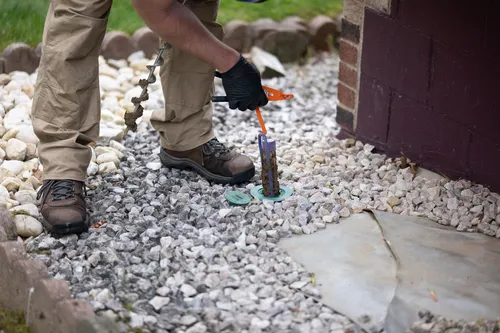
D-Bug Pest Control, Inc.
3421 Library Rd, Pittsburgh, PA 15234
D-Bug Pest Control, Inc. is a pest control company based in Pittsburgh, PA, offering comprehensive services including bed bug treatment, ant and rodent control, termite inspections, mosquito control, and bee and wasp removal. With over 80 years of experience, they provide thorough inspections and customized treatment plans to address a wide range of pest issues. Their termite control includes identifying common signs of infestation and delivering long-term solutions to prevent structural damage. D-Bug also offers targeted treatments for ticks, stinging insects, and mosquitoes, ensuring effective pest management throughout the Pittsburgh area.
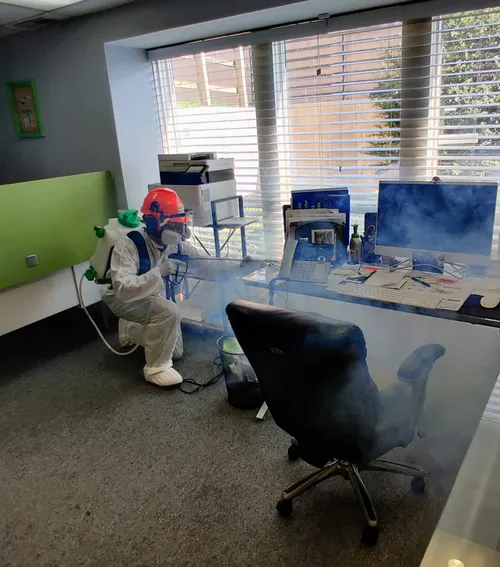
Akita Pest Control
101 Bill Smith Blvd, King of Prussia, PA 19406
Akita Pest Control provides pest control services in Philadelphia, PA, with a focus on both residential and commercial properties. They offer treatments for a wide range of pests including bed bugs, termites, mosquitoes, wasps, ants, rodents, and cockroaches. Their services include same-day and 24-hour response options, along with quarterly preventive treatments to help keep pests away. Akita Pest Control has been serving the King of Prussia area since opening their local office, assisting thousands of homeowners and businesses with pest elimination and prevention. They also provide specialized capabilities such as termite inspections and guaranteed re-treatment for certain pests.
Understanding Pennsylvania's Stinging Insects
Proper identification is the critical first step in any removal plan. Pennsylvania is home to a variety of social bees and wasps, each with distinct behaviors and nesting habits that dictate the appropriate management strategy.
Honey Bees: These are crucial pollinators and are often managed by beekeepers. A swarm-a temporary cluster of bees looking for a new home-is generally not aggressive and may move on in a day or two. However, if they establish a hive inside a wall, soffit, or chimney, it becomes a structural issue requiring professional intervention.
Bumble Bees: These large, fuzzy bees are also excellent pollinators. They typically nest in small, ground-level cavities like abandoned rodent burrows. Due to their beneficial role and non-aggressive nature (unless the nest is disturbed), relocation is often the preferred method.
Paper Wasps: Recognizable by their umbrella-shaped, open-comb nests often found under eaves, decks, or railings. They are less aggressive than other wasps but will defend their nest. Early-season nests are small with only a few individuals, making removal simpler.
Yellowjackets: These aggressive wasps can nest in the ground (often in old rodent holes) or in wall voids and attics. They are highly defensive of their nests and can sting repeatedly. Ground nests pose a significant risk near lawns and play areas.
Bald-Faced Hornets: Actually a type of yellowjacket, these insects build large, football-shaped paper nests in trees, shrubs, or on buildings. They are extremely territorial and will vigorously defend their nest, making them one of the most dangerous stinging insects to handle without training.
Cicada Killers: These large, solitary wasps are intimidating in appearance but are rarely aggressive toward humans. Females dig burrows in sandy, sunny soil to lay eggs. While their nesting can be unsightly and damage lawns, they are generally not a threat that requires extermination.
Why Professional Removal is Essential in PA
Attempting DIY removal of stinging insects is one of the most common causes of painful, and sometimes life-threatening, encounters. Professionals bring necessary expertise, equipment, and understanding of state regulations.
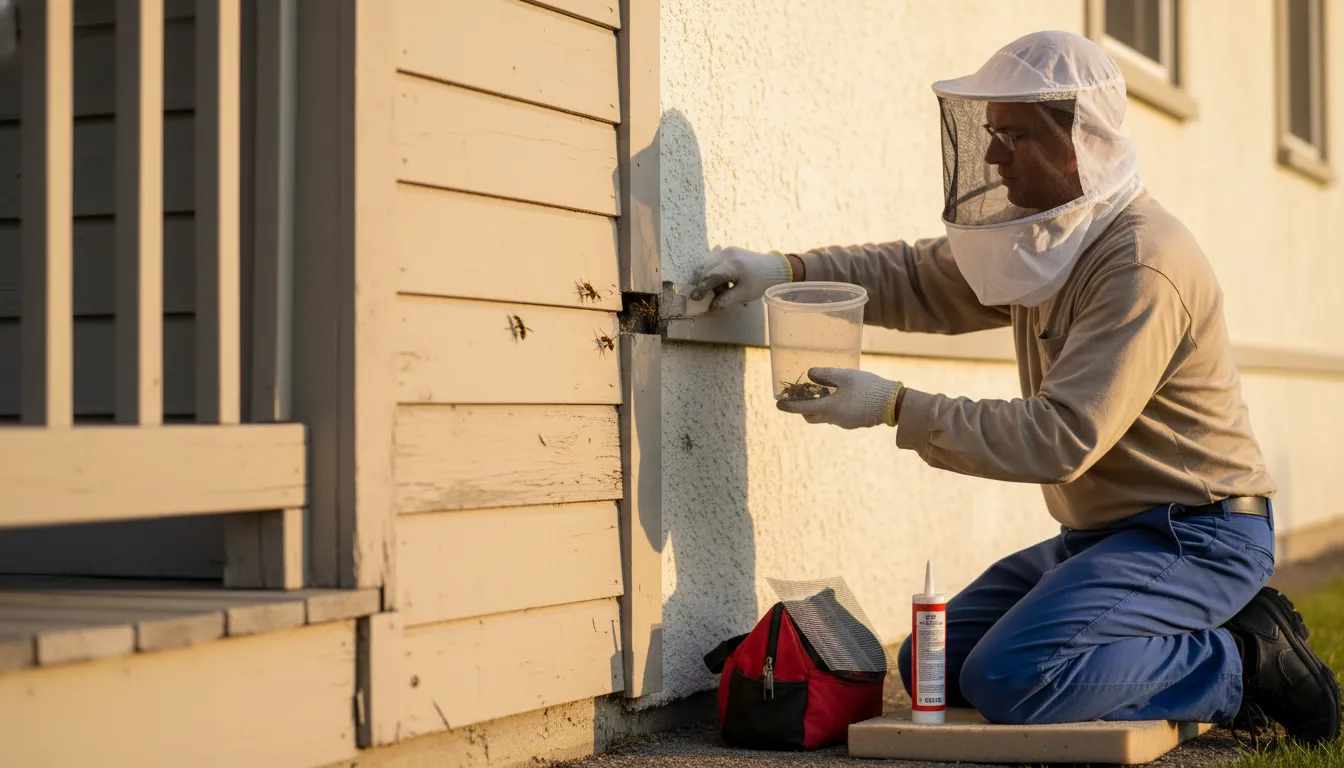
Safety and Protective Gear: Trained technicians wear specialized protective suits, gloves, and veils that prevent stings. They are trained to approach and treat nests from a safe angle and distance, minimizing the risk of a massive, defensive swarm attack 1 2.
Proper Identification and Strategy: A professional can correctly identify the species, which determines the entire plan. Is it a beneficial honey bee hive that should be live-removed and relocated to a beekeeper, or an aggressive yellowjacket nest that requires extermination? Misidentification can lead to unnecessary ecological harm or inadequate treatment.
Compliance with Regulations: In Pennsylvania, the application of pesticides for bee and wasp control is regulated. State-certified professionals understand and follow guidelines set by the Pennsylvania Department of Agriculture and the EPA, ensuring methods are effective and environmentally sound.
Preventing Property Damage: Removing a honey bee hive from a wall is not just about removing the bees. It involves carefully opening the structure, removing all wax comb and honey, and then sealing the entry point. If honey is left behind, it can seep through walls, cause rot, and attract other pests like ants, rodents, and moths.
Guaranteeing Complete Removal: Professionals have access to tools and materials not available to consumers, such as specialized insecticidal dusts that can be applied deep into wall voids or ground nests. They ensure the queen is eliminated (in extermination cases) or captured (in relocation cases), preventing the colony from simply rebuilding 3.
Find the perfect wasp & hornet removal companies for your needs
Get personalized recommendations and expert advice
Seasonal Considerations for Removal
The time of year greatly influences insect behavior, nest size, and the best course of action.
Spring to Early Summer: This is the ideal window for managing paper wasp nests, as colonies are just founding and contain only a few individuals. It's also when honey bee swarms are most common. If a swarm lands on your property, contacting a local beekeeper or removal specialist promptly can often result in a free, safe relocation before the bees move into your home's structure.
Mid to Late Summer: Nests reach their peak size and population. Food sources for wasps and hornets begin to dwindle, making them more aggressive and likely to bother outdoor gatherings. This is when ground-nesting yellowjackets become a major hazard.
Fall: Wasps and hornets become desperate for sugary foods and can be particularly aggressive. However, this is the end of their annual lifecycle for all but the new queens. Treating nests in late fall may be less urgent, as freezing temperatures will kill the colony 4.
Winter: Most social wasps and hornets die off. The season is a good time to inspect your property for old nests (which are not reused) and seal potential entry points in your home's exterior to prevent queens from entering to hibernate or start a new nest in spring 5.
Methods: Relocation vs. Extermination
The chosen method hinges on the species and the situation.
Live Bee Relocation: This is the standard for honey bees and bumble bees. Specialists or beekeepers use techniques like vacuuming the bees into a secure box. For structural hives, they must carefully extract the comb and honey. The colony is then rehomed in an apiary where it can continue its vital pollinating work 6. This process is complex and protects your home from future problems caused by leftover hive materials 7.
Wasp and Hornet Extermination: For aggressive species like yellowjackets and bald-faced hornets, extermination is typically necessary for safety. Professionals use targeted methods:
- Aerosol Sprays: For small, exposed paper wasp nests.
- Insecticidal Dusts: Critical for nests in wall voids or ground burrows. The dust is applied to the entrance and carried by the insects deep into the nest, effectively reaching the queen.
- Soapy Water Solution: An effective, low-toxicity option for ground nests, as it coats and suffocates the insects 8.
What to Expect: Process and Pricing
When you contact a professional, they will typically ask questions to assess the situation before scheduling an inspection.
The Inspection: A technician will identify the insect, locate all nesting sites (there may be more than one), assess the nest's size and accessibility, and check for structural involvement. They will then recommend a tailored plan and provide a detailed quote.
The Treatment: This is scheduled for a time that minimizes risk, often in the early morning or late evening when insects are less active. The technician will execute the plan using appropriate protective gear and methods. For exterminations, they may need to return after a few days to ensure the colony is eliminated and remove the nest.
Pricing in Pennsylvania: Costs vary based on the job's complexity.
- Wasp/Hornet Nest Removal: Removing a standard, accessible nest (e.g., a paper wasp nest under an eave or a yellowjacket nest in a shrub) typically ranges from $300 to $700+. Larger, harder-to-reach bald-faced hornet nests or ground nests will be on the higher end 9.
- Honey Bee Hive Removal (Structural): This is a more involved service. Due to the need for carpentry, careful comb and honey extraction, and bee relocation, costs often start at $1,000 or more and can increase significantly with the hive's size and location 10 11.
Prevention is Key: After removal, a good professional will advise on sealing entry points, managing attractants like open garbage cans, and maintaining your landscape to discourage future nesting 12.
Frequently asked questions
Sources
Footnotes
-
Bee, Wasp, Hornet Removal Plymouth Meeting PA - https://www.cooperpest.com/wasp-hornet-bee-removal-plymouth-meeting ↩
-
Bee and Wasp Removal: Top 2025 Effective Solutions - https://bigginsexterminating.com/bee-and-wasp-removal/ ↩
-
Can I Remove Wasps and Bees from My Doylestown, PA Property? - https://www.cooperpest.com/blog/can-i-remove-wasps-and-bees-from-my-doylestown-pa-property ↩
-
Common Social Bees and Wasps of Pennsylvania - https://pollinators.psu.edu/assets/uploads/documents/Common-Social-Bees-and-Wasps-of-Pennsylvania-Behavior-Lifecycle-and-Management.pdf ↩
-
Pennsylvania Wasp Exterminator - Viking Pest Control - https://www.vikingpest.com/pest-control/wasps/pennsylvania-wasp-control/ ↩
-
Bee Control Pittsburgh: Bee Removal | Wasp Elimination ... - https://www.beecontrolpittsburgh.com/ ↩
-
The Ultimate Guide to Bee Nest Removal: Importance, Methods, and Prevention - https://pghpestcontrol.co.uk/the-ultimate-guide-to-bee-nest-removal/ ↩
-
Stinging Insect & Carpenter Bee Control in Lancaster & Harrisburg, PA | Tomlinson Bomberger - https://tomlinsonbomberger.com/pest-control/bees-wasps-hornets/ ↩
-
Common Social Bees and Wasps of Pennsylvania: Behavior ... - https://extension.psu.edu/common-social-bees-and-wasps-of-pennsylvania-behavior-lifecycle-and-management ↩
-
Philadelphia Bee Company - https://www.philadelphiabee.com/removals.html ↩
-
How Much Does Terminix Cost? (2026) - HomeGuide - https://homeguide.com/costs/terminix-prices ↩
-
Five-Step Decision Support: Nesting Bees and Wasps Near Homes - https://extension.psu.edu/five-step-decision-support-nesting-bees-and-wasps-near-homes ↩