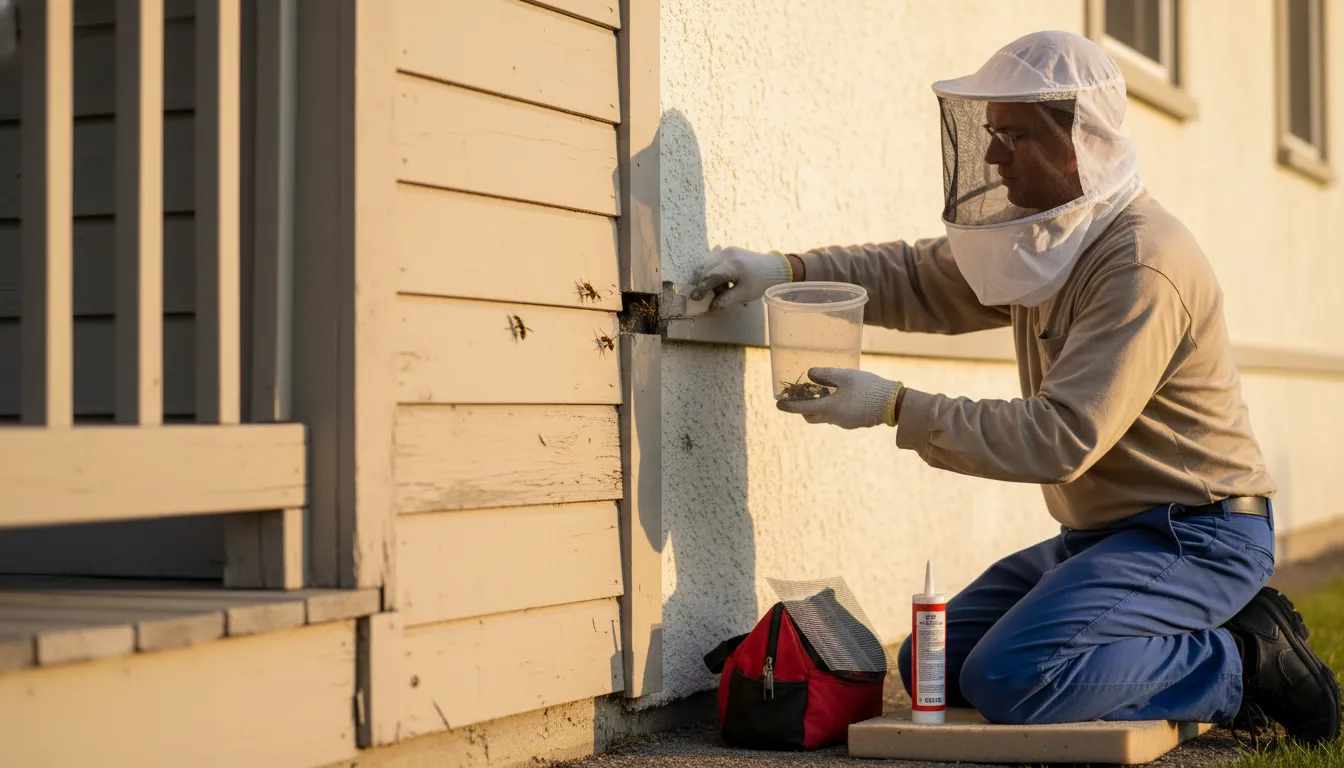
Find the Best Wasp & Hornet Removal Companies for Your Business
No obligation • Fast responses • Nationwide coverage
Why you can trust Pest Crews
Pest Crews is a leading U.S. resource for finding and evaluating residential and commercial pest control services. Our team researches providers, reviews treatment approaches, and organizes unbiased information to help you make informed decisions. Companies cannot pay to change our editorial content or influence how they appear.
Search providers near you
Best Wasp & Hornet Removal Companies in North Dakota Ranked
Discovering a buzzing nest on your property can be unsettling. In North Dakota, managing stinging insects requires a careful approach that balances safety, cost, and environmental stewardship. This guide provides clear, practical information on your options for bee and wasp control, the specific rules that apply in the state, and what you can expect from the process. Whether you're dealing with protected honey bees or aggressive wasps, understanding the local landscape will help you make an informed decision and connect with the right professional for your situation.
Understanding North Dakota's Stinging Insects
North Dakota's diverse ecosystem is home to various stinging insects, each requiring a different management strategy. The two primary categories are social bees, like honey bees, and social wasps, such as yellow jackets, hornets, and paper wasps.
Honey bees are vital pollinators for the state's agriculture and are generally considered beneficial. They form large, perennial colonies often housed in hollow trees, wall cavities, or attics. In contrast, wasps and hornets can be more aggressive, especially when their nests are disturbed. They typically build papery nests in sheltered areas like eaves, sheds, or underground. Correctly identifying the insect is the crucial first step, as the recommended action-relocation versus extermination-differs significantly.
North Dakota's Rules and Regulations for Bee Management
North Dakota has specific regulations in place, particularly for honey bees, reflecting their importance to the environment and economy.
- Mandatory Licensing: All honey bee owners and managers in the state must be licensed by the North Dakota Department of Agriculture (NDDA). This ensures beekeepers are knowledgeable about hive health and management practices.
- Hive Registration and Mapping: Licensed beekeepers are required to register their hive locations. This data contributes to the state's Pollinator Plan, which includes an interactive map to inform pesticide applicators of nearby apiaries, helping to protect bee colonies from accidental exposure 1.
- Protected Status: Due to their role as pollinators, honey bees are generally protected. State law and best practices strongly favor relocation by a licensed beekeeper over extermination 2. This ethical and often legal guideline shapes the removal services available to homeowners.
Your Removal Options: Relocation vs. Extermination
The path you take depends almost entirely on the type of insect you're dealing with.
Honey Bee Removal and Relocation
For a honey bee swarm or established colony, extermination is a last resort. The preferred method is live removal and relocation.
- The Process: A experienced beekeeper or removal specialist will safely collect the swarm or carefully extract the comb and bees from a structure. The colony is then moved to a managed apiary where it can continue to thrive.
- Who to Contact: Your first call should be to a local beekeeper or the NDDA, which can provide referrals 3. Many beekeepers are eager to collect accessible swarms at little to no cost.
- When Costs Apply: While swarm capture is often free, removal becomes a paid service when the colony is established inside a wall, attic, or chimney. These jobs are labor-intensive, require carpentry skills to open and repair structures, and take considerable time, leading to higher costs.
Wasp and Hornet Extermination
For wasps, hornets, and yellow jackets, relocation is not a standard or practical option due to their aggressive nature and lower ecological value as pollinators.
- The Process: A pest control professional will typically apply an insecticidal dust or spray directly to the nest, eliminating the colony. This is often the safest and most effective solution.
- Safety First: Due to the risk of painful, multiple stings and potential allergic reactions, DIY removal of large or hard-to-reach wasp nests is strongly discouraged. Professionals have the protective equipment and expertise to handle the job safely 4.
Key Factors Influencing Removal Cost
The price for professional bee or wasp removal in North Dakota is not fixed; it varies based on several key factors.
- Insect Species: Honey bee removal is often more expensive than wasp extermination due to the careful, non-lethal techniques and greater effort required for preservation.
- Nest Location and Accessibility: This is the most significant cost driver. A small, exposed paper wasp nest under an eave is straightforward and less expensive. Costs rise dramatically for nests inside walls, deep in attics, underground, or within chimneys, as these require more time, specialized tools, and possible repairs.
- Nest Size and Colony Activity: A large, active colony presents more risk and requires more product or labor to address, increasing the price.
- Season and Urgency: Services during peak activity in late spring and summer may command higher rates due to demand. Emergency or after-hours services will also cost more.
Typical Cost Ranges
While every job is unique, you can expect the following general ranges:
- Wasp/Hornet Extermination: Typically between $100 and $400+, with higher-end costs for large nests or difficult locations like chimneys or within structures 5 6.
- Honey Bee Removal: Can start around $400 and go up significantly for complex removals involving structural entry and repair. Accessible swarm capture may be free or low-cost 7 8 9.
Find the perfect wasp & hornet removal companies for your needs
Get personalized recommendations and expert advice
The Professional Removal Process: What to Expect
Hiring a professional ensures the job is done safely, effectively, and in compliance with state guidelines. Here's a general outline of the process:
- Inspection and Quote: The professional will identify the insect, locate the nest, and assess its size and accessibility. They will then provide a detailed quote explaining the recommended approach and cost.
- Preparation and Safety: For honey bees, the goal is to keep the colony intact. For wasps, the area will be secured. Professionals will suit up in protective gear and may ask you to keep pets and family indoors.
- Treatment/Removal:
- For Wasps: An insecticide is applied directly to the nest entrance. The professional will return after a specified period to remove the physical nest.
- For Honey Bees: The removal specialist will carefully open the structure, vacuum or brush bees into a transport box, and remove all comb and honey to prevent future pest issues like ants or wax moths.
- Clean-up and Repair: This critical step is especially important for honey bees. All residue (honey, comb, pheromones) must be thoroughly cleaned to avoid attracting new swarms. Any openings made during removal should be sealed, and structural repairs completed.
- Follow-up: A reputable professional may schedule a follow-up visit to ensure the colony is gone and no new activity has started.
Seasonal Considerations in North Dakota
The time of year greatly affects bee and wasp behavior and your removal options.
- Spring (April-June): This is swarm season for honey bees, when new colonies are formed. Swarms are temporary and often easier (and cheaper) for a beekeeper to collect. Wasp queens begin building new, small nests.
- Summer (July-August): Peak activity. Colonies are at their largest and most defensive. This is when most removal calls occur, and professionals are busiest.
- Fall (September-October): Wasp colonies reach maximum size and can become more aggressive as food sources dwindle. Honey bees prepare for winter. Removal is still possible but may be more complex.
- Winter (November-March): Most wasp colonies die off, leaving only the queen to overwinter. Honey bee clusters are dormant inside structures. Visible activity is low, making it an excellent time to schedule preventive sealing of entry points, but live removal is less feasible.
Preventing Future Infestations
After removal, take proactive steps to make your property less inviting:
- Seal Entry Points: Carefully inspect your home's exterior in the fall or winter. Seal cracks in siding, gaps around utility lines, and openings in soffits and roof joints with caulk or steel wool.
- Manage Attractants: Keep trash cans tightly sealed, clean up fallen fruit, and avoid leaving sugary drinks outdoors.
- Reduce Nesting Sites: Fill in abandoned rodent burrows in the ground, which are favored by yellow jackets. Consider hanging fake wasp nests (decoy nests) in early spring, as wasps are territorial and may avoid areas they believe are already occupied.
Frequently asked questions
Sources
Footnotes
-
North Dakota Pollinator Plan - https://www.ndda.nd.gov/sites/www/files/documents/files/ND_Pollinator_Plan_2016.pdf ↩
-
North Dakota Pollinator Plan - USDA - https://www.usda.gov/sites/default/files/documents/north-dakota-pollinator-plan.pdf ↩
-
Apiary (Honey Bees) | North Dakota Department of Agriculture - https://www.ndda.nd.gov/divisions/plant-industries/apiary-honey-bees ↩
-
Bee and Wasp Removal: Top 2025 Effective Solutions - https://bigginsexterminating.com/bee-and-wasp-removal/ ↩
-
How Much Wasp and Hornet Removal and Treatment Costs - Terminix - https://www.terminix.com/stinging-pest-control/cost/ ↩
-
How Much Does Wasp Nest Removal Cost in 2026? - Lawn Love - https://lawnlove.com/blog/wasp-nest-removal-cost/ ↩
-
How Much Does Beehive Removal Cost in 2026? - Lawn Love - https://lawnlove.com/blog/beehive-removal-cost/ ↩
-
How Much Bee Removal and Treatment Costs - Terminix - https://www.terminix.com/bee-control/cost/ ↩
-
Bee or Wasp Removal Cost - https://usalivebeeremoval.com/bee-or-wasp-removal-cost/ ↩