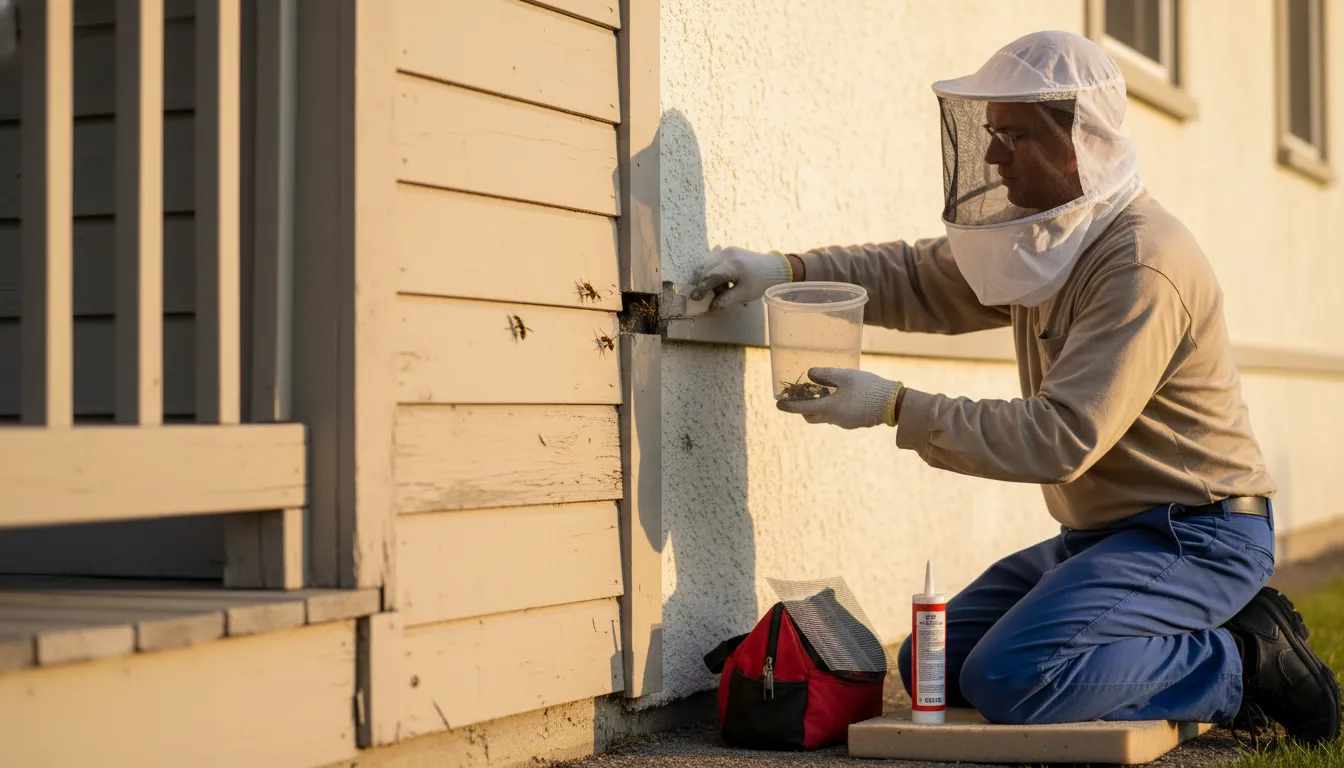
Find the Best Wasp & Hornet Removal Companies for Your Business
No obligation • Fast responses • Nationwide coverage

Why you can trust Pest Crews
Pest Crews is a leading U.S. resource for finding and evaluating residential and commercial pest control services. Our team researches providers, reviews treatment approaches, and organizes unbiased information to help you make informed decisions. Companies cannot pay to change our editorial content or influence how they appear.
Search providers near you
Best Wasp & Hornet Removal Companies in Connecticut Ranked
Discovering a buzzing nest on your property can be alarming. In Connecticut, the approach to managing these stinging insects is not one-size-fits-all; it depends heavily on the species and state regulations. This guide explains the critical differences between handling honey bees and wasps, outlines the processes professionals use, and provides practical advice for Connecticut homeowners. You can use this information to understand your situation and find qualified local specialists for safe, effective, and compliant removal.
Understanding Connecticut's Stinging Insects: Bees vs. Wasps
The first and most crucial step is identifying your unwelcome guests. Connecticut is home to both beneficial pollinators and aggressive pests, and the correct response varies dramatically.
Honey Bees are generally robust, fuzzy, and golden-brown with black stripes. They are vital pollinators and are protected by Connecticut state law. Exterminating a healthy honey bee colony is strongly discouraged and often illegal. The preferred and mandated method is live removal and relocation by a licensed professional, often in collaboration with a local beekeeper 1.
Wasps, Hornets, and Yellow Jackets have smoother, brighter bodies with more defined waists. Common species include paper wasps, bald-faced hornets, and yellow jackets. These insects are typically predatory or scavengers and can be highly aggressive, especially when their nest is threatened. For these species, extermination is the standard and recommended course of action.
The Professional Removal Process: What to Expect
Licensed pest control professionals follow specific, safe protocols tailored to the insect type.
For Honey Bee Relocation
Live bee removal is a specialized skill. The process often involves:
- Positive Identification: Confirming the insects are honey bees.
- Assessment: Evaluating the nest's size and location (e.g., inside a wall, in a tree).
- Live Removal: Using specialized vacuums and tools to carefully extract the bees and the comb.
- Relocation: Transporting the colony to a local apiary where a beekeeper will hive them2 3.
- Clean-up and Exclusion: Removing all honeycomb to prevent future pest issues (like ants or wax moths) and sealing the entry point to prevent a new swarm from moving in.
For Wasp, Hornet, and Yellow Jacket Extermination
The goal here is elimination for safety. A professional service typically includes:
- Identification: Determining the species to choose the most effective treatment.
- Strategic Treatment: Applying targeted insecticides, often in the evening when the colony is less active and more insects are at the nest.
- Nest Removal: Physically removing the nest after the colony is neutralized to prevent pheromones from attracting new wasps4.
- Prevention Advice: Providing recommendations, such as sealing cracks and managing outdoor food sources, to deter future nesting.
Seasonal Activity: When to Take Action
Timing plays a significant role in the severity of an infestation and the complexity of removal.
- Spring: This is when overwintering queens emerge to start new, small nests. Early detection and removal in spring can prevent a major problem later in the year5.
- Late Summer to Early Fall: This is peak season. Colonies are at their largest, food sources become scarcer, and insect aggression is highest. While this makes them more dangerous, it is also the most effective time for complete extermination or relocation, as the entire colony is present 6.
Find the perfect wasp & hornet removal companies for your needs
Get personalized recommendations and expert advice
Cost Factors for Removal in Connecticut
The cost for stinging insect removal in Connecticut varies widely based on several key factors.
- Insect Species: Honey bee relocation is a specialized, time-consuming process and is therefore more expensive, often ranging from $500 to $2,000 or more7 8. Wasp, hornet, and yellow jacket extermination is generally less costly, with typical averages in Connecticut falling between $212 and $875, and many services averaging around $3857.
- Nest Location and Accessibility: A nest under the eaves of a single-story home is far easier and cheaper to treat than one inside a wall void, buried in the ground, or located high in a chimney. Difficult-access nests can see prices rise significantly, with chimney removals often starting around $540 or more9.
- Nest Size: A small, early-season nest will cost less to remove than a large, established colony in late summer.
Always get a detailed, on-site inspection and quote from a licensed professional, as phone estimates can be inaccurate due to these variables.
Safety and Legal Considerations
Attempting DIY removal of stinging insects is strongly discouraged and can be dangerous or illegal.
- Safety Risks: Disturbing a nest can trigger a mass, aggressive sting attack. For individuals allergic to venom, this is a life-threatening emergency. Professionals have the proper protective equipment (PPE) and training to handle the job safely10 11.
- Legal Compliance: As noted, Connecticut has laws protecting honey bees12. Only licensed pest control operators or beekeepers are legally authorized to handle and relocate honey bee colonies. Hiring a pro ensures you remain in compliance.
- Effective Resolution: Professionals have access to commercial-grade products and the knowledge to apply them correctly, ensuring the colony is fully eliminated or relocated and that future infestations are prevented13 14.
Prevention Tips for Homeowners
After removal, take steps to make your property less inviting:
- Seal Entry Points: Carefully inspect your home's exterior in spring. Seal cracks in siding, gaps around utility lines, and openings in soffits and roof vents with caulk or steel wool15.
- Manage Attractants: Keep garbage cans tightly sealed, clean up fallen fruit, and avoid leaving sweet drinks or pet food outdoors.
- Regular Inspections: Periodically check common nesting sites like under decks, inside sheds, and along fence lines for early signs of nest building.
Frequently asked questions
Sources
Footnotes
-
Professional Bee Removal in Connecticut |Safe & Fast Service ... - https://greenpestmanagementct.com/professional-bee-removal-in-connecticut/ ↩
-
6 Professional Bee Removal Steps - https://richlandpestbee.com/6-crucial-bee-removal-expert-steps/ ↩
-
Dealing With Wasp, Hornet, and Bee Infestations at Your Facility - https://ifmali.starchapter.com/blog/facility-management-wasp-hornet-nest ↩
-
WASPS REMOVAL & Stinging Insects CONTROL IN CT & MA - https://richlandpestbee.com/stinging-insect-control/ ↩
-
Safe Wasp Removal in CT | Pet & Child Safe in 2025 - https://greenpestmanagementct.com/safe-wasp-removal-in-ct/ ↩
-
Bee Barrier in Connecticut & Western MA | Richland Pest - https://richlandpestbee.com/stinging-insect-control/bee-barrier/ ↩
-
How Much Does Beehive Removal Cost in 2026? - Lawn Love - https://lawnlove.com/blog/beehive-removal-cost/ ↩ ↩2
-
How Much Does it Cost to Get Rid of a Bee Hive? - Atomic Pest Control - https://atomicpestcontrol.com/blog/how-much-does-it-cost-to-get-rid-of-a-bee-hive ↩
-
How Much Does Wasp Nest Removal Cost in 2026? - Lawn Love - https://lawnlove.com/blog/wasp-nest-removal-cost/ ↩
-
Bee Removal | Waterbury & Bristol, CT | Total Pest Control, LLC - https://www.totalpestcontrolct.com/bees-wasps-and-yellow-jackets ↩
-
Bee & Wasp in Norwalk | Insecta x Total Pest Solutions - https://www.insectax.com/residential-pest-control/bee-wasp/ ↩
-
Laws Pertaining to Honey Bees in Connecticut - CT.gov - https://portal.ct.gov/caes/bee-information/bee-information/laws-pertaining-to-honey-bees-in-connecticut ↩
-
Exterminator for Wasps in Connecticut | 2025's Trusted Pros - https://greenpestmanagementct.com/exterminator-for-wasps-in-connecticut/ ↩
-
Quick Wasp extermination in Connecticut | Wasp Removal 2025 - https://greenpestmanagementct.com/wasp-extermination-in-connecticut/ ↩
-
Wasps Removal in Connecticut & Massachusetts | Richland - https://richlandpestbee.com/stinging-insect-control/wasps/ ↩