Find the Best Wasp & Hornet Removal Companies for Your Business
No obligation • Fast responses • Nationwide coverage

Why you can trust Pest Crews
Pest Crews is a leading U.S. resource for finding and evaluating residential and commercial pest control services. Our team researches providers, reviews treatment approaches, and organizes unbiased information to help you make informed decisions. Companies cannot pay to change our editorial content or influence how they appear.
Search providers near you
Best Wasp & Hornet Removal Companies in West Virginia Ranked
Dealing with stinging insects on your West Virginia property requires a careful approach. Honey bees are vital, protected pollinators that must be relocated alive by a beekeeper, while wasps and hornets are pests that can be exterminated. This guide explains the key differences, state-specific considerations, and typical costs to help you find the right local professional for safe and effective removal.
Understanding the Key Differences: Bees vs. Wasps in WV
Correctly identifying the insect is the crucial first step, as it dictates the legal and practical approach to removal in West Virginia.
Honey Bees are fuzzy, golden-brown insects that live in large, wax-comb hives. They are essential for agriculture and are protected by state guidelines. It is generally illegal to exterminate a honey bee colony; they must be live-removed and relocated by a beekeeper or a pest control professional specializing in bee rescue.
Wasps and Hornets (like yellow jackets, paper wasps, and bald-faced hornets) have smooth, slender bodies with brighter yellow or white markings. They build papery nests from chewed wood. These insects are considered pests and pose a greater sting threat due to their aggressive nature and ability to sting repeatedly. A licensed exterminator can treat and remove these nests.
West Virginia Regulations and Best Practices
West Virginia's approach balances environmental protection with public safety. The primary regulation focuses on the licensing of Pest Control Operators (PCOs) who apply insecticides. For honey bees, the emphasis is on preservation. Many local beekeepers' associations work with pest control companies to offer live removal services. Attempting DIY removal, especially for honey bees, is not only risky due to stings but may also violate best practices for pollinator protection. For all stinging insects, professionals have the protective gear, correct insecticides, and techniques to handle the job safely.
Professional Removal Methods: What to Expect
The method used depends entirely on the type of insect involved.
For Honey Bee Removal: A beekeeper or specialist will perform a live extraction. This often involves carefully opening a wall, attic, or chimney to access the hive, vacuuming the bees into a special container, and meticulously removing all wax comb and honey. The colony is then relocated to an apiary. This process is labor-intensive and may include necessary repair work to the structure after removal.
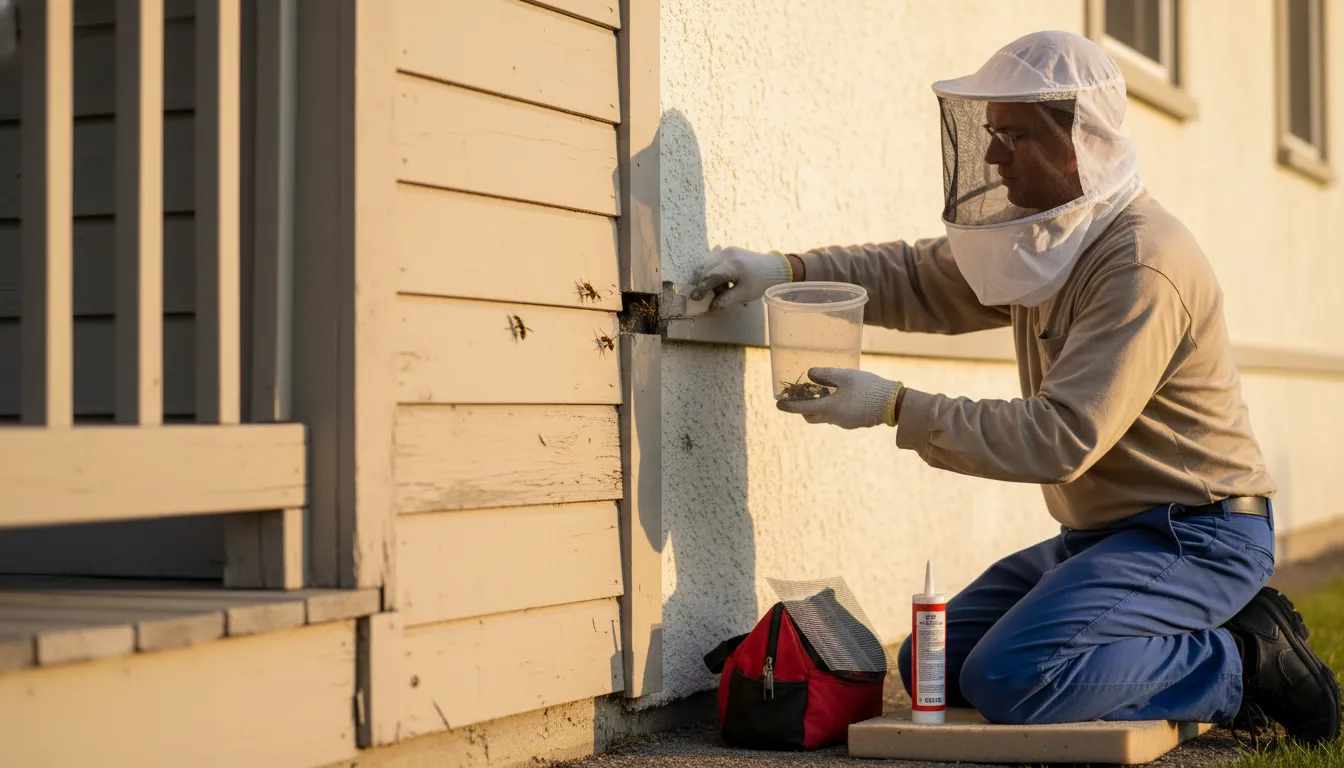
For Wasp and Hornet Removal: A licensed exterminator will typically treat the nest with a targeted insecticidal dust or spray. This is often done at night when the colony is less active. Once the insects are eliminated, the professional can safely remove the nest to prevent future colonies from using it. Some treatments are designed to eliminate the colony without immediate nest removal, which can be safer in hard-to-reach areas 1.
Seasonal Activity in West Virginia
Stinging insect activity in West Virginia is highly seasonal, which affects both the likelihood of an infestation and service availability.
- Spring (April-May): Queen wasps and bees emerge to start new colonies. This is the best time for preventive measures and addressing small, new nests.
- Summer (June-August): Colonies grow rapidly. This is peak season for removal services, with high demand for dealing with large, established nests and bee swarms 2.
- Fall (September-October): Wasps become more aggressive as food sources dwindle. New honey bee colonies are less common, but established hives are large.
- Winter (November-March): Most wasps die, leaving only the queen to overwinter. Honey bee clusters remain alive but inactive in their hive. Removal services are less frequent but may be needed for indoor infestations or hive extraction from structures.
Find the perfect wasp & hornet removal companies for your needs
Get personalized recommendations and expert advice
Cost Factors for Bee and Wasp Removal in West Virginia
Prices for stinging insect removal in West Virginia vary widely based on several key factors. Understanding these can help you interpret estimates from local professionals.
1. Type of Insect: This is the most significant factor. Honey bee live removal is almost always more expensive than wasp extermination due to the labor-intensive, non-lethal process and the expertise required.
2. Nest Location and Accessibility: A nest under a deck eave is far simpler than one inside a wall void, attic, or chimney. Difficult locations require more time, specialized equipment, and potentially repair work, increasing the cost substantially.
3. Size of the Nest or Colony: A small, early-season paper wasp nest costs less to treat than a massive, late-summer yellow jacket nest in the ground. Similarly, a small bee swarm is easier to capture than a well-established hive with 50,000 bees and extensive wax comb.
4. Required Repairs: For honey bees, the cost often includes removing honey-soaked insulation, cleaning residual pheromones, and repairing drywall or siding to prevent future problems. This repair work is a major component of the total price for structural infestations 3.
Estimated Price Ranges
While every job is unique, here are general price ranges you might encounter in West Virginia:
- Wasp/Hornet Nest Removal (Small, Exterior): $100 - $300 4
- Wasp/Hornet Nest Removal (Medium/Large or Difficult Access): $300 - $700 5
- Honey Bee Live Removal (Swarm Capture): $150 - $500 6
- Honey Bee Live Removal (Established Hive in Structure): $700 - $1,300+ 7 8
- Complex Extractions (e.g., large hive in wall with repairs): Can exceed $2,000 9 10
Always get a detailed, in-person inspection and written estimate before work begins. A reputable professional will clearly explain what the quote includes, such as treatment, nest removal, guarantee, and any repair work.
Choosing a Qualified West Virginia Professional
Selecting the right service provider ensures the job is done safely, effectively, and in compliance with local norms.
- For Wasps/Hornets: Look for a licensed Pest Control Operator (PCO) with experience in stinging insect control. Ask if their service includes nest removal after treatment to prevent recurrence 11.
- For Honey Bees: Seek a beekeeper (often found through local beekeeping associations) or a pest control company that partners with a beekeeper for live removals. Verify they perform full comb and honey removal to avoid secondary pest issues like ants or rodents 12.
- For Both: Check for insurance, ask about guarantees or follow-up visits, and read local reviews. A trustworthy professional will prioritize safety, provide a clear plan, and differentiate their approach based on the insect species.
Preventing Future Infestations
After removal, take steps to make your property less inviting:
- Seal cracks and holes in your home's exterior, especially around rooflines, vents, and utility entries.
- Keep garbage cans tightly sealed and manage outdoor food sources.
- Fill ground holes where yellow jackets might nest.
- Regularly inspect sheds, decks, and eaves in the spring for early nest construction.
Frequently asked questions
Sources
Footnotes
-
Wasp and Hornet Control | WV Exterminator - https://masterspestmanagement.com/wasps/ ↩
-
Stinging Insect Control - Bees, Hornets, Wasps - https://www.environmentalpc.com/stinging-insect-control ↩
-
Bee Control & Removal in West Virginia - https://www.environmentalpc.com/bee-control/west-virginia ↩
-
How Much Does Wasp Nest Removal Cost in 2026? - Lawn Love - https://lawnlove.com/blog/wasp-nest-removal-cost/ ↩
-
How Much Wasp and Hornet Removal and Treatment Costs - Terminix - https://www.terminix.com/stinging-pest-control/cost/ ↩
-
What Do Bee Keepers Charge for Bee Removal in 2025? - Pest Extinct - https://pestextinct.com/what-do-bee-keepers-charge-for-bee-removal-in-2025/ ↩
-
How Much Bee Removal and Treatment Costs - Terminix - https://www.terminix.com/bee-control/cost/ ↩
-
How Much Does Beehive Removal Cost in 2026? - Lawn Love - https://lawnlove.com/blog/beehive-removal-cost/ ↩
-
Bee and Wasp Removal: Top 2025 Effective Solutions - https://bigginsexterminating.com/bee-and-wasp-removal/ ↩
-
How Much Does Bee Removal Cost? [2026 Data] | Angi - https://www.angi.com/articles/how-much-does-bee-removal-cost.htm ↩
-
Wasp Nest Removal: Why Professionals Prevent Return Visits - https://bettertermite.com/wasp-nest-removal/ ↩
-
Bee Control & Removal | WV Exterminator - https://masterspestmanagement.com/bees/ ↩