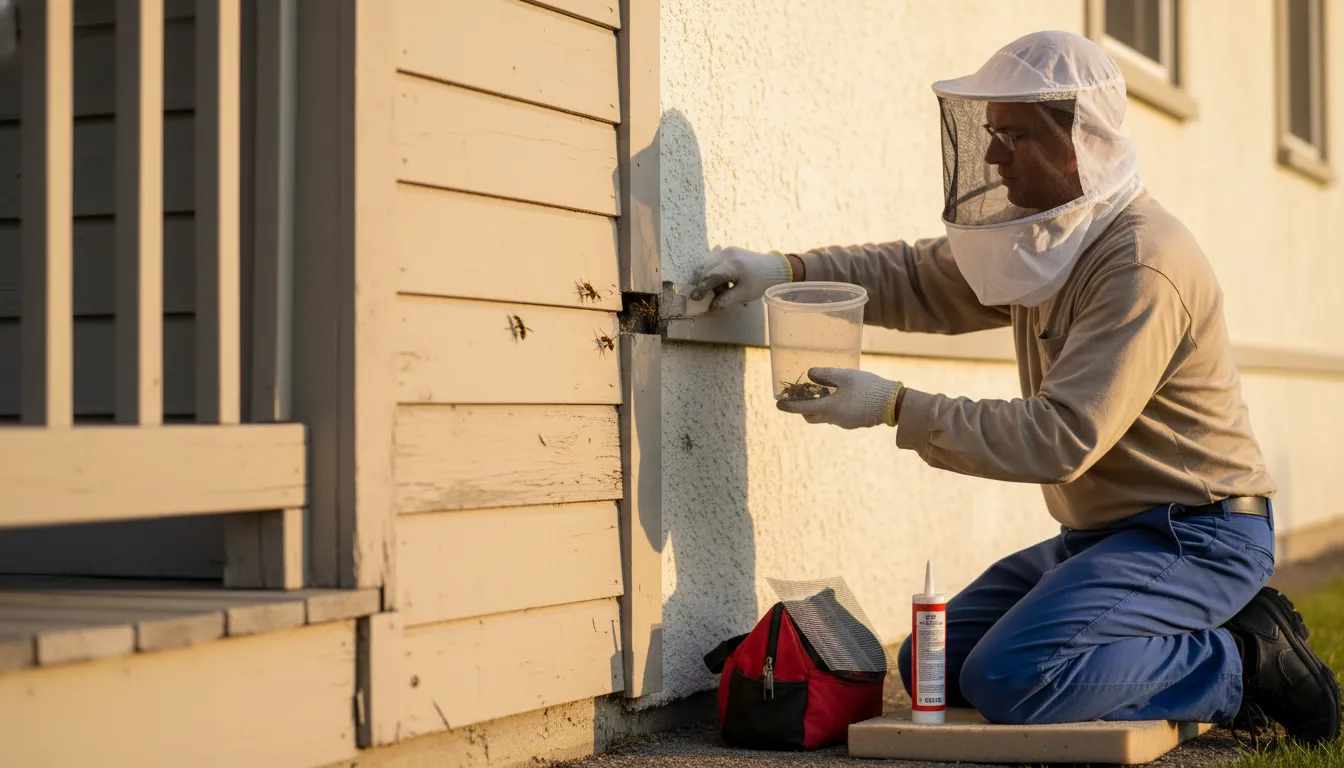
Find the Best Wasp & Hornet Removal Companies for Your Business
No obligation • Fast responses • Nationwide coverage

Why you can trust Pest Crews
Pest Crews is a leading U.S. resource for finding and evaluating residential and commercial pest control services. Our team researches providers, reviews treatment approaches, and organizes unbiased information to help you make informed decisions. Companies cannot pay to change our editorial content or influence how they appear.
Search providers near you
Best Wasp & Hornet Removal Companies in North Carolina Ranked
Managing stinging insects in North Carolina requires a careful balance between safety, local laws, and environmental stewardship. While bees are vital pollinators protected by state law, aggressive wasps and hornets can pose serious risks to people and pets. This guide helps you understand your options for safe, effective, and responsible bee and wasp management, from DIY prevention to knowing when to call a professional.

ClearDefense Pest Control
501 Penman St Suite 301, Charlotte, NC 28203
ClearDefense Pest Control is a pest control company based in Charlotte, NC, specializing in environmentally responsible pest management. They provide targeted treatments for cockroaches, ants, rodents, bees, wasps, and other pests using a micro-crystallized formula that releases treatment slowly for ongoing effectiveness. Their services include establishing anti-bug barriers, baiting, trapping, wall injections, and nest removal to control and prevent pest activity year-round. ClearDefense Pest Control serves Charlotte and surrounding areas, applying methods designed to minimize exposure to people and pets while maintaining environmental safety.

ClearDefense Pest Control
7347 W Friendly Ave Suite F, Greensboro, NC 27410
ClearDefense Pest Control provides environmentally responsible pest control services in Winston Salem, NC. They use a micro-crystallized formula that releases treatment slowly over time, targeting pests based on their behavior, habitats, and lifecycle. Their approach includes establishing anti-bug barriers, baiting, wall injections, and nest removal to address a variety of pests including cockroaches, ants, rodents, bees, and wasps. ClearDefense serves multiple nearby communities and emphasizes ongoing treatments to maintain pest control throughout all seasons.

ClearDefense Pest Control
486 N Patterson Ave Suite 232, Winston-Salem, NC 27101
ClearDefense Pest Control provides comprehensive pest control services in Winston Salem, NC, addressing a wide range of pests including ants, cockroaches, rodents, wasps, and spiders. Their approach focuses on seasonal pest management with targeted treatments such as micro-crystallized barrier applications, baiting, trapping, and wall injections to create and maintain long-lasting protection around homes. The service includes removing wasp nests and spider webs from eaves and overhangs as part of regular visits. ClearDefense uses environmentally responsible products designed to minimize chemical exposure while keeping families and pets safe. Regular quarterly visits reinforce the protective barriers to ensure ongoing pest prevention throughout the year.
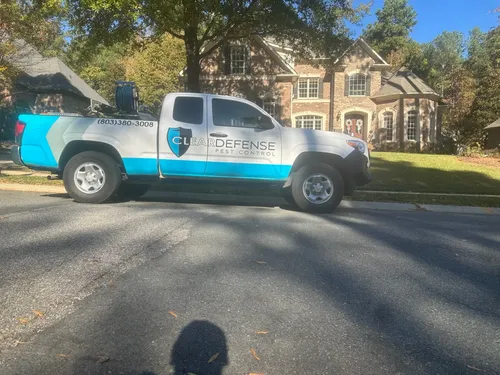
ClearDefense Pest Control
1383 Old Springdale Rd, Rock Hill, SC 29730
ClearDefense Pest Control is a pest control company serving Charlotte, NC, and surrounding areas. They specialize in environmentally responsible pest management, including cockroach, ant, rodent control, and bee and wasp removal. Their approach uses a micro-crystallized formula that releases treatment slowly for ongoing effectiveness, focusing on targeted applications based on pest behavior and habitats. ClearDefense serves multiple nearby cities and maintains pest barriers year-round to address seasonal pest activity. Their services include web and nest removal as well as precision treatments at entry points to homes.
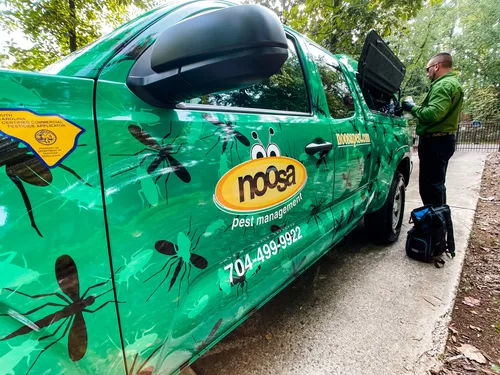
Noosa Pest Management LLC
6916 Rea Croft Dr, Charlotte, NC 28226
Noosa Pest Management LLC is a locally owned pest control company serving Charlotte, NC. They provide a range of residential and commercial pest management services including bed bug treatment, ant and rodent control, termite inspections, mosquito control, bee and wasp removal, bird and wildlife control, and crawl space encapsulation. Their approach emphasizes environmentally friendly and botanical pest control solutions, integrating natural treatments and comprehensive inspections to address pest issues effectively. Noosa Pest Management also offers specialized termite control and uses heat treatment for bed bugs. They participate in the EPA's Pesticide Environmental Stewardship Program and focus on minimizing chemical use. The company is known for its thorough inspections, customized treatment plans, and ongoing maintenance visits. Noosa Pest Management is family-operated and prioritizes eco-conscious methods while covering a wide range of pests common in the Charlotte area.
Understanding North Carolina's Stinging Insects
North Carolina is home to a variety of stinging insects, each requiring a different approach. Correct identification is the first step to a safe solution.
Honey Bees: These fuzzy, golden-brown insects are crucial pollinators. In North Carolina, beekeeping is protected by the "Right to Farm" law, which generally allows residents to keep hives, though local ordinances may impose reasonable restrictions like limits on hive numbers or setback distances from property lines. Honey bees are not naturally aggressive but will defend their hive. A swarm-a temporary cluster of bees looking for a new home-is usually docile. An established hive inside a wall or attic, however, requires careful handling.
Wasps, Hornets, and Yellow Jackets: This group includes paper wasps (open, umbrella-shaped nests), yellow jackets (often ground-dwelling), and bald-faced hornets (large, enclosed gray nests in trees). They are smooth-bodied, more brightly colored than bees, and can be highly aggressive, especially in late summer when their colonies are large and food is scarce. Their stings are painful, and they can sting repeatedly.
North Carolina Rules and Best Practices
State and local guidelines emphasize protecting beneficial pollinators while managing legitimate threats.
- Protect Pollinators: The general rule is to preserve honey bee colonies whenever possible. Removal should only be considered for nests that pose a direct danger due to their location (e.g., inside a child's play structure, near a high-traffic doorway) or for individuals with severe allergies 1.
- Know Local Ordinances: While the state protects beekeeping, cities and counties can set rules. These may limit the number of hives (often to five or fewer), require hives to be anchored or at ground level, and mandate specific setbacks from neighboring properties 2 3. Always check with your local government before taking action against a honey bee hive.
- Remove Dangerous Nests: For aggressive wasps, hornets, and yellow jackets, removal of dangerous nests is recommended to protect household safety 4.
Professional Removal Options and Methods
When a nest poses a threat, professionals employ several strategies tailored to the insect and situation.
For Wasps, Hornets, and Yellow Jackets
These insects are typically eradicated due to their aggressive nature.
- Chemical Treatment: Professionals use targeted, EPA-registered insecticides, often applied in the evening when insects are less active and the entire colony is present in the nest. They use specialized equipment like crevice tools to inject material directly into the nest opening.
- Trapping: In spring and early summer, trapping foraging queens can prevent colony establishment. For existing colonies, traps are less effective than direct nest treatment but can be part of an integrated approach.
- Structural Removal: If wasps have nested inside a wall void or attic, killing the colony is only half the job. The nest itself may need to be physically removed to prevent odors and secondary pest infestations, which can involve opening up part of the structure-a more complex and costly procedure.
For Honey Bees
The goal with honey bees is almost always live removal and relocation.
- Hive Relocation: A local beekeeper or removal specialist will often remove an accessible swarm or hive for free or a small fee, as they gain a new colony. They will vacuum the bees into a special box and relocate them to an apiary.
- Trap-Out Method: For bees established inside a wall where demolition isn't desired, a "trap-out" may be used. A one-way exit is placed over the hive entrance, allowing bees to leave but not return. A bait hive is set up nearby to attract the displaced colony. This is a slow process that requires significant skill and is best done in spring or summer.
- Cut-Out and Structural Removal: This is the most thorough method for interior hives. After the bees are safely removed, the wall or ceiling is opened to extract all wax comb and honey. This is critical, as leftover comb can attract new bee swarms, ants, or rodents. It is also the most expensive option due to the carpentry and repair work involved 5.
Find the perfect wasp & hornet removal companies for your needs
Get personalized recommendations and expert advice
Seasonal Guide for North Carolina Homeowners
Timing your prevention and removal efforts with insect life cycles is key to success and safety.
- Early Spring (March-April): This is the most critical time for prevention. Queen wasps and hornets emerge from hibernation and begin building small, starter nests. Inspect eaves, soffits, sheds, and ground holes. Knocking down a nickel-sized nest now prevents a basketball-sized problem in August. It's also the best time to contact a beekeeper about swarm prevention or to plan a hive relocation 6.
- Summer (May-August): Colonies grow rapidly, reaching peak size and aggression by late summer. DIY removal of large nests is extremely dangerous. This is the peak season for professional intervention for both wasps and bees. If you have a honey bee hive that must be removed, professionals are most active during this time 7.
- Fall and Winter (September-February): By the first hard frost, wasp and hornet colonies die off. The new queens leave to hibernate in sheltered spots, abandoning the nest. Winter is the safest time for DIY removal of empty wasp nests. You can simply knock them down without risk of stings, which helps prevent queens from reusing the same site the following spring. Honey bee clusters remain active in their hive on warm winter days but are less likely to swarm.
Cost Considerations for Removal
Costs in North Carolina vary dramatically based on the insect, nest location, and method required.
- Wasp/Hornet Nest Removal: Professional eradication of an exposed, accessible nest typically ranges from $300 to $700 on average. Complexity (e.g., a nest three stories high) or the need for interior access will increase the price.
- Honey Bee Removal: A straightforward swarm capture or hive relocation by a beekeeper may cost $135 to $450. A standard cut-out removal from a structure averages $450 to $1,065. Extensive structural removal that involves significant demolition, comb extraction, and wall repair can easily exceed $2,500 8 9.
- Factors Influencing Price: Key factors include the height and accessibility of the nest, whether it's inside a structure, the size of the colony, and the time of year. Emergency or after-hours services will also command a premium.
When to Take Action and When to Call a Pro
Making the right call ensures your safety and the ecological health of your property.
You may consider careful DIY action if:
- You find a very small, early-season wasp nest (no larger than a golf ball).
- You are removing an obviously abandoned wasp nest in the winter.
- You see a honey bee swarm (a hanging cluster) and have contacted a local beekeeper who is on the way.
You should always call a professional for:
- Large Nests: Any wasp, hornet, or yellow jacket nest larger than a fist.
- Hidden Nests: Nests inside walls, attics, soffits, or underground.
- High-Risk Locations: Nests near doorways, play areas, or pools.
- Bee Hives in Structures: Any established honey bee colony inside a building.
- Allergies: If anyone in the household is allergic to stings.
- Uncertainty: If you are unsure what type of insect you're dealing with.
Acting early in the spring to monitor and prevent nests is the most effective and cost-efficient strategy. Knowing the difference between a beneficial pollinator and a dangerous pest allows you to make informed, responsible decisions for your North Carolina home 10 11 12.
Frequently asked questions
Sources
Footnotes
-
Bee, Wasp & Hornet Removal - Spartan Animal & Pest Control - https://spartananimalandpestcontrol.com/pest-control/bee-wasp-hornet-removal/ ↩
-
Chapter 106 - Article 55 - North Carolina General Assembly - https://www.ncleg.gov/EnactedLegislation/Statutes/HTML/ByArticle/Chapter_106/Article_55.html ↩
-
Vegas Bees FAQ | Las Vegas Live Bee Removal & Honey Experts - https://www.vegasbees.com/faq ↩
-
Bee and Wasp Removal: Top 2025 Effective Solutions - https://bigginsexterminating.com/bee-and-wasp-removal/ ↩
-
Honey Bee Removal From Residential & Commercial Sites - https://content.ces.ncsu.edu/frequently-asked-questions-about-removing-honey-bees-from-structures ↩
-
Be Prepared For Wasp Season in North Carolina - https://outerbanks-pestcontrol.com/2024/05/be-prepared-for-wasp-season-in-north-carolina/ ↩
-
Bee Removal FAQ - Forsyth County Beekeepers Association - https://fcba.wildapricot.org/Bee-Removal-FAQ ↩
-
How Much Does Beehive Removal Cost in 2026? - Lawn Love - https://lawnlove.com/blog/beehive-removal-cost/ ↩
-
How Much Does Terminix Cost? (2026) - HomeGuide - https://homeguide.com/costs/terminix-prices ↩
-
How to Protect Yourself from Wasps and Hornets in NC - https://www.carolinapest.com/how-to-protect-yourself-from-wasps-and-hornets-in-nc/ ↩
-
The Complete Guide to Wasp, Hornet, and Yellow Jacket ... - https://www.wakepest.com/the-complete-guide-to-wasp-hornet-and-yellow-jacket-control-in-the-triangle-area/ ↩
-
Safely Removing a Wasp Nest in Winter - Mosquito Squad - https://www.mosquitosquad.com/blog/other-insects-pests/how-to-safely-remove-a-wasp-nest-in-winter/ ↩