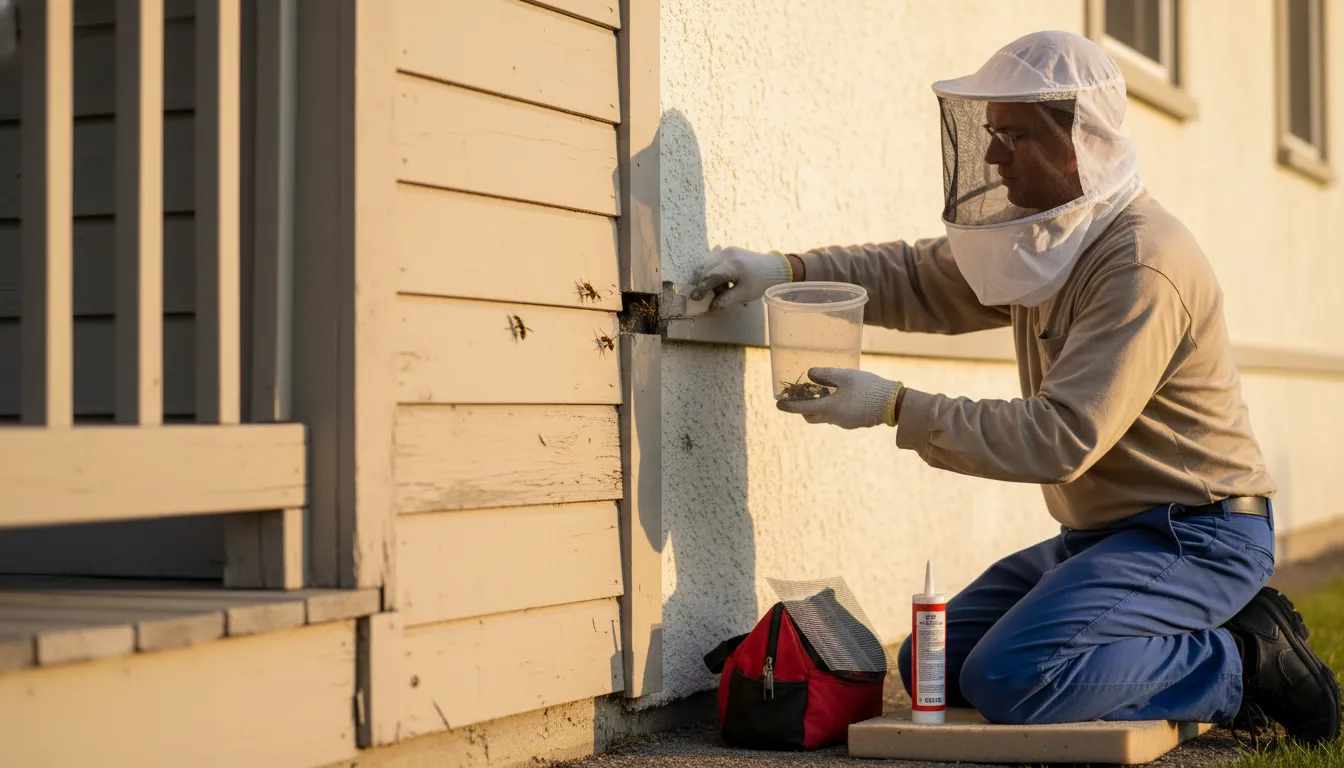
Find the Best Wasp & Hornet Removal Companies for Your Business
No obligation • Fast responses • Nationwide coverage

Why you can trust Pest Crews
Pest Crews is a leading U.S. resource for finding and evaluating residential and commercial pest control services. Our team researches providers, reviews treatment approaches, and organizes unbiased information to help you make informed decisions. Companies cannot pay to change our editorial content or influence how they appear.
Search providers near you
Top Wasp & Hornet Removal Companies in Winston Salem, North Carolina Ranked
Dealing with stinging insects like bees, wasps, and hornets is a common concern for homeowners in Winston-Salem. These pests can pose a safety risk, especially to those with allergies, and their nests can cause structural damage or become a persistent nuisance. Understanding your options for safe and effective removal is key. This guide provides local insights to help you identify the problem, choose between professional extermination and humane relocation, and connect with qualified specialists in the Forsyth County area.

ClearDefense Pest Control
7347 W Friendly Ave Suite F, Greensboro, NC 27410
ClearDefense Pest Control provides environmentally responsible pest control services in Winston Salem, NC. They use a micro-crystallized formula that releases treatment slowly over time, targeting pests based on their behavior, habitats, and lifecycle. Their approach includes establishing anti-bug barriers, baiting, wall injections, and nest removal to address a variety of pests including cockroaches, ants, rodents, bees, and wasps. ClearDefense serves multiple nearby communities and emphasizes ongoing treatments to maintain pest control throughout all seasons.

ClearDefense Pest Control
486 N Patterson Ave Suite 232, Winston-Salem, NC 27101
ClearDefense Pest Control provides comprehensive pest control services in Winston Salem, NC, addressing a wide range of pests including ants, cockroaches, rodents, wasps, and spiders. Their approach focuses on seasonal pest management with targeted treatments such as micro-crystallized barrier applications, baiting, trapping, and wall injections to create and maintain long-lasting protection around homes. The service includes removing wasp nests and spider webs from eaves and overhangs as part of regular visits. ClearDefense uses environmentally responsible products designed to minimize chemical exposure while keeping families and pets safe. Regular quarterly visits reinforce the protective barriers to ensure ongoing pest prevention throughout the year.
Pest-X Exterminating
4991 Reidsville Rd, Walkertown, NC 27051
Pest-X Exterminating is a locally owned pest control company serving Winston Salem, NC, and the surrounding Triad area including Greensboro, High Point, and Burlington. They provide pest control services for common nuisances such as ants, cockroaches, rodents, termites, bees, and wasps. With over 35 years of experience, Pest-X Exterminating offers expert termite inspections and effective pest removal solutions. The company emphasizes a strong community connection and offers same-day service when contacted early in the day.
Go-Forth Pest Control
707a Gralin St, Kernersville, NC 27284
Go-Forth Pest Control is a pest management company serving Winston Salem, NC, and the surrounding Piedmont Triad region. They provide a range of pest control services including bed bug treatment, cockroach and ant control, rodent elimination, termite inspections and treatments, mosquito and flying insect control, as well as commercial pest services. With over 55 years of experience since 1959, Go-Forth uses EPA-approved methods tailored to local pest challenges and offers same-day service to address infestations promptly. Their expertise includes termite control to prevent structural damage and comprehensive treatments for various pests common to the area.

Four Seasons Pest Control
2411 S Scales St #2, Reidsville, NC 27320
Four Seasons Pest Control is a family-owned pest control company serving Winston Salem, NC, and surrounding areas since 1998. They offer customized treatments for common pests such as ants, cockroaches, rodents, termites, mosquitoes, and bed bugs. Their services include thorough termite inspections and commercial pest control tailored to various industries. The company emphasizes long-term prevention and uses methods mindful of homes, families, and pets.
Understanding Your Stinging Insect Problem
The first step in addressing a bee or wasp issue is proper identification. Different species require different approaches, especially when considering the ecological importance of pollinators like honey bees.
- Honey Bees: Often seen in large, teardrop-shaped swarms clinging to tree branches or structures. These are crucial pollinators, and their colonies build wax combs, typically within hollow spaces like walls or trees. Humane relocation by a beekeeper is the preferred and often free method for honey bee swarms.
- Bumblebees: Large, fuzzy, and black and yellow, they are generally docile. They nest in small, ground-level cavities like abandoned rodent burrows or under piles of debris.
- Paper Wasps: Build distinctive, open-celled, umbrella-shaped nests from a papery material, often under eaves, porch ceilings, or inside attics. They are less aggressive but will defend their nest.
- Yellow Jackets: Aggressive wasps with bright yellow markings. They often build large, enclosed paper nests in the ground, wall voids, or under shrubs. They are attracted to human food and can be a major nuisance in late summer and fall.
- Hornets: Including the bald-faced hornet, these build large, football-shaped, enclosed paper nests high in trees or on structures. They are highly defensive of their nest.
Common Nest Locations Around Your Property
Bees and wasps are opportunistic when choosing a nesting site. Knowing where to look can help you spot a problem early. Nests are commonly found in three types of locations 1 2 3 4:
Aerial Locations:
- Under roof eaves, soffits, and overhangs
- In tree branches, cavities, or shrubs
- Inside chimneys and attic vents
- On porch ceilings, light fixtures, and utility poles
Ground & Low-Level Locations:
- In or under woodpiles, mulch beds, and dense shrubbery
- Within ground holes, abandoned rodent burrows, or under fallen logs (common for yellow jackets and bumblebees)
- Inside unattended containers, grills, or children's playground equipment
Structural Void Locations:
- Within wall cavities, especially around window and door frames
- In attic spaces, crawl spaces, and behind siding
- Inside hollow porch columns or deck railings
The Seasonal Cycle of Bees and Wasps in Winston-Salem
Activity levels for stinging insects in North Carolina follow a predictable seasonal pattern driven by temperature and food availability 5.
Spring (March - May): This is the start of the active season. Overwintering queens emerge to establish new nests and lay eggs. For honey bees, spring is prime swarming season, particularly in March, April, and May, as colonies split to form new hives 6. You may see large clusters of bees resting on surfaces before they find a permanent home.
Summer (June - August): Colony populations peak during the summer heat. Workers are busy foraging, and nests grow rapidly. Wasps and hornets are actively hunting insects, while bees are focused on pollination. This is when most people notice high insect activity.
Fall (September - November): This is a critical period for wasp and hornet activity. As natural food sources decline, these insects become more aggressive and are strongly attracted to sugary human foods at outdoor gatherings. New queens mate and seek sheltered spots to hibernate, often accidentally entering attics or wall voids, which can lead to indoor problems later 7 8.
Winter (December - February): Most social wasp and hornet colonies die off, leaving only the fertilized queens in hibernation. Honey bee clusters huddle together inside their hive for warmth. Visible activity is minimal, making it an excellent time for property owners to have professionals seal potential entry points to prevent spring infestations.
Your Removal Options: Extermination vs. Relocation
When you discover a nest, you generally have two paths, and the right choice depends heavily on the insect species.
Professional Pest Control for Extermination: Licensed pest management professionals are equipped to handle wasps, hornets, and other stinging insects that typically require elimination. Companies like Bug Out Service or Pest-X Exterminating use specialized protective gear and application methods to safely remove or exterminate nests from difficult locations 9 10. This service often includes treating the area to deter re-infestation and is the recommended solution for aggressive species like yellow jackets or hornets, or for nests located inside homes.
Humane Bee Removal by Local Beekeepers: For honey bee swarms and established colonies, contacting a local beekeeper or beekeeping association is the best course of action. The Forsyth County Extension Center can often provide references 11 12. Beekeepers will usually remove a honey bee swarm for free, as acquiring the bees benefits them. Live removal of an established colony from a structure (like a wall) is a specialized, labor-intensive service that involves carefully extracting the comb and bees, so it comes at a higher cost than extermination. Choosing relocation helps preserve these vital pollinators.
Find the perfect wasp & hornet removal companies for your needs
Get personalized recommendations and expert advice
What Influences the Cost of Removal?
The price for bee and wasp control in Winston-Salem varies based on several key factors 13 14. Understanding these can help you interpret estimates from local providers.
- Type of Insect: Humane honey bee removal, especially a live extraction from a wall, is typically more expensive (ranging from $800 to over $1,000) due to the skilled labor and careful cleanup required to prevent future swarms 15 16. Wasp and hornet removal generally ranges from $300 to $700.
- Nest Location and Size: A small, easily accessible paper wasp nest under an eave will cost less to treat than a large, enclosed yellow jacket nest inside a wall void or deep underground. Height and difficulty of access increase price.
- Service Type: A one-time treatment for a specific nest is a standalone cost. Many local companies also offer ongoing general pest control plans, which may include periodic inspections and removal of accessible nests as part of a quarterly or annual agreement, with initial services sometimes starting around $100 17 18 19.
- Urgency and Accessibility: Emergency or after-hours services will command a premium. The need for ladders, special equipment, or minimal-disruption techniques can also affect the final price.
Preventing Future Infestations
After a nest is removed, taking preventive steps can reduce the chance of a recurrence.
- Seal Entry Points: In late fall or winter, inspect your home's exterior. Seal cracks in siding, around windows and doors, and where utility lines enter with caulk or steel wool. Repair damaged screens on attic and crawl space vents.
- Manage Attractants: Keep trash cans tightly sealed and clean up food and drink spills immediately after outdoor events. Avoid leaving pet food outside. Consider planting pollinator gardens away from high-traffic areas to give bees a preferred food source.
- Reduce Nesting Sites: Regularly clear away yard debris, such as fallen branches, old lumber piles, and unused containers. Fill in abandoned rodent burrows and ground holes in the spring.
Choosing a Local Service Provider
Whether you need a pest control expert or a beekeeper, selecting a reliable professional is important.
- Verify Licensing and Insurance: For pest control companies, ensure they are licensed by the North Carolina Department of Agriculture and Consumer Services and carry liability insurance.
- Ask About Methods: Inquire about their approach. For bees, ask if they work with beekeepers for relocation. For wasps, ask about the products used and any precautions for pets or children.
- Get a Detailed Estimate: A reputable provider should offer a clear, written estimate that outlines the scope of work, the species being treated, the method to be used, and any guarantees or follow-up visits included.
- Check Local References: Look for reviews specific to bee or wasp removal on local platforms. Community groups, such as neighborhood Facebook pages, can be a good source of recommendations for both beekeepers and exterminators 20.
Frequently asked questions
Sources
Footnotes
-
Common Places You Find Bee and Wasp Nests - https://abarbpest.com/common-places-you-find-bee-and-wasp-nests/ ↩
-
Stinging Insect Control in Winston-Salem, NC | Safe Remova - https://www.raypestcontrol.com/stinging-insects ↩
-
Wasp & Bee Removal | Orlando | ABC Home & Commercial - https://www.abchomeandcommercial.com/orlando/pest-control/bee-removal ↩
-
Supplemental Information: Yellowjackets - Napa County Mosquito Abatement District - https://new.napamosquito.org/vectors-and-pests/yellowjackets/supplemental-information-yellowjackets/ ↩
-
When Are Bees Most Active? And Other FAQs - Bizzy Bee Exterminators - https://www.bizzybeeexterminators.com/blog/post/when-are-bees-most-active-and-other-faqs ↩
-
A Beekeeper's Year in WNC - Early Spring - Honey and the Hive - https://honeyandthehivenc.com/blogs/news/a-beekeepers-year-in-wnc-early-spring ↩
-
Why Bees, Wasps, and Hornets Are So Active in August and ... - https://www.actionpestcontrol.com/2024/08/21/why-bees-wasps-and-hornets-are-so-active-in-august-and-september/ ↩
-
November Wasp and Hornet Activity in North Carolina - https://www.sawyerexterminating.com/2025/11/november-wasp-and-hornet-activity-in-north-carolina-what-to-expect/ ↩
-
Bug Out Winston-Salem NC's Pest Control Company - https://www.bugoutservice.com/forsyth-county/winston-salem/ ↩
-
Bee, Wasps & Hornet Removal - Bug Out - https://www.bugoutservice.com/bees-wasps-exterminators/ ↩
-
"Bee" on the Lookout for Honey Bee Swarms - Forsyth County - https://www.co.forsyth.nc.us/article.aspx?NewsID=25286 ↩
-
Top-Rated Bee Removals Experts in Winston Salem, NC - https://www.homeadvisor.com/tloc/Winston-Salem-NC/Bee-And-Wasp-Removal/ ↩
-
How Much Does Terminix Cost? (2025) - HomeGuide - https://homeguide.com/costs/terminix-prices ↩
-
How Much Wasp and Hornet Removal and Treatment Costs - https://www.terminix.com/stinging-pest-control/cost/ ↩
-
Pest Control vs. Bee Relocation - Garden Variety Bees - https://gardenvarietybees.com/pest-control-vs-bee-relocation/ ↩
-
The 10 Best Bee Removal Services in Winston Salem, NC 2025 - https://www.thumbtack.com/nc/winston-salem/bee-removal ↩
-
Winston-Salem, NC Pest Control & Termite Exterminator - https://www.go-forth.com/winston-salem-pest-control/ ↩
-
Pest Control Exterminator Winston-Salem NC | ClearDefense ... - https://cleardefensepest.com/pest-control-winston-salem-nc/ ↩
-
How Much Does Pest Control Cost in Winston-Salem, NC - https://pestextinct.com/winston-salem-nc-pest-control/ ↩
-
How to remove bees from a property in Greensboro? - Facebook - https://www.facebook.com/groups/1366212630911505/posts/1580116542854445/ ↩