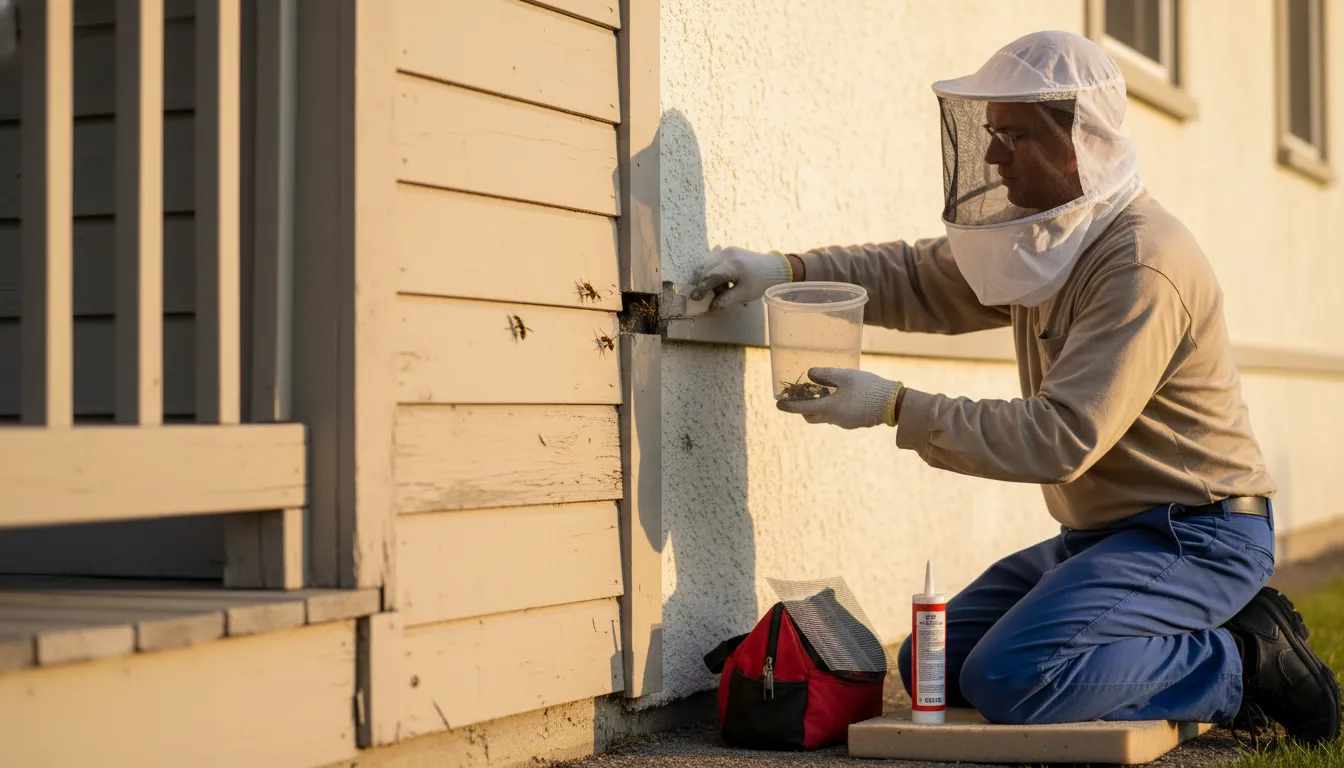
Find the Best Wasp & Hornet Removal Companies for Your Business
No obligation • Fast responses • Nationwide coverage

Why you can trust Pest Crews
Pest Crews is a leading U.S. resource for finding and evaluating residential and commercial pest control services. Our team researches providers, reviews treatment approaches, and organizes unbiased information to help you make informed decisions. Companies cannot pay to change our editorial content or influence how they appear.
Search providers near you
Top Wasp & Hornet Removal Companies in Frederick, Maryland Ranked
Discovering a buzzing nest on your property can be unsettling and potentially dangerous. Professional bee and wasp removal services in Frederick provide safe, effective solutions to manage stinging insect infestations, protecting your family, pets, and property. This guide explains the local landscape of stinging insect control, from identifying common pests and their nesting habits to understanding seasonal activity and removal costs, helping you make an informed decision to resolve your pest problem.
Green Pest Services
Washington, DC
Green Pest Services provides comprehensive pest control solutions in Washington, DC, serving both residential and commercial clients. Their services include bed bug treatment, rodent control, termite inspections, mosquito control, and bee and wasp removal. The company uses EPA-approved, environmentally friendly products that are safe for pets and children. Their certified technicians offer integrated pest management, including inspections, treatment, and prevention advice to help protect properties from future infestations. Green Pest Services operates 24 hours a day, seven days a week, ensuring availability whenever pest issues arise.
Frontline Pest and Termite of Rockville
1095 Taft St # A, Rockville, MD 20850
Frontline Pest and Termite of Rockville offers comprehensive pest control services in Washington, DC, with 18 years of experience. Their licensed technicians provide treatments for a wide range of pests including termites, rodents, mosquitoes, ants, and stinging insects. The company uses safe, eco-friendly methods and offers specialized services such as the Sentricon termite protection system and rodent exclusion repairs. They provide year-round protection plans and continuous termite safeguarding to address local pest challenges effectively.

Terminix
25 Chestnut St, Gaithersburg, MD 20877
Terminix provides pest control services in Washington, DC, specializing in the management of common pests such as ants, bed bugs, termites, rodents, and various insects. The company offers termite inspections and treatments, rodent control, and bee and wasp removal, addressing seasonal pest challenges with tailored plans. Their local technicians are familiar with the specific pest issues in the area and are supported by a nationwide network of expertise.
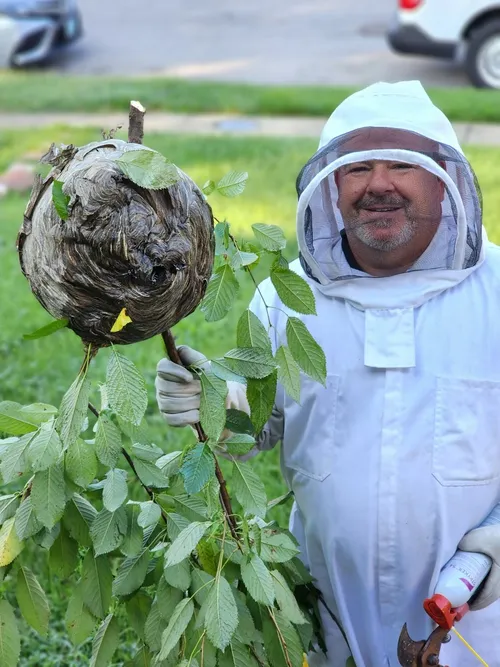
Senate Termite and Pest Control
1912 Liberty Rd bldg 3 unit 30j, Eldersburg, MD 21784
Senate Termite and Pest Control is a locally owned pest control company serving Baltimore, MD, and the surrounding Washington DC, Maryland, and Virginia areas. They offer services including rodent control, termite inspections, and bee and wasp removal. With over 30 years of experience since 1991, the company provides around-the-clock support, including 24-hour phone lines and Saturday servicing, to address pest issues promptly. Their capabilities include thorough pest treatments backed by follow-up visits and re-treatments as part of their pest control warranties.
Understanding Stinging Insects in Frederick
Frederick's mix of suburban neighborhoods, agricultural outskirts, and natural areas creates ideal habitats for various stinging insects. While often grouped together, bees and wasps have distinct behaviors. Honeybees are crucial pollinators and are generally less aggressive unless their hive is threatened. Wasps, including paper wasps, yellow jackets, and hornets, can be more territorial and aggressive, especially in late summer when their colonies are at peak size and they are foraging for sugary foods.
Knowing which insect you're dealing with is the first step toward a safe resolution. This identification influences the removal method-whether humane relocation is an option for beneficial honeybees or if professional extermination is necessary for aggressive wasp colonies.
Common Species and Their Nesting Sites
Different species prefer specific nesting locations, which can range from highly visible to dangerously concealed. Here are the common stinging insects in Frederick and where they are likely to build their homes:
- Paper Wasps: These builders create the classic, open-celled, umbrella-shaped nests often found hanging from roof eaves, porch ceilings, deck railings, and inside attics or sheds. They are less aggressive than yellow jackets but will defend their nest.
- Yellow Jackets: Known for their aggression, yellow jackets often build large, enclosed paper nests underground in old rodent burrows, within wall voids, or in hollow logs 1. Their ground nests in lawns are a particular hazard for unsuspecting gardeners or children playing in the yard.
- Bald-Faced Hornets: These large, black-and-white hornets construct sizable, football-shaped paper nests, typically high in trees, under eaves, or on shrubs 2. They are highly protective of their nests and can sting repeatedly.
- Carpenter Bees: These solitary bees are known for drilling perfectly round holes into wooden structures like decks, fascia boards, eaves, and fences to create tunnels for their larvae. While males are harmless (they have no stinger), females can sting if handled.
- Honeybees: As social insects, honeybees form large hives with honeycombs. Swarms may temporarily cluster on tree branches or structures, but established colonies often move into hollow trees, wall cavities, chimneys, or attics 3.
- Mud Daubers: These solitary wasps are less aggressive and build distinctive mud tubes on protected vertical surfaces under eaves, in garages, or on siding 4. They are generally considered beneficial as they hunt spiders.
The Seasonal Cycle of Stinging Insects
Activity levels for bees, wasps, and hornets in Frederick are tightly linked to the weather and seasons, which dictates the best times for intervention and prevention 5.
- Spring (April - July): As temperatures warm, overwintered queen wasps and hornets emerge to start new colonies. Honeybee swarms are also common in late spring. This is the ideal time for prevention and early removal, as nests are small and populations are low, making treatment easier and less hazardous 6 7.
- Late Summer to Fall (August - October): This is the peak season for activity and aggression. Colonies reach their maximum size, with hundreds or thousands of individuals. As natural food sources dwindle, these insects become more attracted to human foods and drinks, leading to more encounters. Wasps and hornets are most defensive of their nests during this period 8 9.
- Winter (November - March): Most wasp and hornet colonies die off with the first hard freeze, with only mated queens surviving to hibernate. Honeybees cluster in their hives to stay warm. Visible activity ceases, making winter an excellent time to seal potential entry points in your home's exterior to prevent queens from establishing nests in the spring.
Professional Removal: Methods and What to Expect
For most stinging insect problems, especially those involving aggressive species or hard-to-reach nests, hiring a professional pest control service is the safest and most effective course of action. Local Frederick companies are experienced with the species common to the region.
Extermination Services: Most pest control providers, such as Ehrlich Pest Control and Potomac Pest & Termite Control, offer targeted treatments for wasps, hornets, and yellow jackets 10 11. This typically involves applying EPA-registered insecticides directly to the nest or entry points. Technicians wear protective gear to safely eliminate the colony, often with a guarantee for the service.
Humane Bee Relocation: For honeybee swarms or established hives, removal without killing the colony is possible and encouraged due to their ecological importance. The Frederick County Beekeeping Association maintains a list of local beekeepers who may be able to capture and relocate a swarm or hive 12. This service depends on the beekeeper's availability and the accessibility of the colony.
Integrated Pest Management (IPM): Many companies offer broader service plans that include stinging insect control as part of year-round protection. These plans focus on prevention, habitat modification, and targeted treatments to keep pests from becoming a problem in the first place.
Find the perfect wasp & hornet removal companies for your needs
Get personalized recommendations and expert advice
Understanding Removal Costs in Frederick
The cost for professional bee or wasp removal in Frederick is not a flat fee; it depends on several factors specific to your situation.
- Insect Species and Aggressiveness: Removing a small paper wasp nest is generally less expensive than treating a large, underground yellow jacket nest due to the increased risk and labor involved.
- Nest Location and Accessibility: A nest high under a second-story eave or deep within a wall void requires more time, specialized equipment (like ladders or extension tools), and potentially minor structural repair, which increases the cost.
- Nest Size: A small, newly established nest is quicker to treat than a large, mature colony.
Based on local data, homeowners in Frederick can expect the following general price ranges for one-time removal 13 14 15:
- Small, Accessible Nests (e.g., paper wasp, mud dauber): $100 - $400
- Average Wasp or Hornet Nest Removal: $150 - $450
- Large, Difficult, or Aggressive Nests (e.g., yellow jackets, bald-faced hornets in walls/underground): $375 - $700+
- Severe Infestations or Those Requiring Repair Work: Can exceed $1,000
- Annual or Quarterly Service Plans (often including stinging insects): $320 - $750 per year
The most accurate way to determine cost is to get a free, in-person estimate from a local provider like Environmental Pest Control or Potomac Pest Control 16 17 18. A technician can assess the specific threat and provide a guaranteed quote.
Why DIY Removal is Not Recommended
Attempting to remove a wasp or bee nest yourself, especially with over-the-counter sprays, is highly discouraged. The risks far outweigh the potential savings:
- Severe Stinging Risk: Disturbing a nest can trigger a mass, aggressive attack. Individuals allergic to stings risk anaphylaxis, and even those without allergies can suffer painful, multiple stings.
- Incomplete Elimination: DIY methods often fail to reach the entire colony, especially for nests in walls or underground. Surviving insects can rebuild, or the queen may survive to start a new nest.
- Property Damage: Improper treatment can drive insects deeper into your home's structure. Aggressive spraying around electrical fixtures or attempting to seal entry points with an active colony inside can cause further problems.
- Harm to Beneficial Insects: Indiscriminate spraying can kill vital pollinators like honeybees and native bees when humane relocation was a viable option.
Preventing Future Infestations
After professional removal, take steps to make your property less attractive to stinging insects:
- Seal Entry Points: In late fall or winter, inspect and seal cracks, gaps, and holes in your home's siding, roof, and foundation. Repair damaged screens on windows, vents, and attic fans 19.
- Manage Food Sources: Keep trash cans tightly sealed and clean up fallen fruit from trees. During outdoor meals, keep food and sugary drinks covered and clean up spills promptly.
- Reduce Nesting Sites: Fill in abandoned rodent burrows in your yard. Consider painting or staining untreated wood surfaces to deter carpenter bees.
- Landscape Mindfully: Regularly inspect sheds, play sets, and deck undersides for early nest construction in the spring.
Frequently asked questions
Sources
Footnotes
-
5 Common Places You Find Wasp Nests - Dustin Pest Control - https://dustinpestcontrol.com/5-common-places-you-find-wasp-nests/ ↩
-
What Hive Is It?: Identifying Bee and Wasp Nests - Groundworks - https://www.groundworks.com/resources/what-hive-is-it/ ↩
-
How to Identify Types of Bee Nests - Ehrlich Pest Control - https://www.jcehrlich.com/pest-insights/bees/bee-nest-identification ↩
-
Common Areas for Wasp Nests - Summit Pest Management - https://www.summitpestmanagement.com/bees-wasps-exterminators/common-areas-for-wasp-nests/ ↩
-
How Weather and Seasons Affect Stinging Insect Activity - https://www.askawayblog.com/2025/10/how-weather-and-seasons-affect-stinging.html ↩
-
Pest Control Wasp Nest - Biggins Exterminating - https://bigginsexterminating.com/pest-control-wasp-nest/ ↩
-
Wasp Season in Annapolis, MD: Why They're So Active Right Now - https://nomosquitosmd.com/blog/wasp-season-in-annapolis-md ↩
-
Complete Guide to Stinging Insects in Maryland, Virginia, and ... - https://americanpest.net/about-us/resources/pest-guides-and-faqs/complete-guide-to-stinging-insects-in-maryland-virginia-and-washington-d-c/ ↩
-
Critical Days of Summer: All the buzz about stinging insects - https://www.jbmdl.jb.mil/News/Features/Display/Article/247208/critical-days-of-summer-all-the-buzz-about-stinging-insects/ ↩
-
Potomac Pest & Termite Control - https://www.google.com/viewer/place?mid=/g/11fjzf0d6y ↩
-
Ehrlich Pest Control - https://www.google.com/viewer/place?mid=/g/11cffb_37 ↩
-
Swarms - Frederick County Beekeeping Association - https://www.frederickbees.org/swarms/ ↩
-
Stinging Insect Control - Bees, Hornets, Wasps - https://www.environmentalpc.com/stinging-insect-control ↩
-
Wasp Nest Removal Cost [2026 Data] | Angi - https://www.angi.com/articles/how-much-does-wasp-removal-cost.htm ↩
-
How much does Wasp extermination cost? - Yelp - https://www.yelp.com/costs/wasp_extermination ↩
-
Bee Control & Removal in Frederick MD - https://www.environmentalpc.com/bee-control/frederick-md ↩
-
Best Wasp Control & Removal in Frederick County MD - https://www.environmentalpc.com/wasp-control/frederick-county-md ↩
-
Pest Control| Frederick, MD - https://www.potomacpests.com/general-pest-control ↩
-
Paper Wasp Swarming Around Structures - https://content.ces.ncsu.edu/paper-wasp-swarming-around-structures ↩