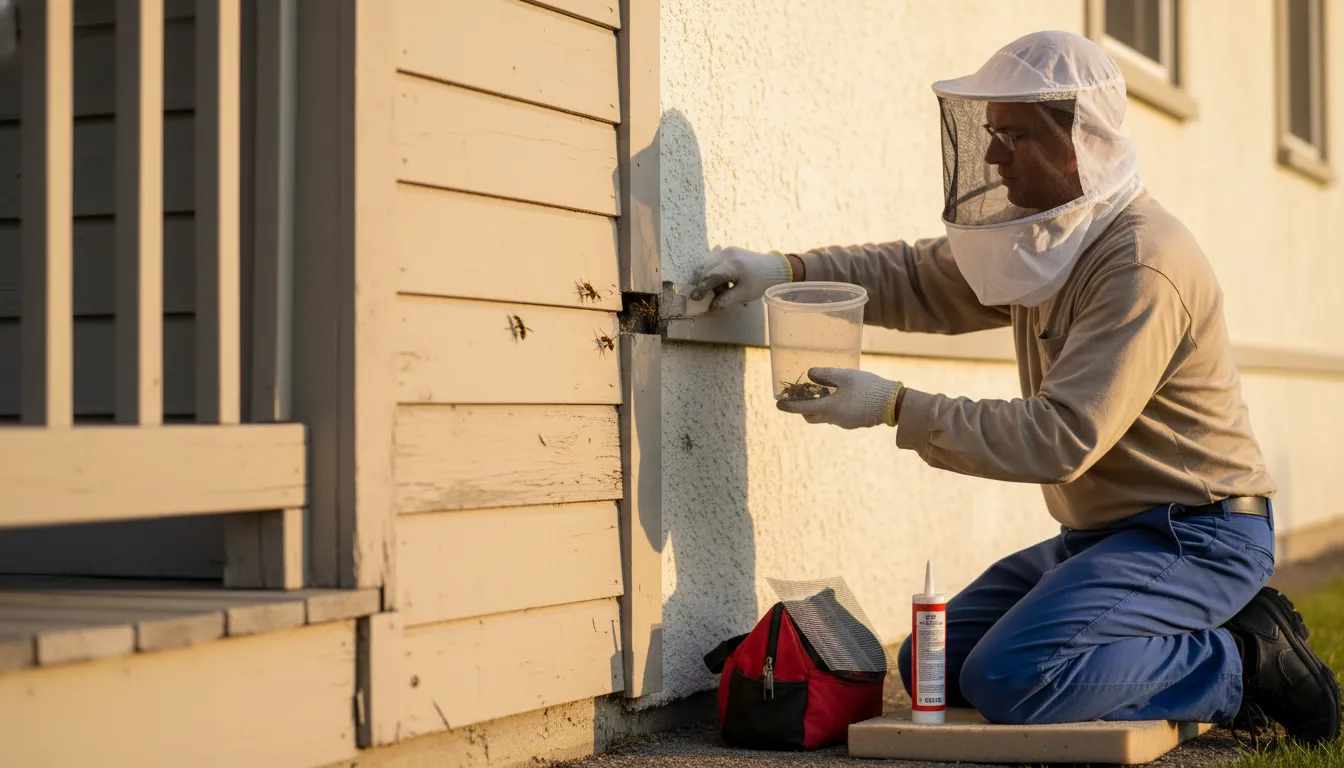
Find the Best Wasp & Hornet Removal Companies for Your Business
No obligation • Fast responses • Nationwide coverage
Why you can trust Pest Crews
Pest Crews is a leading U.S. resource for finding and evaluating residential and commercial pest control services. Our team researches providers, reviews treatment approaches, and organizes unbiased information to help you make informed decisions. Companies cannot pay to change our editorial content or influence how they appear.
Search providers near you
Top Wasp & Hornet Removal Companies in St Clair Shores, Michigan Ranked
Discovering a buzzing nest on your property in St. Clair Shores can be alarming. Effective bee and wasp removal is essential for protecting your family, pets, and property from painful stings and potential structural damage. This guide explains the local options for stinging insect control, from humane honeybee relocation to professional extermination of aggressive hornets, helping you make an informed decision to resolve your pest problem safely.
Bed Bug Exterminator Detroit
500 Griswold St, Detroit, MI 48226
Bed Bug Exterminator Detroit provides pest control services in Detroit, MI, specializing in bed bug treatment along with cockroach, ant, rodent, bee, wasp, and wildlife removal. The company uses safe and reliable techniques to handle a wide range of pests, including carpenter ants, spiders, fleas, and centipedes. With extensive experience and a focus on discreet, effective solutions, they have served many Detroit residents over the years. Their technicians perform thorough inspections and offer humane pest control options when possible.
Maple Lane Pest Control
5955 Chicago Rd, Warren, MI 48092
Maple Lane Pest Control is a family-owned pest control company serving Detroit, MI, with over 45 years of experience. They provide comprehensive pest management for ants, cockroaches, rodents, mosquitoes, bees, wasps, and other common pests. Their technicians bring an average of 15 years of experience and focus on customized solutions tailored to each customer's needs. Maple Lane Pest Control is known for ethical service practices, including advising when treatment may not be necessary or effective.
EcoShield Pest Solutions
408 Oliver, Troy, MI 48084
EcoShield Pest Solutions is a pest control company serving Detroit, MI, offering a wide range of services including bed bug treatment, termite inspections, mosquito control, rodent elimination, and removal of stinging insects like bees and wasps. They specialize in managing common local pests such as ants, cockroaches, spiders, ticks, and carpenter bees. EcoShield uses environmentally friendly methods and professional products that are safe for people and pets. Their service includes guaranteed pest elimination and prevention plans designed for both residential and commercial properties.
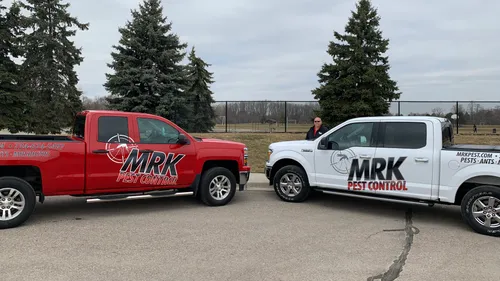
MRK Pest Control
Detroit, MI
MRK Pest Control is a family-owned pest control company based in Detroit, MI. They provide services for ant control, rodent control, mosquito control, and bee and wasp removal. The company uses EPA-approved materials and offers maintenance services to keep homes insect and rodent free. MRK Pest Control emphasizes environmentally friendly products that are safe for pets and children and is fully licensed and insured.

All Seasons Pest Control Inc.
13759 Dix Toledo Rd, Southgate, MI 48195
All Seasons Pest Control Inc. provides specialized pest control services in Detroit, MI, focusing on flying pests such as paper wasps, ladybugs, stink bugs, and box elder beetles. Their service is designed for the spring through fall seasons and includes quarterly visits with follow-ups if issues arise. The company does not handle yellow jackets, bald-faced hornets, bumble bees, or carpenter bees.
Understanding Your Stinging Insect Problem
The first step to a safe resolution is identifying what type of insect has taken up residence. Different species require different approaches, especially in a lakeside community like St. Clair Shores where they are a common seasonal issue.
Common Bees in St. Clair Shores
- Honeybees: These are vital pollinators and are generally not aggressive unless their hive is threatened. They often nest in hollow trees, wall voids, or attics. Because of their ecological importance, live removal and relocation by a beekeeper is the preferred method.
- Bumblebees: Larger and furrier than honeybees, they are typically docile and nest in small, ground-level cavities like abandoned rodent burrows. They rarely require professional removal unless the nest is in a high-traffic area.
Common Wasps and Hornets in St. Clair Shores
- Paper Wasps: Identified by their long legs and open-comb, umbrella-shaped nests often found under eaves, deck railings, or in shrubs. They can be defensive but are less aggressive than yellow jackets.
- Yellow Jackets: Highly aggressive, especially in late summer and fall. They often build large nests underground, in wall cavities, or in structural voids. Their painful, persistent stings make them a significant hazard.
- Bald-Faced Hornets: Actually a type of yellow jacket, these insects build large, gray, football-shaped paper nests in trees, shrubs, or on buildings. They are extremely protective of their nest and will sting repeatedly 1.
- European Hornets: Larger than other wasps, they are nocturnal and often nest in hollow trees, wall voids, and attics. Their nests can be quite large and pose a serious risk if disturbed.
Why Professional Removal is Recommended
Attempting a DIY solution for a bee hive or wasp nest can be dangerous. Over-the-counter sprays often aggravate the insects without eliminating the entire colony, leading to increased aggression. Professionals have the training, protective equipment, and targeted insecticides to remove the nest efficiently and safely. They can also identify and seal potential entry points to prevent re-infestation.
For honeybees, contacting a local beekeeper or a pest control company that offers live removal is the responsible choice. Services like Big Chief Bee Apiary and Swarm Rescue may assist with accessible swarms 2. For aggressive wasps and hornets, licensed exterminators such as Prudential Pest Management or EcoShield Pest Solutions are equipped to handle the job with guaranteed treatments 3 4.
Common Nesting Sites Around Your Home
Stinging insects are opportunistic and will build nests in any sheltered space. Knowing where to look can help you spot a problem early.
- Eaves, Soffits, and Overhangs: The sheltered underside of your roof line is a prime real estate for paper wasps and hornets to attach their distinctive paper nests.
- Wall Voids and Attics: Yellow jackets and honeybees frequently enter through small cracks or vents and establish large colonies inside walls or attic spaces. This type of infestation often requires a professional to access and remove the nest, which may involve minor repairs 5.
- Underground: Many yellow jackets and some native bees nest in old rodent burrows, under porches, or in rock piles. These nests are easy to stumble upon accidentally 6.
- Shrubs, Trees, and Dense Foliage: Bald-faced hornets often suspend their nests from tree branches, while other species may build in thick bushes.
- Other Structures: Don't forget to check inside unused grills, playground equipment, utility boxes, sheds, and behind shutters 7.
The Seasonal Cycle of Wasps and Bees in Michigan
Activity levels for these pests in St. Clair Shores change dramatically with the seasons, which influences both the risk they pose and the best time for intervention 8 9.
- Spring (Late April-May): Overwintering queens emerge and begin searching for nesting sites. They start building small nests and laying eggs. Nests are small and populations are low, making this an ideal time for early detection and prevention.
- Summer (June-August): Colonies grow rapidly as worker populations boom. By mid-to-late summer, nests reach their maximum size, and foraging activity is constant. This is when most people notice an issue.
- Fall (September-October): This is peak aggression season. The colony is at its largest, and workers are desperately foraging for sugary foods to feed new queens. As temperatures drop and food becomes scarce, they become more irritable and likely to sting 10 11. After the first hard frost, most of the colony dies off, leaving only the new queens to hibernate.
- Winter: Most species are inactive. Visible nests are typically abandoned and can be safely removed to prevent queens from reusing them the next spring.
Find the perfect wasp & hornet removal companies for your needs
Get personalized recommendations and expert advice
Understanding Removal Costs in St. Clair Shores
The cost for professional bee or wasp control in St. Clair Shores varies based on the insect type, nest size, location, and accessibility. It's always wise to get quotes from multiple local providers for an accurate estimate for your specific situation.
Wasp and Hornet Nest Removal Removal of aggressive species like yellow jackets or hornets typically ranges from $212 to $875 12. The higher end of the scale usually involves nests that are large, located inside walls or deep underground, or pose a significant access challenge. The increased risk associated with these aggressive insects also factors into the cost.
Beehive Removal For honeybee removal, costs generally range from $150 to $600 13. Live relocation by a beekeeper may be on the lower end or even free if the swarm is easily accessible and not yet established inside a structure. However, a complex removal that requires opening up a wall or ceiling to extract a large, established hive can exceed $1,000 when factoring in pest control labor and necessary repairs.
Ongoing Prevention Many companies offer seasonal plans to treat and deter pests throughout the year. These often involve an initial service fee followed by periodic treatments, which can range from $40 to $70 per visit after the initial setup 14.
Choosing Between Extermination and Relocation
Your course of action should depend on the species.
- For Honeybees: Always opt for relocation if possible. Honeybees are crucial for the environment, and local beekeepers are often happy to collect a healthy swarm. The St. Clair Beekeepers Association is a resource for connecting with local experts 15.
- For Wasps and Hornets: Extermination is typically the only safe and effective option for aggressive species like yellow jackets and hornets that pose a direct threat to human safety. Professional exterminators will ensure the entire colony is eliminated.
What to Expect During a Professional Service Visit
When you contact a professional for stinging insect control, they will typically:
- Conduct a thorough inspection to locate all nests and identify the species.
- Provide a detailed quote and explain the removal plan.
- Schedule the service for an appropriate time (often in the evening when insects are less active).
- Use appropriate insecticides and methods to eliminate the colony. For wall nests, this may involve drilling a small access hole.
- Remove the physical nest (if accessible) to prevent pheromones from attracting new insects.
- Recommend and possibly perform exclusion work to seal entry points.
Preventing Future Infestations
After removal, take steps to make your property less attractive to stinging insects:
- Seal Entry Points: Caulk cracks around windows, siding, and utility penetrations. Repair damaged screens and install fine mesh over vents.
- Manage Food Sources: Keep trash cans tightly sealed. Clean up fallen fruit promptly. Avoid leaving sugary drinks or food uncovered outdoors.
- Reduce Nesting Sites: Fill in abandoned rodent burrows in the ground. Keep shrubs trimmed and clear away yard debris.
- Perform Regular Inspections: In the spring and early summer, regularly check common nesting sites like eaves, under decks, and in sheds.
Frequently asked questions
Sources
Footnotes
-
Hornets & Wasps in Michigan | ID & Safety Guide - https://www.pestprosmi.com/blog/hornets-and-wasps-in-michigan-what-you-need-to-know/ ↩
-
Big Chief Bee Apiary and Swarm Rescue - https://www.google.com/viewer/place?mid=/g/11vy9wkp31 ↩
-
wasp, hornet, and yellow jacket removal in saint clair shores, mi - https://www.ecoshieldpest.com/get-rid-of-yellow-jackets-wasps-and-hornets-in-saint-clair-shores-mi ↩
-
Bees, Wasps, & Yellow Jackets - Prudential Pest Management - https://www.prudentialpestmanagement.com/bees-wasps-yellow-jackets/ ↩
-
wasp, hornet, and yellow jacket removal in saint clair shores, mi - https://www.ecoshieldpest.com/get-rid-of-yellow-jackets-wasps-and-hornets-in-saint-clair-shores-mi ↩
-
Stinging Insect Identification In Port Huron, Michigan - Eco Pest Control - https://www.ecopestcontrolmi.com/pest-library/stinging-insects/ ↩
-
Common Places You Find Bee and Wasp Nests - https://abarbpest.com/common-places-you-find-bee-and-wasp-nests/ ↩
-
Late Summer Wasp Infestations in Michigan - https://www.pestprosmi.com/blog/wasp-infestation-michigan/ ↩
-
Wasp Season in Michigan | Peak Months & Prevention - https://www.pestprosmi.com/blog/what-seasons-are-wasps-most-active-in-michigan/ ↩
-
Wasp Season in Michigan This Summer | Griffin Pest Solutions - https://www.griffinpest.com/blog/wasp-season-in-michigan-this-summer/ ↩
-
Why Are Stinging Insects More Aggressive In Late Summer? - https://www.graduatepestsolutions.com/our-blog/why-are-stinging-insects-more-aggressive-in-late-summer-early-fall ↩
-
Wasp Nest Removal Cost [2026 Data] | Angi - https://www.angi.com/articles/how-much-does-wasp-removal-cost.htm ↩
-
How Much Does Bee Removal Cost? [2026 Data] | Angi - https://www.angi.com/articles/how-much-does-bee-removal-cost.htm ↩
-
Bee Removal Cost in Michigan | Pest Pros Guide - https://www.pestprosmi.com/blog/how-much-does-bee-extermination-cost/ ↩
-
Bee Removal - Saint Clair Beekeepers Association - https://stclairbees.com/bee-removal/ ↩