Find the Best Wasp & Hornet Removal Companies for Your Business
No obligation • Fast responses • Nationwide coverage

Why you can trust Pest Crews
Pest Crews is a leading U.S. resource for finding and evaluating residential and commercial pest control services. Our team researches providers, reviews treatment approaches, and organizes unbiased information to help you make informed decisions. Companies cannot pay to change our editorial content or influence how they appear.
Search providers near you
Top Wasp & Hornet Removal Companies in Franklin, New Jersey Ranked
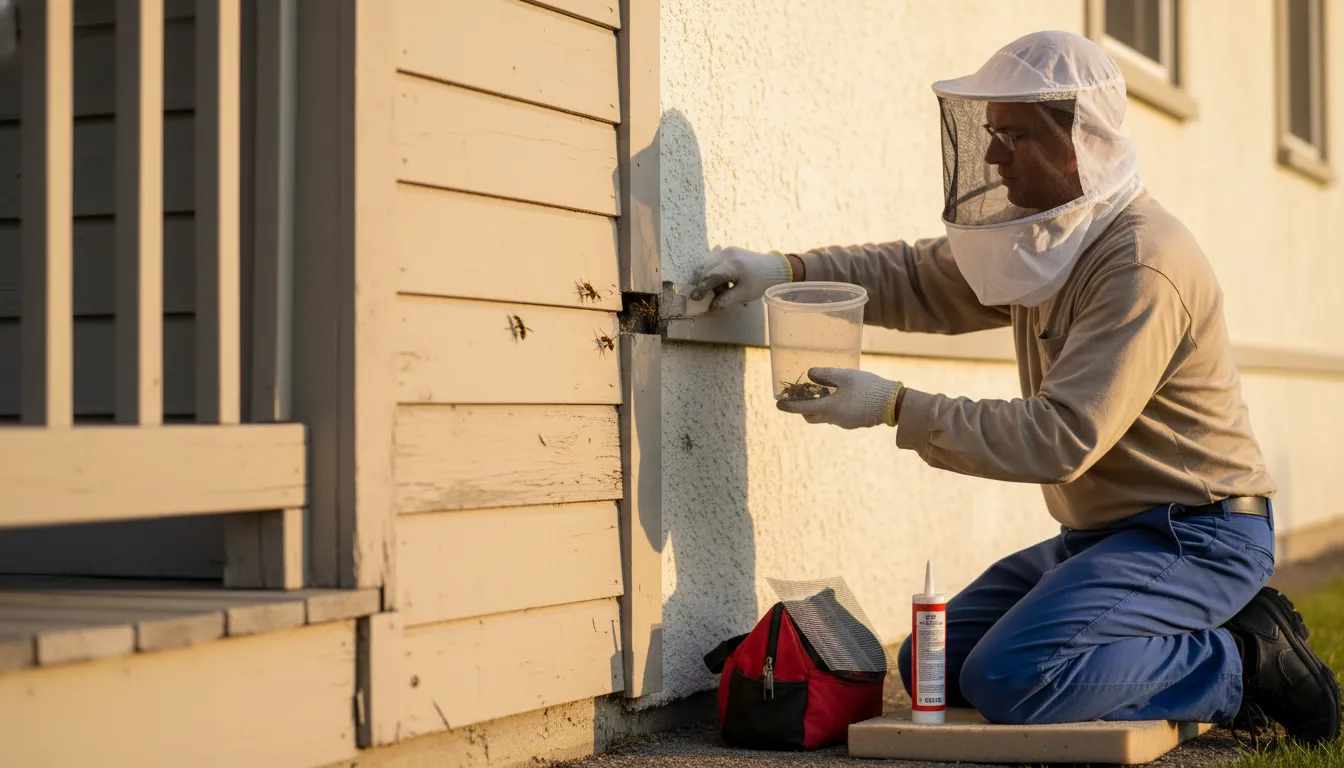
Dealing with a bee, wasp, or hornet nest on your New Jersey property requires a careful, informed approach to ensure safety and effectiveness. Professional stinging insect removal involves species identification, safe treatment-which can mean relocation for beneficial honey bees or extermination for aggressive wasps-and crucial steps to prevent their return. This guide explains the process, costs, regulations, and seasonal considerations to help you understand your options and connect with qualified local specialists who can resolve the issue.

Mosquito Joe of Wayne
5 Mathews Ave, Riverdale, NJ 07457
Mosquito Joe of Wayne provides eco-friendly pest control services in New York, NY, specializing in mosquito, tick, ant, cockroach, rodent, and bee/wasp removal for both residential and commercial properties. Their treatments focus on preventing infestations year-round using science-backed methods that protect families, pets, and the environment. Established in 2010, Mosquito Joe offers customized pest management plans and commercial pest control solutions designed to keep outdoor spaces comfortable and pest-free.
Western Pest Services - Pest Control, West Orange, NJ
614 Eagle Rock Ave, West Orange, NJ 07052
Western Pest Services - Pest Control, West Orange, NJ, provides tailored residential and commercial pest management solutions in New York, NY. They address common local pests such as termites, rodents, ants, bed bugs, and stinging insects using advanced monitoring systems, eco-friendly treatments, and customized maintenance plans. Their services include emergency pest control and long-term exterior treatments to protect properties from infestations. The company emphasizes innovative, non-pesticide options and preventative measures to maintain safe environments. Western Pest Services serves a wide range of communities around New York, NY, including both homes and commercial spaces. Their expertise covers integrated pest management and specialized treatments for challenging pests like bed bugs and carpenter ants. They also offer emergency response services and ongoing monthly maintenance to ensure continuous pest control.
Aptive Pest Control
Newark, NJ
Aptive Pest Control offers pest management services in Newark, NJ, and surrounding areas. They address common pests such as ants, cockroaches, rodents, bees, and wasps. Operating from Randolph, NJ, Aptive provides pest control solutions tailored to local needs, including wasp nest removal and rodent bait station management. The company serves a wide range of communities around East Orange and Newark, focusing on maintaining comfortable and pest-free homes.
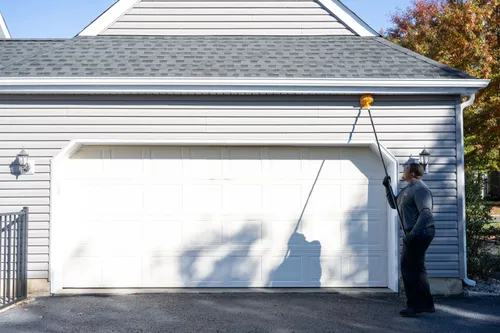
Viking Pest Control
585 Winters Ave, Paramus, NJ 07652
Viking Pest Control is a pest management company serving New York, NY, with a focus on controlling a wide range of pests including bed bugs, rodents, termites, mosquitoes, and wildlife. They provide year-round pest control services tailored to the local climate, addressing both indoor and outdoor pest issues. Viking Pest Control offers specialized capabilities such as wood destroying insect reports (WDIR) and comprehensive treatments to protect homes and businesses from structural damage and health risks associated with pests.
ALCO Animal & Pest Control
11 Red Maple Ave, Bloomfield, NJ 07003
ALCO Animal & Pest Control is a pest and animal control company serving New York, NY, and nearby areas in New Jersey. They offer a wide range of services including removal of squirrels, raccoons, mice, bees, and other pests, as well as commercial pest control. Their approach includes humane removal methods, releasing captured animals back into the wild away from homes. ALCO has many years of experience providing pest control solutions for both residential and commercial properties. They also provide same-day service for urgent pest and animal removal needs.
Understanding Your Stinging Insect Problem
The first and most critical step is identifying what type of insect has taken up residence. Different species require different handling strategies and pose varying levels of risk.
- Honey Bees: These are vital pollinators and are generally not aggressive unless their hive is threatened. In New Jersey, professional removal often focuses on live relocation, especially when colonies are established inside wall voids or structures. A local beekeeper or a pest control company that partners with one may perform a "cutout" to save the colony.
- Bumblebees: Also important pollinators, bumblebees typically nest in the ground or in small, insulated cavities. They are rarely aggressive. Removal, if necessary, often involves relocation.
- Yellow Jackets: A type of wasp known for their aggression, especially in late summer and fall. They often build large nests in the ground, wall cavities, or soffits. Due to their defensive nature, extermination is the standard treatment.
- Paper Wasps: Build the familiar open-comb, umbrella-shaped nests under eaves or deck railings. They are less aggressive than yellow jackets but will sting if the nest is disturbed. Nests are often treated and physically removed.
- Bald-Faced Hornets: Build large, enclosed paper nests, usually high in trees or on structures. They are highly protective of their nest and can sting repeatedly. Professional extermination is strongly recommended.
Attempting a DIY removal without proper identification and protective equipment is dangerous. A professional will conduct a thorough inspection to locate the nest and determine the species before proposing a solution.
The Professional Removal Process: From Inspection to Exclusion
A comprehensive service by a qualified professional follows a multi-step process designed for safety and long-term results.
- Inspection and Identification: The technician will assess the property to find all nesting sites and identify the insect species. This determines whether relocation or extermination is the appropriate course of action1.
- Treatment: Relocation vs. Extermination:
- Relocation (Primarily for Honey Bees): If the colony is honey bees and accessible, a beekeeper may be called to vacuum the bees and carefully remove the comb for transfer to an apiary. For colonies inside walls, a more involved "cutout" removal is performed 2.
- Extermination (For Wasps, Hornets, or Inaccessible Bees): Using EPA-approved insecticides, the technician will treat the nest, often during early morning or evening when insect activity is lowest. For yellow jackets, baiting systems may also be used. The nest is then physically removed when safe to do so.
- Exclusion and Prevention: Simply removing the nest is not enough. The technician will identify and seal the entry points the insects used to access the void space (e.g., cracks in siding, gaps around utility lines, holes in soffits). This step is vital to prevent a new colony from finding the same attractive spot in the future3 4. A critical warning: Never attempt to seal an entrance to an active nest yourself, as this can trap insects inside, forcing them further into your home and causing greater damage or creating a more dangerous situation5.
Find the perfect wasp & hornet removal companies for your needs
Get personalized recommendations and expert advice
When to Act: Seasonal Timing for Removal in NJ
The best time for removal depends on the species and the season, which in New Jersey has a direct impact on nest size and insect behavior.
- Early Spring: This is the ideal time to address new, small nests. A queen begins building a colony in the spring; eliminating it early is easier, safer, and less costly6 7.
- Summer: Colonies reach their peak size and activity. Wasps and yellow jackets become more aggressive as they compete for food for the developing larvae. Removal at this stage is more complex but necessary if the nest poses an immediate threat.
- Late Fall: After the first few frosts, most wasps and hornets die off, leaving only the new queens to overwinter. Treating visible nests in late fall can prevent queens from emerging and starting new colonies nearby the following spring. For honey bees, a professional can assess whether a fall removal or relocation is appropriate.
- Winter: While stinging insects are dormant, it's a good time to have a professional inspect your home for potential entry points and seal them to prevent spring infestations8.
For treatment appointments, professionals typically schedule removals during cooler parts of the day-early morning or evening-when insects are less active and more likely to be inside the nest.
Understanding Costs for Bee and Wasp Removal in New Jersey
The cost of professional removal varies widely based on the nest's location, size, and the species involved.
- Small, Accessible Nests: A small, hanging paper wasp nest or a ground nest that is easily reached may cost between $125 to $250 for treatment and removal.
- Moderate Nests: Larger exterior nests, such as a sizeable yellow jacket nest in a bush or under a deck, typically start around $180 or more.
- Large or Structural Nests: The most expensive scenarios involve nests inside wall cavities, attics, or between floors. Removing a honey bee or wasp colony from within a wall requires cutting into the structure, carefully removing comb and insects, and subsequent repair work. These services can range from $600 to over $1,0009 10.
- Live Honey Bee Relocation: There may be additional costs or a different pricing structure for live cutout removals, reflecting the specialized labor and time required to preserve the colony.
Always get a detailed, written estimate from the provider that outlines the treatment method, any necessary repairs, and the warranty or follow-up policy.
New Jersey Regulations and Important Considerations
Homeowners and professionals must adhere to specific state guidelines regarding stinging insects.
- Pesticide Notification for Bees: New Jersey has rules to protect managed honey bee colonies. Commercial pesticide applicators are required to notify registered beekeepers within three miles of the application site when using products that are highly toxic to bees 11. This underscores the importance of using licensed professionals who understand these regulations.
- Beekeeping Regulations: If you're considering keeping bees, note that hives must be placed at least 10 feet from property lines and 20 feet from public paths or streets. Beekeeping can be deemed unlawful if the hive is considered a public threat12.
- Licensing: Ensure any pest management professional you hire is licensed by the New Jersey Department of Environmental Protection (NJDEP). This ensures they are trained in safe and legal application methods.
Frequently asked questions
Sources
Footnotes
-
Wasp Control & Nest Removal Services in New Jersey in New ... - https://www.actionpestcontrol.com/insects-and-pests/wasp-control/ ↩
-
Bee Identification & Removal - NJBA - https://www.njbeekeepers.org/bee-identification-removal ↩
-
Stinging Insects Removal in Central NJ | Bee-Gone - https://beegonepests.com/residential-pest-control-services/stinging-insects-removal ↩
-
Bee, Wasp, & Hornet Control & Removal - Eastern Pest Services - https://easternpest.com/bees-wasps-exterminators/ ↩
-
Philadelphia Bee Company - https://www.philadelphiabee.com/removals.html ↩
-
Yellow Jacket Control & Nest Removal in New Jersey - https://www.actionpestcontrol.com/insects-and-pests/yellow-jacket-control/ ↩
-
Wasp and Bee Removal - Bee Lab - https://beelab.umn.edu/wasp-and-bee-removal ↩
-
Ultimate Seasonal Pest Control Advice for New Jersey Homes - https://amcopest.com/news-and-updates/ultimate-seasonal-pest-control-advice-for-new-jersey-homes ↩
-
How Much Does Bee Removal Cost? [2026 Data] | Angi - https://www.angi.com/articles/how-much-does-bee-removal-cost.htm ↩
-
How Much Wasp Removal Cost? | Compare Prices Now - Pest Extinct - https://pestextinct.com/wasp-control/ ↩
-
Beekeepers - Sussex County - https://www.sussex.nj.us/cn/webpage.cfm?tpid=16022 ↩
-
NJ Beekeeping Regulations Frequently Asked Questions - NJ.gov - https://www.nj.gov/agriculture/divisions/pi/pdf/NJBeekeepingRegulationsFAQs.pdf ↩