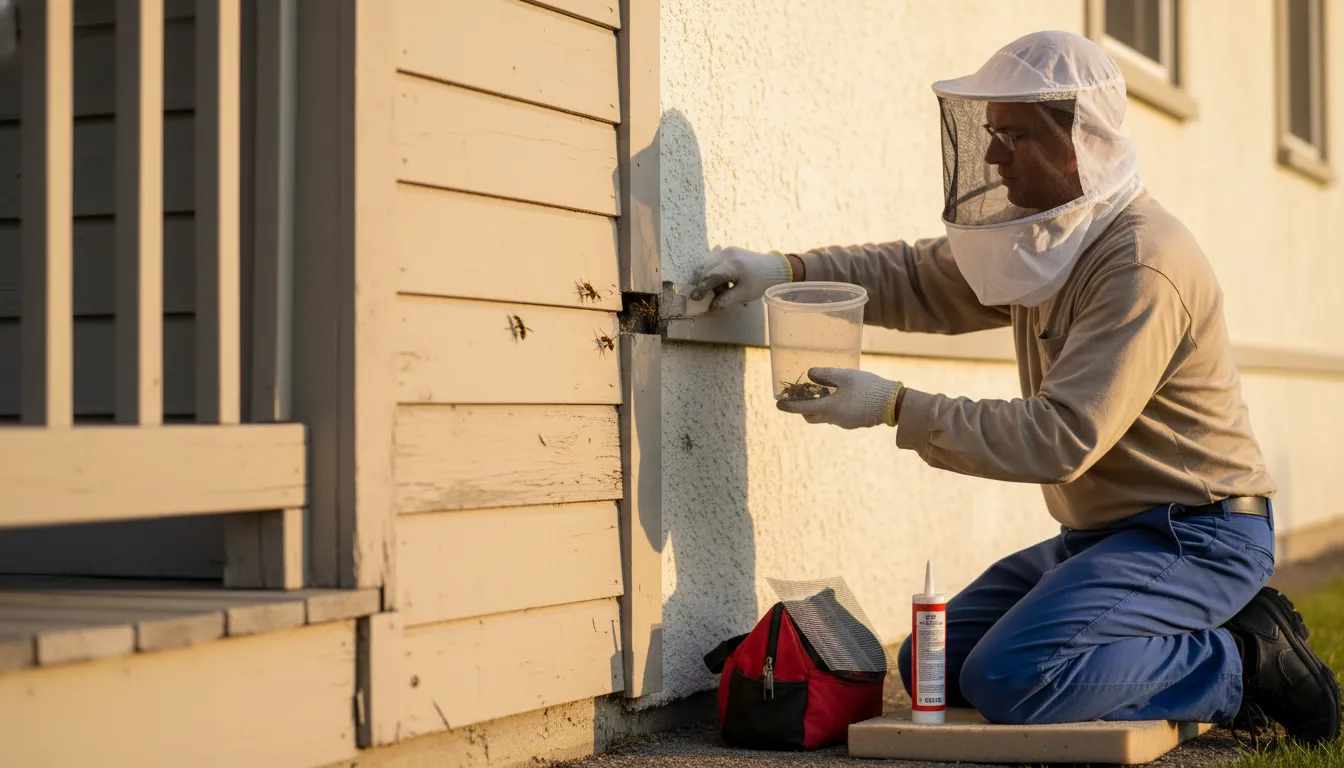
Find the Best Wasp & Hornet Removal Companies for Your Business
No obligation • Fast responses • Nationwide coverage

Why you can trust Pest Crews
Pest Crews is a leading U.S. resource for finding and evaluating residential and commercial pest control services. Our team researches providers, reviews treatment approaches, and organizes unbiased information to help you make informed decisions. Companies cannot pay to change our editorial content or influence how they appear.
Search providers near you
Top Wasp & Hornet Removal Companies in Sayreville, New Jersey Ranked
Discovering a buzzing nest on your property can be unsettling. Professional bee and wasp removal is a specialized service focused on safely eliminating or relocating stinging insect colonies from residential and commercial properties. This matters not only for your peace of mind and safety but also for protecting your home's structure and ensuring the well-being of beneficial pollinators when possible. For Sayreville residents, understanding local pest behavior, seasonal activity, and available professional services is the key to resolving an infestation effectively and safely.
Anchor Pest Control
28 Arthur St, East Brunswick, NJ 08816
Anchor Pest Control provides comprehensive pest control services in New York, NY. They cover a wide range of pests including ants, cockroaches, termites, bed bugs, mosquitoes, and stinging insects. Their services include termite monitoring as part of general pest control, and they offer specialized treatments such as bed bug protection and mosquito prevention bundled in their premium plans. Anchor Pest Control aims to deliver thorough pest management with inclusive service options.
Universal Pest Control
118 Locust St, Roselle, NJ 07203
Universal Pest Control is a family owned and operated pest control company serving Newark, NJ, and the surrounding Union County area. They offer a wide range of pest management services including cockroach, ant, termite, bee and wasp removal, as well as wildlife control. Their licensed and trained technicians use up-to-date methods to address pest infestations safely and effectively. With years of experience, Universal Pest Control provides free consultations and estimates to help customers find tailored solutions for their pest issues.
Recon Pest Control Inc
79 Escanaba Ave, Staten Island, NY 10308
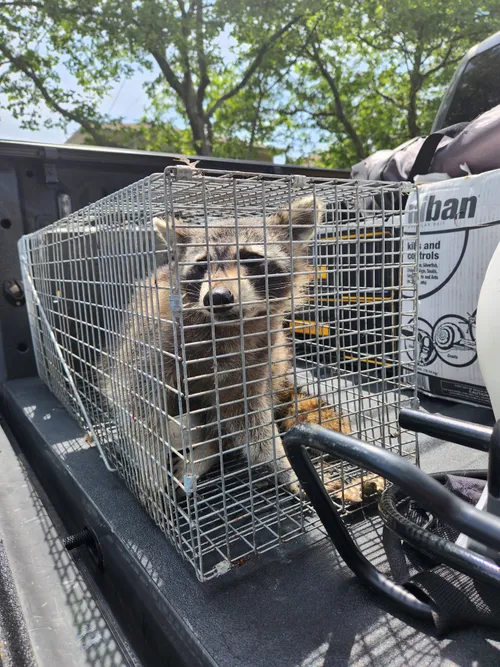
Recon Pest Control Inc is a family-owned pest control company based in Staten Island, serving New York, NY, and nearby New Jersey. They offer a wide range of pest management services including bed bug extermination, termite control, rodent removal, mosquito reduction, bee and wasp removal, and wildlife relocation. The company also provides specialized solutions like the SolaTrim Pest Abatement Barrier to protect solar panels from pigeons and rodents. Recon Pest Control partners with Dad and Daughters Home Inspection, LLC to offer comprehensive home inspections and related services.
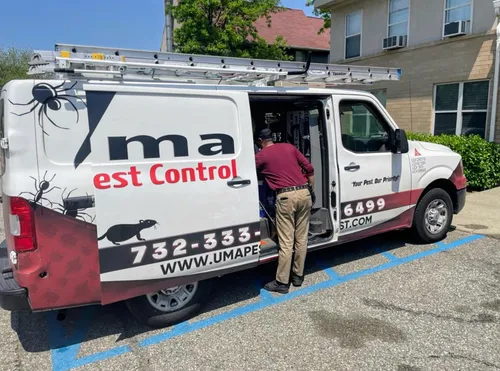
Uma Pest Control
200 W Milton Ave, Rahway, NJ 07065
Uma Pest Control offers a range of pest management services in New York, NY, including bed bug treatment, termite inspections, mosquito control, rodent removal, and bird control. They provide commercial, residential, and industrial pest control using green botanical products when preferred. Uma Pest Control is known for its one-day bed bug treatment that combines freeze, heat, and steam methods in a single visit, avoiding multiple follow-ups common with other providers. Their services also cover insect repellents, exclusion work, and wildlife removal for animals like bats and raccoons. The company operates from Rahway, NJ, and has been maintaining pest control services for several years.

Eagle Pest Service Control
507B Graham Ave, Brooklyn, NY 11222
Eagle Pest Service Control is a pest control company serving New York, NY, including Brooklyn, Manhattan, and Queens. They provide commercial and residential pest control services, addressing infestations of bed bugs, cockroaches, ants, rodents, termites, bees, wasps, and other pests. The company offers specialized services such as violations removal for businesses and termite inspections to help protect property investments. Eagle Pest Service Control uses eco-friendly and licensed methods tailored to urban pest challenges, with expertise in targeted German cockroach extermination and comprehensive bed bug eradication.
Understanding Your Stinging Insect Problem
The first step in addressing an infestation is identifying the culprit. Different species require different approaches, especially when considering that many bees are beneficial and, when possible, should be relocated rather than exterminated.
- Paper Wasps: These common wasps build open, umbrella-shaped nests, often under eaves, porch ceilings, or inside sheds. They are less aggressive than other wasps but will defend their nest.
- Yellowjackets: Highly aggressive, yellowjackets often build large, enclosed nests underground, in wall voids, or in attics. They are a frequent nuisance at outdoor gatherings in late summer 1.
- Hornets: Including the bald-faced hornet, these insects construct large, football-shaped paper nests high in trees or on structures. They can be very defensive of their nest.
- Honey Bees: These vital pollinators typically live in large, perennial hives. Swarms-a cluster of bees looking for a new home-are generally docile. Established hives in walls or chimneys require professional removal, often by a beekeeper for relocation.
- Carpenter Bees: These solitary bees drill perfectly round holes into wooden decks, eaves, or siding to create nesting galleries. While males are harmless (they have no stinger), females can sting, and their tunneling can cause structural damage over time.
- Bumblebees: These large, fuzzy bees are excellent pollinators and are generally docile. They often nest in abandoned rodent burrows, under piles of debris, or in compost heaps.
Why Professional Removal is Essential in Sayreville
Attempting a DIY solution for a bee or wasp nest can be dangerous. Insects like yellowjackets can sting repeatedly and may attack in swarms if they feel threatened 2 3. Professionals have the protective gear, specialized equipment, and expertise to handle the situation safely. They can also correctly identify the species, which is crucial for determining whether extermination or live relocation is the appropriate course of action. For honey bee swarms and established hives, many local professionals work with beekeepers to ensure these important insects are saved and moved to an apiary.
Common Nest Locations Around Your Sayreville Home
Bees and wasps are opportunistic, seeking sheltered, protected spots to build their colonies. Knowing where to look can help you spot a problem early 4.
- High & Sheltered: The undersides of roof eaves, porch ceilings, attic soffits, and the peaks of gables are prime real estate for paper wasps and hornets.
- Within Structures: Wall voids, attics, behind shutters, and inside chimneys or vents provide excellent insulation and protection, especially for yellowjackets and honey bees.
- Ground Level & Outbuildings: Sheds, garages, children's play sets, and underneath decks are common nesting sites. Yellowjackets frequently establish colonies in old rodent burrows in the ground next to foundations 5 6.
- Landscaping: Dense shrubs, tall trees, and thick ivy can conceal nests.
- Wooden Surfaces: Look for perfectly round, half-inch holes in untreated wood on decks, railings, or siding-a telltale sign of carpenter bee activity 7.
The Seasonal Cycle of Bees and Wasps in New Jersey
Activity levels for stinging insects in Sayreville change dramatically with the seasons, influencing when you're most likely to encounter them and when treatment is most effective 8.
- Spring (March-May): This is the foundation period. Overwintered queens emerge from hibernation and begin scouting for nesting sites. They build small, starter nests and lay their first eggs. Nests are small and populations are low, making this an ideal time for early intervention if a nest is spotted 9.
- Summer (June-August): Colonies experience rapid growth. Worker populations explode as they forage for food to feed the developing larvae. This is when nests become large and highly visible, and human encounters increase significantly.
- Fall (September-November): This is peak "stinging season." As natural food sources like insects dwindle, wasps and hornets become more aggressive in their search for sugars, often bothering people at outdoor events, BBQs, and around trash cans 10 11. The colony's life cycle culminates with the production of new queens and males. After the first hard frost, the workers die off.
- Winter (December-February): Most of the colony perishes. Only the newly mated queens survive, finding shelter to hibernate until spring, completing the cycle.
Find the perfect wasp & hornet removal companies for your needs
Get personalized recommendations and expert advice
What to Expect: The Professional Removal Process
When you contact a professional for stinging insect control in Sayreville, the process typically follows several key steps to ensure a complete resolution.
- Inspection & Identification: A technician will perform a thorough inspection of your property to locate all nesting sites and identify the insect species. Many local companies, such as Pest Pro Exterminator, ALCO Animal & Pest Control, and Anchor Pest Control, offer this initial inspection for free 12 13.
- Customized Treatment Plan: Based on the findings, the professional will recommend a course of action. This could involve:
- Direct Treatment: Applying EPA-approved insecticides directly to the nest, often done at night when the colony is less active.
- Exclusion & Removal: Physically removing the nest after treatment, which is important to prevent other pests from being attracted to the leftover honeycomb (in the case of bees) or to deter a new queen from using the same location.
- Live Relocation: For honey bee swarms or accessible hives, a beekeeper may be called to capture and relocate the colony 14.
- Preventative Measures: Sealing entry points in the home's exterior, treating wood to deter carpenter bees, or discussing a seasonal maintenance plan.
- Follow-up & Prevention: Some infestations, particularly those within walls, may require a follow-up visit. Professionals can also advise on long-term prevention, such as securing trash cans, managing fallen fruit, and sealing potential entry points around the home.
Understanding the Cost of Bee and Wasp Removal in Sayreville
The cost for professional bee and wasp removal in Sayreville can vary widely, typically ranging from $300 to over $1,000. Several factors influence the final price:
- Type of Insect: Wasp and hornet nest removal often has a different cost structure than honey bee relocation.
- Nest Size and Location: A small, easily accessible paper wasp nest under a gutter may be on the lower end of the scale. A large yellowjacket nest inside a wall void or attic that requires careful demolition and repair will be at the higher end.
- Required Repairs: If removal creates an opening in your siding, soffit, or interior wall, carpentry repair costs will add to the total, potentially reaching $1,000 to $2,000 or more 15.
- Emergency or After-Hours Service: Services required on weekends or outside standard business hours may incur an additional fee.
Cost Breakdown:
- Small, Accessible Wasp Nests: $100 - $250
- Standard Wasp/Hornet Nest Removal: $300 - $700 (the most common range)
- Honey Bee Swarm Removal: Often $0 - $200 (many beekeepers remove swarms for free or a small fee) 16
- Established Bee Hive in a Structure: $500 - $1,500+
- Large or Inaccessible Nests with Repairs: $1,000 - $2,000+ 17 18 19
The most accurate way to determine cost is to obtain specific quotes from several licensed and insured local professionals.
Choosing a Local Sayreville Provider
When selecting a company for bee and wasp control, consider the following:
- Licensing & Insurance: Ensure the company is licensed by the New Jersey Department of Environmental Protection and carries proper liability insurance.
- Experience & Methods: Ask about their specific experience with the type of insect you have and their approach (extermination vs. relocation for bees).
- Guarantees & Follow-up: Inquire if their service includes a guarantee and what their policy is for follow-up visits if the problem persists.
- Preventative Plans: Some companies, like Viking Pest Control, offer ongoing seasonal plans that can provide proactive protection against future infestations 20.
Frequently asked questions
Sources
Footnotes
-
Stinging Season: Why Wasps Are More Active in Late Summer - https://abrakadabraenvironmental.com/stinging-season-why-wasps-are-more-active-in-late-summer/ ↩
-
What NJ Homeowners Need to Know About Paper Wasps ... - https://www.njmosquitopatrol.com/blog/2025/july/summer-sting-alert-what-nj-homeowners-need-to-kn/ ↩
-
Sayreville - Viking Pest Control - https://www.vikingpest.com/exterminator/sayreville/ ↩
-
Common Places You Find Bee and Wasp Nests - Abarb Pest Services - https://abarbpest.com/common-places-you-find-bee-and-wasp-nests/ ↩
-
How to Spot a Wasp Nest on Your Property - Specter Pest Control - https://specterservice.com/how-to-tell-if-you-have-a-wasp-nest-on-your-property/ ↩
-
How to Get Rid of Paper & Mud Wasp Nests Above & Underground | Orkin - https://www.orkin.com/pests/stinging-pests/wasps/wasp-nests ↩
-
What Hive Is It?: Identifying Bee and Wasp Nests - Groundworks - https://www.groundworks.com/resources/what-hive-is-it/ ↩
-
Seasonal Pest Control in Michigan | Seasonal Exterminator Service - https://www.econexpest.com/seasonal-pest-control-exterminators/ ↩
-
Are Wasps Active in Spring in Mount Laurel, NJ? Why Am I ... - https://www.rossenvironmentalsolutions.com/wasps-active-spring-mount-laurel-nj-seeing-stinging-insects-april-may/ ↩
-
Why Bees, Wasps, and Hornets Are So Active in August and ... - https://www.actionpestcontrol.com/2024/08/21/why-bees-wasps-and-hornets-are-so-active-in-august-and-september/ ↩
-
What Month Do Wasps Go Away? - Lookout Pest Control - https://www.lookoutpestcontrol.com/blog/what-seasons-are-wasps-most-active/ ↩
-
Bee Control in Sayreville, NJ - ALCO Animal & Pest Control - https://njpest.com/pest_control_nj-town.asp?town=Sayreville&pest_id=18 ↩
-
Anchor Pest Control - https://www.google.com/viewer/place?mid=/g/11cmr4t4x_ ↩
-
Bee Removal in Sayreville, NJ - ALCO Animal & Pest Control - https://njpest.com/pest_removal_parent_nj-town.asp?zip=08871&pest_id=2 ↩
-
Breaking Down the Bee Control Cost - https://proguardpest.com/breaking-down-the-bee-control-cost/ ↩
-
How Much Does Bee Removal Cost? | Compare Prices Now - https://pestextinct.com/bee-removal/ ↩
-
How Much Does Beehive Removal Cost in 2026? - Lawn Love - https://lawnlove.com/blog/beehive-removal-cost/ ↩
-
Wasp Nest Removal Cost [2026 Data] | Angi - https://www.angi.com/articles/how-much-does-wasp-removal-cost.htm ↩
-
How Much Does Bee Removal Cost? [2026 Data] | Angi - https://www.angi.com/articles/how-much-does-bee-removal-cost.htm ↩
-
Sayreville, New Jersey Pest Control & Exterminator - https://www.vikingpest.com/exterminator/sayreville/ ↩