
Find the Best Wasp & Hornet Removal Companies for Your Business
No obligation • Fast responses • Nationwide coverage

Why you can trust Pest Crews
Pest Crews is a leading U.S. resource for finding and evaluating residential and commercial pest control services. Our team researches providers, reviews treatment approaches, and organizes unbiased information to help you make informed decisions. Companies cannot pay to change our editorial content or influence how they appear.
Search providers near you
Top Wasp & Hornet Removal Companies in Kettering, Ohio Ranked
Discovering a buzzing nest on your property can be unsettling. Professional bee and wasp removal in Kettering is recommended for safety and effectiveness, offering solutions from humane relocation for beneficial pollinators to necessary elimination for aggressive stinging insects. This guide helps you understand local stinging insect behavior, removal options, and how to connect with qualified experts in the Dayton area who can provide tailored solutions, including same-day or emergency services.

Mosquito Joe of Cincinnati
7264 Columbia Rd Suite #300, Maineville, OH 45039
Mosquito Joe of Cincinnati offers eco-friendly pest control services in Cincinnati, OH, focusing on protecting homes and businesses from a variety of pests including mosquitoes, ticks, rodents, ants, cockroaches, and wasps. Their treatments are designed to be safe for families, pets, and the environment, using science-backed methods and entomologist-driven strategies. The company provides year-round pest management with a proactive approach to prevent infestations before they start. Mosquito Joe has been part of the Neighborly family since 2010 and offers commercial pest control tailored to different business needs.

Aptive Pest Control
Cincinnati, OH
Aptive Pest Control provides comprehensive pest management services in Cincinnati, OH, and surrounding areas. They address common pests such as ants, cockroaches, termites, rodents, mosquitoes, bees, and wasps with year-round treatments tailored to the region's seasonal pest challenges. Their services include perimeter treatments and moisture control techniques to prevent infestations and rodent exclusion and baiting during colder months. Aptive Pest Control serves a wide area around Cincinnati, including many neighboring communities, ensuring effective pest control solutions for both urban and suburban environments.

Greenix Pest Control
Cincinnati, OH
Greenix Pest Control offers comprehensive pest management services in Cincinnati, OH, addressing over 50 common household pests including ants, bed bugs, rodents, termites, mosquitoes, and wasps. Their approach includes a detailed 20-point inspection and a multi-step treatment process that targets pests both inside and outside the home, creating protective barriers and addressing problem areas. Greenix emphasizes sustainable and science-based methods tailored to each customer's needs, ensuring year-round protection. They provide specialized plans for pest control, rodent control, mosquito reduction, and termite prevention, with service coverage extending to multiple Cincinnati neighborhoods.
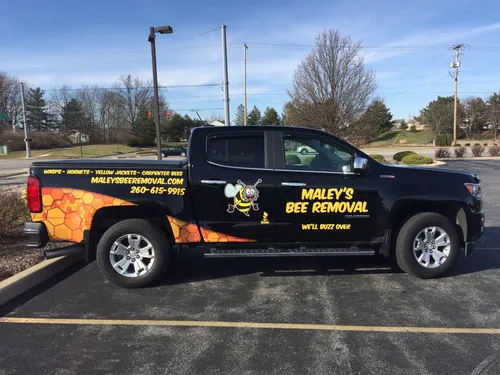
Maley's Bee Removal
Fort Wayne, IN
Maley's Bee Removal is a pest control company based in Fort Wayne, IN, specializing in bee and wasp removal. They serve Northeast Indiana and Northwest Ohio, handling the removal and relocation of honey bee swarms and hives, as well as the destruction of other pest bees like bumble bees, carpenter bees, hornets, wasps, and yellow jackets. Their services cover bees found in structures, on the ground, or in trees. The company offers flexible scheduling, including daytime, evening, and weekend appointments to accommodate customer needs.
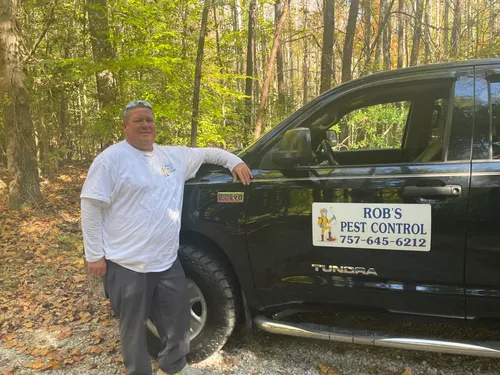
Rob's Pest Control
Newport News, VA
Rob's Pest Control is a locally owned pest control company serving Newport News, VA. They provide a wide range of services including termite control, crawlspace treatments, and removal of ants, rodents, roaches, mosquitoes, bees, and wasps. Their team uses environmentally friendly methods to eliminate pests and address moisture issues that can attract infestations. With over 10 years of experience, Rob's Pest Control focuses on protecting homes and properties in the Hampton Roads area.
Understanding Your Stinging Insect Problem
Correctly identifying the insect is the first step toward a safe and appropriate solution. The approach for a hive of honey bees, which are vital pollinators, differs significantly from dealing with a nest of territorial yellow jackets.
Common Bees in Kettering:
- Honey Bees: Social, fuzzy, and golden-brown. They build wax comb hives, often inside wall voids, chimneys, or tree hollows. Professional beekeepers or wildlife control experts can often perform live bee removal to relocate the colony.
- Bumble Bees: Larger, rounder, and very fuzzy with black and yellow bands. They typically nest in small, ground-level cavities like abandoned rodent burrows. They are generally non-aggressive unless the nest is disturbed.
- Carpenter Bees: Resemble bumble bees but have a shiny, hairless abdomen. They are solitary and bore perfectly round holes into wooden structures like decks, eaves, and window frames to create nesting galleries.
Common Wasps and Hornets in Kettering:
- Paper Wasps: Have long legs and slender, brown bodies with yellow or reddish markings. They build distinctive, open-celled, umbrella-shaped nests from chewed wood pulp, often under eaves, porch ceilings, or inside grills 1.
- Yellow Jackets: Smooth, black and yellow banded, and highly aggressive. They frequently build large, enclosed paper nests underground in old rodent burrows or within wall voids and attics. They are a common culprit at late-summer picnics 2.
- Bald-Faced Hornets: Actually a type of yellow jacket, they are black with white or ivory markings. They construct large, gray, football-shaped aerial nests, usually high in trees or on shrubs 3.
The Lifecycle of Stinging Insects in Ohio
Activity in Kettering follows a distinct seasonal pattern driven by temperature. Understanding this cycle helps explain when problems arise and the best time for intervention.
- Spring (Late March - May): As temperatures consistently rise above 50°F, overwintered queens emerge. They seek out nesting sites and begin laying eggs to establish new colonies. This is also swarming season for honey bees, when a large group may cluster on a tree branch while scouting for a new home 4 5.
- Summer (June - August): Colony populations explode. Worker insects are highly active on warm, sunny days, foraging for food to feed the growing larvae. Nests become visibly larger and more active.
- Late Summer & Early Fall (September - October): This is when wasps and yellow jackets become most noticeable and aggressive. As natural food sources dwindle and the colony reaches its peak size, these insects are drawn to human food and can be quick to defend their nest 6. After the first hard frost, most workers and males die.
- Winter: The colony dies off, with only the new, mated queens surviving by finding sheltered spots to hibernate, restarting the cycle the following spring 7.
Where to Look for Nests
Stinging insects choose nesting sites that offer shelter and protection. Common locations around Kettering homes include 8:
- Eaves, Soffits, and Roof Overhangs: A prime spot for paper wasp nests.
- Wall Voids, Attics, and Chimneys: Honey bees and European hornets may establish hives inside these hidden, hollow spaces, which can lead to structural issues and honey seepage 9.
- Underground: Yellow jackets favor abandoned rodent burrows, spaces under concrete slabs, or landscape timbers.
- Trees, Shrubs, and Bushes: Hornets often build large, enclosed nests hanging from tree branches or within dense foliage.
- Wooden Structures: Look for small, round holes in untreated wood-a sign of carpenter bee activity 10.
- Less Common Spots: Inside grills, playground equipment, mailboxes, or under deck railings.
Professional Removal Methods
For safety and effectiveness, contacting a local professional is the best course of action. They will assess the situation and choose the most appropriate method.
1. Live Bee Relocation: For honey bee colonies, a specialist may attempt to capture the queen and worker bees, vacuum them safely, and relocate the hive to a managed apiary. This preserves the pollinators and is often preferred when structurally feasible 11 12.
2. Wasp and Hornet Elimination: For aggressive species like yellow jackets or bald-faced hornets, or when bees are in an inaccessible location, elimination is typically necessary. A professional will apply targeted insecticides, often during early morning or dusk when insect activity is low, to neutralize the nest 13 14. They have the protective gear and expertise to do this safely from a distance.
3. Exclusion and Prevention: After removal, a good professional will advise on sealing entry points (like cracks in siding or gaps in soffits) to prevent future colonies from moving in. For carpenter bees, treatment of wood surfaces may be recommended.
Find the perfect wasp & hornet removal companies for your needs
Get personalized recommendations and expert advice
What to Expect: Service and Cost Considerations
The cost for professional bee and wasp control in Kettering depends on several key factors, leading to a typical range of $100 to $700 or more for a single nest removal 15 16.
Primary Cost Factors:
- Nest Location: A ground-level nest is simpler to address than one 30 feet up in a tree, inside a wall void (which may require careful opening and repair), or within a chimney. Difficult access requires more labor and specialized equipment.
- Insect Type and Nest Size: The treatment protocol for a small paper wasp nest differs from a large, established yellow jacket colony or an extensive honey bee hive.
- Service Type: A one-time removal is a single cost. For properties with recurring issues, some companies offer ongoing service plans. These may include initial visits costing $150-$300 with follow-up inspections or treatments priced between $40 and $70 17 18 19.
To get an accurate estimate for your specific situation, it's best to contact local Kettering pest control experts such as Free Bee Pest Control, Barnes Wildlife Control, or ScherZinger Pest Control for a consultation 20 21.
Safety First: What Not to Do
Attempting DIY removal is risky and can aggravate the insects, leading to multiple stings.
- Do not block the entrance to a hive in a wall. This can force bees or wasps to chew into your living space.
- Do not spray a nest with water or hit it with objects.
- Do not attempt to remove an aerial or ground nest without proper protective clothing and equipment.
- Do keep children and pets away from the area and contact a professional.
Frequently asked questions
Sources
Footnotes
-
How to Identify a Wasp Nest I Prevent Pest Control - https://preventpestcontrol.com/wasps/how-to-identify-a-wasp-nest/ ↩
-
How to Get Rid of Paper & Mud Wasp Nests Above & Underground | Orkin - https://www.orkin.com/pests/stinging-pests/wasps/wasp-nests ↩
-
Ohio Wasp Identification Guide - https://admisiones.unicah.edu/libweb/9z4UIP/7OK136/OhioWaspIdentificationGuide.pdf ↩
-
Spring Bees in Northeast Ohio: A Complete Guide - Pest Asset - https://pestasset.com/spring-bees-in-northeast-ohio-a-complete-guide/ ↩
-
Bumble Bees and Solitary Bees & Wasps in Urban Landscapes - https://ohioline.osu.edu/factsheet/HYG-2143-10 ↩
-
Why Are Bees Suddenly So Aggressive? It's Angry Bee Season! - https://www.afcurgentcare.com/torrington/blog/why-are-bees-suddenly-so-aggressive-its-angry-bee-season/ ↩
-
Strange adaptation ensures bee, wasp survival - Lake Erie ... - https://www.lensc.org/strange-adaptation-ensures-bee-wasp-survival/ ↩
-
Common Places You Find Bee and Wasp Nests - Abarb Pest Services - https://abarbpest.com/common-places-you-find-bee-and-wasp-nests/ ↩
-
How to Identify Types of Bee Nests - Ehrlich Pest Control - https://www.jcehrlich.com/pest-insights/bees/bee-nest-identification ↩
-
Ohio Bee Identification Guide - Ohioline - https://ohioline.osu.edu/factsheet/ENT-57 ↩
-
Greater Dayton Ohio Bee Removal Service - Barnes Wildlife Control - https://barneswildlifecontrol.com/bee-removal-service/ ↩
-
Bee & Wasp Removal | Central Ohio - https://www.xterminatorohio.com/bee-and-wasp-removal ↩
-
Dayton Wasp & Bee Removal Pros - 90 Years of Experience - https://stopzbugs.com/wasp-bee-removal-dayton-oh/ ↩
-
Cincinnati Wasp & Bee Removal Pros - 90 Years of Experience - https://stopzbugs.com/wasp-bee-removal-cincinnati-oh/ ↩
-
Stinging Insects Wasps Bees - Ohio Exterminating - https://ohioexterminating.com/services/stinging-insects-wasp-bees/ ↩
-
Bee or Wasp Removal Cost - https://usalivebeeremoval.com/bee-or-wasp-removal-cost/ ↩
-
How Much Does Wasp Nest Removal Cost in 2026? - Lawn Love - https://lawnlove.com/blog/wasp-nest-removal-cost/ ↩
-
How Much Does Terminix Cost? (2026) - HomeGuide - https://homeguide.com/costs/terminix-prices ↩
-
How Much Does Wasp Nest Removal Cost in 2025? - https://lawnlove.com/blog/wasp-nest-removal-cost/ ↩
-
THE BEST 10 Pest Control Trending in KETTERING, OH - Yelp - https://m.yelp.com/search?cflt=pest_control&find_loc=Kettering%2C+OH ↩
-
How Much Does Pest Control Cost in Seattle, WA? - https://www.angi.com/articles/how-much-does-pest-control-service-cost/wa/seattle ↩