Find the Best Wasp & Hornet Removal Companies for Your Business
No obligation • Fast responses • Nationwide coverage

Why you can trust Pest Crews
Pest Crews is a leading U.S. resource for finding and evaluating residential and commercial pest control services. Our team researches providers, reviews treatment approaches, and organizes unbiased information to help you make informed decisions. Companies cannot pay to change our editorial content or influence how they appear.
Search providers near you
Top Wasp & Hornet Removal Companies in Stillwater, Oklahoma Ranked
Dealing with a bee or wasp nest on your property can be stressful and dangerous. Professional stinging insect removal services in Stillwater provide safe, effective solutions to eliminate these pests, protecting your family, pets, and property from painful stings and potential structural damage. This guide explains your options for wasp and bee control, from live honey bee relocation to nest extermination, and helps you understand what to expect when seeking local expertise for this critical service.
Understanding Your Stinging Insect Problem
The first step in addressing any pest issue is proper identification. Stillwater is home to several common stinging insects, each with distinct behaviors and nesting preferences that influence the removal approach.
Honey Bees: These vital pollinators are typically not aggressive unless their hive is threatened. They often build large, wax-comb hives in enclosed spaces like wall voids, chimneys, or hollow trees. Due to their ecological importance, live removal and relocation by a beekeeper is the preferred method whenever possible.
Paper Wasps: Identified by their long legs and open, umbrella-shaped paper nests, paper wasps often build under eaves, porch ceilings, and deck railings. They are less aggressive than yellowjackets but will defend their nest.
Yellowjackets: These aggressive wasps are a common nuisance. They often build large, enclosed paper nests underground in old rodent burrows or within wall cavities. Their colonies can grow very large by late summer, and they are responsible for most stinging incidents.
Hornets: While less common, bald-faced hornets build large, football-sized aerial paper nests in trees, shrubs, or on buildings. They are highly protective of their nest and can sting repeatedly. 1
Carpenter Bees: These solitary bees resemble bumblebees but bore perfectly round holes into unpainted, weathered wood to create nesting galleries. While males are territorial (but lack stingers), females can sting. Their primary damage is structural, as they tunnel into wooden decks, eaves, and siding.
Why Professional Removal is Essential
Attempting do-it-yourself (DIY) bee or wasp control is strongly discouraged. Over-the-counter sprays often only anger the colony, leading to aggressive swarming and a high risk of multiple stings. For individuals with allergies, a single sting can trigger a life-threatening reaction. 2
Professional exterminators and beekeepers have the necessary training, protective equipment, and targeted insecticides to handle the job safely and completely. They can also identify the species and locate the entire nest, including hidden satellite colonies, ensuring the problem is fully resolved. This expertise is crucial for nests located in difficult areas like inside walls or high in trees.
Common Nesting Sites Around Your Stillwater Home
Bees and wasps seek sheltered, secure locations. Being aware of these common nesting spots can help you spot a problem early.
- Eaves, Soffits, and Overhangs: The protected undersides of roofs are prime real estate for paper wasps and hornets to attach their nests. 3
- Attics and Wall Voids: Small cracks in siding or rooflines provide perfect entry points for honey bees, yellowjackets, and wasps to establish large, hidden colonies. These are among the most challenging and costly removals. 4 5
- Ground Burrows: Yellowjackets frequently repurpose old rodent holes or create nests under concrete slabs, in garden beds, or along foundation lines. Disturbing the ground near their entrance can provoke an attack. 6
- Sheds, Garages, and Play Structures: Undisturbed corners of storage buildings, inside grills, under patio furniture, or within playground equipment offer ideal shelter.
- Chimneys and Vents: Uncapped chimneys and plumbing/attic vents are attractive to swarming honey bees looking for a new home. 7
- Trees and Shrubs: Hornets and some wasp species build aerial nests in the branches of trees and dense shrubs.
Seasonal Activity of Stinging Insects in Oklahoma
Understanding the seasonal lifecycle of these pests can inform the best time for intervention and help you anticipate periods of high activity. 8
- Spring (March-April): Overwintered queens emerge to scout for nest sites. Activity is low, and new nests are small-this is the most effective and least expensive time for removal. Honey bee swarming is common in April and May. 9
- Early to Mid-Summer (May-June): Colonies grow rapidly as the first workers hatch. Nests expand in size, and foraging activity increases noticeably.
- Late Summer to Early Fall (July-September): This is peak season. Colonies are at their maximum size, and food sources become scarcer, making yellowjackets and wasps more aggressive. This is when most human encounters and stings occur. 10 11
- Late Fall and Winter (October-February): Most workers die with freezing temperatures. Fertilized queens hibernate in sheltered spots, and visible activity ceases until spring.
Find the perfect wasp & hornet removal companies for your needs
Get personalized recommendations and expert advice
Removal Methods: Extermination vs. Live Relocation
The strategy for dealing with stinging insects depends largely on the species and location.
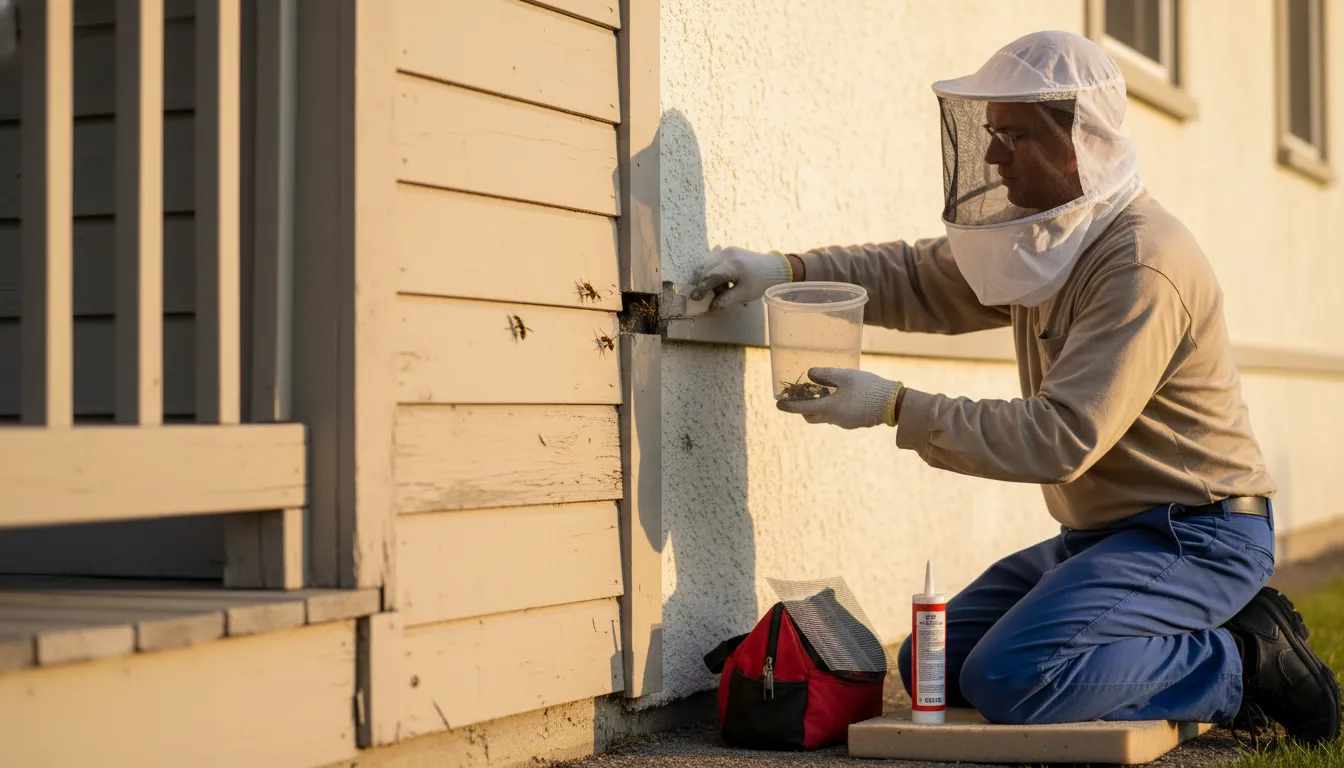
Wasp and Hornet Extermination: For most wasps, hornets, and yellowjackets, extermination is the standard method. Professionals use specialized insecticidal dusts or aerosols applied directly to the nest entrance, which the insects then carry inside, eliminating the entire colony. Follow-up visits may be needed for large or hidden nests. Companies like Murray Pest Control and A & B Eco-Safe Pest Control offer these services in the Stillwater area. 12
Live Bee Removal and Relocation: For honey bees, relocation is the responsible choice. Local beekeepers or pest control services with bee expertise (like A & B Eco-Safe) may perform this service, sometimes for a reduced fee or even free if the hive is healthy and easily accessible. The process involves carefully extracting the comb and bees and transferring them to a managed hive box. Extermination of honey bees is generally considered only if relocation is impossible or if the colony is an aggressive hybrid like Africanized honey bees.
Carpenter Bee Control: Treating carpenter bee holes with insecticidal dust or liquid and then sealing the tunnels is the standard approach. Preventing future infestations often involves painting or staining exposed wood surfaces. 13
Cost of Bee and Wasp Removal in Stillwater
Costs in Stillwater align with national averages and are determined by the species, nest size, location, and accessibility. 14 15 The following table outlines typical price ranges:
| Factor | Typical Cost Range | Notes for Stillwater Residents |
|---|---|---|
| Basic Wasp/Hornet Nest (Easy Access) | $100 - $400 | For a small, exposed paper wasp nest under an eave. |
| Average Wasp Nest Removal | $300 - $700 | The most common price for a residential yellowjacket or hornet nest. |
| Aggressive Species/Complex Nest | $500 - $1,200+ | For large, hidden, or underground yellowjacket nests requiring more labor and material. |
| Live Honey Bee Removal | $0 - $800+ | Cost varies widely; a local beekeeper may relocate a swarm for little to no cost, while cutting into a wall to remove an established hive costs significantly more. 16 |
| Nests Inside Walls or Attics | $500 - $1,000+ | High cost due to the need for careful insecticide application, possible demolition, and subsequent repair work. |
| Emergency or After-Hours Service | Additional $150 - $350 | Expedited services for urgent situations often include a premium fee. |
It's always wise to get a detailed, in-person inspection and quote from a provider, as phone estimates can be inaccurate for hidden problems.
Choosing a Service Provider in Stillwater
When selecting a company for stinging insect control, consider the following:
- Licensing and Insurance: Ensure the company is properly licensed by the state of Oklahoma and carries liability insurance.
- Experience with Specific Pests: Ask about their experience with the type of insect you have (e.g., ground-nesting yellowjackets, honey bees in structures).
- Methodology: Inquire about their treatment methods, especially if you have preferences regarding insecticides or desire live bee relocation.
- Guarantees: Understand what their service guarantee covers and for how long.
- Repair Services: If the nest is within a structure, ask if they provide repair services for the access hole or recommend a contractor.
Local providers such as Murray Pest Control and A & B Eco-Safe Pest Control are established options in the Stillwater area for wasp and hornet extermination and general pest control plans. 17 18 For live honey bee removal, contacting the Northeast Oklahoma Beekeepers Association or a local apiary can connect you with a skilled beekeeper. 19
Preventing Future Infestations
After removal, take steps to make your property less inviting:
- Seal cracks and holes in your home's exterior, including around utility lines, vents, and siding.
- Keep garbage cans tightly sealed and clean up food spills outdoors promptly.
- Fill in abandoned rodent burrows and other holes in the ground.
- Regularly inspect eaves, attics, and sheds in the spring and early summer for new nest construction.
- Consider painting or staining untreated wood surfaces to deter carpenter bees.
Frequently asked questions
Sources
Footnotes
-
Wasp and Hornet Removal Long Island - https://www.extermicore.com/wasp-and-hornet-removal/ ↩
-
How much does Wasp extermination cost? - Yelp - https://www.yelp.com/costs/wasp_extermination ↩
-
Common Areas for Wasp Nests - Summit Pest Management - https://www.summitpestmanagement.com/bees-wasps-exterminators/common-areas-for-wasp-nests/ ↩
-
Common Places You Find Bee and Wasp Nests - Abarb Pest Services - https://abarbpest.com/common-places-you-find-bee-and-wasp-nests/ ↩
-
How to Get Rid of Paper & Mud Wasp Nests Above & Underground | Orkin - https://www.orkin.com/pests/stinging-pests/wasps/wasp-nests ↩
-
Yellow Stripy Things in Oklahoma - Flatline Pest Control - https://www.flatlinepest.com/yellow-stripy-things/ ↩
-
Removing bee swarms from houses in Oklahoma - Facebook - https://www.facebook.com/groups/140833425936399/posts/24480724994853903/ ↩
-
What time of year do stinging insects become active in ... - https://championexperts.com/faqs/what-time-of-year-do-stinging-insects-become-active-in-oklahoma/ ↩
-
Yellow jacket exterminator cost 2025: Top 5 Proven Savings - https://bigginsexterminating.com/yellow-jacket-exterminator-cost/ ↩
-
Wasp Activity Is Ramping Up - SDSU Extension - https://extension.sdstate.edu/wasp-activity-ramping ↩
-
Paper Wasps, Yellowjackets, and Other Stinging Wasps - https://extension.okstate.edu/fact-sheets/print-publications/epp-entomology-and-plant-pathologhy/paper-wasps-yellowjackets-and-other-stinging-wasps-epp-7305.pdf ↩
-
Stinging Insect Control - Murray Pest Control - https://themurraypestcontrol.com/stinging-insect-control/ ↩
-
Honey Bees, Bumble Bees, Carpenter Bees and Sweat Bees - https://extension.okstate.edu/fact-sheets/print-publications/epp-entomology-and-plant-pathologhy/honey-bees-bumble-bees-carpenter-bees-and-sweat-bees-epp-7317.pdf ↩
-
Wasp Nest Removal Cost [2026 Data] | Angi - https://www.angi.com/articles/how-much-does-wasp-removal-cost.htm ↩
-
Pest Control Stillwater OK: Home - https://pestcontrolstillwaterok.com/ ↩
-
How Much Does Bee Removal Cost in 2025? - HomeAdvisor - https://www.homeadvisor.com/cost/environmental-safety/bee-removal/ ↩
-
Murray Pest Control - https://www.google.com/viewer/place?mid=/g/1vtqwm28 ↩
-
A & B Eco-Safe Pest Control - https://www.google.com/viewer/place?mid=/g/1tf9tb9v ↩
-
Bee Biology - Northeast Oklahoma Beekeepers Association - https://neoba.org/content.aspx?page_id=22&club_id=932348&module_id=506665 ↩