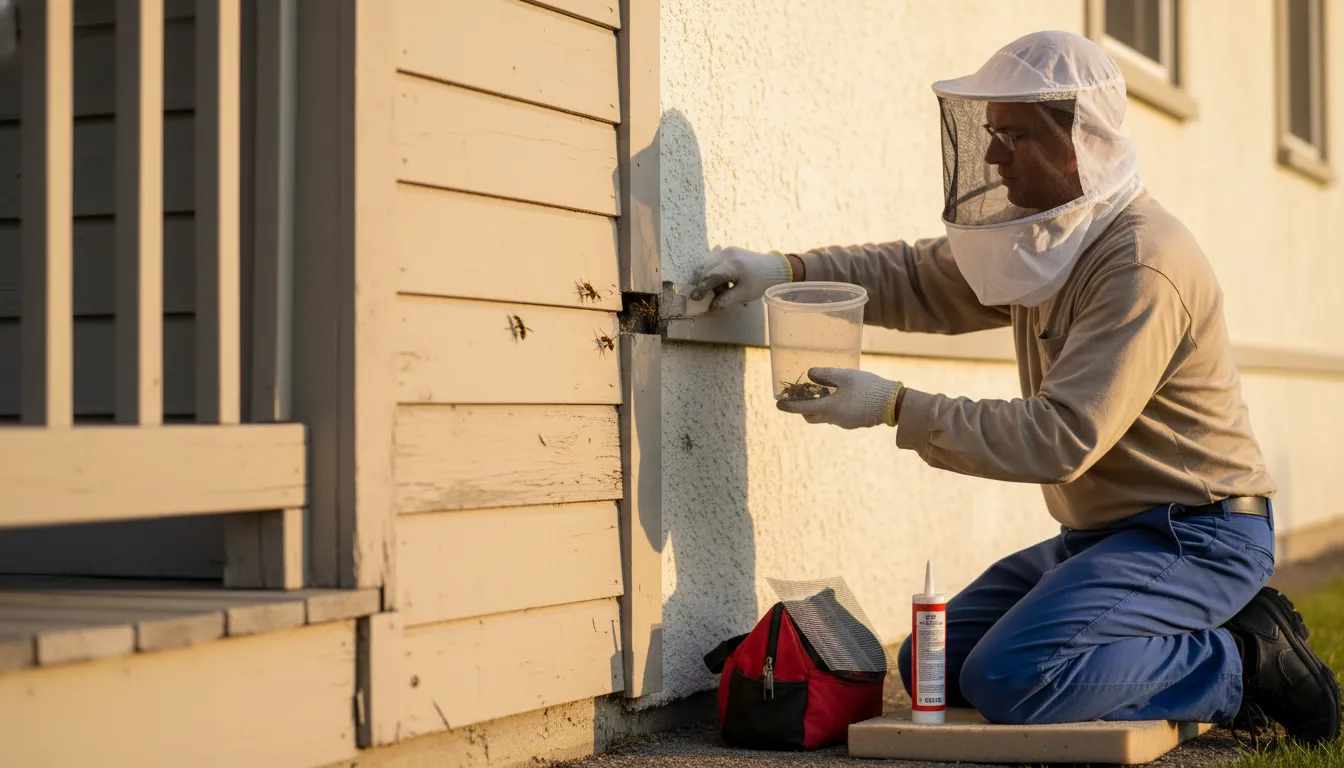
Find the Best Wasp & Hornet Removal Companies for Your Business
No obligation • Fast responses • Nationwide coverage

Why you can trust Pest Crews
Pest Crews is a leading U.S. resource for finding and evaluating residential and commercial pest control services. Our team researches providers, reviews treatment approaches, and organizes unbiased information to help you make informed decisions. Companies cannot pay to change our editorial content or influence how they appear.
Search providers near you
Top Wasp & Hornet Removal Companies in Rock Hill, South Carolina Ranked
Discovering a buzzing nest on your property can be unsettling. Bee and wasp removal is a specialized service focused on safely eliminating or relocating stinging insect colonies from residential and commercial properties. This matters not only for your peace of mind and safety but also for protecting the structural integrity of your home from potential damage. For Rock Hill residents, understanding your local options for stinging insect control is the first step toward a solution that is both effective and appropriate for the specific pest you're facing.

ClearDefense Pest Control
501 Penman St Suite 301, Charlotte, NC 28203
ClearDefense Pest Control is a pest control company based in Charlotte, NC, specializing in environmentally responsible pest management. They provide targeted treatments for cockroaches, ants, rodents, bees, wasps, and other pests using a micro-crystallized formula that releases treatment slowly for ongoing effectiveness. Their services include establishing anti-bug barriers, baiting, trapping, wall injections, and nest removal to control and prevent pest activity year-round. ClearDefense Pest Control serves Charlotte and surrounding areas, applying methods designed to minimize exposure to people and pets while maintaining environmental safety.
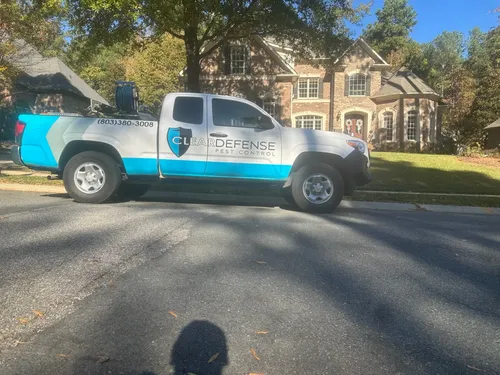
ClearDefense Pest Control
1383 Old Springdale Rd, Rock Hill, SC 29730
ClearDefense Pest Control is a pest control company serving Charlotte, NC, and surrounding areas. They specialize in environmentally responsible pest management, including cockroach, ant, rodent control, and bee and wasp removal. Their approach uses a micro-crystallized formula that releases treatment slowly for ongoing effectiveness, focusing on targeted applications based on pest behavior and habitats. ClearDefense serves multiple nearby cities and maintains pest barriers year-round to address seasonal pest activity. Their services include web and nest removal as well as precision treatments at entry points to homes.
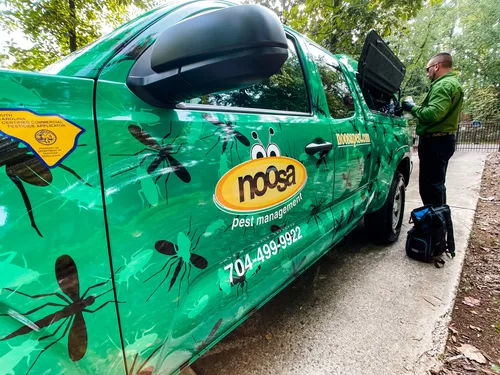
Noosa Pest Management LLC
6916 Rea Croft Dr, Charlotte, NC 28226
Noosa Pest Management LLC is a locally owned pest control company serving Charlotte, NC. They provide a range of residential and commercial pest management services including bed bug treatment, ant and rodent control, termite inspections, mosquito control, bee and wasp removal, bird and wildlife control, and crawl space encapsulation. Their approach emphasizes environmentally friendly and botanical pest control solutions, integrating natural treatments and comprehensive inspections to address pest issues effectively. Noosa Pest Management also offers specialized termite control and uses heat treatment for bed bugs. They participate in the EPA's Pesticide Environmental Stewardship Program and focus on minimizing chemical use. The company is known for its thorough inspections, customized treatment plans, and ongoing maintenance visits. Noosa Pest Management is family-operated and prioritizes eco-conscious methods while covering a wide range of pests common in the Charlotte area.

Go-Forth Pest Control
1974 Carolina Pl Ste 120, Fort Mill, SC 29708
Go-Forth Pest Control is a pest management company based in Charlotte, NC, serving the Fort Mill area and nearby towns. They provide a wide range of pest control services including ant, cockroach, flea, mosquito, rodent, bed bug, termite, bee, wasp, and wildlife removal. The company uses pet- and kid-friendly products and applies the latest pest management technologies to protect homes and businesses. Established in 1959, Go-Forth Pest Control has decades of experience and offers same-day service to address pest issues promptly.

Bulwark Exterminating
2300 Stevens Mill Rd, Matthews, NC 28105
Bulwark Exterminating provides residential pest control services in Charlotte, NC. They offer a range of treatments including ant control, termite inspections, mosquito management, and bee and wasp removal. Their services are tailored to meet individual needs, addressing common concerns like termite activity, allergic reactions to stings, and pest presence in yards. The company focuses on creating safer and more comfortable homes through customized prevention plans.
Understanding Your Stinging Insect Problem in Rock Hill
The first step in any effective removal process is proper identification. Rock Hill is home to various stinging insects, each with distinct behaviors and nesting preferences. Common culprits include paper wasps, with their iconic umbrella-shaped nests; yellowjackets, which are notably aggressive and often nest underground or in wall voids; hornets, including the larger bald-faced hornet; and honeybees, which are crucial pollinators and often require a different, preservation-minded approach.
Misidentifying the insect can lead to using the wrong removal strategy, potentially escalating the danger. For instance, disturbing a ground-nesting yellowjacket colony can provoke a massive, defensive swarm, while a honeybee hive might be best served by a live relocation to a local apiary.
Why Professional Intervention is Recommended
While a can of spray from the hardware store might seem like a quick fix, DIY stinging insect control is strongly discouraged, especially in Rock Hill's active pest environment. The risks are significant:
- Safety Hazards: Multiple stings can cause severe allergic reactions (anaphylaxis) even in individuals without a known allergy. Aggressive species like yellowjackets will defend their nest fiercely.
- Incomplete Removal: DIY methods often kill only the visible workers, leaving the queen and brood cells intact deep within a nest. This allows the colony to rebound quickly.
- Property Damage: Attempting to remove a nest from inside a wall or attic without proper knowledge can lead to unnecessary structural damage.
- Environmental Impact: Indiscriminate spraying can harm beneficial insects and contaminate your immediate environment.
Professional pest control technicians are trained to handle these risks. They use industry-approved protective equipment and application methods to ensure the colony is eradicated or removed safely and completely.
Common Nesting Sites Around Rock Hill Homes
Wasps and bees are opportunistic when choosing a home for their colony. They seek out locations that offer shelter from South Carolina's rain and humidity, protection from predators, and proximity to food and water sources. Being aware of these hotspots can help you spot a problem early.
- High & Sheltered Structures: The underside of roof eaves, overhangs, porch ceilings, and attic vents are prime real estate for paper wasps and hornets.
- Structural Voids: Yellowjackets and sometimes honeybees will exploit gaps in siding, cracks in brickwork, or openings around utility lines to build nests inside wall cavities, attics, or soffits 1.
- Ground-Level & Landscaping: Many yellowjacket species prefer to nest in abandoned rodent burrows, under dense shrubbery, in compost piles, or within landscape timbers. Exposed tree branches and dense ivy are also common sites.
- Man-Made Objects: Don't overlook children's play sets, grills, unused mailboxes, lawn furniture, boats, or sheds. Any hollow, sheltered space can become a nest site.
Regularly inspecting these areas, particularly in early spring when queens are founding new colonies, can help you catch a nest while it is still small and manageable.
The Seasonal Cycle of Stinging Insects in South Carolina
Rock Hill's warm, humid climate creates a long active season for bees and wasps, with pest pressure fluctuating throughout the year 2 3. Understanding this cycle explains when you're most likely to encounter problems.
- Early Spring (March-April): Overwintering queens emerge and begin scouting for nesting sites. You may see solitary wasps or bees starting small, papery nests. Activity is low but this is the ideal time for preventive measures.
- Summer (June-August): Colonies grow exponentially. Worker populations boom, and they are constantly foraging for insects (protein) and sugars to feed the developing larvae. Nests become large and obvious. By late summer, populations peak, and defensive behavior increases.
- Fall (September-November): This is often the peak time for nuisance issues. As natural food sources dwindle and the colony's lifecycle ends, workers become desperate and aggressively seek out human food and drinks at outdoor gatherings. New queens and drones are produced to mate before winter 4 5 6.
- Winter (December-February): Most workers die off with freezing temperatures. Fertilized new queens find sheltered spots (like under tree bark or in attic insulation) to hibernate, waiting to restart the cycle in spring 7.
Find the perfect wasp & hornet removal companies for your needs
Get personalized recommendations and expert advice
Professional Removal Methods and Local Services
When you contact a professional in Rock Hill, they will typically follow a structured process. It begins with a thorough inspection to identify the insect species and locate the primary nest. Based on their findings, they will recommend a treatment plan. For most wasp, hornet, and yellowjacket infestations, this involves the application of EPA-registered insecticides using specialized equipment to directly treat the nest, ensuring the queen is eliminated.
For honeybee colonies, the approach is different. Given their ecological importance, live removal and relocation is the preferred method. Some local beekeepers or services that specialize in bee rescue, such as Critter Crew Pest Solutions & Beekeeping, may perform this service, sometimes at a reduced cost or for free if the hive is easily accessible, as they can then manage the colony for honey production.
Several Rock Hill-area companies offer specialized stinging insect control, including ClearDefense Pest Control, Noosa Pest Management, and Clark's Termite & Pest Control 8 9 10. It's advisable to contact a few providers to discuss your specific situation.
Understanding the Cost of Bee and Wasp Removal in Rock Hill
The cost for professional stinging insect extermination or removal in Rock Hill varies based on several key factors. Here's a breakdown of what influences the price:
| Factor | Impact on Cost |
|---|---|
| Insect Species & Nest Size | A small, exposed paper wasp nest costs less than a large, established yellowjacket colony inside a wall. |
| Nest Location & Accessibility | Nests under eaves are standard. Those in high-risk areas (high roofs, inside structural voids) or requiring repair work after removal cost more 11. |
| Type of Service Required | Standard extermination for wasps has one cost structure. Live honeybee removal and relocation is a different service with its own pricing, potentially offered by a beekeeper rather than a pest control company 12 13. |
| Urgency & Number of Nests | Emergency or after-hours service may carry a premium. Treating multiple nests on one property will also increase the total cost. |
Based on local and national data, Rock Hill homeowners can expect the following general ranges for wasp nest removal 14:
- Standard Removal: $300 to $700 for a typical nest treatment, including inspection.
- Small/Accessible Nests: Can be as low as $100 to $250.
- Large/Difficult Nests: For severe infestations or nests requiring demolition (e.g., inside a wall), costs can reach $1,300 or more.
- Post-Removal Repairs: If access holes need to be sealed or drywall repaired, this is an additional cost, typically $300 to $1,000+.
The most reliable way to get an accurate price is to request a free, in-person inspection and quote from licensed local providers 15 16.
Prevention: Keeping Bees and Wasps Away
After removal, or to avoid a problem altogether, consider these preventive steps tailored to the Rock Hill climate:
- Seal Entry Points: In early spring, carefully inspect your home's exterior. Seal cracks in siding, mortar, and foundation. Install fine mesh screens over attic, soffit, and crawl space vents 17.
- Manage Food Sources: Keep trash cans tightly sealed and clean grills after use. Promptly clean up fallen fruit from trees and avoid leaving pet food outdoors. Use covered cups for sugary drinks when outside 18 19.
- Reduce Attractants: Repair leaky faucets and downspouts to eliminate standing water. Consider planting less attractive landscaping and avoid using overly fragrant perfumes or lotions outdoors during peak season.
- Regular Property Maintenance: Keep vegetation trimmed back from the house. Fill in abandoned rodent burrows in yards. Regularly inspect sheds, playhouses, and other outdoor structures 20 21.
Frequently asked questions
Sources
Footnotes
-
Common Areas for Wasp Nests - Summit Pest Management - https://www.summitpestmanagement.com/bees-wasps-exterminators/common-areas-for-wasp-nests/ ↩
-
How Seasonal Changes in South Carolina Affect Pest Activity - https://econobugpc.com/how-seasonal-changes-in-south-carolina-affect-pest-activity/ ↩
-
How Weather and Seasons Affect Stinging Insect Activity - https://www.askawayblog.com/2025/10/how-weather-and-seasons-affect-stinging.html ↩
-
12 months of beekeeping in south carolina - https://alamancebeekeepers.org/wp-content/uploads/2021/03/Beekeeping_Calendar_Final-copy.pdf ↩
-
A Late Summer Pest Alert For South Carolina Homeowners - https://www.harrispestcontrolinc.com/blog/post/late-summer-pest-alert-for-pee-dee-grand-strand-areas ↩
-
Wasp Warnings: Why August Is Prime Time for Aggressive Nests - https://abctermite-pest.com/wasp-warnings-why-august-is-prime-time-for-aggressive-nests/ ↩
-
The Complete Guide to Wasp, Hornet, and Yellow Jacket ... - https://www.wakepest.com/the-complete-guide-to-wasp-hornet-and-yellow-jacket-control-in-the-triangle-area/ ↩
-
ClearDefense Pest Control Rock Hill, SC - https://cleardefensepest.com/pest-control-rock-hill/ ↩
-
Rock Hill SC Pest Control | Exterminator - https://noosapest.com/rock-hill-pest-control/ ↩
-
Wasp Control in the Carolinas - Clark's Termite & Pest Control - https://www.clarkspest.com/wasps/ ↩
-
How Much Does Wasp Nest Removal Cost in 2026? - https://lawnlove.com/blog/wasp-nest-removal-cost/ ↩
-
How Much Does Bee Removal Cost? [2026 Data] | Angi - https://www.angi.com/articles/how-much-does-bee-removal-cost.htm ↩
-
Critter Crew Pest Solutions & Beekeeping - https://www.google.com/viewer/place?mid=/g/11nnss35hs ↩
-
2025 Bee Removal Cost | Get Estimates - Thumbtack - https://www.thumbtack.com/p/bee-removal-cost ↩
-
Wasp Nest Removal Cost [2026 Data] | Angi - https://www.angi.com/articles/how-much-does-wasp-removal-cost.htm ↩
-
The Costs of Bee Removal From Your Property - Pestcor - https://pestcor.com/learning-center/pest-control/costs-of-bee-removal-from-your-property/ ↩
-
The Pre-Fall Frenzy: Look for Signs of Interior Wasp, Hornet, and Yellow Jacket Nests - https://www.pestendinc.com/blog/the-pre-fall-frenzy-look-for-signs-of-interior-wasp-hornet-and-yellow-jacket-nests ↩
-
How to avoid wasps in the South Carolina Lowcountry - https://www.islandpacket.com/news/local/article309956850.html ↩
-
A Simple Guide To Effective Wasp Control For Your South Carolina ... - https://www.bugmanpest.com/blog/2021/june/a-simple-guide-to-effective-wasp-control-for-you/ ↩
-
Common Places You Find Bee and Wasp Nests - https://abarbpest.com/common-places-you-find-bee-and-wasp-nests/ ↩
-
South Carolina Wasp Guide | Action Pest Wasp Control - https://actionpestsc.com/south-carolina-wasp-guide/ ↩