Find the Best Wasp & Hornet Removal Companies for Your Business
No obligation • Fast responses • Nationwide coverage

Why you can trust Pest Crews
Pest Crews is a leading U.S. resource for finding and evaluating residential and commercial pest control services. Our team researches providers, reviews treatment approaches, and organizes unbiased information to help you make informed decisions. Companies cannot pay to change our editorial content or influence how they appear.
Search providers near you
Top Wasp & Hornet Removal Companies in Franklin, Tennessee Ranked
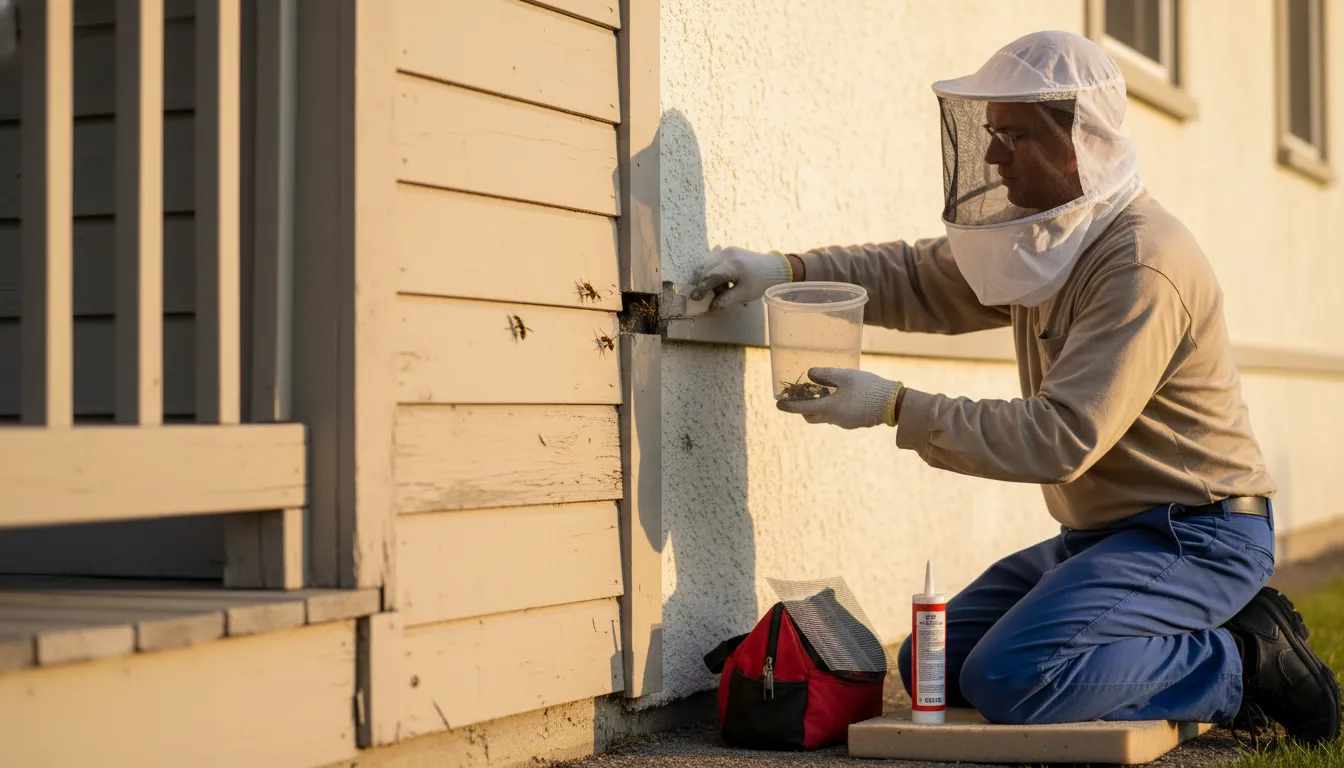
Discovering a buzzing nest of stinging insects on your Franklin property can be unsettling. Professional bee and wasp removal is a specialized service focused on safely eliminating or relocating these insects to protect your family, pets, and property. This guide explains the local options for stinging insect control, the seasonal patterns that drive their activity, and how to find qualified help for a safe and effective solution.
Insight Pest Solutions
5000 Linbar Dr #260, Nashville, TN 37211
Insight Pest Solutions provides comprehensive pest control services in Nashville, TN, addressing common household and commercial pests such as cockroaches, ants, rodents, termites, mosquitoes, bees, and wasps. Their approach includes thorough inspections, sealing entry points, and targeted treatments to prevent infestations and protect properties year-round. Established in 1985, the company offers specialized termite inspections and treatments, as well as outdoor mosquito control using environmentally responsible methods. Their service includes ongoing monitoring and seasonal adjustments to maintain pest-free environments.
All-American Pest Control
1585 Mallory Ln STE 201, Brentwood, TN 37027
All-American Pest Control is a family-owned pest control company serving the Nashville, TN area, including Brentwood. With over 60 years of experience since 1961, they offer year-round residential and commercial pest control services targeting a wide range of pests such as termites, ants, rodents, spiders, mosquitoes, and wasps. Their services include termite inspections, mosquito control, rodent removal, and eco-friendly pest management solutions tailored to local pest pressures. They also provide specialized capabilities like the Sentricon® Termite Colony Elimination System and seasonal pest control plans to address changing pest activity throughout the year.
ClearDefense Pest Control
175 Commerce Dr, Hendersonville, TN 37075
ClearDefense Pest Control is a pest control company serving Nashville, TN, and surrounding areas. They specialize in environmentally responsible pest management, including cockroach, ant, rodent control, and bee and wasp removal. Their treatments use a micro-crystallized formula that releases slowly over time, providing ongoing pest control with less frequent applications. ClearDefense applies targeted methods based on pest behavior and habitats to minimize exposure to people and pets. They offer a comprehensive service plan that includes barrier establishment, baiting, wall injections, and nest removal to address seasonal pest challenges throughout the year. The company serves multiple cities around Nashville and Hendersonville, maintaining pest control year-round with a focus on precision and environmental care.
Ehrlich Pest Control
803 Louisville Hwy, Goodlettsville, TN 37072
Ehrlich Pest Control has been serving Nashville, TN, and surrounding areas since 1928, offering customized pest control solutions for homes and businesses. Their local technicians understand the unique pest challenges of the Nashville metropolitan area, providing treatments for common pests such as termites, rodents, ants, bed bugs, cockroaches, and wasps. Ehrlich uses environmentally responsible methods combined with industry-leading technology to deliver effective pest management, including termite inspections and rodent control. Their PestFree365+ program offers year-round protection tailored to each property's needs.
House Call Pest Control
859 W College St, Murfreesboro, TN 37129
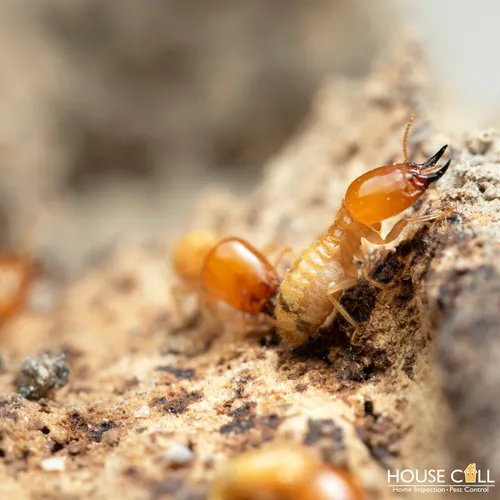
House Call Pest Control is a pest control company based in Nashville, TN, offering services for both residential and commercial properties. They provide solutions for a wide range of pests including cockroaches, ants, rodents, termites, mosquitoes, fire ants, wasps, and hornets. Their services include termite inspections, exclusion services to seal entry points, and customized commercial pest control plans. The company emphasizes safe and environmentally responsible methods and has certified specialists to handle termite treatments and other pest issues.
Understanding Your Stinging Insect Problem in Franklin
The first step to a safe resolution is identifying what type of insect you're dealing with. Different species require different approaches, especially when considering the ecological importance of pollinators like honeybees versus aggressive pests like yellow jackets.
Common Stinging Insects in Northwest New Jersey:
- Honeybees: These vital pollinators are fuzzy and golden-brown. They typically build wax combs inside cavities like hollow trees, wall voids, or chimneys. A honeybee swarm-a temporary cluster of thousands of bees on a tree branch or fence-is the colony's natural way of reproducing and is generally not aggressive.
- Bumblebees: Larger, rounder, and furrier than honeybees, they often nest in small, ground-level cavities like abandoned rodent burrows. They are generally docile unless their nest is threatened.
- Paper Wasps: Identified by their long legs and narrow waists, they build open-celled, umbrella-shaped nests, often under eaves, deck railings, or porch ceilings.
- Yellow Jackets: Smooth, black-and-yellow striped wasps that are highly aggressive, especially in late summer. They often build large, enclosed paper nests underground or inside wall cavities, making them particularly dangerous.
- Bald-Faced Hornets: Actually a type of yellow jacket, these black-and-white insects build large, football-shaped paper nests high in trees or on structures.
- Carpenter Bees: Large, shiny black bees that resemble bumblebees but have a hairless abdomen. Males are territorial but cannot sting. The females bore perfectly round holes into untreated wood (like deck posts, fences, or siding) to create nesting galleries, causing structural damage over time.
Why Professional Removal is the Safer Choice
Attempting DIY nest removal is strongly discouraged due to the significant risks involved. 1 2 A provoked colony can swarm in defense, leading to multiple painful stings. For the estimated 5-7.5% of people with insect sting allergies, a single sting can trigger a life-threatening anaphylactic reaction. Professionals have the protective gear, specialized equipment, and insecticides to handle the job safely. They also know how to differentiate between harmful pests and beneficial pollinators, ensuring the right method is used.
Local Bee and Wasp Control Services in Franklin
Franklin residents have access to several types of professional services for stinging insect management.
Pest Control Professionals (Exterminators): Local companies like Howey Pest Solutions, Eastern Pest Services, and Prestige Pest Unit & House Wash specialize in the safe elimination of wasps, hornets, and other stinging pests. 3 4 These experts can accurately identify the species, locate the nest (even hidden ones), and apply treatments that eliminate the colony. They also provide preventative treatments to deter future nesting.
Humane Bee Removal & Relocation: For honeybee colonies, relocation is the preferred method. Many pest control professionals partner with local beekeepers, or you can contact a beekeeper directly. The Northwest New Jersey Beekeepers Association (NWNJBA) is a valuable resource for finding someone who can safely remove and relocate a honeybee swarm or established hive, giving the colony a new home where it can continue its crucial pollinating work. 5 Swarm removal is often performed for a reduced cost or sometimes for free by passionate beekeepers. 6
Integrated Service Plans: For ongoing peace of mind, many companies offer annual residential pest control plans. These plans typically include scheduled inspections and treatments throughout the year, with coverage for stinging insects like wasps and hornets. This means if a nest appears between visits, a service call to remove it is often included at no additional charge. 7
Find the perfect wasp & hornet removal companies for your needs
Get personalized recommendations and expert advice
Where to Look for Nests on Your Property
Stinging insects seek sheltered spots to build their nests. Conducting periodic inspections, especially in spring, can help you catch a problem early. Common nesting sites around Franklin homes include: 8 9
- Under eaves, soffits, and roof overhangs
- Behind shutters, inside light fixtures, or under porch ceilings
- Within deck and porch railings, floor joists, or underneath the structure
- In attics, sheds, garages, and crawl spaces
- In shrubs, dense ivy, or within voids in trees
- Underground in old rodent burrows, under landscaping timbers, or in compost piles (common for yellow jackets)
- Inside wall voids, accessed through cracks, vents, or gaps in siding
Carpenter bees target weathered, unpainted wood. Look for perfect half-inch holes and sawdust piles below wooden elements like fascia boards, window trim, decks, and fences. 10
The Seasonal Cycle of Bees and Wasps in New Jersey
Understanding their life cycle explains why activity peaks at certain times and highlights the best time for intervention. 11 12 13
- Spring (April - May): Fertilized queens emerge from hibernation and begin scouting for nesting sites. They build small, starter nests and lay the first eggs. This is the ideal time for preventative treatments, as eliminating a small, young nest is far easier and safer. Honeybee swarms are most common during spring. 14 15
- Summer (June - July): Colonies expand rapidly. Worker numbers increase, foraging for food (insects for wasps, nectar/pollen for bees) to feed the growing larvae. Nests become more noticeable and active.
- Late Summer & Fall (August - October): This is the peak period for nuisance behavior and stings. 16 Colonies reach maximum size, often containing thousands of individuals. As natural food sources dwindle, wasps and hornets become aggressive scavengers, drawn to sugary drinks, food, and garbage. Worker bees and wasps will die with the first hard frost.
- Winter (November - March): Most of the colony perishes. Only the newly mated queens survive, hibernating in protected spots like under bark, in soil, or within the insulation of wall voids. Nests are inactive and are not reused the following year.
What Influences the Cost of Removal?
Pricing for bee, wasp, and hornet removal in Franklin is highly variable, depending on several key factors. 17 18 19 The most accurate way to get a price is to request a free estimate from a local provider.
- Species & Aggressiveness: Removing a docile honeybee swarm for relocation typically costs less than eradicating a large, aggressive yellow jacket nest. 20
- Nest Location & Accessibility: A small paper wasp nest under an eave is straightforward. A nest inside a wall void, deep in an attic, or underground requires more time, specialized tools, and may involve minor repair work after removal, increasing the cost significantly.
- Nest Size: The physical size and population of the colony directly impact the amount of material and labor required.
- Height: Nests high on a second-story peak or in a tall tree may require ladders or special equipment.
General Cost Ranges: Based on regional data, homeowners can expect the following approximate ranges:
- Basic Removal (easily accessible nest): $75 - $350
- Average Job (standard-sized nest): $150 - $500
- Complex Removal (in-wall, attic, large underground nest): $500 - $1,500+
- Honeybee Swarm Relocation: $125 - $200 (sometimes free from beekeepers)
- Aggressive Yellow Jacket Nest Elimination: $600 - $1,200
Prevention: Keeping Stingers Away
After removal, preventative measures can help deter future colonies from settling on your property.
- Seal Entry Points: In early spring, inspect and seal cracks, gaps, and holes in your home's exterior, especially around roof joints, siding, and utility penetrations. Use caulk, steel wool, or hardware cloth.
- Manage Attractants: Keep trash cans tightly sealed, clean up fallen fruit, and avoid leaving sugary drinks or food uncovered outdoors.
- Modify Landscaping: Fill in abandoned rodent burrows in the ground. Keep shrubs and tree branches trimmed away from the house.
- Use Preventative Treatments: Many pest control companies offer springtime treatments to likely nesting sites (soffits, eaves, deck frames) with residual insecticides that deter queen wasps from starting a nest. 21
- Protect Wood: Paint or stain untreated wood surfaces to make them less attractive to carpenter bees.
Frequently asked questions
Sources
Footnotes
-
What NJ Homeowners Need to Know About Paper Wasps ... - https://www.njmosquitopatrol.com/blog/2025/july/summer-sting-alert-what-nj-homeowners-need-to-kn/ ↩
-
Bee, Wasp, & Hornet Exterminators in North Jersey | Nest Removal - https://easternpest.com/bees-wasps-exterminators/ ↩
-
Eastern Pest Services - https://www.google.com/viewer/place?mid=/g/1tcygdcz ↩
-
Prestige Pest Unit & House Wash - https://www.google.com/viewer/place?mid=/g/11fll6c4jj ↩
-
Insect Identification | NWNJBA - https://www.nwnjba.com/insect-identification ↩
-
How Much Does Bee Removal Cost? (2026) - HomeGuide - https://homeguide.com/costs/bee-removal-cost ↩
-
Year-Round Residential Pest Control Plan - https://www.vikingpest.com/home-protection-plans/ ↩
-
How Do I Remove Wasps and Bees from my Manalapan, NJ ... - https://www.cooperpest.com/blog/remove-wasps-and-bees-in-manalapan-nj ↩
-
Honey Bees in North Jersey | Identification, Prevention, & More! - https://easternpest.com/pest-info/bees-wasps-and-hornets/honey-bee/ ↩
-
How to Get Rid of Paper & Mud Wasp Nests Above & Underground | Orkin - https://www.orkin.com/pests/stinging-pests/wasps/wasp-nests ↩
-
Bald faced hornet - NJ.gov - https://www.nj.gov/agriculture/divisions/pi/pdf/beeswaspshornetsbrocure.pdf ↩
-
How Weather and Seasons Affect Stinging Insect Activity - https://www.askawayblog.com/2025/10/how-weather-and-seasons-affect-stinging.html ↩
-
How Long Do Wasps Live? | Lifespan Of A Wasp - https://beeswiki.com/how-long-do-wasps-live/ ↩
-
The amazing honey bee swarm! Springtime in New Jersey is ... - https://www.facebook.com/NJBeekeepers/videos/swarm-season-for-honey-bees-in-nj/524477085243453/ ↩
-
Are Wasps Active in Spring in Mount Laurel, NJ? Why Am I ... - https://www.rossenvironmentalsolutions.com/wasps-active-spring-mount-laurel-nj-seeing-stinging-insects-april-may/ ↩
-
Why Bees, Wasps, and Hornets Are So Active in August and ... - https://www.actionpestcontrol.com/2024/08/21/why-bees-wasps-and-hornets-are-so-active-in-august-and-september/ ↩
-
How Much Does Bee Removal Cost? [2026 Data] | Angi - https://www.angi.com/articles/how-much-does-bee-removal-cost.htm ↩
-
Breaking Down the Bee Control Cost - https://proguardpest.com/breaking-down-the-bee-control-cost/ ↩
-
Howey Pest Solutions - https://www.google.com/viewer/place?mid=/g/11s8c19z5l ↩
-
How much does wasp or hornet nest removal cost? - HomeGuide - https://homeguide.com/costs/wasp-and-hornet-nest-removal-cost ↩
-
Stinging Insect Control Franklin NJ | Safe Wasp & Hornet ... - https://www.howeypestsolutions.com/service-area/franklin-nj/stinging-insect-control-franklin-nj ↩