Find the Best Wasp & Hornet Removal Companies for Your Business
No obligation • Fast responses • Nationwide coverage

Why you can trust Pest Crews
Pest Crews is a leading U.S. resource for finding and evaluating residential and commercial pest control services. Our team researches providers, reviews treatment approaches, and organizes unbiased information to help you make informed decisions. Companies cannot pay to change our editorial content or influence how they appear.
Search providers near you
Top Wasp & Hornet Removal Companies in Smyrna, Tennessee Ranked
Stinging insects like bees, wasps, and hornets are more than just a nuisance in Tennessee; they can pose serious health risks and cause property damage. Professional bee and wasp removal services focus on safe, effective identification, nest elimination, and long-term prevention. This guide explains what to expect from professional stinging insect control in Tennessee, helping you understand the process, timing, and considerations for finding the right local expert for your situation.
Insight Pest Solutions
5000 Linbar Dr #260, Nashville, TN 37211
Insight Pest Solutions provides comprehensive pest control services in Nashville, TN, addressing common household and commercial pests such as cockroaches, ants, rodents, termites, mosquitoes, bees, and wasps. Their approach includes thorough inspections, sealing entry points, and targeted treatments to prevent infestations and protect properties year-round. Established in 1985, the company offers specialized termite inspections and treatments, as well as outdoor mosquito control using environmentally responsible methods. Their service includes ongoing monitoring and seasonal adjustments to maintain pest-free environments.
All-American Pest Control
1585 Mallory Ln STE 201, Brentwood, TN 37027
All-American Pest Control is a family-owned pest control company serving the Nashville, TN area, including Brentwood. With over 60 years of experience since 1961, they offer year-round residential and commercial pest control services targeting a wide range of pests such as termites, ants, rodents, spiders, mosquitoes, and wasps. Their services include termite inspections, mosquito control, rodent removal, and eco-friendly pest management solutions tailored to local pest pressures. They also provide specialized capabilities like the Sentricon® Termite Colony Elimination System and seasonal pest control plans to address changing pest activity throughout the year.
ClearDefense Pest Control
175 Commerce Dr, Hendersonville, TN 37075
ClearDefense Pest Control is a pest control company serving Nashville, TN, and surrounding areas. They specialize in environmentally responsible pest management, including cockroach, ant, rodent control, and bee and wasp removal. Their treatments use a micro-crystallized formula that releases slowly over time, providing ongoing pest control with less frequent applications. ClearDefense applies targeted methods based on pest behavior and habitats to minimize exposure to people and pets. They offer a comprehensive service plan that includes barrier establishment, baiting, wall injections, and nest removal to address seasonal pest challenges throughout the year. The company serves multiple cities around Nashville and Hendersonville, maintaining pest control year-round with a focus on precision and environmental care.
Ehrlich Pest Control
803 Louisville Hwy, Goodlettsville, TN 37072
Ehrlich Pest Control has been serving Nashville, TN, and surrounding areas since 1928, offering customized pest control solutions for homes and businesses. Their local technicians understand the unique pest challenges of the Nashville metropolitan area, providing treatments for common pests such as termites, rodents, ants, bed bugs, cockroaches, and wasps. Ehrlich uses environmentally responsible methods combined with industry-leading technology to deliver effective pest management, including termite inspections and rodent control. Their PestFree365+ program offers year-round protection tailored to each property's needs.
House Call Pest Control
859 W College St, Murfreesboro, TN 37129
House Call Pest Control is a pest control company based in Nashville, TN, offering services for both residential and commercial properties. They provide solutions for a wide range of pests including cockroaches, ants, rodents, termites, mosquitoes, fire ants, wasps, and hornets. Their services include termite inspections, exclusion services to seal entry points, and customized commercial pest control plans. The company emphasizes safe and environmentally responsible methods and has certified specialists to handle termite treatments and other pest issues.
Understanding Tennessee's Stinging Insects
The first and most critical step any professional takes is proper identification. The approach to a honeybee hive is vastly different from that for a yellowjacket nest or carpenter bee infestation.
- Honeybees: These are crucial pollinators and are generally not aggressive unless their hive is threatened. Due to their ecological importance, many professionals will attempt live relocation of a honeybee colony in cooperation with a local beekeeper when structurally possible and safe.
- Wasps & Hornets: This category includes paper wasps, yellowjackets, and bald-faced hornets. They can be highly aggressive, especially in late summer and fall when defending their nests. Extermination is the standard method for these insects, particularly when nests are located near doorways, play areas, or other high-traffic zones.
- Carpenter Bees: Often mistaken for bumblebees, carpenter bees are solitary insects that bore into wood to create nesting galleries, causing potential structural damage over time. They are not typically aggressive but require a specific treatment approach that involves treating the nesting holes and sealing them to prevent re-infestation.
The Professional Removal Process: Safety and Strategy
Attempting do-it-yourself removal is risky and can lead to multiple painful stings or severe allergic reactions. Professionals are trained to handle these situations safely and effectively.
- Inspection and Identification: A technician will assess your property to locate all nesting sites and identify the specific insect species. This dictates the entire treatment plan.
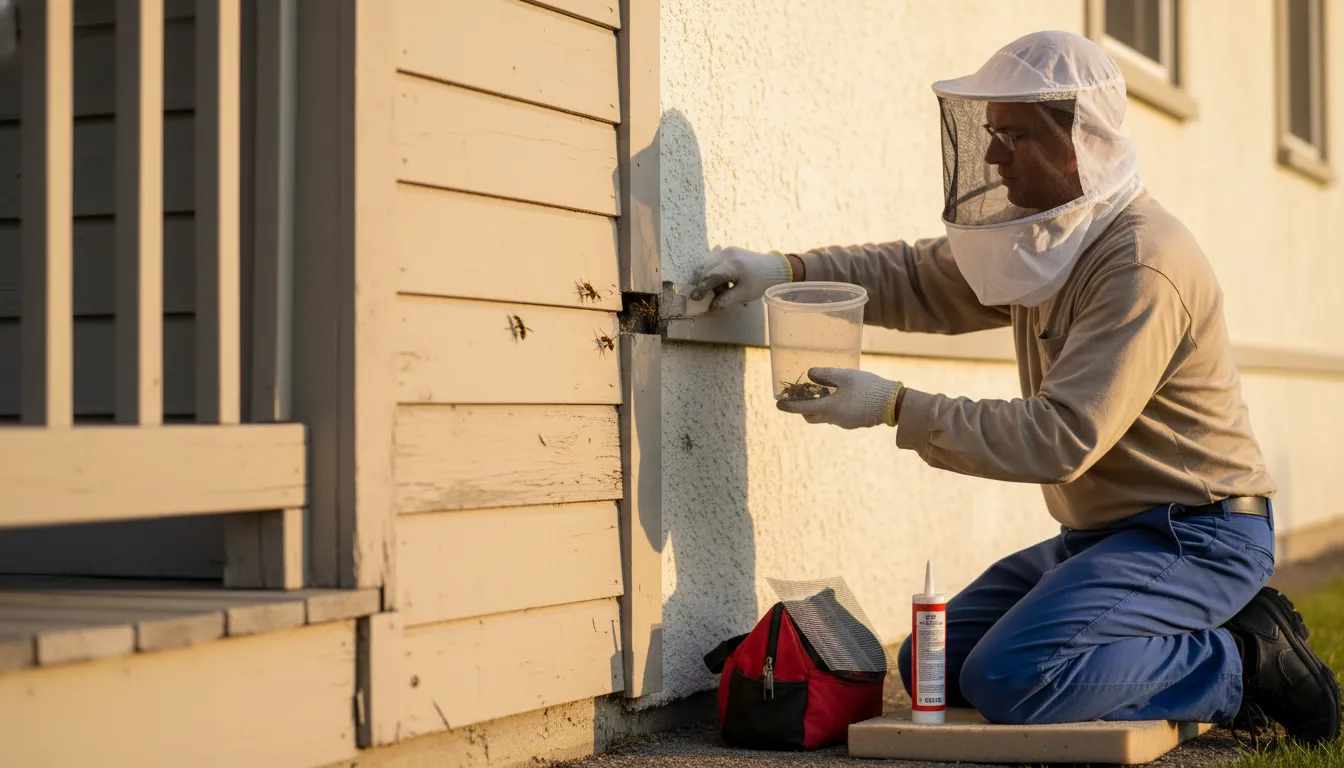
- Safety First: Licensed technicians use professional-grade protective gear, including bee suits, gloves, and veils, to safely approach and treat nests.
- Treatment and Nest Removal: The method depends on the insect.
- For wasps and hornets, technicians use targeted insecticidal treatments applied directly to the nest, often at dusk or dawn when the insects are less active and the colony is present. The nest is then physically removed 1.
- For honeybees, a live removal process may involve carefully extracting the comb and vacuuming the bees into a specialized box for transport to an apiary.
- For carpenter bees, treatment involves applying insecticidal dust or liquid into the drilled holes, followed by sealing the holes with wood putty or caulk to prevent future use 2.
- Clean-up and Follow-up: After extermination, the nest is removed to prevent other pests from being attracted to the residue. Some services may include a follow-up visit to ensure the colony has been eliminated 3.
When to Call a Professional in Tennessee
It's time to seek professional help if you observe any of the following:
- A nest larger than a fist.
- A nest in a high-traffic area (near doors, decks, mailboxes, or play sets).
- Signs of a nest inside a wall, attic, soffit, or underground (often indicated by a high volume of insects entering and exiting a small opening).
- Aggressive insect behavior.
- Identification of aggressive species like yellowjackets or hornets.
- Evidence of carpenter bee activity (sawdust piles below round holes in wooden surfaces) 4 5 6.
Seasonal Considerations for Bee and Wasp Activity
Understanding the seasonal behavior of these pests is key to effective timing for removal and prevention.
- Spring (March-May): Queens emerge from overwintering to establish new nests. Nests are small at this stage, making it the ideal time for early removal or preventive treatments before colonies grow large.
- Summer (June-August): Colonies expand rapidly, reaching peak population and aggression by late summer. This is when most removal calls occur, as nests become highly noticeable and threatening.
- Fall (September-November): New queens mate and seek sheltered spots to overwinter, while worker wasps die off. Late fall is the best time to seal potential entry points around your home to prevent queens from entering.
- Winter (December-February): Most colonies die off, except for hibernating queens. It is a safe time to remove old, vacant nests from eaves and trees. However, occasional indoor finds can happen if a queen overwintered inside a wall void 7.
Find the perfect wasp & hornet removal companies for your needs
Get personalized recommendations and expert advice
Cost of Bee and Wasp Removal in Tennessee
The cost for professional removal varies significantly based on the job's complexity. Here is a general breakdown based on industry standards 8 9 10 11:
- Small, Accessible Nests: For a single, small paper wasp nest under an eave or on a shrub, costs typically range from $100 to $300.
- Large or Hard-to-Reach Nests: For large hornet nests, yellowjacket nests in the ground or within wall voids, or nests high on a second story, prices can range from $400 to $1,300 or more. Attic or wall void infestations are more expensive due to the additional labor of accessing and decontaminating the area.
- Honeybee Hive Removal: Live removal of a honeybee colony is often more complex and can start around $500 and go higher, depending on the hive's size and location within the structure.
Always request a detailed, on-site inspection and quote from a provider before work begins.
Proactive Prevention Strategies
After removal, preventing future infestations is crucial. Professionals recommend an integrated approach:
- Seal Entry Points: Carefully inspect and seal cracks, crevices, and gaps in your home's foundation, siding, around windows and doors, and where utility lines enter. This is the most effective preventive measure.
- Manage Food and Trash: Keep trash cans and recycling bins tightly sealed with locking lids. Clean up food and drink spills immediately, especially sugary substances, from outdoor eating areas 12.
- Modify Landscaping: Trim back tree branches and overgrown shrubs so they do not touch your home's exterior. This removes bridges insects can use to access your house 13.
- Address Attractants: Repair leaky outdoor faucets and ensure downspouts direct water away from the foundation to reduce moisture. Consider removing or relocating hummingbird feeders, which can attract wasps 14.
Choosing a Qualified Service Provider in Tennessee
When searching for a bee and wasp control expert, look for:
- Proper Licensing: Ensure the company is licensed by the Tennessee Department of Agriculture for pest control.
- Insurance: Verify they carry liability insurance to protect your property.
- Experience & Specifics: Ask about their specific experience with the type of insect you have (e.g., honeybee relocation, carpenter bee treatment).
- Guarantee: Inquire if their service includes a guarantee or warranty period.
- Integrated Pest Management (IPM) Approach: Choose a company that emphasizes prevention and targeted treatment over blanket pesticide applications.
Frequently asked questions
Sources
Footnotes
-
Wasp Control | All-American Pest Control - https://www.allamericanpestcontrol.com/wasp-control ↩
-
Carpenter Bees in Tennessee - Russell's Pest Control - https://www.russellspest.com/bees-wasps-exterminators/carpenter-bees-in-tennessee/ ↩
-
Bee, Wasp, & Hornet Nest Removal | Serving Central TN - https://thebugman.us/bees-wasps-exterminators/nest-removal/ ↩
-
Bee Wasp & Hornet Nest Removal - Russell's Pest Control - https://www.russellspest.com/bees-wasps-exterminators/nest-removal/ ↩
-
Bee Wasp & Hornet Control in Mid-South TN - Inman-Murphy - https://inman-murphy.com/bees-wasps-exterminators/ ↩
-
Bee Wasp & Hornet Exterminators | Control & Removal Services - https://johnsonpestcontrol.com/bees-wasps-exterminators/ ↩
-
Wasp Prevention Is A Year-Round Job In Nashville - https://www.allamericanpestcontrol.com/wasp-prevention-is-a-year-round-job-in-nashville ↩
-
Bee and Wasp Removal: Top 2025 Effective Solutions - https://bigginsexterminating.com/bee-and-wasp-removal/ ↩
-
How Much Wasp and Hornet Removal and Treatment Costs - Terminix - https://www.terminix.com/stinging-pest-control/cost/ ↩
-
How Much Bee Removal and Treatment Costs - https://www.terminix.com/bee-control/cost/ ↩
-
How Much Bee Removal and Treatment Costs - https://www.terminix.com/bee-control/cost/ ↩
-
Wasp Nest Removal in Nashville, TN | Alta Pest Control - https://www.altapestcontrol.com/city-services/wasp-nest-removal-nashville-tn ↩
-
Year-Round Pest Control Plan for Homes in Eastern TN - https://allaboutbugstn.com/year-round-pest-control-plan-for-homes/ ↩
-
Summer is Wasp Season in Nashville, TN - PureGuard Pest Solutions - https://www.pureguardpest.com/summer-is-wasp-season-in-nashville.php ↩