
Find the Best Wasp & Hornet Removal Companies for Your Business
No obligation • Fast responses • Nationwide coverage

Why you can trust Pest Crews
Pest Crews is a leading U.S. resource for finding and evaluating residential and commercial pest control services. Our team researches providers, reviews treatment approaches, and organizes unbiased information to help you make informed decisions. Companies cannot pay to change our editorial content or influence how they appear.
Search providers near you
Top Wasp & Hornet Removal Companies in Spring Hill, Tennessee Ranked
Finding a nest of stinging insects on your Spring Hill property can be alarming. Whether it's a paper wasp nest under the eave, a ground-dwelling yellow jacket colony, or a honeybee swarm in a wall void, knowing your options for safe and effective removal is crucial. This guide covers what homeowners need to know about bee and wasp control in Spring Hill, from identifying common species and their nesting habits to understanding seasonal activity and professional removal methods. You'll find information to help you connect with local experts who can assess your specific situation and provide a solution, whether that's humane relocation for beneficial pollinators or targeted extermination for aggressive pests.
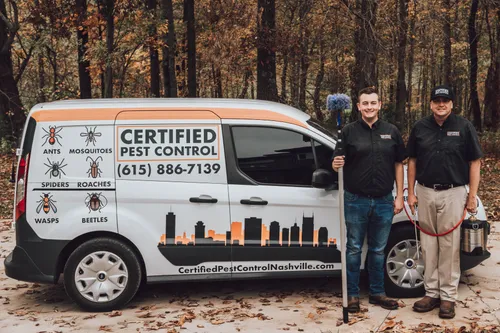
Insight Pest Solutions
5000 Linbar Dr #260, Nashville, TN 37211
Insight Pest Solutions provides comprehensive pest control services in Nashville, TN, addressing common household and commercial pests such as cockroaches, ants, rodents, termites, mosquitoes, bees, and wasps. Their approach includes thorough inspections, sealing entry points, and targeted treatments to prevent infestations and protect properties year-round. Established in 1985, the company offers specialized termite inspections and treatments, as well as outdoor mosquito control using environmentally responsible methods. Their service includes ongoing monitoring and seasonal adjustments to maintain pest-free environments.
All-American Pest Control
1585 Mallory Ln STE 201, Brentwood, TN 37027
All-American Pest Control is a family-owned pest control company serving the Nashville, TN area, including Brentwood. With over 60 years of experience since 1961, they offer year-round residential and commercial pest control services targeting a wide range of pests such as termites, ants, rodents, spiders, mosquitoes, and wasps. Their services include termite inspections, mosquito control, rodent removal, and eco-friendly pest management solutions tailored to local pest pressures. They also provide specialized capabilities like the Sentricon® Termite Colony Elimination System and seasonal pest control plans to address changing pest activity throughout the year.
EcoPro Pest Control
127 Split Rail Ln, Spring Hill, TN 37174
EcoPro Pest Control provides a range of pest management services in Nashville, TN, including bed bug treatment, cockroach and ant control, rodent management, termite inspections, mosquito control, bee and wasp removal, and wildlife removal. The company serves both residential and commercial clients, offering personalized and eco-friendly solutions. EcoPro Pest Control is family-owned and operated, with certified and insured technicians who focus on protecting homes and businesses from common pests in the area. Their services cover neighborhoods in and around Spring Hill, TN, near Nashville, and include professional insulation removal, attic restoration, and sanitation.
EcoPro Pest Control
1441 New Hwy 96 W, Franklin, TN 37064
EcoPro Pest Control is a family-owned pest control company serving Nashville, TN, and surrounding areas including Franklin, Brentwood, Spring Hill, and Columbia. They offer environmentally-friendly pest management services for homes and businesses, addressing issues such as ants, bed bugs, mosquitoes, roaches, rodents, spiders, termites, ticks, wasps, and wildlife. EcoPro Pest Control also provides repair and exclusion services to help prevent pest entry. With over 12 years of experience, the company emphasizes personalized service and uses proven methods to protect properties effectively.

EcoShield Pest Solutions
475 Metroplex Dr Suite 205, Nashville, TN 37211
EcoShield Pest Solutions is a pest control company based in Nashville, TN, offering services to manage a wide range of pests including ants, termites, mosquitoes, bed bugs, carpenter bees, mice, cockroaches, stinging insects, spiders, and ticks. They provide both residential and commercial pest control solutions with environmentally friendly methods. Their termite inspections and treatments address common local species, and their mosquito control targets seasonal populations to reduce disease risks. EcoShield emphasizes comprehensive pest elimination and prevention, including specialized services like carpenter bee removal and rodent exclusion.
Common Stinging Insects in Spring Hill
Spring Hill's environment supports a variety of bees, wasps, and hornets. Correctly identifying the insect is the first step toward a safe and appropriate resolution.
- Honeybees: These are vital pollinators, typically amber and brown with a fuzzy body. They often build wax comb nests inside sheltered cavities like wall voids, chimneys, or hollow trees 1. A large, buzzing swarm clustered on a branch or structure is usually a honeybee colony looking for a new home.
- Bumblebees: Larger and furrier than honeybees, bumblebees are generally docile. They often nest in small, ground-level cavities like abandoned rodent burrows, under piles of debris, or in compost bins.
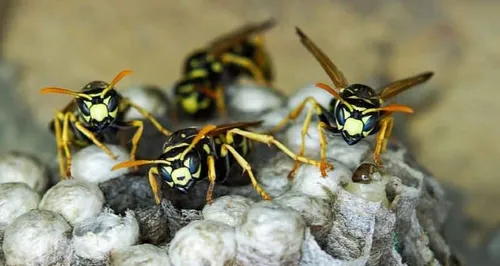
- Paper Wasps: Identified by their slender bodies and long legs that dangle in flight, paper wasps construct the classic open-celled, umbrella-shaped nests from chewed wood fibers. These nests are frequently found under porch ceilings, deck railings, window frames, and eaves.
- Yellow Jackets: These wasps have bold black and yellow markings and a more compact body than paper wasps. They can be highly aggressive, especially in late summer. They often build paper nests underground in old rodent burrows or within wall cavities and attics.
- Carpenter Bees: These look similar to bumblebees but have a shiny, hairless black abdomen. Males are territorial but cannot sting. The females bore perfectly round, half-inch diameter holes into unpainted or weathered wood (like decks, eaves, and fences) to create nesting galleries, which can cause structural damage over time.
- Bald-Faced Hornets: Actually a type of yellow jacket, these insects are black with white or ivory markings. They build large, enclosed football-shaped paper nests, often high in trees, shrubs, or on building overhangs 2.
Where to Look for Nests Around Your Home
Stinging insects are opportunistic when choosing nesting sites. Regular inspections of these common areas can help you catch a problem early 3.
- Eaves, Soffits, and Roof Overhangs: This is a prime location for paper wasps and hornets seeking shelter from rain 4.
- Wall Voids and Attics: Yellow jackets and honeybees frequently enter through small exterior cracks or vents to establish colonies in the quiet, protected spaces inside walls or attics 5.
- Garages, Sheds, and Porches: Undisturbed corners, window frames, and the underside of shelves are attractive to various wasps and bees.
- Ground Level: Check along foundation lines, in garden beds, under landscaping timbers, and in old stump holes for yellow jacket or bumblebee nests 6.
- Decks and Wooden Structures: Look for the tell-tale perfectly round holes of carpenter bees in exposed wood surfaces 7.
The Seasonal Cycle of Bees and Wasps in Tennessee
Understanding the annual life cycle of these insects explains why they appear-and become more aggressive-at certain times of the year 8.
- Spring (March-May): Overwintering queens become active and begin searching for nesting sites. This is the best time for preventative measures, as colonies are small and easier to manage. Mid-to-late spring is also peak swarm season for honeybees 9 10 11.
- Summer (June-August): Colonies expand rapidly as worker populations boom. Activity is high as insects forage for food (insects for wasps, nectar/pollen for bees). Nests grow to their largest size during this period 12.
- Late Summer & Fall (September-November): This is often when homeowners experience the most problems. Wasp and hornet colonies are at their peak population, and food sources become scarce, making them more aggressive and likely to scavenge near human activity 13 14. After the first hard frost, most workers die, and only newly mated queens seek shelter to hibernate 15.
- Winter (December-February): Activity is minimal. Some species, like yellow jacket queens, may hibernate within the insulation of attics or wall voids, which can lead to indoor sightings on warm winter days 16.
Professional Removal Methods and Considerations
When a nest poses a threat, professional intervention is the safest choice. Local Spring Hill pest control services offer different approaches based on the insect and situation.
For Wasps, Hornets, and Carpenter Bees: Most pest management companies utilize targeted extermination for these pests. A technician will typically apply a fast-acting insecticidal dust or spray directly into the nest entrance during cooler hours (dawn or dusk) when insects are less active and more likely to be inside. Follow-up visits or sealing of entry points may be included to prevent re-infestation 17.
For Honeybees: Given their critical role in the ecosystem, humane live removal is strongly recommended for honeybees 18. This specialized service involves a technician or beekeeper carefully removing the wax comb and colony, often using a vacuum device, and relocating it to an apiary. If the nest is within a wall, this process may require careful cutting of drywall to access the colony, followed by repair services. Some local beekeepers may collect accessible swarms for free, while complex removals are a paid service 19.
Find the perfect wasp & hornet removal companies for your needs
Get personalized recommendations and expert advice
Understanding Service Costs in Spring Hill
The cost for stinging insect control in Spring Hill is not one-size-fits-all. It depends on several key factors: the type of insect, the size and location of the nest, and the complexity of the removal method required 20.
| Service Type | Typical Price Range | Key Cost Factors |
|---|---|---|
| Wasp/Hornet Extermination | $100 - $400+ per nest | Height and accessibility (ground nest vs. 2nd-story eave). Species aggressiveness. Need for follow-up visits 21. |
| Honeybee Live Removal/Relocation | $100 - $700+ | Swarm collection (lower cost) vs. full hive removal from a structure. Extent of carpentry needed for wall or attic removals 22. |
| Carpenter Bee Treatment | $88 - $1,500+ | Number of nesting holes and extent of infestation. Cost of wood repair or replacement after galleries are treated 23. |
| Ongoing Pest Control Plan | ~$40 - $100 per month | Many companies include seasonal stinging insect treatments within a broader annual pest management plan, which usually starts with an initial inspection and treatment fee 24. |
For accurate pricing, it's best to contact local providers for a free, on-site inspection and a detailed quote tailored to your specific problem 25 26.
Choosing a Local Service Provider
Spring Hill residents have access to several reputable pest control companies that offer stinging insect programs 27 28. When evaluating providers, consider asking:
- Do you offer both extermination and humane bee relocation?
- Are your technicians licensed and insured for pest control in Tennessee?
- What is included in your service guarantee or warranty?
- Can you provide an itemized quote after a thorough inspection?
- Do you offer preventative treatments as part of a yearly plan?
Taking prompt, informed action with a qualified professional ensures the safety of your household and protects your property from potential damage.
Frequently asked questions
Sources
Footnotes
-
Honey bee and wasp nests: how to know the difference - https://www.honeybeesuite.com/honey-bee-and-wasp-nests-how-to-know-the-difference/ ↩
-
Are There Difference Between a Hornet Nest vs. Wasp Nest? - https://www.greenmatters.com/living/hornet-nest-vs-wasp-nest ↩
-
How To Identify Bee Nests | Types of Bee Nest - https://activepestcontrol.com/bees-wasps-exterminators/identify-bee-nests/ ↩
-
Where Do Wasps Nest? - Harris Pest Control - https://www.harrispestcontrolinc.com/blog/post/where-do-wasps-nest ↩
-
Hidden Honey Homes: Identifying & Safely Removing Bee Nests - https://spice.alibaba.com/spice-basics/hidden-honey-homes ↩
-
Bee Control Knoxville, TN - https://www.pestops.com/bee-and-wasps/ ↩
-
What Hive Is It?: Identifying Bee and Wasp Nests - Groundworks - https://www.groundworks.com/resources/what-hive-is-it/ ↩
-
Are Bugs Worse In The Summer Or The Winter? - https://championspest.com/are-bugs-worse-in-the-summer-or-the-winter/ ↩
-
How To Identify & Get Rid Of Bees and Wasps in East TN - https://www.pestops.com/pest-library/bees-and-wasps/ ↩
-
How to Prepare For Wasps in Spring: Tips to Remember - https://www.allamericanpestcontrol.com/blog/post/how-to-prepare-for-wasps-in-spring ↩
-
Honey Bee Swarms - TN Department of Agriculture - https://www.tn.gov/agriculture/animals/apiary/honey-bee-swarms.html ↩
-
Summer is Wasp Season in Nashville, TN - https://www.pureguardpest.com/summer-is-wasp-season-in-nashville.php ↩
-
Wasps In Tennessee Are Still Active During The Fall - https://www.allamericanpestcontrol.com/blog/post/wasps-in-tennessee-are-still-active-during-the-fall ↩
-
Why Bees, Wasps, and Hornets Are So Active in August and ... - https://www.actionpestcontrol.com/2024/08/21/why-bees-wasps-and-hornets-are-so-active-in-august-and-september/ ↩
-
The reproductive cycle of red wasps begins in the Spring ... - https://www.facebook.com/u.s.pest/videos/reproductive-cycle-of-red-wasps/452326627252282/ ↩
-
Summer Sting Season: Expert Wasp Control Near You Keeps Northern Virginia Families Safe - https://mypestpros.com/pest-control-tips/summer-sting-season-expert-wasp-control-near-you-keeps-northern-virginia-families-safe/ ↩
-
Stinging Insect Control-Bees, Wasps & Hornets - Urbanex - https://www.urbanexpro.com/bee-wasp-control/ ↩
-
Why Choose Live Beehive Removal? - https://lawnlove.com/blog/why-choose-live-beehive-removal/ ↩
-
Bee Control Help & Prevention Tips - https://www.corkyspest.com/bee-control-service-help-us-help-you/ ↩
-
How Much Does Bee Removal Cost? [2026 Data] | Angi - https://www.angi.com/articles/how-much-does-bee-removal-cost.htm ↩
-
Wasp Nest Removal Cost [2025 Data] | Angi - https://www.angi.com/articles/how-much-does-wasp-removal-cost.htm ↩
-
How Much Does Beehive Removal Cost in 2026? - Lawn Love - https://lawnlove.com/blog/beehive-removal-cost/ ↩
-
Bee or Wasp Removal Cost - https://usalivebeeremoval.com/bee-or-wasp-removal-cost/ ↩
-
How Much Does Terminix Cost? (2025) - HomeGuide - https://homeguide.com/costs/terminix-prices ↩
-
Professional Pest Control in Spring Hill, TN | Waynes - https://callwaynes.com/tennessee/spring-hill-pest-control/ ↩
-
EcoPro Pest Control - https://www.google.com/viewer/place?mid=/g/11snh_5vz6 ↩
-
TOP 10 BEST Bug Exterminators near Spring Hill, TN - Updated 2026 - https://m.yelp.com/search?find_desc=Bug+Exterminators&find_loc=Spring+Hill%2C+TN ↩
-
Pest Control in Springhill Tennessee - https://jamespestmanagement.com/springhill-tn/ ↩