
Find the Best Bird & Pigeon Control Companies for Your Business
No obligation • Fast responses • Nationwide coverage
Why you can trust Pest Crews
Pest Crews is a leading U.S. resource for finding and evaluating residential and commercial pest control services. Our team researches providers, reviews treatment approaches, and organizes unbiased information to help you make informed decisions. Companies cannot pay to change our editorial content or influence how they appear.
Search providers near you
Top Bird & Pigeon Control Companies in Tigard, Oregon Ranked
Dealing with nuisance birds like pigeons, starlings, or sparrows is a common challenge for property owners in Tigard. These birds can cause significant damage to structures, create unsanitary conditions with their droppings, and become a persistent annoyance. Effective bird and pigeon management involves a strategic combination of humane deterrents, physical barriers, and habitat modification tailored to your specific property. This guide will help you understand the local solutions available, from residential DIY tips to comprehensive commercial plans, so you can find the right approach to protect your home or business.
Pest Plus LLC
Portland, OR
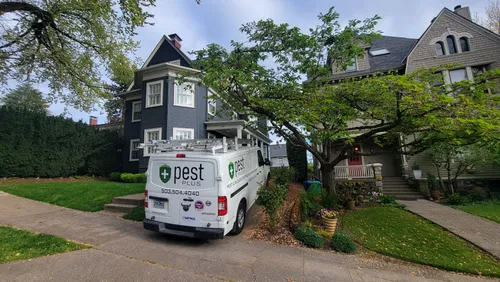
Pest Plus LLC is a locally owned pest control company serving the Portland, OR metro area and surrounding regions. They provide custom pest management solutions for residential, commercial, and industrial clients. Their services include thorough inspections, advanced exclusion repairs, crawlspace and attic restorations, sanitation services, and solar panel exclusions. Pest Plus specializes in wildlife removal, rodent control, ant control, bee and wasp removal, and bird and pigeon control. The company emphasizes tailored strategies and offers flexible service programs without long-term contracts to meet customer needs.
Pointe Pest Control - Vancouver
5900 NE 152nd Ave Bldg B #250, Vancouver, WA 98682
Pointe Pest Control - Vancouver provides pest control and wildlife removal services in Portland, OR. They handle infestations of rodents, ants, cockroaches, bed bugs, bees, wasps, pigeons, and other pests. Their technicians are experienced in identifying vulnerable areas of homes and managing infestations ranging from moderate to advanced. Pointe Pest Control has extensive knowledge of pest behavior and control methods to address a variety of pest problems effectively.
Sprague Pest Solutions
9106 NE Marx Dr, Portland, OR 97220
Sprague Pest Solutions is a family-owned commercial pest control company based in Portland, OR. They provide comprehensive pest management services including rodent and insect control, bed bug inspections, bird exclusion, mosquito abatement, termite baiting, and fumigation alternatives. Their approach uses advanced, science-based solutions tailored to each business, supported by online reporting and communication tools to ensure compliance and audit readiness. Sprague Pest Solutions has over 20 years of experience and offers 24/7 client access through a web portal for alerts and billing.

Wayfare Pest Solutions
4817 NW Fruit Valley Rd #500, Vancouver, WA 98660
Wayfare Pest Solutions is a pest control company serving Portland, OR, and nearby areas. They offer a wide range of pest management services including ant, rodent, roach, wasp, bird, and wildlife removal. The company specializes in humane exclusion and repair services to prevent re-entry of pests. With over 13 years of experience, Wayfare Pest Solutions combines integrated pest management techniques to provide effective and environmentally conscious solutions.

Orkin
9130 SW Pioneer Ct D, Wilsonville, OR 97070
Orkin provides pest control services in Portland, OR, specializing in residential and commercial pest management. Their services cover a wide range of pests including cockroaches, ants, rodents, termites, mosquitoes, bees, wasps, and birds. Orkin offers termite inspections and treatments using methods such as liquid barriers, Sentricon® bait, and dry foam void filler. With over 120 years in business, Orkin supports customers with year-round pest control plans tailored to seasonal pest activity. The company also offers 24/7 availability for pest control needs in the Portland area.
Why Bird Control is Essential in Tigard
Birds, particularly pigeons, are attracted to urban and suburban areas like Tigard for the abundant shelter and food sources. While they are a part of the local ecosystem, their presence on buildings can lead to clogged gutters, damaged roofing materials, and corrosive droppings that deface property and pose slip hazards 1. Furthermore, accumulated droppings can harbor fungi and pathogens, creating potential health risks. Implementing a bird management strategy is not about harming wildlife but about humanely encouraging them to nest and roost elsewhere, preserving both your property's integrity and the birds' well-being.
Common Problem Areas on Tigard Properties
Understanding where birds like to roost is the first step in controlling them. In the Tigard area, services typically focus on these key zones:
- Rooftops & Architectural Ledges: Flat roofs, parapet walls, building corners, and window sills provide ideal, sheltered landing spots.
- Signage & Lighting: The tops of commercial signs and the supports for exterior lights are prime perching locations.
- HVAC Units & Vents: The warmth and shelter around rooftop HVAC systems and vent openings are highly attractive to birds seeking nesting sites.
- Eaves & Soffits: The overhangs on homes and commercial buildings offer protection from the elements.
- Warehouses & Loading Docks: Large, open structures with high rafters and open doors are particularly susceptible to swallows, starlings, and pigeons.
Humane Bird Deterrent Methods and Solutions
Modern bird abatement focuses on effective, long-term, and humane solutions. Local professionals often recommend and install a combination of the following methods, chosen based on the bird species, the building's architecture, and the severity of the problem.
Physical Exclusion and Barriers
This is often the most permanent and effective strategy, physically preventing birds from accessing preferred areas.
- Bird Netting: Heavy-duty polyethylene netting is used to block off large areas like building facades, overhangs, courtyards, or entire rooftops. It's a common solution for warehouses, retail centers, and apartment complexes in Tigard.
- Bird Spikes: Stainless steel or polycarbonate spikes can be installed on ledges, signs, beams, and other narrow surfaces to prevent birds from landing. They are a low-profile, highly effective deterrent for ledges and sills.
- Bird Wire Systems: Nearly invisible tensioned wire systems create an unstable landing zone on ledges and beams. They are a discreet option for historical or aesthetic-sensitive buildings.
- Electric Track Systems: These low-profile tracks deliver a mild, harmless shock to birds that land on them, conditioning them to avoid the area. They are effective on parapet walls, roof peaks, and signage.
Sensory and Visual Deterrents
These solutions aim to make an area unpleasant or frightening to birds through sight, touch, or smell.
- Bird Gel: A non-toxic, sticky gel applied to ledges creates an unpleasant footing for birds. Some gels also have visual properties that disturb birds.
- Ultrasonic Devices: Emit high-frequency sounds that are disturbing to birds but generally inaudible to humans. Effectiveness can vary and may be best used in enclosed spaces.
- Hazing and Fogging: Devices that disperse a food-grade, non-toxic fog (often made from grape seed oil) can create a visual barrier and sensory discomfort, encouraging birds to leave large open areas like patios or loading docks.
Habitat Modification and Sanitation
The most fundamental step is to make your property less attractive to pest birds.
- Seal Entry Points: Close off gaps in eaves, soffits, roof vents, and other openings where birds can enter to nest 2.
- Remove Food Sources: Secure garbage bins, clean up outdoor eating areas, and manage compost piles. For residential properties, consider using bird feeders designed to exclude larger birds like pigeons.
- Regular Cleanup: Safely removing existing droppings and nesting materials eliminates the scents that attract more birds and is crucial for health and safety.
Active Population Management
For established, large flocks, more active measures may be incorporated into a management plan.
- Trapping and Relocation: Licensed professionals can use live traps to capture and humanely relocate birds, often as part of a larger exclusion project.
- Avian Birth Control: For pigeon populations, a product like OvoControl can be administered as a treated feed. It is non-lethal and reduces hatch rates over time, gradually lowering the population 3.
Find the perfect bird & pigeon control companies for your needs
Get personalized recommendations and expert advice
Residential vs. Commercial Bird Control Needs
The scale and approach to bird management differ significantly between a Tigard home and a commercial property.
For Residential Properties: The focus is often on specific, smaller trouble spots. A homeowner might use spike strips on a chimney cap, install netting over a patio, or use visual deterrents like reflective tape. DIY options, such as sealing cracks or using certain scent deterrents (e.g., peppermint oil), can be attempted for minor issues 4. However, for persistent problems or to protect against damage, consulting a local professional for a custom solution like a properly installed ledge deterrent is often the most effective long-term investment.
For Commercial Properties: Warehouses, office buildings, shopping centers, and apartment complexes require comprehensive, custom plans. A commercial solution often combines multiple methods-for example, netting for large open rafters, spikes for perimeter ledges, and electric tracks on signage. These projects require expertise in accessing high structures, understanding building codes, and implementing solutions that are both effective and durable for the long term 5 6. Local Tigard-area services specialize in creating these integrated plans.
Understanding Investment and Service Options
The cost for bird management in Tigard varies widely based on the property size, methods chosen, and complexity of the installation. Most reputable services begin with a thorough inspection to assess the problem and provide a customized quote.
- Spike Systems: Installation can range from $5 to $15 per linear foot, depending on material and ledge accessibility.
- Exclusion Netting: For large-area netting installations, costs can range from $10 to $30+ per square foot, influenced by the height and complexity of the structure 7 8.
- Electric Track Systems: These are typically a higher-end solution, with installed costs often starting at $20 to $40 per linear foot 9.
- Professional Service Fees: An initial inspection and consultation may have a fee, and larger commercial projects are typically priced as a complete project. Many companies also offer maintenance plans to ensure deterrents remain effective over time.
Local providers, such as those serving the greater Portland metro area, bring specific knowledge of the bird species common to Tigard and the regional architecture, which is vital for designing an effective, humane, and lasting solution 10.
Frequently asked questions
Sources
Footnotes
-
Top 5 West Coast nuisance birds | Western Exterminator - https://www.westernexterminator.com/blog/birds/top-5-west-coast-nuisance-birds ↩
-
How To Keep Birds Away From Your House - State Farm® - https://www.statefarm.com/simple-insights/residence/how-to-keep-birds-out-of-my-yard ↩
-
How to Get Rid of Pigeons: Overview of All Available Solutions - https://www.ovocontrol.com/how-to-get-rid-of-pigeons ↩
-
Smells Pigeons and birds Dislike: Natural Deterrents - Aviaway - https://www.aviaway.com/single-post/smells-pigeons-dislike-natural-deterrents-smell ↩
-
Effective Bird Management Strategies for Commercial Properties - https://www.clarkpest.com/commercial-service-blog/protecting-your-facility-effective-bird-management ↩
-
Bird Control for Warehouses - https://www.birdbgone.com/bird-problem/warehouse-bird-control/ ↩
-
Commercial Bird Control Services - https://www.crittercontrol.com/services/bird-control/ ↩
-
How to Keep Birds Off Your Property | Gregory Pest Solutions - https://www.smarterpestcontrol.com/blog/residential-pest-control/how-to-manage-bird-populations-on-your-property ↩
-
Best Bird Deterrents: Buyers Guide For 2024 - Avian Enterprises - https://aviancontrolinc.com/best-bird-deterrents/ ↩
-
Bird Control Service - Portland - EcoCare Pest Control - https://www.ecocarepestcontrol.com/bird-control-service-portland/ ↩