Find the Best Commercial Pest Control Companies for Your Business
No obligation • Fast responses • Nationwide coverage

Why you can trust Pest Crews
Pest Crews is a leading U.S. resource for finding and evaluating residential and commercial pest control services. Our team researches providers, reviews treatment approaches, and organizes unbiased information to help you make informed decisions. Companies cannot pay to change our editorial content or influence how they appear.
Search providers near you
Top Commercial Pest Control Companies in Tempe, Arizona Ranked
Protecting your business from pests is a critical component of maintaining a safe, compliant, and reputable operation. Commercial pest management goes beyond simple spraying; it's a strategic, ongoing partnership designed to prevent infestations that can damage property, contaminate products, and harm your brand. This resource is designed to help you understand the specialized services available in Tempe, from inspection and prevention to treatment and monitoring, so you can connect with local professionals equipped to handle your specific business needs.

Urban Desert Pest Control
2501 W Behrend Dr Ste C-37, Phoenix, AZ 85027
Urban Desert Pest Control is a family-owned pest control company based in Phoenix, AZ, with over 21 years of experience. They specialize in controlling a variety of pests including cockroaches, rodents, termites, and scorpions, offering services for both residential and commercial properties. Their licensed technicians use targeted, family- and pet-friendly treatments suited to the unique desert environment. Urban Desert Pest Control provides next-day service for urgent infestations and offers both one-time clean-outs and ongoing maintenance plans.

Insectek Pest Solutions
1720 E Robin Ln Unit 3, Phoenix, AZ 85024
Insectek Pest Solutions is a family-owned pest control company based in Phoenix, AZ. With over 20 years of experience, they provide integrated pest management services for residential and commercial clients throughout Maricopa County. Their offerings include cockroach, ant, and rodent control using EPA-approved and organic products. Insectek also features a 365 Pest Prevention Program with flexible treatment schedules to help prevent future pest issues. The company focuses on protecting homes and businesses from pests that can cause health code violations and damage reputations.
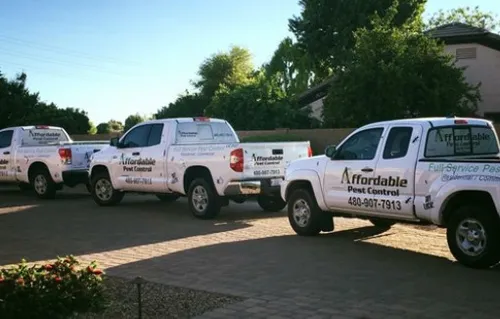
Affordable Pest Control
2769 Combs Rd, San Tan Valley, AZ 85140
Affordable Pest Control is a pest control company based in San Tan Valley, serving Chandler, AZ, and the East Valley area. They specialize in pest control, termite treatments, and weed management for both residential and commercial properties. With over 10 years of experience since 2013, they offer various service plans including one-time treatments and recurring pest control programs. Their expertise includes comprehensive termite inspections and treatments to protect properties from common Arizona pests.

Busy Bee Pest Solutions
14819 N Cave Creek Rd Suite 2, Phoenix, AZ 85032
Busy Bee Pest Solutions is a pest control company based in Phoenix, AZ, specializing in humane bee and rodent removal. They provide services across the Phoenix metro area and Maricopa County, including live bee relocation, wasp and hornet nest removal, and rodent exclusion with sealing and sanitation. Their team uses advanced detection and exclusion technology such as thermal inspections and custom rodent-proofing to address infestations effectively. Busy Bee Pest Solutions has served over 5,000 homeowners with a focus on tailored solutions and same-day service when available.
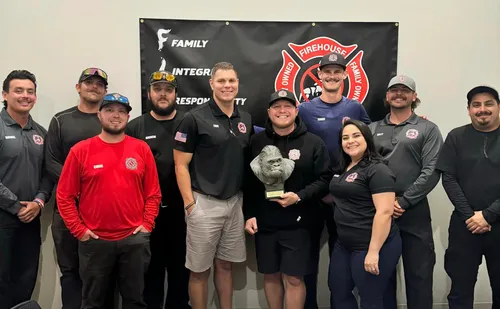
Firehouse Pest Control Services
1090 S Gilbert Rd, Gilbert, AZ 85296
Firehouse Pest Control Services is a pest control company based in Phoenix, AZ, offering treatments for termites, scorpions, bed bugs, ants, cockroaches, and other pests. They serve residential and commercial clients across the Greater Phoenix area, including Scottsdale, Mesa, and Gilbert. The company provides both internal and external pest treatments, including perimeter sprays and dust applications to prevent pest entry. Firehouse Pest Control has been operating for over five years and uses natural-based, child- and pet-friendly products. They also offer termite inspections and have become a trusted subcontractor for termite services among other pest control companies.
What is Commercial Pest Management?
Commercial pest control, often referred to as business or industrial pest management, is a professional service tailored to the unique challenges and regulatory requirements of non-residential properties. Unlike one-off residential treatments, commercial services are built on a foundation of prevention, ongoing monitoring, and detailed documentation. This is essential for businesses like restaurants, hotels, offices, warehouses, and healthcare facilities in Tempe, where a single pest sighting can have serious consequences for health inspections, customer trust, and employee safety. The goal is to implement a sustainable system that manages pest populations at acceptable levels with minimal risk.
The Core Approach: Integrated Pest Management (IPM)
The industry standard for effective commercial pest elimination is Integrated Pest Management (IPM). This is a sustainable, science-based strategy that emphasizes long-term prevention through a combination of techniques 1. IPM focuses on understanding the life cycle of pests and their interaction with the environment to manage them with the least possible hazard to people, property, and the environment. For a Tempe business, this means solutions are smarter, more targeted, and often use fewer chemicals than conventional methods. The principles of IPM form the backbone of a professional commercial service plan.
The Four Steps of an IPM Program
A professional commercial pest management program in Tempe typically follows a structured IPM cycle:
- Inspection and Pest Identification: The process always begins with a thorough inspection. A technician will identify the specific pest (e.g., German cockroaches, Pharaoh ants, roof rats, or scorpions), locate active harborage areas, and map potential entry points like utility penetrations, cracks, and gaps 2 3. This step includes a risk assessment to understand the potential impact on your staff, customers, and operations.
- Prevention: Before any treatment occurs, the focus shifts to making your property less attractive to pests. This involves cultural and physical controls, such as recommending improvements in sanitation, proper food storage, waste management, and sealing structural gaps 4. Preventing access is often more effective and longer-lasting than repeatedly treating an ongoing problem.
- Targeted Intervention: When action is needed, the most specific, low-risk methods are used first. This may include mechanical traps, insect monitoring stations, or baiting systems. Chemical controls are used selectively and strategically-applied in cracks, crevices, or bait stations-rather than as a broad spray, to target pests while minimizing exposure 5 6.
- Monitoring and Documentation: A commercial contract is defined by ongoing vigilance. Your provider will schedule regular visits (e.g., monthly, bi-monthly, or quarterly) to inspect monitoring devices, assess activity, and adjust the plan as needed. Detailed service reports are provided, documenting findings, actions taken, and recommendations for your facility, which is crucial for audit trails and health code compliance.
Common Commercial Pest Control Services in Tempe
Tempe businesses face a distinct set of pest challenges due to the urban environment and Arizona climate. Local commercial exterminators offer a range of services to address these issues.
- Ongoing Service Plans: The most common arrangement for businesses is a scheduled service plan. These provide regular inspections and preventative treatments on a recurring basis-monthly, bi-monthly, or quarterly-to maintain a protective barrier and catch problems early 7.
- One-Time or Corrective Services: For addressing an acute, isolated infestation, such as a sudden influx of ants or a rodent sighting, providers offer one-time corrective treatments.
- Specialized Pest Treatments: Certain pests require specific protocols. Tempe providers offer dedicated solutions for:
- Termite Control & Prevention: Including soil treatments, baiting systems, and wood treatments for destructive subterranean termites.
- Rodent Management: Implementing comprehensive exclusion (sealing entry points), trap lines, and rodenticide bait stations in secure tamper-resistant boxes.
- Stinging Insect Control: Safe removal of wasp, hornet, or bee nests from business premises.
- Bed Bug Services: Utilizing heat treatments, targeted insecticides, and canine inspections for hotels, multi-family housing, and offices.
- Scorpion & Spider Control: Focused exterior barrier treatments and exclusion tactics common in the Arizona desert.
Find the perfect commercial pest control companies for your needs
Get personalized recommendations and expert advice
Key Factors Influencing Service and Cost for Tempe Businesses
Understanding what goes into a commercial pest management plan helps in evaluating providers and their quotes. Pricing is highly variable and customized, but several core factors influence the scope and cost of service 8.
- Type of Business & Industry Regulations: A restaurant or food processing facility has vastly different requirements (and scrutiny) than a retail shop or office building. Compliance with health codes (like the Maricopa County Environmental Services Code) dictates specific treatment protocols and documentation.
- Property Size & Complexity: The square footage, number of buildings, presence of a warehouse or kitchen, and architectural complexity all affect the time and materials required for a proper service.
- Pest Pressure & Type: The specific pest problem is a major cost driver. A preventative plan for occasional ants will cost less than an eradication program for a widespread cockroach infestation or a termite treatment plan. Pests like scorpions or bed bugs often require more intensive, and therefore more expensive, methods.
- Service Frequency: How often a technician visits-monthly, every other month, or quarterly-directly impacts the annual cost. Higher-frequency plans offer more consistent protection and quicker response to issues.
- Location within Tempe: Proximity to canals, open desert, or densely packed urban areas can influence local pest pressure and may be a minor factor in pricing.
While it's difficult to pin down exact figures without an inspection, starting costs for basic, recurring commercial pest control services in the Tempe area can often range from approximately $75 to $200+ per service visit for a standard-sized business on a bi-monthly or quarterly plan 9 10. The most accurate way to determine cost is to obtain a customized quote based on an on-site inspection of your specific property.
Creating a Partnership with Your Pest Management Provider
A successful commercial pest management program is a collaborative effort. Your provider brings expertise and tools, but your daily operations play a crucial role. Be prepared to discuss your business hours, any past pest issues, and specific concerns. After the initial service, maintain open communication, promptly address sanitation or exclusion recommendations provided in your service reports, and report any new pest sightings immediately. This partnership ensures your IPM program remains effective and adaptive, keeping your Tempe business protected year-round.
Frequently asked questions
Sources
Footnotes
-
Integrated Pest Management (IPM) Principles | US EPA - https://www.epa.gov/safepestcontrol/integrated-pest-management-ipm-principles ↩
-
Integrated Pest Management - https://www.invasivespeciesinfo.gov/subject/integrated-pest-management ↩
-
Household Pest Control - Oklahoma State University Extension - https://extension.okstate.edu/fact-sheets/household-pest-control.html ↩
-
Unit 1: Principles of Pest Control - CTAHR.hawaii.edu - https://cms.ctahr.hawaii.edu/epp/Education/Study-Guide-Packets/APC-Core/APC-Unit1 ↩
-
Integrated Pest Management (IPM): A Sustainable Approach to Pest ... - https://hgic.clemson.edu/factsheet/iintegrated-pest-management-ipm-a-sustainable-approach-to-pest-management/ ↩
-
Do's and Don'ts of Pest Control | US EPA - https://www.epa.gov/safepestcontrol/dos-and-donts-pest-control ↩
-
3 Principles of Integrated Pest Management (IPM) | Aberdeen, NC - https://www.naturesselect.com/blog/3-principles-of-integrated-pest-management-ipm/ ↩
-
Important Components of a Successful Pest Management Program | USU - https://extension.usu.edu/planthealth/research/sucessful-pest-managment-program ↩
-
Pest Control Tempe AZ | Affordable Pest Control - https://affordablepestservice.com/pest-control-tempe-az/ ↩
-
Pest Control in Tempe, AZ: Termites, Bed Bugs, Rodents ... - https://atomicpestcontrol.com/locations/pest-control-tempe-az ↩