Find the Best Commercial Pest Control Companies for Your Business
No obligation • Fast responses • Nationwide coverage

Why you can trust Pest Crews
Pest Crews is a leading U.S. resource for finding and evaluating residential and commercial pest control services. Our team researches providers, reviews treatment approaches, and organizes unbiased information to help you make informed decisions. Companies cannot pay to change our editorial content or influence how they appear.
Search providers near you
Top Commercial Pest Control Companies in Tigard, Oregon Ranked
For any business in Tigard, from bustling restaurants and retail stores to quiet office parks and industrial warehouses, maintaining a pest-free environment is non-negotiable. Commercial pest management is a specialized service designed to protect your property, inventory, reputation, and compliance with health codes from the threats posed by rodents, insects, and other pests. This isn't just about reacting to an infestation; it's about implementing a proactive, strategic defense. Here, you can find detailed information on what modern commercial pest control entails and connect with local experts who can develop a customized protection plan for your specific business needs.

Aspen Pest Control Vancouver
12104 NE 95th St, Vancouver, WA 98682
Aspen Pest Control Vancouver is a local pest control company serving Portland, OR, and nearby areas. They provide residential and commercial pest control services, including treatments for rodents and spiders. Aspen Pest Control started as a small team in Vancouver, Washington, and has expanded to serve multiple communities in both Washington and Oregon. The company offers tailored pest control plans with options for one-time or ongoing monthly service and provides same-day service to address pest issues promptly.

Aspen Pest Control Portland
8305 SE Monterey Ave suite 220 q, Happy Valley, OR 97086
Aspen Pest Control Portland is a local pest control company serving Portland, OR, and nearby areas. They provide residential and commercial pest control services, including rodent control and spider treatments. Aspen Pest Control offers tailored solutions for one-time or ongoing service and emphasizes same-day service to address pest issues promptly. The company started as a small team in Vancouver, Washington, and has expanded to serve multiple locations in Oregon and Washington.
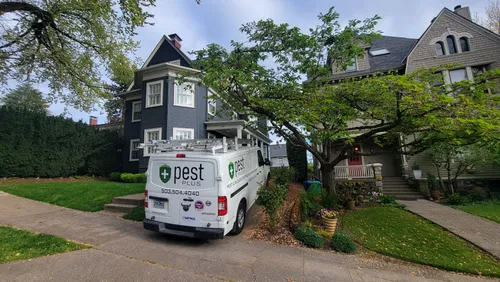
Pest Plus LLC
Portland, OR
Pest Plus LLC is a locally owned pest control company serving the Portland, OR metro area and surrounding regions. They provide custom pest management solutions for residential, commercial, and industrial clients. Their services include thorough inspections, advanced exclusion repairs, crawlspace and attic restorations, sanitation services, and solar panel exclusions. Pest Plus specializes in wildlife removal, rodent control, ant control, bee and wasp removal, and bird and pigeon control. The company emphasizes tailored strategies and offers flexible service programs without long-term contracts to meet customer needs.

PURCOR Pest Solutions
6103 NE St James Rd, Vancouver, WA 98663
PURCOR Pest Solutions is a pest control company serving Portland, OR, offering both residential and commercial pest management services. They provide comprehensive solutions including crawlspace treatments to keep homes and businesses free from pests. PURCOR emphasizes environmentally responsible practices and works to minimize their impact on the environment while maintaining effective pest control. The company is also involved in community support and education, collaborating with healthcare professionals to promote public health through pest management.
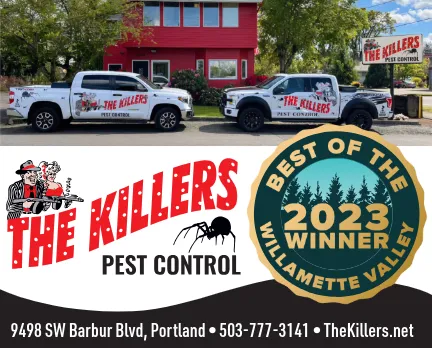
The Killers Pest Control
9498 SW Barbur Blvd Suite 312, Portland, OR 97219
The Killers Pest Control is a locally-owned pest management company serving Portland, OR. Founded in 1982, they provide a wide range of pest control services including bed bug treatment, termite inspections with Certified Sentricon Specialist® expertise, rodent control, and bee and wasp removal. The company addresses both residential and commercial pest issues with tailored inspections, treatments, and preventive measures to manage infestations effectively. Their service area covers many neighborhoods throughout Portland, ensuring local knowledge and customized solutions for the community.
What is Modern Commercial Pest Management?
Gone are the days when pest control for businesses meant a technician showing up to spray chemicals and leave. Today's standard, especially among leading providers in the Tigard area, is Integrated Pest Management (IPM). IPM is a holistic, science-based approach that focuses on long-term prevention and uses a combination of techniques with the least possible hazard to people, property, and the environment 1. For a commercial property, this means moving beyond simple extermination to create a sustainable, pest-resistant operation. It's a partnership between the business owner and the pest management professional, centered on inspection, identification, prevention, and monitoring.
The Core Steps of an IPM Program
A comprehensive commercial pest management program in Tigard typically follows a structured IPM process. This systematic approach ensures nothing is overlooked and that solutions are effective and lasting.
1. Thorough Inspection and Pest Identification
Every effective plan starts with a detailed inspection. A certified technician will examine your property inside and out to determine the type of pest (e.g., rodents, ants, cockroaches, stored product pests), assess the extent of the infestation, and identify the conditions that are attracting and sustaining them. This critical first step informs every action that follows.
2. Locating and Sealing Entry Points (Exclusion)
Pests need a way in. A key component of commercial IPM is exclusion-the physical sealing of cracks, gaps, utility penetrations, and other hidden access points that pests use to enter a building. This might involve using caulk, steel wool, door sweeps, or screens. By making your building less accessible, you address the problem at its source, reducing reliance on other control methods.
3. Addressing Attractants (Sanitation and Habitat Modification)
Pests are drawn to food, water, and shelter. Technicians will provide customized sanitation recommendations and advice on habitat modification 2. This could include guidance on proper trash management, food storage protocols, fixing leaks to eliminate moisture, and managing landscaping or clutter around the building's perimeter that can harbor pests 2. By removing these attractants, you make your property inherently less inviting.
4. Implementing Targeted Control Methods
When active pests are present, control measures are deployed. IPM prioritizes non-chemical methods first, such as mechanical traps, sticky boards, or physical removal 3. If necessary, targeted, often eco-friendly, pesticides are used in a precise manner-like gels and baits placed in specific, out-of-the-way locations-rather than broad, indiscriminate spraying. The goal is to eliminate the current population with minimal environmental impact.
Find the perfect commercial pest control companies for your needs
Get personalized recommendations and expert advice
Common Pest Control Strategies for Tigard Businesses
The specific tactics used will vary based on your business type and the pests present. Here's a look at common strategies deployed by local commercial pest control providers:
- For Rodent Control: This often involves a combination of exclusion work to seal entry points, interior and exterior trapping programs, and the strategic placement of tamper-resistant bait stations in accordance with safety regulations.
- For Insect Control (Ants, Cockroaches, Flies): Treatment focuses on finding and eliminating nests and colonies, using baiting systems that insects carry back to their source, applying residual insecticides in key zones, and crucially, implementing the sanitation practices that deprive them of sustenance 4.
- For Ongoing Prevention: The most successful businesses treat pest control as a continuous process. This involves regular monitoring with placed devices, scheduled re-inspections, and maintaining the exclusion and sanitation standards established at the outset.
Understanding Service Plans and Investment
Commercial pest control is typically offered through ongoing service plans, which provide consistent protection and peace of mind. Most local companies will begin with a free inspection to assess your needs before providing a quote.
- Service Plan Options: Common structures include monthly, quarterly, or as-needed plans 5. A quarterly plan is a popular choice for many Tigard businesses, offering regular preventative maintenance and monitoring that can catch potential issues early 5.
- Pricing Factors: The investment for commercial pest management varies. It is customized based on several key factors: the size and type of your property (a restaurant vs. a warehouse), the specific pest pressures identified, the severity of any existing infestation, and the scope of the chosen service plan (monthly vs. quarterly) 6. Providers work to create an effective plan that fits your operational budget.
What to Expect from a Local Tigard Provider
When you engage a professional commercial pest control company in Tigard, you should expect a consultative partnership. The process will start with a comprehensive inspection of your facility. The expert will then explain their findings and propose a customized IPM plan that uses a mix of exclusion, sanitation advice, and targeted treatments-not just blanket spraying-to manage pests sustainably 7 8 9. They should provide clear documentation of their service visits, findings, and actions taken. Ongoing monitoring and communication are hallmarks of a quality provider, ensuring your business remains protected in the long term 7.
Frequently asked questions
Sources
Footnotes
-
Integrated Pest Management (IPM) Principles | US EPA - https://www.epa.gov/safepestcontrol/integrated-pest-management-ipm-principles ↩
-
Do's and Don'ts of Pest Control | US EPA - https://www.epa.gov/safepestcontrol/dos-and-donts-pest-control ↩ ↩2
-
Unit 1: Principles of Pest Control - CTAHR.hawaii.edu - https://cms.ctahr.hawaii.edu/epp/Education/Study-Guide-Packets/APC-Core/APC-Unit1 ↩
-
Effective Pest Control Methods: Best Practices & Strategies - FieldRoutes - https://www.fieldroutes.com/blog/pest-control-methods ↩
-
Tigard Quarterly Pest Control - https://primepestsolutions.com/tigard-pest-solutions/tigard-quarterly-pest-control/ ↩ ↩2
-
Commercial Pest Control Treatment Services - https://www.integrity-pestsolutions.com/commercial-pest-control-treatment-plans ↩
-
Tigard Pest Control Preventative Maintenance 5-Stars on ... - https://morganspestmanagement.com/areas-we-serve/pest-control-tigard/ ↩ ↩2
-
Commercial Pest Control Tigard, OR | Tough Bug Solutions - https://toughbugsolutions.com/commercial-pest-control/ ↩
-
Commercial Pest Control in Tigard, OR - Top-Rated ... - https://antsrodentstigard.com/commercial-pest-control/ ↩