Find the Best Rat & Mice Control Companies for Your Business
No obligation • Fast responses • Nationwide coverage

Why you can trust Pest Crews
Pest Crews is a leading U.S. resource for finding and evaluating residential and commercial pest control services. Our team researches providers, reviews treatment approaches, and organizes unbiased information to help you make informed decisions. Companies cannot pay to change our editorial content or influence how they appear.
Search providers near you
Best Rat & Mice Control Companies in Maine Ranked
Rodent infestations are a common and serious concern for Maine homeowners and business owners. Mice and rats seek shelter, food, and water, especially during the state's cold winters, and can cause significant property damage and health risks. Effective rodent management involves a strategic combination of prevention, trapping, and professional expertise. This guide provides clear, practical information on how to address rodent problems in Maine, from do-it-yourself tips to understanding when to call a professional service.
Understanding the Rodent Threat in Maine
Maine's climate and landscape make it particularly susceptible to rodent invasions. As temperatures drop, rodents like the common house mouse and Norway rat actively seek warm harborage, often finding their way into attics, basements, wall voids, and crawl spaces. Beyond being a nuisance, they pose real dangers. Rodents can chew through electrical wiring, creating fire hazards, and damage insulation, drywall, and structural wood. They also contaminate food and surfaces with their droppings and urine, which can transmit diseases such as hantavirus, salmonellosis, and leptospirosis. Understanding this threat is the first step toward implementing an effective control strategy.
The Four Pillars of Effective Rodent Management
A successful approach to keeping rodents out of your Maine property rests on four key principles: exclusion, sanitation, population reduction, and professional intervention.
1. Exclusion: Sealing the Fortress
Exclusion is widely considered the most effective and long-term solution for rodent control. It involves physically blocking the entry points rodents use to get inside. Remember, mice can squeeze through a hole the size of a dime, while rats only need a gap the size of a quarter 1.
Common entry points in Maine homes include:
- Cracks and gaps in the foundation.
- Gaps around utility lines (pipes, cables, vents) entering the home.
- Spaces around doors and windows, including garage doors.
- Damaged or missing vent covers.
- Gaps under eaves or where the roofline meets siding.
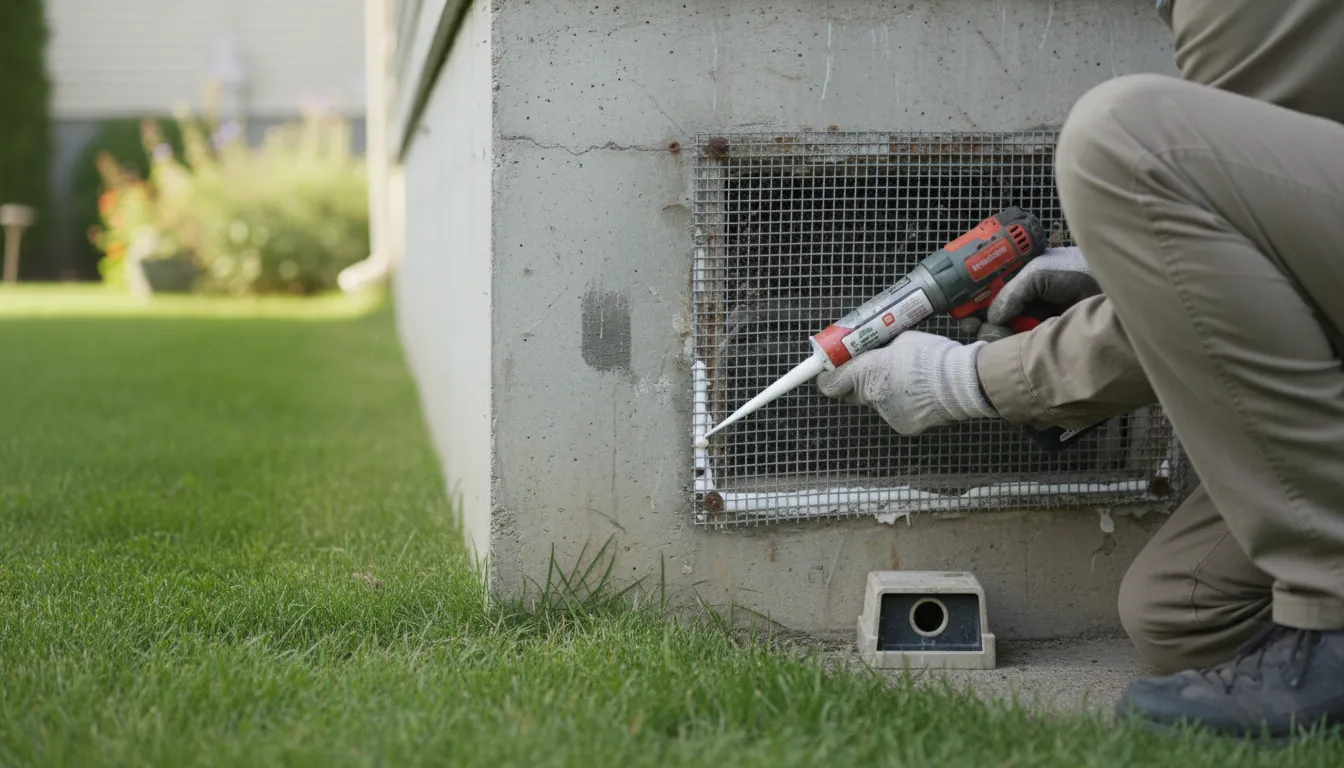
Effective sealing materials: Use durable materials that rodents cannot gnaw through. Avoid caulk, foam, or plastic alone, as rodents will chew right through them. Effective materials include:
- Steel wool packed into holes, then sealed with caulk or foam.
- Hardware cloth (metal mesh) over vents and larger openings.
- Metal flashing for gaps around foundations or rooflines.
- Door sweeps and weather stripping on all exterior doors 2 3.
2. Sanitation: Eliminating Food and Water Sources
Rodents are opportunistic feeders. By removing their access to sustenance, you make your property far less attractive.
Key sanitation steps:
- Store all human and pet food-including bags of pet food, bird seed, and grass seed-in airtight, rodent-proof containers made of metal or thick plastic, not cardboard or thin plastic bags.
- Clean up kitchen crumbs, spills, and pet food bowls promptly.
- Manage garbage by using tightly covered, durable bins, both indoors and outdoors.
- Fix leaky pipes, faucets, and downspouts to eliminate standing water sources.
- Outdoors, keep grills clean, pick up fallen fruit from trees, and maintain compost bins securely.
3. Population Reduction: Trapping and Baiting
When rodents are already inside, reducing their numbers is necessary. The methods you choose depend on the location and your preferences.
Trapping (Preferred for Indoor Use): Trapping is often recommended for indoor rodent problems because it allows for the immediate removal of the rodent, preventing it from dying in an inaccessible wall void and creating odor issues 4.
- Snap Traps: Inexpensive, effective, and quick. Bait with peanut butter, nuts, or dried fruit. Place them perpendicular to walls, with the trigger plate facing the wall, as rodents tend to travel along edges.
- Live Traps: Capture rodents alive for release elsewhere. This is a humane option but requires you to check traps frequently and release the animal at least a mile from your home to prevent its return. Be aware of local regulations regarding the release of wildlife.
- Glue Boards: While effective for mice, their use is generally discouraged due to the inhumane nature of the slow death they cause.
Toxic Baits (Rodenticides): Rodenticides are powerful tools but must be used with extreme caution, primarily outdoors.
- Outdoor Use: Baits should only be placed in secured, tamper-resistant bait stations to protect children, pets, and non-target wildlife. A new Maine bill (LD 356) has been proposed to prohibit the outdoor residential use of rodenticides by individuals who are not certified pesticide applicators 5.
- Indoor Use is Not Recommended: Using rodenticides inside walls or attics is strongly discouraged. Rodents may consume the bait and then die in inaccessible areas, leading to severe, long-lasting odors and potential issues with fleas, mites, or other ectoparasites leaving the carcass 6.
Find the perfect rat & mice control companies for your needs
Get personalized recommendations and expert advice
4. Professional Intervention: When to Call an Expert
While DIY methods can work for minor problems, professional pest control operators offer comprehensive solutions that address the root cause.
Signs you need a professional:
- You see frequent rodent activity despite your own trapping efforts.
- You hear scratching or gnawing noises in walls or ceilings.
- You find extensive droppings, gnaw marks, or nesting materials.
- The infestation is large or has persisted for a long time.
- You need help identifying and sealing all potential entry points.
What professional rodent control in Maine typically includes:
- Inspection: A thorough assessment to identify the species, locate entry points, and gauge the infestation's severity.
- Initial Clean-Out: Setting a high number of traps or using professional-grade baits to quickly reduce the active population.
- Exclusion Work: Sealing identified entry points with professional-grade materials for a durable seal.
- Ongoing Monitoring: Many companies offer maintenance plans that include regular inspections and bait station servicing to prevent re-infestation 7 8.
Cost of Professional Rodent Control in Maine
The cost for professional services in Maine varies based on the size of your property, the severity of the infestation, and the scope of work required.
- Initial/One-Time Service: For a standard visit and treatment, homeowners can expect to pay between $150 and $500 9.
- Rodent Exclusion (Sealing): This is a critical service for long-term prevention. Costs can range from $200 to over $1,500, depending on the home's size and the number of entry points that need sealing 10.
- Ongoing Maintenance Plans: For continued protection, many companies offer quarterly or monthly plans. These can start as low as $35 to $49 per month and typically include periodic inspections and bait station maintenance 11 12.
- Inspection Fees: Some companies offer free inspections, while others may charge a fee ranging from $125 to $450. This fee is often waived or deducted if you proceed with their treatment services 13 14.
Seasonal Rodent Prevention Tips for Maine
Maine's distinct seasons require shifting strategies.
- Fall (Critical Preparation): This is the most important time for prevention. Conduct a thorough exterior inspection of your home. Seal all cracks and gaps, install door sweeps, trim back tree branches and shrubs touching the house, and store firewood at least 20 feet away from the home and 18 inches off the ground 15 16 17.
- Winter (Vigilance): Rodents are actively seeking warmth. Be extra vigilant about indoor sanitation and listen for noises in walls and attics. Check traps and bait stations more frequently.
- Spring (Clean-up and Assessment): As snow melts, clean up yard debris, leaf litter, and clutter that provides nesting sites. Assess any winter damage to your home's exterior that may have created new entry points.
- Summer (Maintenance): Focus on outdoor sanitation. Keep garbage lids secure, manage compost, and ensure landscaping is well-maintained to reduce harborage areas near the foundation 18 19.
Frequently asked questions
Sources
Footnotes
-
Where to Find Mice & Rats in Your Maine Home - https://www.pinestatepest.com/where-to-find-mice-and-rats-in-your-maine-home ↩
-
RATS - Maine.gov - https://www.maine.gov/dacf/php/gotpests/othercritters/documents/bpc_9-12_4StepsRatPrevention-final-rev-web.pdf ↩
-
Common Rodent Entry Points in Maine Homes and How to ... - https://atlanticpestcontrol.com/common-rodent-entry-points-in-maine-homes-and-how-to-seal-them/ ↩
-
Humane Rodent Control Solutions for Maine Homeowners - https://atlanticpestcontrol.com/humane-rodent-control-solutions-for-maine-homeowners/ ↩
-
ME LD356 - BillTrack50 - https://www.billtrack50.com/billdetail/1811357 ↩
-
Rodent Control - Mice and Rats - Maine Bed Bugs and Pest Control - https://www.mainebedbugsandpestcontrol.com/rodent-control-mice-and-rats/ ↩
-
RATS | Maine.gov - https://www.maine.gov/dacf/php/gotpests/othercritters/documents/rats-cal.pdf ↩
-
Your Guide to Mice and Rats in Southern Maine - https://gshieldpest.com/your-guide-to-mice-and-rats-in-southern-maine/ ↩
-
How Much Does an Exterminator Cost? - Candor Pest Control - https://candorpestcontrol.com/blog/pest-control-costs-near-me/ ↩
-
Mice Prevention Tips For Maine Owners - Pine State Pest Solutions - https://www.pinestatepest.com/blog/post/mice-prevention-tips ↩
-
The ultimate guide to pest control pricing - https://www.method.me/pricing-guides/pest-control-prices-list/ ↩
-
Maine Rodent Control Services | Get Rid Of Mice & Rats Fast - https://www.pinestatepest.com/rodent-control ↩
-
Rodent Pest Control Costs: Detailed Pricing Guide - https://promptactionpest.com/blog/how-much-does-rodent-pest-control-costs-a-detailed-guide-to-pricing/ ↩
-
Pest Control Cost | Angi - https://www.angi.com/articles/how-much-does-pest-control-service-cost.htm ↩
-
Keeping Mice Out Of Your Maine Home This Winter - https://www.pinestatepest.com/blog/post/keeping-mice-out-of-your-maine-home-this-winter ↩
-
How to Keep Mice Out of Your Maine Home - Green Pest Defense - https://greenpestdefense.com/2024/12/01/how-to-keep-mice-out/ ↩
-
Strategies For Effective Rat Control For Homes In Maine - https://www.bigbluebug.com/blog/2023/december/say-goodbye-to-rats-strategies-for-effective-rat/ ↩
-
Rodent Prevention in Maine Homes: Tips and Tricks - https://greenpestdefense.com/2023/08/27/rodent-prevention-in-maine/ ↩
-
Deterring Rats The Easy Way In Southern Maine - https://www.bigbluebug.com/deterring-rats-the-easy-way-in-southern-maine/ ↩