Find the Best Rat & Mice Control Companies for Your Business
No obligation • Fast responses • Nationwide coverage

Why you can trust Pest Crews
Pest Crews is a leading U.S. resource for finding and evaluating residential and commercial pest control services. Our team researches providers, reviews treatment approaches, and organizes unbiased information to help you make informed decisions. Companies cannot pay to change our editorial content or influence how they appear.
Search providers near you
Find Rat & Mice Control Companies near you
Dealing with mice or rats is more than a nuisance; it's a serious threat to your property and health. Rodents can cause extensive structural damage by gnawing on wires, insulation, and wood, and they pose significant health risks by contaminating food and surfaces with their droppings and urine. Effective rodent management requires a strategic, multi-step approach that goes beyond simply setting a few traps. This resource explains the professional methods used for rodent extermination and prevention, helping you understand what to expect and how to find qualified local specialists to address your specific situation.
Search providers near you
Why Professional Rodent Management is Essential
Attempting to handle a rodent infestation on your own often leads to temporary relief at best. Rodents are prolific breeders and incredibly adept at finding shelter and food. A DIY approach might remove a few visible pests but often misses the larger colony, nesting sites, and critical entry points. Professionals bring expertise in rodent behavior, access to commercial-grade tools and materials, and a systematic strategy designed for complete eradication and long-term prevention. They follow an Integrated Pest Management (IPM) framework, which prioritizes safety and sustainability by combining multiple control methods 1 2. This is especially critical for businesses, which must adhere to strict health codes and regulations to protect their customers, employees, and reputation.
The Professional Rodent Control Process: A Step-by-Step Guide
A thorough rodent control program is not a single action but a process. Here's how a professional service typically approaches a rodent problem.
1. Comprehensive Inspection and Assessment
The first and most crucial step is a detailed inspection. A technician will examine the interior and exterior of your property to identify:
- The type of rodent (house mouse, Norway rat, roof rat, etc.).
- Signs of activity, including droppings, gnaw marks, grease rub marks along walls, and nesting materials.
- All potential entry points, such as gaps around utility lines, cracks in the foundation, damaged vent screens, and openings under doors.
- Internal pathways used by rodents to travel between nesting and feeding areas.
- Attractants like accessible food, water sources, and clutter that provides shelter.
This assessment determines the scope and severity of the infestation, forming the basis for a customized treatment plan 3.
2. Exclusion: The Foundation of Long-Term Control
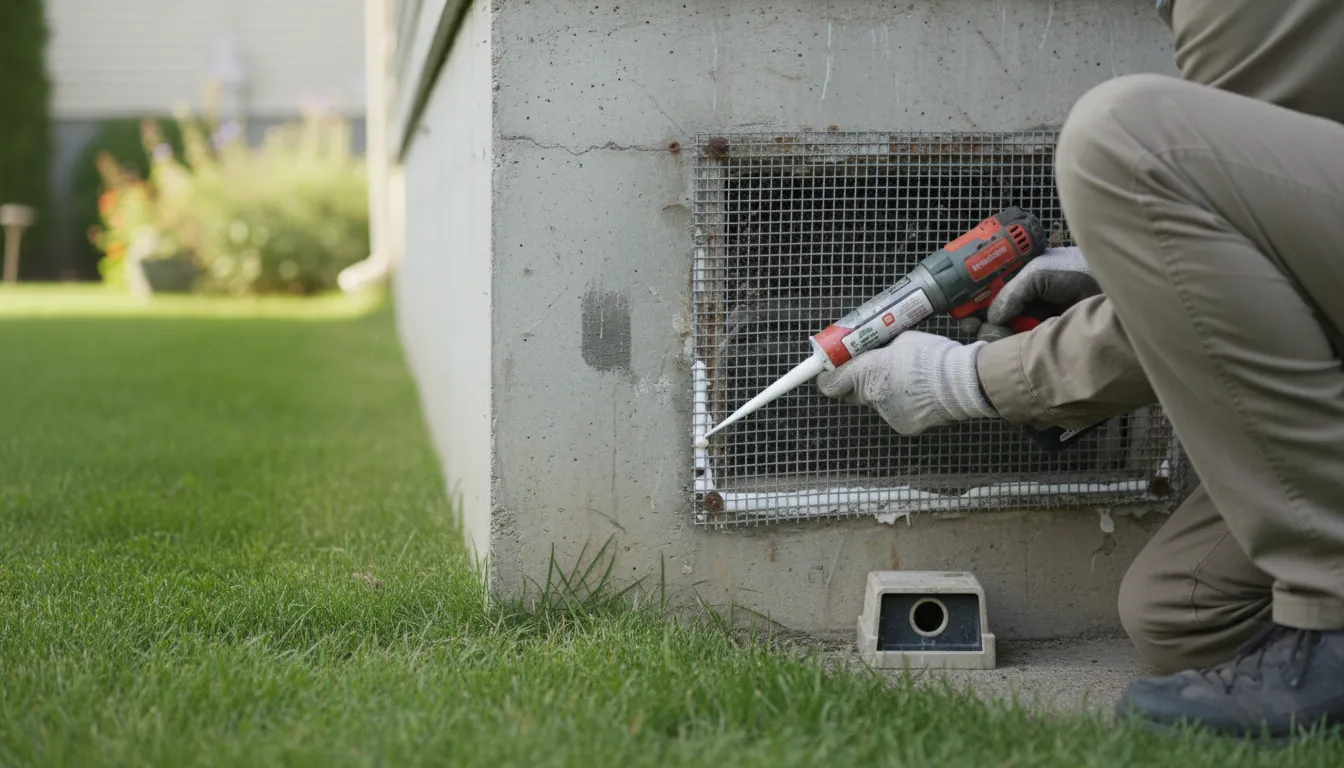
Often called "rodent proofing," exclusion is the physical act of sealing a building to prevent entry. This is a cornerstone of IPM and is far more effective and permanent than relying solely on killing pests. Professionals use durable, chew-proof materials like steel wool, copper mesh, hardware cloth, and concrete to seal gaps, cracks, and holes. Key areas include where pipes and wires enter the building, around door sweeps, and through attic and crawl space vents. For commercial properties, this step is vital for compliance and protecting inventory.
3. Trapping and Removal
For immediate population reduction, especially inside a home or business, trapping is a preferred method. It allows for the confirmation of elimination and proper disposal of carcasses. Professionals use a variety of traps:
- Snap traps: The classic, effective tool when placed correctly in high-activity pathways.
- Electronic traps: Deliver a quick, humane shock and contain the rodent for easy disposal.
- Live traps: Used in specific situations where relocation is required or desired. Strategic placement is key, and professionals know where to position traps for maximum effectiveness based on their inspection findings.
4. Targeted Baiting Programs
When trapping isn't sufficient for a large or widespread infestation, commercial-grade rodenticides may be used. Professionals place these baits securely inside tamper-resistant bait stations. These locked boxes protect children, pets, and non-target wildlife while allowing rodents to enter. Stations are typically placed around the exterior perimeter, in attics, crawl spaces, or wall voids-areas inaccessible to people and pets. This method is designed to systematically reduce the population 4.
5. Sanitation and Clean-up
After the rodents are eliminated, addressing the contamination they leave behind is a critical health step. Droppings, urine, and nesting materials can harbor dangerous pathogens. Professional services can provide biohazard clean-up, which includes careful removal, disinfection, and deodorization of affected areas. This erases the biological traces that can attract new rodents and creates a safer environment 5 6.
6. Ongoing Monitoring
For ongoing peace of mind, especially for commercial clients, monitoring is essential. This can involve regular service visits to check traps and bait stations. Advanced services may include electronic monitoring systems or smart traps that send real-time alerts to the pest control provider when activity is detected, allowing for a rapid response 7.
7. Fumigation: A Last Resort
In cases of extreme, whole-structure infestation, fumigation may be necessary. This involves sealing the building and introducing a poison gas. It is a complex, highly regulated, and costly procedure that requires occupants to vacate the premises for several days. Due to its scale and impact, it is only considered when all other methods are inadequate 8.
Find the perfect rat & mice control companies for your needs
Get personalized recommendations and expert advice
Your Role in Prevention: A Partnership for Success
Long-term rodent control is a partnership. The most effective professional treatment can be undermined without ongoing preventive efforts from the property owner or manager. Prevention focuses on making your environment less attractive to rodents by eliminating the three things they seek: food, water, and shelter 9.
- Maintain Impeccable Cleanliness: Store all food-including dry goods, pet food, and bird seed-in sealed metal or heavy-duty plastic containers. Clean up food crumbs and spills immediately in kitchens, break rooms, and dining areas. In commercial settings, this is a daily operational necessity.
- Manage Waste Effectively: Use garbage cans with tight-fitting, locking lids. Empty indoor trash receptacles frequently and ensure outdoor dumpsters are sealed, placed on a concrete pad, and kept as far from building entrances as possible 10.
- Reduce Clutter: Rodents nest in quiet, undisturbed areas. Minimize storage clutter in basements, attics, garages, and stockrooms. Avoid using cardboard boxes for long-term storage, as rodents can easily gnaw through them 11.
- Landscape for Defense: Trim tree branches and shrubs back at least six feet from the roofline and exterior walls. This removes natural "bridges" rodents use to access upper levels of a structure 12 13.
- Eliminate Water Sources: Fix leaky faucets, pipes, and HVAC drip lines. Ensure gutters and downspouts are clear to prevent standing water and improve drainage around the foundation 14.
- Employee and Resident Education: In a business, train staff to recognize signs of rodent activity (droppings, gnawed packaging) and report them immediately. At home, ensure all family members follow good sanitation practices 15.
Understanding Investment: Rodent Control Cost Factors
The cost for professional rodent extermination services varies widely based on several key factors: the severity of the infestation, the size and type of property (residential vs. commercial), your geographic location, and the specific methods required 16 17.
The following table provides a general overview of typical cost ranges. It's important to get a detailed, in-person inspection and quote from a qualified professional for an accurate price for your specific situation.
| Service Type | Residential Typical Cost Range | Commercial Typical Cost Range |
|---|---|---|
| One-time Service / Initial Visit | $150 - $500 | $300 - $1,000+ |
| Rodent Proofing / Exclusion (add-on) | $200 - $1,000 | Varies significantly by building size & complexity |
| Monthly Maintenance Plan | $40 - $80 per visit | Custom plans; typically higher than residential |
| Annual or Quarterly Plan | $400 - $1,200 annually | $300 - $1,200+ annually for basic service |
| Severe Infestation (Fumigation) | $2,000 - $6,500 (last resort) | $1,500 - $8,000+ (last resort) |
Sources: Compiled from industry pricing guides and service provider data 18 19 20.
For a business, investing in a proactive commercial rodent control plan is often more cost-effective than reacting to an infestation, which can lead to lost product, regulatory fines, and reputational damage 21 22.
Frequently asked questions
Sources
Footnotes
-
Exterminator Cost: What You'll Pay for Pest Control Services - https://bettertermite.com/exterminator-cost/ ↩
-
Commercial Rodent Control for Businesses - https://www.anverpestcontrol.com/commercial-rodent-control-for-businesses/ ↩
-
Commercial Rodent Control for Businesses - https://www.anverpestcontrol.com/commercial-rodent-control-for-businesses/ ↩
-
Rodent Control Best Practices To Protect Your Family and Business - https://whocandancan.com/rodent-control-best-practices-for-fall-nj/ ↩
-
Rodent Control Inc. - https://rodentcontrolinc.com/ ↩
-
Rodent Control Methods - Delaware Public Health District - https://www.delawarehealth.org/wp-content/uploads/2023/11/Rodent-Control-Methods.pdf ↩
-
Pest Control for Rodents in NY: Mice, Rats & More | Pestech - https://pestech.com/pest-management-services/rodents/ ↩
-
How Much Does a Rat Exterminator Cost? (2026) - HomeGuide - https://homeguide.com/costs/rat-exterminator-cost ↩
-
Comprehensive Approach to Rodent Prevention Tips and Techniques - https://earthritepestcontrol.com/blog/comprehensive-approach-to-rodent-prevention-tips-and-techniques/ ↩
-
Rodent Prevention for Commercial Properties | Fox Pest Control - https://fox-pest.com/commercial/blog/rodent-prevention-and-control-strategies-for-commercial-properties/ ↩
-
Prevent Rodents in Your Home - Florida Pest Control - https://www.flapest.com/rodent-exterminators/prevention-tips/ ↩
-
Rodent Prevention for Commercial Properties | Fox Pest Control - https://fox-pest.com/commercial/blog/rodent-prevention-and-control-strategies-for-commercial-properties/ ↩
-
Top Rodent Control Do's & Don'ts For Your Business - Orkin - https://www.orkin.com/commercial/blog/dos-and-donts-of-rodent-control ↩
-
Commercial Rodent Prevention Tips | Mice & Rats - https://www.rkenvironmental.com/blog/pest-management/rodent-prevention-tips ↩
-
Top Rodent Control Do's & Don'ts For Your Business - https://www.envirogpc.com/blog/2025/june/top-rodent-control-do-s-don-ts-for-your-business/ ↩
-
Exterminator Cost: What You'll Pay for Pest Control Services - https://bettertermite.com/exterminator-cost/ ↩
-
2025 Rodent Removal Cost - Thumbtack - https://www.thumbtack.com/p/rodent-removal-cost ↩
-
Rodent Pest Control Costs: Detailed Pricing Guide - https://promptactionpest.com/blog/how-much-does-rodent-pest-control-costs-a-detailed-guide-to-pricing/ ↩
-
Rodent Pest Control Costs: Detailed Pricing Guide - https://promptactionpest.com/blog/how-much-does-rodent-pest-control-costs-a-detailed-guide-to-pricing/ ↩
-
How Much Does It Cost to Hire a Rat Exterminator? [2025 Data] - https://www.homeadvisor.com/cost/environmental-safety/rodent-removal/ ↩
-
Comprehensive Guide to Commercial Pest Services - - https://callbama.com/comprehensive-guide-to-commercial-pest-services/ ↩
-
How to set commercial pest control prices that maximize ROI - https://gorilladesk.com/learn/how-to-set-commercial-pest-control-prices/ ↩